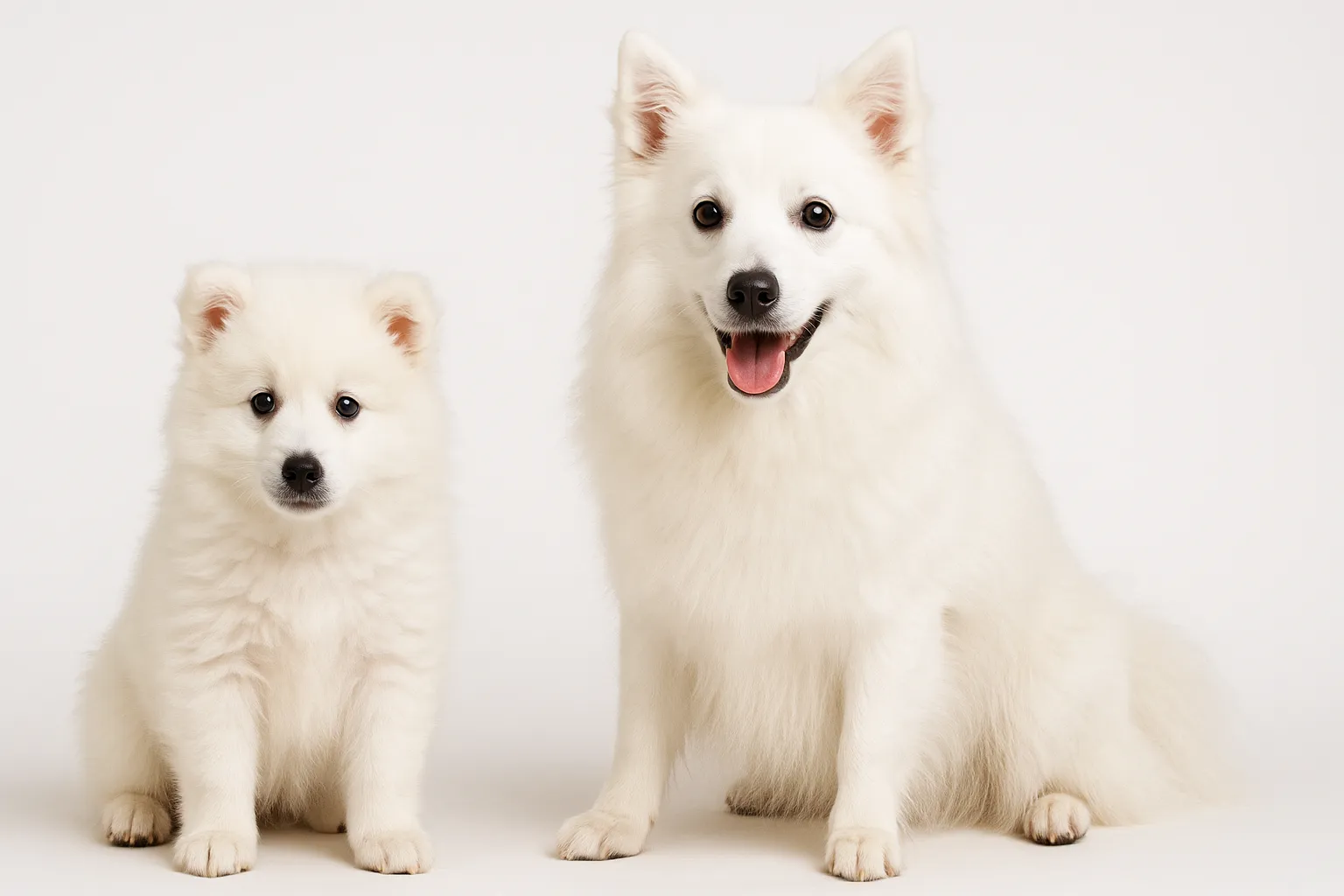
A Long-Lived Breed with One Inherited Condition That Demands Attention
American Eskimo Dogs live 13-15 years across all three AKC-recognized sizes: Toy (9 lbs and under), Miniature (10-20 lbs), and Standard (20-35 lbs). That is a strong lifespan. These alert, lively spitz-type dogs share the same white double coat and vigorous temperament regardless of size, and they tend to stay active and engaged well into their senior years.
But one heritable condition defines health planning for this breed: progressive retinal atrophy (PRA), a photoreceptor degeneration that progresses to blindness. DNA testing identifies status. Beyond PRA, Standard Eskies carry documented hip dysplasia risk, and diabetes mellitus occurs at above-baseline rates across all varieties, typically developing in middle age.
Health Risks Worth Knowing
Progressive Retinal Atrophy: The Primary Inherited Risk
PRA is the most significant hereditary condition in American Eskimo Dogs. The retinal degeneration progresses over months to years, with night blindness appearing first, followed by complete vision loss. DNA testing for PRA-associated mutations is available for this breed, and annual CAER examinations provide clinical monitoring.
The practical news: affected dogs adapt well to blindness when their environment remains consistent. Knowing status early lets you prepare.
See the Progressive Retinal Atrophy guide for full prevention and management detail.
Hip Dysplasia: Primarily a Standard-Variety Concern
Standard American Eskimo Dogs have moderate hip dysplasia risk. OFA hip evaluation at 24 months establishes structural baseline. Weight management and omega-3 supplementation support joint health throughout life. Surgical options exist for dogs with moderate to severe dysplasia affecting quality of life.
See the Hip Dysplasia guide for full prevention and management detail.
Diabetes: Above-Average Rates, Especially After Age 6
Diabetes mellitus is documented at elevated rates in American Eskimo Dogs. Signs include increased thirst, urination, and appetite paired with weight loss. Annual glucose and fructosamine monitoring after age 6 provides early detection.
Well-managed dogs can live normal lives with twice-daily insulin and dietary adjustments. The key is catching it before ketoacidosis develops.
See the Diabetes Mellitus guide for full prevention and management detail.
Practical Longevity Strategies
PRA Screening: Know Before It Shows
PRA DNA testing should be part of every American Eskimo Dog owner’s health plan, ideally done at the breeder level. Affected dogs (homozygous affected genotype) will develop progressive blindness. Knowing status early allows environmental preparation — consistent furniture layouts, scent markers, stable routines — before significant vision loss occurs.
CAER annual ophthalmology exams provide clinical monitoring and are required for OFA registration for breeding dogs.
Catching Diabetes Before It Becomes a Crisis
American Eskimo Dogs have documented above-average diabetes prevalence. Annual wellness bloodwork including glucose and fructosamine starting at age 5-6 provides the detection baseline.
Risk factors you can influence: obesity, chronic pancreatitis, and steroid therapy all increase diabetes risk. One important detail for intact females — they face elevated risk after diestrus (post-heat) due to progesterone-driven insulin resistance. Spaying reduces this specific risk.
Mental Engagement Protects Cognitive Health
American Eskimo Dogs are highly intelligent, active dogs that deteriorate cognitively faster when understimulated. Daily mental engagement — training, puzzle feeders, interactive play — maintains cognitive reserve as they age. Research from the Dog Aging Project supports environmental enrichment as a meaningful factor in delaying cognitive decline. These dogs need to think.
The Three Things That Matter Most
Start here — these are the highest-impact moves for American Eskimo Dog longevity:
- Annual CAER (ophthalmology) exam for progressive retinal atrophy detection — PRA can progress to blindness
- OFA hip evaluation at 24 months for the standard variety, which has moderate hip dysplasia risk
- Annual glucose monitoring after age 6 — diabetes is documented at above-average rates in this breed
These are the monitoring anchors for your American Eskimo Dog. Revisit them at every wellness visit and update your approach when screening results shift the picture. Reference Progressive Retinal Atrophy Pra, Hip Dysplasia, Diabetes for evidence-based management.
Evidence-Based Longevity Priorities
Lean Mass Becomes Critical at Middle Age
Weight stability and muscle quality are foundational to orthopedic health and metabolic longevity. As a small breed, lean mass retention becomes critical around middle age when metabolic rate slows. Consistent body condition monitoring prevents the metabolic and orthopedic drift that compounds silently over years.
Prevention Focused on the Biggest Threats
Target your prevention plan at Progressive Retinal Atrophy Pra, Hip Dysplasia, Diabetes — the conditions where proactive monitoring and early response yield the highest return on invested time and resources.
Consistency Tailored to Temperament
American Eskimo Dogs maintain better stability when household routines, activity levels, and recovery windows are deliberately structured. Consistency tailored to individual temperament prevents stress accumulation that erodes both mental and physical resilience.
Prevention Windows Close Fast
Set routine veterinary review checkpoints and escalate frequency when orthopedic function and gait quality show early drift. By the time symptoms become obvious, the best intervention windows may already be closing.
Breed-Specific Research
Use these evidence deep dives to add mechanism-level context to your American Eskimo Dog longevity plan:
- Genetic Testing For Dogs Clinical Roi: evidence for PRA DNA testing and heritable disease identification
- Annual Wellness Testing Protocol For Dogs: framework for glucose monitoring and metabolic wellness screening timing
- Canine Cognitive Decline Early Action Plan: cognitive health maintenance for mentally active breeds
Making Genetic Testing Actionable
The practical value of genetic testing in American Eskimo Dogs comes from linking results to monitoring cadence and owner execution. PRA DNA testing is the single most important breed-specific genetic test. Consider hip and elbow scoring (OFA or PennHIP) to quantify orthopedic risk, particularly for Standard variety dogs.
- Match your initial testing to the breed’s established vulnerabilities. One round of results tells you where to look; repeated clinical assessment tells you what is actually happening.
- Connect your first monitoring protocol to Hip Dysplasia and Progressive Retinal Atrophy Pra — these are the conditions where test results should directly change what you do next.
- Consolidate everything — genetic results, lab work, exam notes, and what you observe at home — into a single document your vet can review in minutes.
- The value of genetic testing compounds over time. Each veterinary visit adds context that makes the original results more — not less — relevant to current decisions.
Good testing leads to better questions, not just more data. Let results sharpen your focus rather than broaden your anxiety.
From Circus Performer to Family Dog
The American Eskimo Dog’s history includes performing in traveling circuses and serving as a versatile companion — roles that selected for intelligence, trainability, and physical agility. That heritage means these dogs need mental stimulation as much as physical exercise. It also created structural and metabolic risk profiles that benefit from proactive screening.
- Prioritize surveillance around Hip Dysplasia, Progressive Retinal Atrophy Pra, Dental Disease.
- The owner who notices “something is slightly off for the third time this month” catches problems earlier than the one waiting for an obvious crisis.
- The best prevention plan is a living document. Adjust it whenever new data arrives, whenever a life stage changes, and whenever something surprises you.
The breed’s past shapes the risk landscape. Your American Eskimo Dog’s present — measured in real data, not assumptions — shapes the response.
When to Screen, Test, and Reassess
- Puppy: PRA DNA test, baseline CAER exam, hip OFA at 24 months (Standard variety)
- 3-7 years: annual CAER, annual wellness panel, body condition monitoring
- 8+ years: senior panel including glucose, fructosamine, thyroid every 6-12 months
Fuel for the Long Run
American Eskimo Dogs benefit from complete, appropriately sized breed diets with controlled caloric density to prevent obesity — a diabetes risk factor in this breed. The white double coat requires adequate essential fatty acid intake for skin and coat health. Omega-3 supplementation at evidence-based doses benefits joint, cardiac, and skin health.
The Longevity Picture
American Eskimo Dogs are robust, intelligent, long-lived dogs when key health risks are monitored proactively. PRA screening, diabetes monitoring, and hip evaluation (Standard variety) allow owners and veterinarians to intervene early across all major health concerns. With those bases covered, these dogs have the genetic potential for 14-15 healthy, engaged years.
The Subtle Signs You Are Most Likely to Miss
Long-term decline in American Eskimo Dogs often starts as small changes that owners normalize too quickly:
- Subtle hind-limb stiffness after rest related to Hip Dysplasia — dismissed as slow mornings
- Hesitation navigating in dim light or unfamiliar spaces that signals early Progressive Retinal Atrophy Pra progression
- Visible tartar, gum recession, or tooth loss signaling advancing Dental Disease — often caught too late
If baseline function is drifting for 7-10 days, treat it as a prevention failure signal and reassess early.
Additional Health Risks to Monitor
Based on breed predisposition data, American Eskimo Dog owners should also be aware of:
Frequently Asked Questions
How long do American Eskimo Dogs live?
American Eskimo Dogs typically live 13-15 years across all three size varieties. The key longevity investments are PRA screening, annual wellness bloodwork, and weight management.
What is progressive retinal atrophy in American Eskimo Dogs?
PRA is a hereditary retinal degeneration that causes progressive vision loss, eventually leading to blindness. DNA testing identifies affected, carrier, and clear dogs. Affected dogs can live normally with environmental adaptations but will lose vision over months to years.
Are American Eskimo Dogs hypoallergenic?
No. They have a thick double coat and shed heavily, particularly during seasonal coat blows. They are not considered hypoallergenic and require regular brushing to manage shedding and prevent matting.
Are American Eskimo Dogs good with children?
Generally yes. They are playful, energetic, and social dogs. Early socialization is important. They can be reserved with strangers but are typically affectionate and engaged with family members.
What are the three sizes of American Eskimo Dogs?
Toy (under 12 lbs), Miniature (10-20 lbs), and Standard (20-35 lbs). All three are AKC-recognized within a single breed standard. Health profiles are similar across sizes, with the Standard variety carrying additional hip dysplasia risk.
References
[1] PRA in American Eskimo Dogs: Acland GM et al. IOVS. 1998. [2] American Eskimo Dog Club of America health program. aedca.org. [3] OFA health statistics by breed. ofa.org. [4] WSAVA global nutrition guidelines. wsava.org. [5] Dog Aging Project: canine social engagement and cognitive aging. dogagingproject.org.
Related reads
Related Reading
Continue exploring