One of the World’s Oldest Breeds — With a Kidney Disease Found Nowhere Else
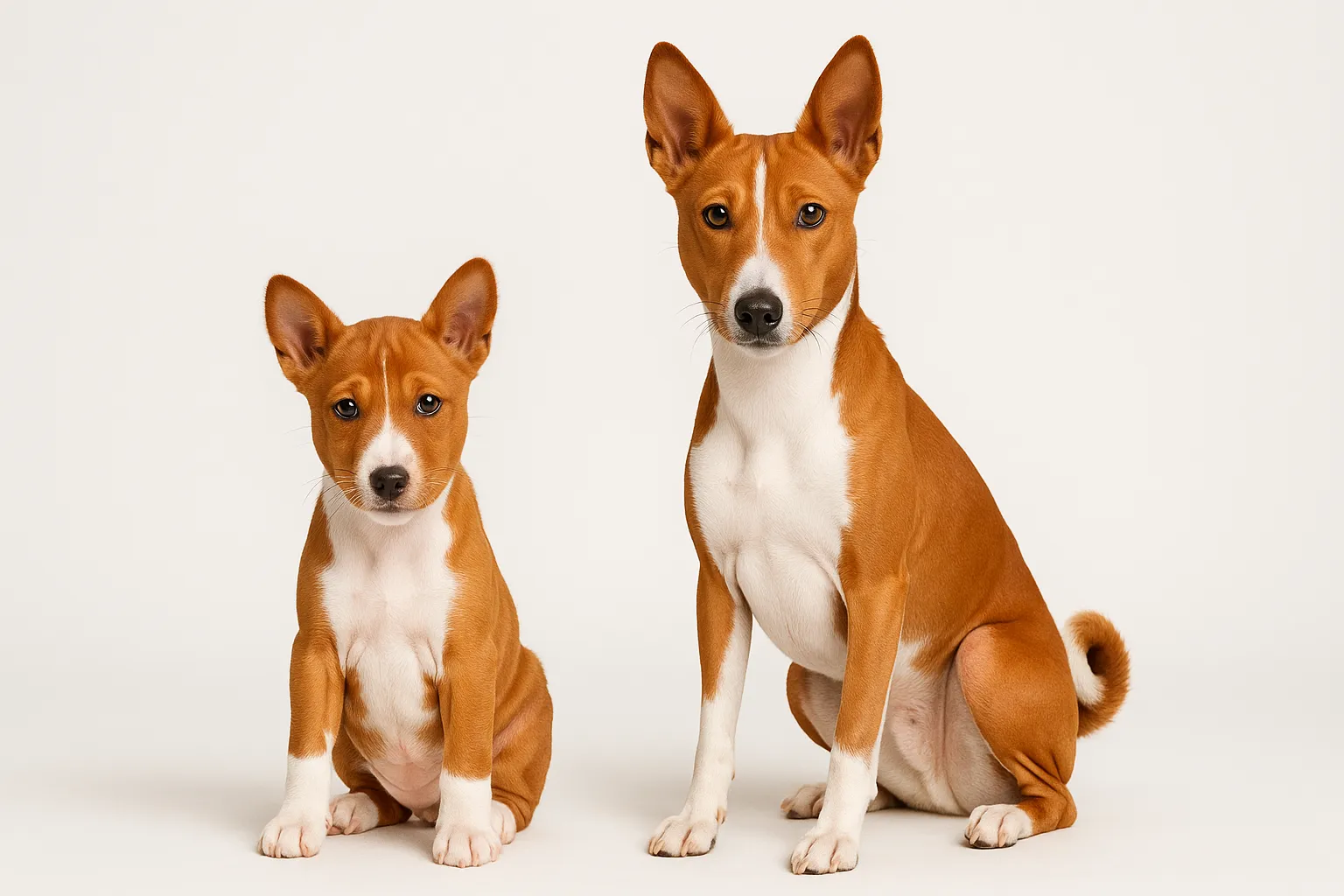
Basenjis rank among the oldest known domesticated dogs, carrying a phenotype close to their ancient African ancestors: upright ears, curled tail, lean build, and a notably quiet voice. They do not bark. They yodel.
At 22-24 lbs and 13-14 years of typical lifespan, they stand as one of the healthier primitive breeds, largely free of the conformational and structural diseases that plague many modern purebreds.
But the Basenji has its own vulnerabilities. The most significant is Fanconi syndrome — a kidney tubule defect unique to this breed that can cause life-threatening metabolic disturbances if undetected. Progressive retinal atrophy and hypothyroidism round out the primary concerns.
The good news: genetic testing for the Fanconi mutation is available, and annual screening catches it early. The health challenges here are breed-specific rather than conformation-driven, and every one of them is manageable with informed care.
What This Breed Is Most Likely to Face
Hypothyroidism: Easy to Miss in an Already Lean Breed
Hypothyroidism occurs at above-average rates in Basenjis. The breed’s naturally lean, athletic appearance can mask the weight gain and lethargy that typically signal early thyroid dysfunction.
Annual thyroid panels (T4, free T4, TSH) starting at age 3 are standard practice. Levothyroxine treatment is effective and well tolerated.
See the Hypothyroidism guide for full prevention and management detail.
Hip Dysplasia
Hip dysplasia appears in Basenjis at moderate rates. Their athletic build and high activity level can initially compensate for mild dysplasia, but the underlying joint changes progress regardless of how well the dog moves.
OFA evaluation at 24 months provides the structural baseline. Weight management and controlled exercise remain the primary preventive strategies.
See the Hip Dysplasia guide for full prevention and management detail.
Skin Allergies
Environmental allergies and atopic dermatitis are reported in Basenjis, though at lower rates than in heavily allergen-exposed breeds. Omega-3 fatty acid supplementation provides anti-inflammatory support. A systematic allergy workup is appropriate for dogs with recurrent skin, ear, or paw symptoms.
See the Skin Allergies guide for full prevention and management detail.
Cancer
Cancer occurs in Basenjis as in all breeds, though not at the elevated rates seen in breeds like Golden Retrievers. Annual physical examination with lymph node palpation and owner awareness of early warning signs provide reasonable surveillance. Any new mass warrants prompt evaluation.
See the Cancer guide for full prevention and management detail.
What Actually Moves the Needle
Fanconi Syndrome: The One Test Every Basenji Owner Must Know
Fanconi syndrome is a defect in kidney tubule reabsorption that causes amino acids, glucose, and electrolytes to be lost in urine. It is a breed-defining health risk — essentially unique to Basenjis among domestic dogs. Affected dogs develop progressive metabolic abnormalities that can be life-threatening if untreated.
Annual screening with a dipstick urine test (checking for glucosuria in a non-diabetic dog) or full urine amino acid analysis is the standard of care. The Basenji Club of America recommends annual testing from age 3 onward. Genetic testing for the Fanconi mutation (two known variants) allows identification before biochemical signs appear. This is the single most important health investment you can make for a Basenji.
Thyroid Monitoring as a Longevity Multiplier
Annual thyroid panels starting at age 3 are the highest-yield laboratory screening test for this breed. A complete panel — including free T4 and TSH, not just total T4 — provides more accurate assessment. Combine thyroid screening with a general wellness chemistry panel to monitor kidney and liver function, which is particularly relevant given the Fanconi risk.
Containment and Exercise for a Sighthound With Serious Speed
Basenjis are sighthounds with a strong prey drive and exceptional speed. They need secure containment — 6-foot fencing minimum — and leash exercise in unsecured areas. Daily vigorous exercise (lure coursing, running, active play) maintains lean muscle mass, healthy weight, and behavioral stability. Adults need 30-60 minutes daily. Without adequate exercise, Basenjis become destructive, and the stress creates secondary health impacts.
The Three Things That Matter Most
Start here — these are the highest-impact moves for Basenji longevity:
- Annual thyroid screening — Basenjis have above-average hypothyroidism rates that are often missed
- Screen for Fanconi syndrome annually with a urinalysis — it is unique to this breed
- Maintain lean body condition to protect against the hip dysplasia seen in the breed
Frame your prevention investment around these targets. When resources are limited, these are where the evidence says to spend them first. See Hypothyroidism, Hip Dysplasia, Skin Allergies for the full clinical picture.
Evidence-Based Longevity Priorities
The Athlete’s Body Composition Advantage
Maintaining stable weight and lean muscle mass is one of the highest-yield longevity interventions available for Basenjis. Lean mass retention becomes critical around middle age when metabolic rate begins to slow. These pursuit athletes need sustained lean mass to preserve joint function and cardiovascular efficiency — and their naturally lean frame means small weight changes carry outsized impact.
Condition-Focused Prevention Stack
The highest-return prevention targets are Hypothyroidism, Hip Dysplasia, and Skin Allergies. The cost of early action is almost always lower than the cost of delay — in treatment complexity, in quality of life, and in total lifespan.
Daily Routine as Longevity Medicine
Daily routine quality directly affects how Basenjis age. Predictable activity, adequate scent enrichment, and protected rest windows help these pursuit athletes maintain cognitive and physical function longer. A chaotic household accelerates aging in a breed that is already wired for high alertness.
Preventive Screening Cadence
Schedule veterinary reassessment intervals by age band and trend changes rather than waiting for obvious deterioration. Planned checkpoints focused on orthopedic function and gait quality improve early detection and intervention timing.
Breed-Specific Research
Use these evidence deep dives to add mechanism-level context to your Basenji longevity plan:
- Senior Dog Screening Protocol: framework for annual wellness testing including breed-specific Basenji protocols
- Annual Wellness Testing Protocol For Dogs: guides Fanconi and thyroid monitoring decisions
- Canine Obesity And Lifespan Evidence: evidence base for lean body condition in active breeds
How to Use Genetic Panel Results
Genetic testing in the Basenji should drive monitoring strategy, not replace it. Use results to tighten surveillance windows and calibrate intervention thresholds. Consider hip and elbow scoring (OFA or PennHIP) to quantify orthopedic risk and breed-specific cancer panels when available.
- Use a breed-appropriate genetic panel as your foundation, but remember that genetic risk is not the same as clinical disease. Serial veterinary observations bridge that gap.
- Link your monitoring plan to Hypothyroidism and Hip Dysplasia first. When test results drive concrete changes in screening cadence or intervention, testing earns its cost.
- A running health log that combines lab work, clinical notes, and your daily observations gives your vet a clearer picture in five minutes than a full workup without history.
- Treat each annual exam as a chance to re-read your genetic data against fresh clinical findings. The same panel results carry different weight as your Basenji ages.
A test result that does not change your next action is just information. Make every panel result translate into a specific monitoring decision.
Breeding History & Health Implications
The Basenji’s history as a tracking and pursuit hound across Central Africa shaped a dog built for endurance, speed, and independent decision-making. That heritage directly informs current health risks and prevention strategy.
- Skeletal and joint loading from this breed’s conformation creates predictable wear patterns that proactive screening can catch early.
- Channel your prevention effort toward Hypothyroidism, Hip Dysplasia, and Skin Allergies, the conditions where this breed’s genetic and functional history creates the greatest vulnerability.
- When a mild concern surfaces more than once, the right response is earlier screening — not more watching and waiting.
- Course-correct regularly. The point of ongoing monitoring is not to confirm the original plan — it is to improve it as your dog’s health picture becomes clearer.
What the breed was built for tells you where to look. What your dog’s trend data shows tells you when to move.
Preventive Care Timeline
- Puppy to 2 years: genetic testing (Fanconi, PRA), baseline thyroid panel, OFA hip evaluation
- 3 to 6 years: annual Fanconi urine screen, thyroid panel, wellness bloodwork
- 7+ years: biannual exams, expanded renal monitoring, cancer surveillance
Nutritional Priorities for Healthspan
Basenjis do best on high-quality, complete diets with measured portions. Their athletic build requires adequate protein for muscle maintenance. For dogs confirmed or suspected with Fanconi syndrome, veterinary-guided nutritional supplementation (potassium, bicarbonate, B vitamins) is critical. Standardized supplementation protocols have been developed by the Basenji Health Endowment.
What the Future Can Hold
Basenjis have excellent longevity potential when breed-specific risks are proactively monitored. Their primitive genetics, lean conformation, and absence of conformational extremes support healthy aging across a 13-14+ year lifespan. The key insight: annual metabolic and genetic screening converts Fanconi syndrome from a late-detected crisis into a manageable chronic condition. That single shift in approach changes the trajectory of the breed’s most serious health risk.
The Changes That Sneak Past You
Early disease progression in the Basenji usually presents as low-grade changes that owners attribute to normal aging:
- Subtle coat dullness or mild weight gain related to Hypothyroidism that gets dismissed as seasonal change
- Bunny-hopping gait or reluctance to jump that masks Hip Dysplasia progression
- Chronic hot spots, secondary infections, and coat degradation pointing toward Skin Allergies that become harder to reverse the longer they persist
If baseline function has been drifting for 7-10 days, treat it as a prevention failure signal and reassess early.
Frequently Asked Questions
What is Fanconi syndrome in Basenjis?
Fanconi syndrome is a kidney tubule defect causing loss of glucose, amino acids, and electrolytes in urine. It is essentially unique to Basenjis among dog breeds. Annual urine testing and genetic screening allow early detection before serious metabolic consequences develop.
Are Basenjis a healthy breed?
Generally, yes. Basenjis have lower rates of conformational orthopedic and respiratory diseases than many modern purebreds. Their breed-specific risks — Fanconi syndrome, PRA, hypothyroidism — are identifiable through targeted testing, which makes them manageable.
Do Basenjis bark?
No. Basenjis produce a distinctive yodel or chortle rather than barking. This is a feature of their primitive vocal anatomy, not something achieved through training.
How much exercise does a Basenji need?
They need 30-60 minutes of vigorous daily exercise. As sighthounds with strong prey drives, they require secure leashed or fenced exercise. Insufficient exercise leads to behavioral problems and weight accumulation.
What genetic tests should a Basenji have?
Fanconi syndrome mutation panel, progressive retinal atrophy (RPGR and PRA-BJ1 variants), and immunoproliferative small intestinal disease (IPSID) are the highest-priority breed-specific tests. These should be done once early in life and connected to ongoing monitoring decisions.
References
[1] Basenji Club of America Health & Research Committee. basenji.org. [2] Fanconi syndrome in Basenjis: Familial renal disease. Bovee KC et al. JAVMA 1978. [3] OFA health statistics by breed. ofa.org. [4] WSAVA global nutrition guidelines. wsava.org. [5] Merck Veterinary Manual: Fanconi Syndrome. merckvetmanual.com.
Related reads
Related Reading
Continue exploring