They Look Like Lambs. They Run Like Whippets. And They Carry a Liver Disease Found Almost Nowhere Else.
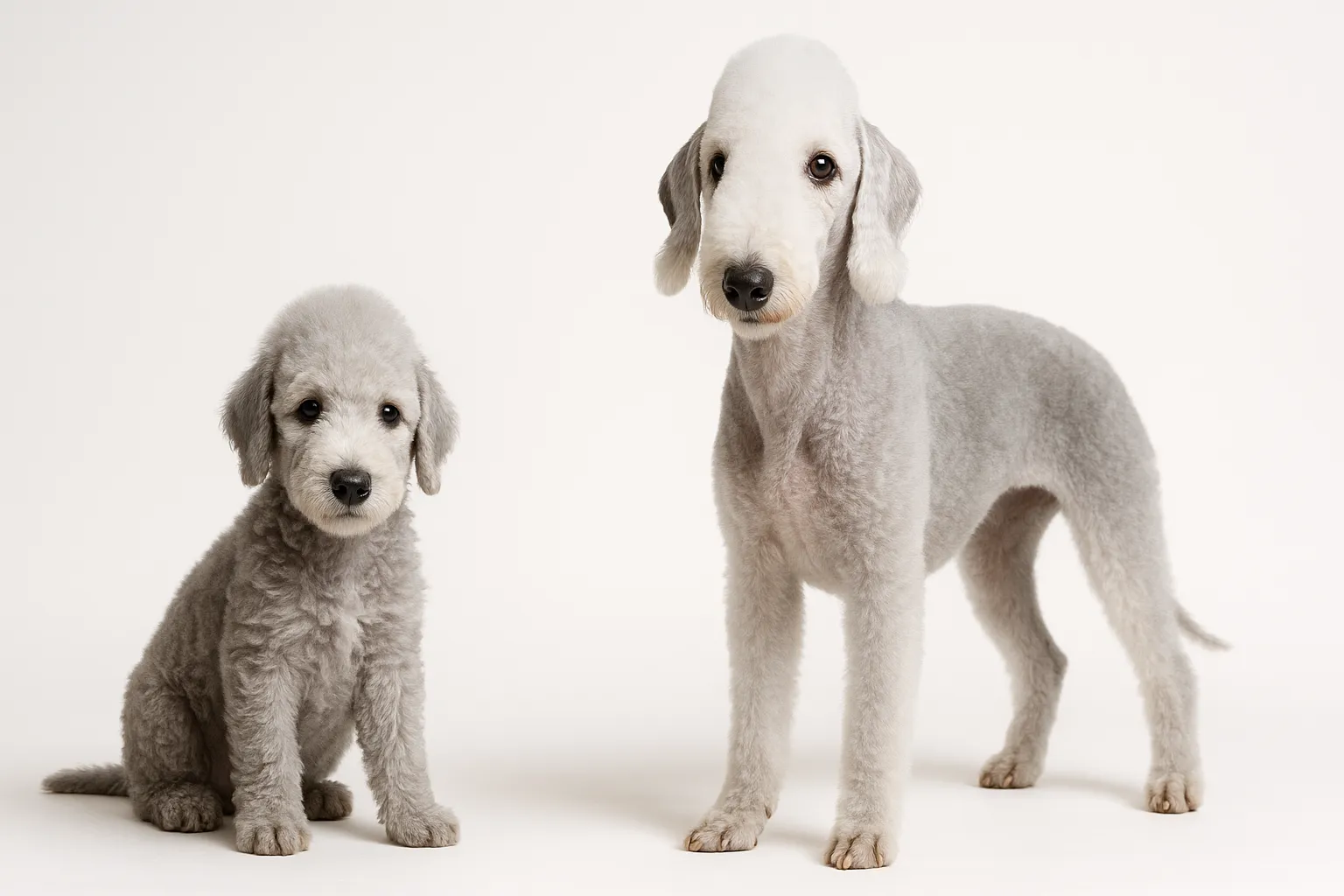
The Bedlington Terrier is one of the most visually distinctive dogs alive — arched back, pear-shaped head, curly coat, and a silhouette that resembles nothing so much as a small lamb. At 17-23 lbs with lifespans of 11-16 years, they are mid-sized terriers with excellent longevity potential. But beneath that gentle appearance lives a fast, athletic dog with genuine terrier drive and one inherited disease that defines their health care.
Copper-associated hepatopathy (copper toxicosis) is the single most important health concern in the breed. The COMMD1 gene mutation causes abnormal copper accumulation in liver cells, leading to progressive hepatitis and cirrhosis. Before DNA testing became available, this disease was a major cause of premature death. Today, every Bedlington puppy purchase should begin with a single question: what are the parents’ COMMD1 test results?
Key Health Challenges
Copper-Associated Hepatopathy: The Disease That Defines Bedlington Health
Copper toxicosis is the most critical inherited disease in Bedlington Terriers. The COMMD1 mutation causes abnormal hepatic copper accumulation that leads to progressive liver disease. DNA testing identifies the autosomal recessive mutation — clear, carrier, or affected. Affected dogs require a copper-restricted diet, D-penicillamine or trientine chelation therapy, and regular liver biopsies to monitor copper levels and disease progression.
Annual liver enzyme panels detect early liver inflammation. Responsible breeders produce only clear-to-clear or carrier-to-clear litters. This is a disease where genetic testing has genuinely transformed breed health.
See the Copper-Associated Hepatopathy guide for full prevention and management detail.
Retinal Disease: A Breed-Specific Form of Vision Loss
Retinal pigmentary epithelial (RPE) dystrophy is a breed-specific inherited retinal disease in Bedlington Terriers, distinct from the progressive retinal atrophy seen in other breeds. Affected dogs develop progressive retinal degeneration beginning in the first years of life. Annual CAER exams provide surveillance, and DNA testing for RPE dystrophy is available through breed-specific panels. The Bedlington Terrier Club of America tracks CAER data to guide breeding decisions.
See the Retinal Disease guide for full prevention and management detail.
Epilepsy: Rule Out the Liver First
Epilepsy occurs in Bedlington Terriers above baseline rates. Here is what makes seizure workup different in this breed: given the copper hepatopathy risk, hepatic encephalopathy must be ruled out before a diagnosis of idiopathic epilepsy is established. A dog seizing from liver-related toxicity needs a fundamentally different treatment than one with primary epilepsy. Anticonvulsant therapy with drug level monitoring every 6 months manages idiopathic cases.
See the Epilepsy guide for full prevention and management detail.
Practical Longevity Strategies
Copper Toxicosis: Your First and Most Important Health Decision
Every Bedlington puppy purchase should start with COMMD1 DNA test results from both parents. Affected dogs require lifelong copper-restricted diet and chelation therapy management. Even DNA-clear or carrier dogs benefit from annual liver enzyme monitoring — additional genetic variants affecting copper metabolism may not be captured by all test panels.
Work with a veterinarian who is familiar with Bedlington copper disease. Not all general practitioners have experience managing chelation therapy or interpreting the nuances of copper loading in this breed. If your vet is unfamiliar, ask for a referral to an internal medicine specialist.
The Terrier Under the Lamb Costume
Bedlington Terriers look gentle, but they retain core terrier drive. They are fast, athletic, and were historically used as racing dogs and for hunting otters. They need significant daily exercise and mental engagement despite their soft appearance. Agility, nose work, and earthdog trials are excellent outlets.
Prospective owners sometimes underestimate exercise needs based on appearance. A Bedlington needs genuine terrier-level engagement, not companion dog management. Get that wrong, and the behavioral fallout creates its own health consequences.
Grooming as a Lifetime Investment
The distinctive curly coat — a mixture of soft and harsh hair — requires professional grooming every 6-8 weeks for the characteristic lamb-like trim. Between trims, regular brushing prevents matting. The topknot, facial hair, and tasseled ears are trimmed to maintain the breed’s unique silhouette. Over a 13-16 year lifespan, consistent grooming represents a significant financial commitment worth budgeting from day one.
The Longevity Priorities That Move the Needle
The prevention priorities with the best evidence behind them for Bedlington Terrier owners:
- DNA testing for copper toxicosis (COMMD1 mutation) — the primary inherited disease in the breed
- Annual liver enzyme panel from age 2 — copper-associated hepatopathy requires ongoing surveillance
- Annual CAER eye exam — retinal pigmentary epithelial dystrophy documented in Bedlingtons
Frame your prevention investment around these targets. When resources are limited, these are where the evidence says to spend them first. See Copper Associated Hepatopathy, Eye Conditions, Seizures Epilepsy for the full clinical picture.
Evidence-Based Longevity Priorities
Precise Calorie Control for a High-Energy Small Breed
Optimal body condition extends healthspan by reducing cumulative disease load across multiple systems. Lean mass retention becomes critical around middle age when metabolic rate begins to slow. Bedlington Terriers burn energy fast, which means calorie governance must be precise — gradual drift is easy to miss in a dog that always seems active.
Condition-Focused Prevention Stack
The highest-return prevention targets are Copper Associated Hepatopathy, Eye Conditions, and Seizures Epilepsy. Proactive response to early signals preserves interventions that become unavailable once conditions progress.
Controlled Rhythm for a Reactive Temperament
Inconsistent schedules and uncontrolled arousal often show up first as behavior volatility, sleep fragmentation, or slower recovery. Controlled daily rhythm protects both neurologic and physical stability in a breed that runs hot temperamentally.
Preventive Screening Cadence
Use planned veterinary reassessment intervals, then tighten cadence when trend logs show drift in oral health and metabolic stability. Early intervention windows are where most healthspan gains are made.
Breed-Specific Research
Use these evidence deep dives to add mechanism-level context to your Bedlington Terrier longevity plan:
- Genetic Testing For Dogs Clinical Roi: COMMD1 copper toxicosis genetic testing and liver monitoring in Bedlington Terriers
- Senior Dog Screening Protocol: senior monitoring framework for a long-lived small terrier
- Annual Wellness Testing Protocol For Dogs: annual liver enzyme monitoring protocol for copper toxicosis surveillance
Making Genetic Testing Actionable
Genetic testing has the most value when results directly change what gets measured, how often, and what triggers escalation. Consider CERF eye exam or PRA gene testing to detect heritable eye disease alongside the essential COMMD1 panel.
- Use a breed-appropriate genetic panel as your foundation, but remember that genetic risk is not the same as clinical disease. Serial veterinary observations bridge that gap.
- Connect your first monitoring protocol to Copper Associated Hepatopathy and Eye Conditions — these are the conditions where test results should directly change what you do next.
- A running health log that combines lab work, clinical notes, and your daily observations gives your vet a clearer picture in five minutes than a full workup without history.
- Treat each annual exam as a chance to re-read your genetic data against fresh clinical findings. The same panel results carry different weight as your Bedlington Terrier ages.
A test result that does not change your next action is just information. Make every panel result translate into a specific monitoring decision.
Breeding History & Health Implications
The Bedlington Terrier was bred for high-intensity prey drive, tenacity, and reactive temperament — disguised inside one of the most unlikely-looking terrier packages imaginable. That working heritage, combined with the COMMD1 mutation that became fixed in the breed population, creates a health profile requiring liver-focused surveillance and terrier-appropriate management throughout adulthood.
- Prioritize surveillance based on breed heritage — Copper Associated Hepatopathy, Eye Conditions, and Seizures Epilepsy are the highest-probability targets that history and data both point to.
- When a mild concern surfaces more than once, the right response is earlier screening — not more watching and waiting.
- Course-correct regularly. The point of ongoing monitoring is not to confirm the original plan — it is to improve it as your dog’s health picture becomes clearer.
What the breed was built for tells you where to look. What your dog’s trend data shows tells you when to move.
When to Screen, Test, and Reassess
- Puppy: COMMD1 DNA testing, RPE dystrophy testing, baseline exam
- 1-2 years: OFA patella evaluation, initial CAER exam, annual liver enzyme panel
- 3-9 years: annual liver enzymes, annual CAER exam, wellness bloodwork
- 10+ years: biannual senior panel, liver monitoring, dental care
Nutrition That Supports a Longer Life
Bedlington Terriers with confirmed copper toxicosis (affected dogs) require strict copper-restricted diets — avoid organ meats, shellfish, and high-copper commercial foods. Even clear or carrier dogs benefit from moderate copper content diets as a precautionary measure. Quality small-breed adult food in measured portions maintains lean body condition. Annual liver monitoring guides dietary decisions for individual dogs.
What a Well-Managed Life Looks Like
Bedlington Terriers with COMMD1 genetic testing, annual liver monitoring, RPE dystrophy surveillance, and appropriate terrier enrichment can achieve excellent longevity of 13-16 years. DNA testing availability since 1999 has dramatically improved breed health outcomes — the difference between the breed’s past and present mortality profile is Evidence of what one genetic test can change.
The Early Signs Owners Miss Most
Healthspan erosion typically begins with subtle shifts that are easy to miss:
- Mild appetite fluctuation or intermittent lethargy that may signal early Copper Associated Hepatopathy — liver disease builds slowly before it presents acutely
- Hesitation in dim light or unfamiliar spaces that points to Eye Conditions progression
- Brief staring episodes or mild disorientation tied to Seizures Epilepsy — and remember, in this breed, seizures may indicate liver involvement
If baseline function has been drifting for 7-10 days, treat it as a prevention failure signal and reassess early.
Additional Health Risks to Monitor
Based on breed predisposition data, Bedlington Terrier owners should also be aware of:
Frequently Asked Questions
How long do Bedlington Terriers live?
Bedlington Terriers typically live 11-16 years. The most critical health investment is COMMD1 copper toxicosis DNA testing and annual liver enzyme monitoring.
What is copper toxicosis in Bedlington Terriers?
Copper toxicosis (copper-associated hepatopathy) is an inherited liver disease caused by the COMMD1 gene mutation. It causes abnormal copper accumulation in the liver and can progress to hepatic failure. DNA testing identifies affected dogs, and lifelong management with copper-restricted diet and chelation therapy is required for affected individuals.
Are Bedlington Terriers hypoallergenic?
They are low-shedding and sometimes described as suitable for allergy sufferers, but no dog breed is truly hypoallergenic. Their curly, mixed-texture coat sheds minimally but requires regular professional grooming to maintain health and appearance.
Why do Bedlington Terriers look like lambs?
The distinctive appearance — arched back, pear-shaped head, curly coat, topknot, and tasseled ears — results from selective breeding for visual distinction. Despite looking like lambs, they retain strong terrier drive and genuine athleticism beneath the grooming.
Are Bedlington Terriers good with other dogs?
They can be dog-selective, with same-sex aggression possible — especially in intact adults. Early socialization from puppyhood supports more tolerant adult behavior. Their terrier tenacity means conflicts can escalate quickly if not managed, so proactive socialization is important.
References
[1] Bedlington Terrier Club of America. bedlingtonamerica.com. [2] COMMD1 copper toxicosis: van de Sluis B et al. Nat Genet. 2002. [3] OFA health statistics. ofa.org. [4] AKC breed information. akc.org. [5] RPE dystrophy in Bedlington Terriers: Gould D et al. Vet Ophthalmol. 2003.
Related reads
Related Reading
Continue exploring