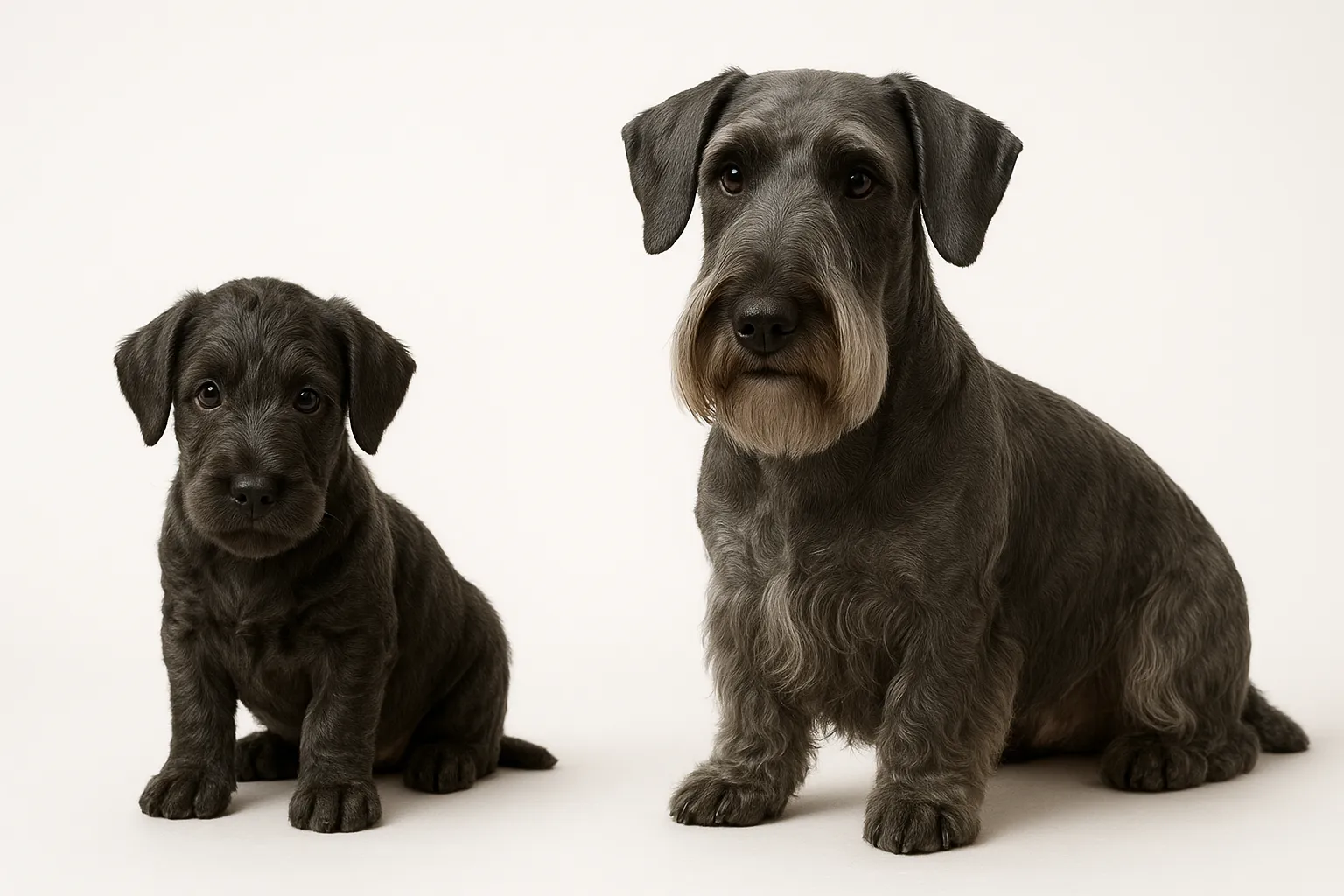
Small Dogs, Long Lives — But Not Without Attention
The Cesky Terrier is one of the rarest terrier breeds in the world — and one of the most deliberately engineered. Developed in 1948 by Czech geneticist Frantisek Horak by crossing Sealyham Terriers with Scottish Terriers, the Cesky was built to work in the dense Bohemian forests. That long, low body gives them their distinctive silhouette and their primary health liability: IVDD risk, shared with other chondrodystrophic breeds. They also carry susceptibility to Scotty cramp, a movement disorder inherited from their Scottish Terrier lineage. Typical lifespan runs 12-15 years.
The chondrodystrophic body plan (long back, short legs) means disc calcification and herniation risk are part of the package. Scotty cramp — a serotonin metabolism disorder causing temporary muscle hypertonicity during excitement or exercise — is documented in the breed. Epilepsy occurs at above-average rates. On the positive side, the Cesky is a relatively recent breed with reasonable genetic diversity for its small population size.
The Health Landscape for This Breed
Intervertebral Disc Disease (IVDD)
The Cesky Terrier’s long spine and short, angled legs predispose it to IVDD — the same body plan that creates risk in Dachshunds and Corgis. Jumping restrictions, ramp access instead of stairs, lean body condition, and controlled exercise all reduce risk. Any sudden onset of hindlimb weakness, back pain, or gait change warrants same-day veterinary evaluation. Disc herniation can progress rapidly.
See the Intervertebral Disc Disease (IVDD) guide for full prevention and management detail.
Skin and Coat Conditions
The Cesky Terrier’s soft, silky coat is unusual among terriers (most have harsh, wiry coats) and requires different grooming care. The breed can develop atopic dermatitis — environmental allergic skin disease — causing itching, skin redness, and recurrent ear infections. Regular grooming sessions serve double duty: coat maintenance and early skin change detection.
See the Skin and Coat Conditions guide for full prevention and management detail.
Epilepsy / Scotty Cramp
Cesky Terriers inherit susceptibility to Scotty cramp — a movement disorder causing temporary muscle hypertonicity (stiffening, arching) during excitement, exercise, or stress. Episodes last seconds to minutes, then resolve fully. While not a true seizure, it can look like one. True epilepsy also occurs in the breed. Any episode of collapse, muscle stiffening, or loss of consciousness warrants veterinary evaluation to distinguish Scotty cramp from epilepsy — the distinction matters for treatment.
See the Epilepsy / Scotty Cramp guide for full prevention and management detail.
Longevity Interventions That Have Data Behind Them
Scotty Cramp Management
Scotty cramp in Cesky Terriers results from altered serotonin signaling that affects muscle tone during arousal. Episodes are triggered by intense excitement, exercise, or stress. Management focuses on avoiding extreme excitement triggers — calm greetings, controlled exercise, reduced exposure to stressful situations.
The episodes are self-limiting and not painful. Dogs with severe Scotty cramp may benefit from veterinary management. Mild cases often require only trigger avoidance.
IVDD Prevention Protocol
As a chondrodystrophic breed, the Cesky Terrier benefits from the same IVDD prevention strategies that protect Dachshunds: ramps instead of stairs, no jumping to or from furniture, lean body condition, and controlled leash exercise. Dogs that have had one IVDD episode face significantly elevated risk of recurrence. After any episode, permanent activity restrictions and physical rehabilitation are appropriate.
Grooming the Soft Cesky Coat
The Cesky Terrier’s soft, silky coat is unusual among terriers and requires different care than typical harsh terrier coats. Brush 2-3 times weekly to prevent matting. Professional scissor clipping (not stripping, as with most terriers) every 6-8 weeks maintains the correct coat shape. The beard, eyebrows, and leg furnishings are left longer in the traditional Cesky style. Regular ear inspection is important given the drop ear conformation.
Start Here: Your Top Longevity Targets
These are the investments that pay the highest longevity dividend for a Cesky Terrier:
- Restrict jumping and stair climbing — IVDD risk from the long-backed chondrodystrophic body plan
- Monitor for Scotty cramp (muscle hypertonicity episodes) — documented in Cesky Terriers as in Scottish Terriers
- Annual CAER eye exam and annual wellness bloodwork from age 3
Build your annual wellness calendar around these targets. Review progress quarterly and shift resources toward whichever risk area is trending fastest. See Intervertebral Disc Disease Ivdd, Skin Allergies, Seizures Epilepsy for detailed protocols.
Evidence-Based Longevity Priorities
Body Composition and Muscle Maintenance
Keeping your Cesky Terrier lean and well-muscled is one of the highest-yield longevity interventions available. Lean mass retention becomes critical around middle age when metabolic rate slows. Terriers burn energy fast, so calorie governance must be precise — small overages accumulate into weight drift that increases IVDD risk with every pound.
Condition-Focused Prevention Stack
The highest-return prevention focus for Cesky Terriers starts with the conditions most likely to reduce lifespan or quality of life: Intervertebral Disc Disease Ivdd, Skin Allergies, Seizures Epilepsy. Acting at the first credible signal, rather than waiting for certainty, is what separates dogs who maintain function from those who lose it.
Behavior, Stress Load, and Recovery
Inconsistent schedules and uncontrolled arousal tend to surface as behavior volatility, sleep fragmentation, or slower recovery in Cesky Terriers. A controlled daily rhythm protects both neurologic and physical stability — and reduces Scotty cramp triggers.
Preventive Screening Cadence
Schedule veterinary reassessment intervals by age band and trend changes rather than waiting for obvious deterioration. Planned checkpoints focused on orthopedic function and gait quality improve early detection and intervention timing.
Breed-Specific Research
Use these evidence deep dives to add mechanism-level context to your Cesky Terrier longevity plan:
- Muscle And Mobility Longevity Protocol: spinal health management for a chondrodystrophic terrier breed
- Canine Obesity And Lifespan Evidence: weight management impact on IVDD risk in a long-backed breed
- Senior Dog Screening Protocol: proactive wellness monitoring for a rare terrier breed with neurological risk
Making Genetic Testing Actionable
Genetic testing in Cesky Terriers delivers the most value when results directly change what gets measured, how often, and what triggers escalation. Consider hip and elbow scoring (OFA or PennHIP) to quantify orthopedic risk and CERF eye exam or PRA gene testing to detect heritable eye disease as part of the initial assessment.
- Run a panel targeted to your breed’s most common conditions. Then confirm what the genetics suggest through ongoing clinical evaluation — the panel sets direction, not destiny.
- Start your monitoring plan with Hip Dysplasia and Dental Disease so every test outcome has a clear next step attached to it.
- Document weight, energy level, appetite patterns, and any changes you notice between vet visits. When combined with clinical data, home observations often reveal the earliest signs of drift.
- Plan reassessment points at each major life transition — post-growth, mid-life, and the senior threshold. Each stage reframes what your genetic data means for daily management.
The best use of any test is to make your next veterinary conversation more specific and your monitoring plan more targeted.
Breeding History & Health Implications
The Cesky Terrier was bred for prey drive and tenacity, with the structural modifications needed to work in dense forest undergrowth. That legacy created a long-backed body plan that demands proactive orthopedic surveillance in modern companion dogs.
- Breed heritage and population health data both point to Hip Dysplasia, Dental Disease, Eye Conditions as the surveillance priorities that deserve the tightest monitoring cadence.
- Treat repeat low-grade drift as a signal to tighten cadence early, not as background noise.
- Anchor your prevention plan to the latest data, not the original risk assessment. What your Cesky Terrier needed at two years old and what they need at eight are different conversations.
What the breed was originally built for shapes the risk landscape. What your individual dog’s trend data shows shapes the response plan.
Monitoring Schedule by Life Stage
- Puppy to 2 years: IVDD prevention routines, baseline CAER, dental start
- 3-8 years: annual CAER, wellness bloodwork, Scotty cramp trigger management, dental cleaning
- 9+ years: senior panel every 6 months, spine monitoring, cognitive assessment
What and How to Feed
Cesky Terriers do well on quality small-breed adult food. Lean body condition is critical for IVDD prevention — strict portion management prevents the weight creep that worsens spinal disease risk. Omega-3 supplementation may provide modest anti-inflammatory support.
What the Future Can Hold
Cesky Terriers with IVDD prevention lifestyle management, annual eye exams, and Scotty cramp trigger management are positioned for healthy lives in the 12-15 year range. Their relative rarity means finding health-tested breeding stock requires effort, but that effort is essential for the breed’s long-term genetic health.
Most-Missed Early Drift Pattern
Healthspan erosion in Cesky Terriers typically begins with subtle shifts that are easy to miss:
- Subtle hind-limb stiffness after rest linked to Hip Dysplasia — dismissed as temporary slowness
- A preference shift toward softer food mistaken for pickiness, actually masking Dental Disease progression
- Visible cloudiness, chronic redness, or navigation difficulty signaling Eye Conditions that become harder to reverse once established
If baseline function has drifted for 7-10 days, treat it as a prevention failure signal and reassess early.
Additional Health Risks to Monitor
Based on breed predisposition data, Cesky Terrier owners should also be aware of:
Frequently Asked Questions
How long do Cesky Terriers live?
Cesky Terriers typically live 12-15 years. IVDD prevention and lean body condition maintenance are the most important longevity strategies for this long-backed breed.
What is Scotty cramp in Cesky Terriers?
Scotty cramp is a movement disorder causing temporary muscle hypertonicity during excitement or exercise, lasting seconds to a minute, then fully resolving. It results from altered serotonin signaling and is managed by reducing extreme excitement triggers.
Are Cesky Terriers good apartment dogs?
Yes — Cesky Terriers are calmer than many terrier breeds, moderately sized, and adaptable to apartment living with daily walks and mental stimulation.
How is the Cesky Terrier different from a Scottish Terrier?
Cesky Terriers are longer and lower, with a softer silky coat (scissor-trimmed rather than hand-stripped), slightly heavier build, and cooperative pack working ability. They share Scottish Terrier ancestry and some health characteristics.
Are Cesky Terriers good with other dogs?
Cesky Terriers were bred to work cooperatively in packs — unlike most terriers they typically get along well with other dogs when socialized properly. This cooperative nature distinguishes them from more dog-reactive terrier breeds.
References
[1] Cesky Terrier Club of America. cesky-terrier.us. [2] AKC breed standards and history. akc.org. [3] Scotty cramp in terriers: Averill DR, de Lahunta A. JAVMA. 1973. [4] IVDD in chondrodystrophic breeds: Brisson BA. Vet Clin North Am. 2010. [5] OFA health statistics by breed. ofa.org.
Related reads
Related Reading
Continue exploring