How Long Dandie Dinmont Terriers Actually Live
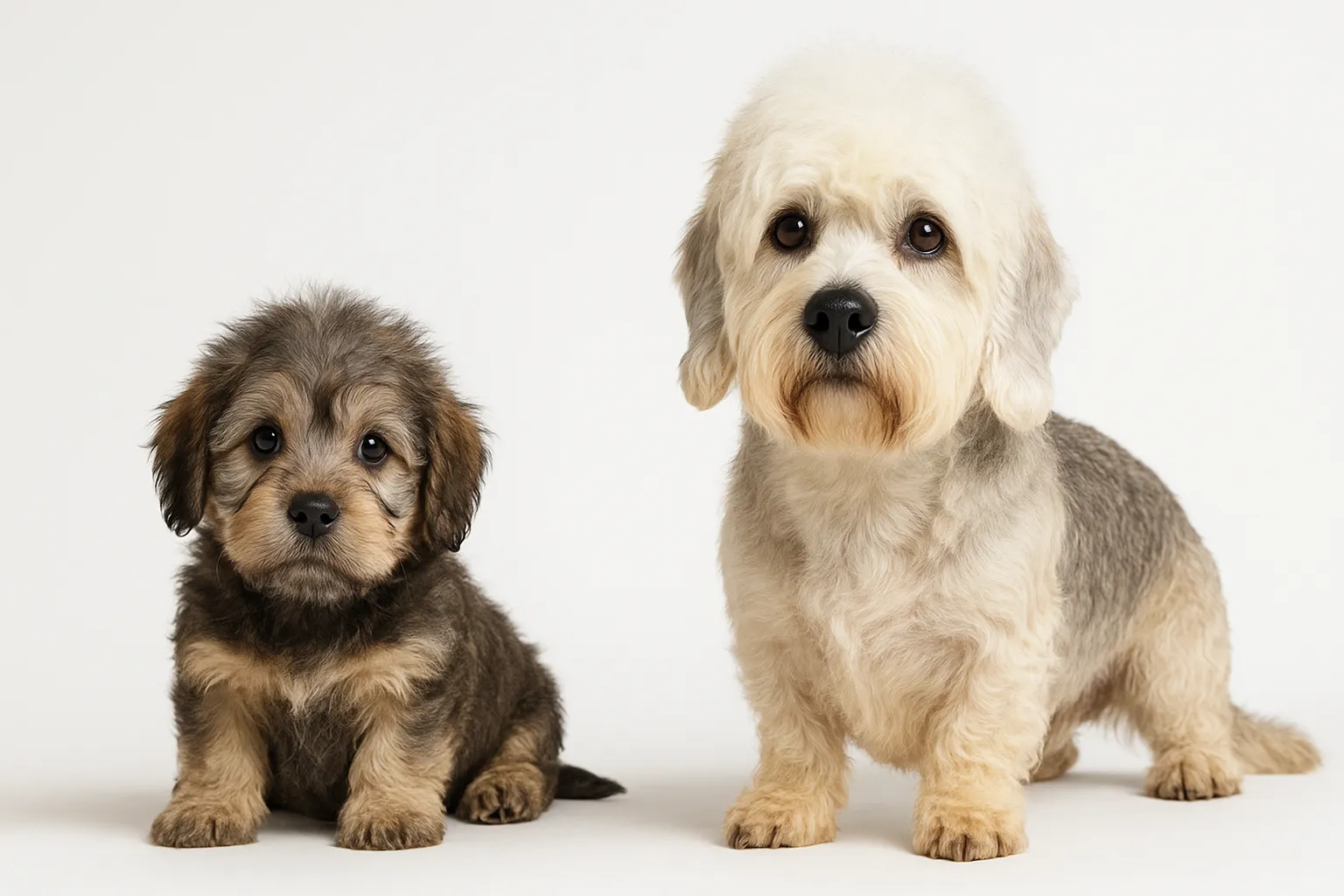
Named after a character in a Sir Walter Scott novel, the Dandie Dinmont Terrier is one of the rarest breeds in the world. Fewer than 100 puppies are registered annually in the US. That rarity makes understanding their health profile even more important.
Their distinctive long, low body on short curved legs — a body plan shared with Dachshunds — is the defining feature and the defining risk. That silhouette predisposes them to intervertebral disc disease. Glaucoma and hypothyroidism round out the top three concerns. With attentive management, most Dandies live 12 to 15 years.
The Health Conditions That Define This Breed
Intervertebral Disc Disease (IVDD)
The Dandie Dinmont’s elongated spine and short, angled legs create the same IVDD vulnerability seen in Dachshunds. This is not a theoretical risk — it is a structural certainty that demands daily management.
Restrict jumping and stair climbing. Use ramps for furniture access. Keep body condition lean, because every extra pound amplifies spinal compression forces in a long-backed dog. Swimming and controlled leash walking are the preferred exercise forms. Any sudden gait change, back pain, or hindlimb weakness warrants same-day veterinary evaluation.
See the Intervertebral Disc Disease (IVDD) guide for full prevention and management detail.
Glaucoma
Primary glaucoma occurs at elevated rates in Dandie Dinmont Terriers. Annual CAER eye exams include intraocular pressure (IOP) measurement, which can detect elevated pressure before clinical glaucoma develops.
Acute glaucoma — a sudden spike in IOP — causes severe eye pain and can destroy vision within 24 to 48 hours. Any sudden squinting, tearing, or eye pain in a Dandie Dinmont is a same-day emergency. This is never a wait-and-see situation.
See the Glaucoma guide for full prevention and management detail.
Hypothyroidism
Hypothyroidism appears at above-average rates in Dandie Dinmont Terriers. Annual thyroid panels (T4 + TSH) starting at age 4 catch the condition early. Signs include weight gain, lethargy, coat thinning, and cold intolerance. Oral levothyroxine therapy effectively restores normal function.
See the Hypothyroidism guide for full prevention and management detail.
What Actually Extends a Dandie Dinmont’s Life
Protecting the Spine Every Day
IVDD prevention in this breed is not a one-time decision. It is a daily lifestyle commitment. Ramps should replace stairs at every regular access point. Furniture jumping needs physical management — either preventing access or providing ramps.
Lean body condition matters more here than in most breeds. In a long-backed dog, even modest weight gain creates disproportionate spinal compression. Swimming and controlled walks are the safest exercise options. Any dog with a previous IVDD episode needs permanent activity modification.
Recognizing a Glaucoma Emergency
Glaucoma can escalate fast in Dandie Dinmont Terriers — from normal pressure to vision-threatening levels in hours. Know the signs: sudden squinting or eye closure, excessive tearing, cloudiness on the eye surface, obvious pain, and behavior changes suggesting distress.
If your Dandie shows any of these signs, seek emergency evaluation the same day. Permanent blindness can result from even a few hours of uncontrolled pressure.
Keeping Weight Off a Long Spine
Weight management is the single most impactful thing you can do to prevent IVDD in this breed. Even one to two pounds above ideal creates meaningfully elevated disc compression forces.
Monthly body condition scoring and strictly measured portions prevent the gradual weight creep that worsens spinal risk over time. Dandies can be surprisingly food-motivated, which makes overfeeding easy if you are not tracking intake carefully.
The Longevity Priorities That Move the Needle
The actions most likely to extend your Dandie Dinmont Terrier’s healthy years:
- Restrict jumping and stair use — IVDD risk is elevated in this long-backed, short-legged breed
- Annual CAER eye exam — Dandie Dinmonts have documented elevated glaucoma rates
- Annual thyroid panel from age 4 — hypothyroidism is documented in the breed
Make these the backbone of your Dandie Dinmont Terrier’s preventive care calendar. Each quarter, assess whether you are on track or need to escalate. Detailed protocols live in Intervertebral Disc Disease Ivdd, Glaucoma, Hypothyroidism .
Evidence-Based Longevity Priorities
Body Composition and Muscle Maintenance
For a Dandie Dinmont Terrier, body composition control predicts long-term function more reliably than almost any other single factor. Lean mass retention becomes critical around middle age when metabolic rate starts to slow. These terriers burn energy at a high rate, which means calorie governance must be precise to avoid gradual drift.
Condition-Focused Prevention Stack
The highest-return prevention targets for Dandie Dinmont Terriers are Intervertebral Disc Disease Ivdd, Glaucoma, and Hypothyroidism. Acting at the first credible signal, rather than waiting for certainty, is what separates dogs who maintain function from those who lose it.
Behavior, Stress Load, and Recovery
Dandies do best with consistent daily rhythms. Unpredictable schedules and uncontrolled arousal often appear first as behavior volatility, sleep fragmentation, or slower recovery. A stable routine protects both neurologic and physical stability.
Preventive Screening Cadence
Do not rely on crisis-driven veterinary visits. Routine screening intervals tied to spinal health, gait quality, and eye pressure catch subtle drift before it compounds into serious disease.
Breed-Specific Research
Use these evidence deep dives to add mechanism-level context to your Dandie Dinmont Terrier longevity plan:
- Muscle And Mobility Longevity Protocol: spinal and joint health management for a long-backed short-legged terrier breed
- Canine Obesity And Lifespan Evidence: weight management impact on IVDD risk in a chondrodystrophic body plan
- Annual Wellness Testing Protocol For Dogs: annual thyroid and eye pressure monitoring framework for Dandie Dinmonts
The Role of Genetic Testing in Prevention
Genetic testing delivers the most value when results directly change what you measure, how often, and what triggers escalation. Hip and elbow scoring (OFA or PennHIP) quantifies orthopedic risk as part of the initial assessment.
- Use genetic testing tailored to Dandie Dinmont Terrier risk factors as a starting point. Results should sharpen your monitoring plan, not replace the clinical observation that catches what genetics cannot predict.
- Anchor your initial monitoring to Intervertebral Disc Disease Ivdd and Glaucoma. Testing matters when it changes what you measure, how often, and what triggers escalation.
- Create a health timeline that follows your Dandie Dinmont Terrier across life stages. Include test results, clinical findings, medications, and home observations — it turns isolated data points into a readable trajectory.
- Genetic results mean different things at different ages. What looked like a low-risk finding at two years old may deserve closer monitoring by age seven when the clinical picture has changed.
The point of testing is not the result — it is what you do differently because of it.
Breeding History and What It Means Today
The Dandie Dinmont Terrier was bred for intense prey drive, tenacity, and reactive temperament. That heritage created structural and behavioral load patterns that demand proactive management in modern companion dogs.
- Their body structure requires tighter orthopedic monitoring cadence across adulthood.
- Focus your risk surveillance on Intervertebral Disc Disease Ivdd, Glaucoma, Dental Disease — these are the conditions where this breed’s ancestry creates the most actionable risk profile.
- Treat repeat low-grade drift as a signal to tighten monitoring early, not as noise to watch passively.
- Lock in a regular cadence for reviewing your monitoring plan — at minimum every three to four months. What you should be watching for at five years old is different from what mattered at two.
Breed heritage sets the surveillance priorities. Your Dandie Dinmont Terrier’s individual data tells you when to act.
Your Veterinary Screening Roadmap
- Puppy to 2 years: IVDD prevention routines established, CAER baseline, dental start
- 3-8 years: annual CAER with IOP, thyroid panel from age 4, spine health assessment
- 9+ years: senior panel every 6 months, glaucoma monitoring, cognitive assessment
Fuel for the Long Run
Strict weight management is non-negotiable for Dandie Dinmont Terriers. Their long spine absorbs the consequences of every extra pound. Feed measured portions of quality small-breed adult food. Avoid overfeeding. Omega-3 supplementation may provide modest anti-inflammatory support for spinal disc health.
What a Well-Managed Life Looks Like
Dandie Dinmont Terriers with IVDD prevention lifestyle management, annual eye pressure monitoring, and thyroid surveillance are well positioned for healthy lives in the 12 to 15 year range. Their rare status makes every well-cared-for Dandie a meaningful contribution to the breed’s preservation.
Subtle Signs You Might Be Missing
Healthspan erosion in Dandie Dinmont Terriers typically starts with small changes that are easy to normalize:
- An occasional stiff step or reluctance to move tied to Intervertebral Disc Disease Ivdd that appears intermittently
- Subtle squinting or eye sensitivity tied to Glaucoma that comes and goes
- Gradual drift toward Dental Disease signs that become harder to reverse: visible tartar, gum recession, or tooth loss
If baseline function is drifting for 7-10 days, treat it as a prevention failure signal and reassess early.
Additional Health Risks to Monitor
Based on breed predisposition data, Dandie Dinmont Terrier owners should also be aware of:
Frequently Asked Questions
How long do Dandie Dinmont Terriers live?
Dandie Dinmont Terriers typically live 12-15 years. IVDD prevention through activity management and lean body condition, plus annual eye exams, are the most important longevity investments.
Are Dandie Dinmont Terriers prone to back problems?
Yes — their long spine and short, curved legs create IVDD risk similar to Dachshunds. Restricting jumping, using ramps instead of stairs, and maintaining lean body condition significantly reduce IVDD risk.
Why is the Dandie Dinmont named after a fictional character?
The breed was made famous by Sir Walter Scott’s 1815 novel Guy Mannering, in which a farmer named Dandie Dinmont kept these terriers. The breed was already established before the novel; the publicity from Scott’s work popularized the name.
Are Dandie Dinmont Terriers good family dogs?
Dandies are loyal, gentle, and somewhat reserved — more dignified than many terrier breeds. They do well with respectful children and are calmer than most terriers. They bond closely to their household and are adaptable to various living situations.
How rare are Dandie Dinmont Terriers?
Very rare — fewer than 50-100 puppies are registered annually in the US, making the Dandie one of the rarest AKC breeds. The breed is on the Kennel Club’s vulnerable native breeds list in the UK.
References
[1] Dandie Dinmont Terrier Club of America health resources. ddtca.org. [2] IVDD in chondrodystrophic breeds: Brisson BA. Vet Clin North Am. 2010. [3] Glaucoma in terrier breeds: Gelatt KN. Vet Ophthalmol. 2004. [4] OFA health statistics by breed. ofa.org. [5] AKC breed standards. akc.org.
Related reads
Related Reading
Continue exploring