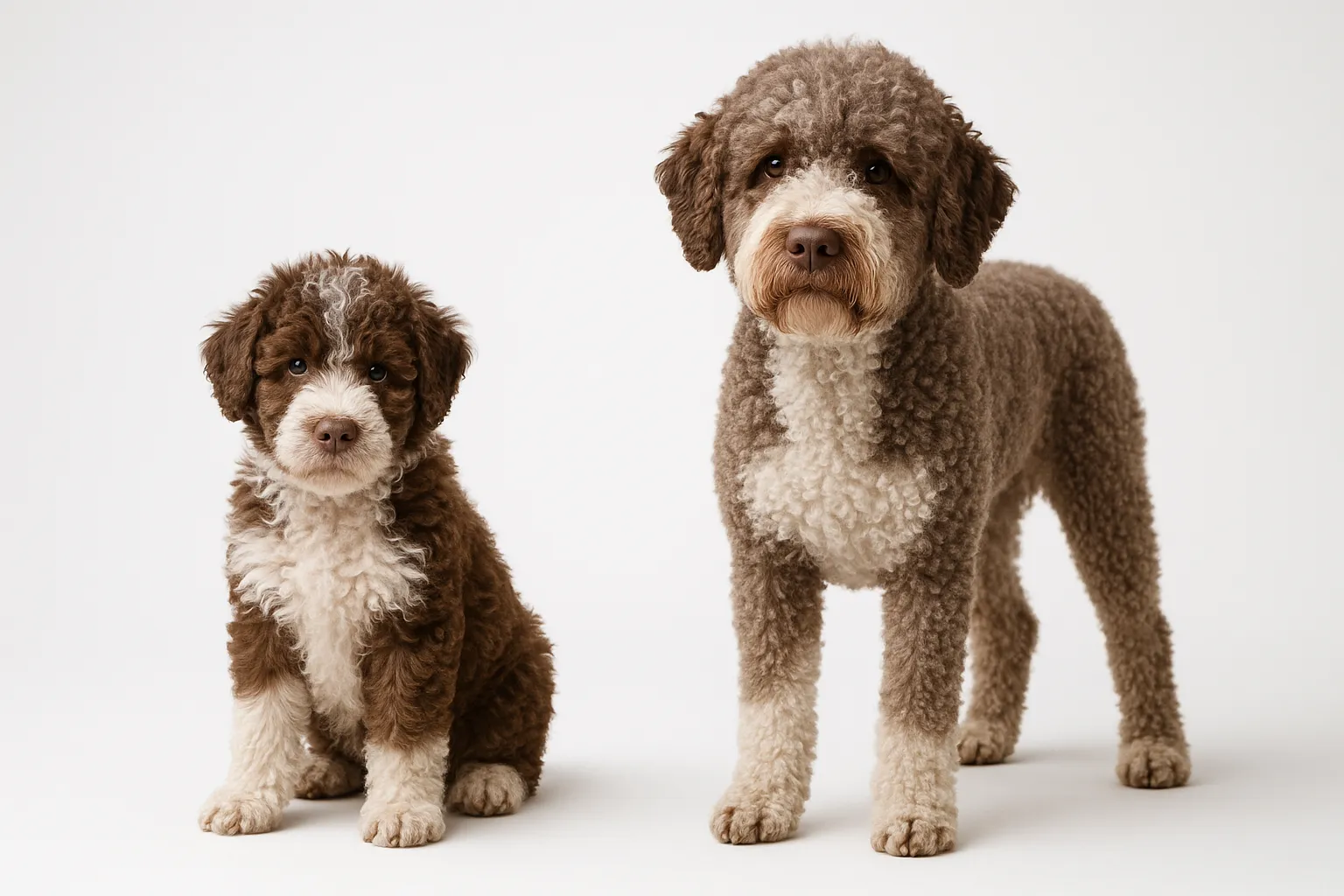
A Sporting Breed That Routinely Reaches 15
The Lagotto Romagnolo is an ancient Italian water dog that traded duck retrieval for a more unusual calling: truffle hunting. Curly-coated and medium-sized at 24-35 lbs, these dogs are among the longest-lived sporting breeds, routinely reaching 15-17 years. That lifespan reflects centuries of working heritage with relatively limited inbreeding — a genetic foundation that many modern breeds lack.
The breed’s most distinctive inherited condition is benign familial juvenile epilepsy (BFJE), which triggers seizures in puppies that typically resolve on their own by 8-13 weeks of age. While alarming to witness, BFJE does not cause permanent neurological damage in most cases. Adult-onset epilepsy is a separate concern entirely.
Hip and elbow dysplasia round out the primary health risks, and lysosomal storage disease appears rarely, with a DNA test available.
Where This Breed Is Most Vulnerable
Juvenile Epilepsy (BFJE)
BFJE is the breed’s signature inherited condition. Affected puppies experience seizure episodes from roughly 5-9 weeks of age that usually self-resolve before 4 months.
The autosomal recessive mutation behind BFJE is distinct from adult idiopathic epilepsy — knowing the difference matters. DNA testing identifies affected puppies, and responsible breeders test before pairing to avoid producing affected litters.
See the Juvenile Epilepsy (BFJE) guide for full prevention and management detail.
Hip Dysplasia
Hip dysplasia occurs at moderate rates in Lagotto Romagnolos. OFA hip evaluation at 24 months is recommended for all breeding stock. Because this breed stays active well into old age, even moderate dysplasia may become symptomatic under sustained exercise loads. Lean body condition and exercise moderation reduce long-term impact considerably.
See the Hip Dysplasia guide for full prevention and management detail.
Elbow Dysplasia
Elbow dysplasia appears at rates that warrant breeding attention. OFA elbow evaluation at 24 months, performed alongside hip evaluation, provides a comprehensive orthopedic baseline. Dogs diagnosed early benefit from joint-supportive management from the point of diagnosis forward.
See the Elbow Dysplasia guide for full prevention and management detail.
Strategies With Research Support
Give Their Nose a Job
Lagotto Romagnolos carry centuries of selective pressure for olfactory sensitivity and independent search drive. In companion dogs, that drive needs an outlet. Nose work, tracking, and scent detection activities provide species-appropriate mental enrichment that no amount of fetch can replace. Without scent work engagement, Lagottos often become anxious or destructive — not out of defiance, but because their primary cognitive system is understimulated. Enrolling in AKC scent work or nose work classes ranks among the highest-return enrichment investments for this breed.
Coat Care Across a 15-Year Life
The Lagotto’s curly, woolly coat never stops growing and requires trimming every 3-4 months to prevent matting. Regular brushing between trims keeps the coat from felting into dense mats. Over a 15-17 year lifespan, professional grooming costs accumulate — budget for quarterly appointments. The floppy, hair-filled ear canals trap moisture and need regular cleaning to prevent otitis, a common secondary issue in this breed.
Planning for a Very Long Senior Phase
A Lagotto that reaches 12 has a reasonable expectation of 3-5 more years ahead. That extended senior phase requires proactive planning. Begin senior care protocols at age 9-10: biannual wellness visits, annual dental cleaning, cognitive function tracking, and proactive pain assessment for orthopedic comfort. Dogs living into their mid-to-late teens may develop age-related hearing loss, lens cloudiness (nuclear sclerosis, distinct from cataracts), and cognitive changes. All are manageable with appropriate care and environmental adaptation.
The Prevention Plan That Pays Off
If you focus on three things for your Lagotto Romagnolo, make it these:
- DNA testing for benign familial juvenile epilepsy (BFJE) — the most breed-specific inherited condition
- OFA hip and elbow evaluation at 24 months — moderate prevalence in the breed
- Annual wellness bloodwork from age 8 — the breed frequently lives 15-17 years requiring proactive senior monitoring
Build your annual wellness calendar around these targets. Review progress quarterly and shift resources toward whichever risk area is trending fastest. See Hip Dysplasia, Juvenile Epilepsy, Elbow Dysplasia for detailed protocols.
Evidence-Based Longevity Priorities
Body Composition and Muscle Maintenance
Maintaining a stable weight trend and lean muscle mass ranks among the highest-yield longevity interventions available for this breed. As a medium-sized dog, body composition stability directly predicts orthopedic longevity and cardiovascular reserve. Bred for endurance work across varied terrain, Lagottos maintain better muscle quality when activity patterns stay consistent rather than sporadic.
Condition-Focused Prevention Stack
The highest-return prevention targets for Lagotto Romagnolos are Hip Dysplasia, Juvenile Epilepsy, and Elbow Dysplasia. Early, consistent intervention preserves option value and prevents the delayed-treatment drift that narrows clinical choices later.
Behavior, Stress Load, and Recovery
Lagotto owners see better long-term outcomes when daily activity is structured and recovery windows are protected. These bred-for-work dogs need consistent physical and mental output to maintain equilibrium. Erratic schedules produce erratic behavior — and that behavioral instability often signals physical decline before any clinical marker moves.
Preventive Screening Cadence
Schedule veterinary reassessment intervals by age band and trend changes rather than waiting for obvious deterioration. Planned checkpoints focused on orthopedic function and gait quality improve early detection and intervention timing — especially valuable in a breed that will need its joints for 15+ years.
Breed-Specific Research
Use these evidence deep dives to add mechanism-level context to your Lagotto Romagnolo longevity plan:
- Senior Dog Screening Protocol: extended senior monitoring framework for a breed that commonly lives 15-17 years
- Genetic Testing For Dogs Clinical Roi: BFJE genetic testing and other breed-specific screening in Lagotto Romagnolos
- Dental Disease And Longevity In Dogs: dental care across a very long lifespan in a medium-breed dog
Using DNA Data to Guide Prevention
In Lagotto Romagnolos, genetic testing delivers the most value when results link directly to monitoring cadence and owner execution — not when treated as predictive certainty. Consider hip and elbow scoring (OFA or PennHIP) to quantify orthopedic risk and CERF eye exam or PRA gene testing to detect heritable eye disease as part of the initial risk assessment.
- Run a panel targeted to your breed’s most common conditions. Then confirm what the genetics suggest through ongoing clinical evaluation — the panel sets direction, not destiny.
- Link your monitoring plan to Hip Dysplasia and Seizures Epilepsy first. When test results drive concrete changes in screening cadence or intervention, testing earns its cost.
- Document weight, energy level, appetite patterns, and any changes you notice between vet visits. When combined with clinical data, home observations often reveal the earliest signs of drift.
- Each time your Lagotto Romagnolo enters a new life stage or shows a persistent change in function, go back to the genetic data and ask what it means in the new context.
The best use of any test is to make your next veterinary conversation more specific and your monitoring plan more targeted.
What Breeding History Means for Your Dog
The Lagotto Romagnolo’s origins in sustained water retrieval and truffle hunting shaped a dog built for endurance across varied terrain. That working heritage created structural load patterns that demand proactive orthopedic surveillance throughout adulthood.
- Channel your prevention effort toward Hip Dysplasia, Seizures Epilepsy, Eye Conditions, the conditions where this breed’s genetic and functional history creates the greatest vulnerability.
- Subtle changes that recur are more diagnostically useful than dramatic one-time events. Track them, report them, and let your vet decide whether to investigate.
- Anchor your prevention plan to the latest data, not the original risk assessment. What your Lagotto Romagnolo needed at two years old and what they need at eight are different conversations.
The breed’s working heritage points to the highest-probability risks. Your dog’s individual trajectory determines the timeline.
The Screening Calendar That Matters
- Puppy: BFJE DNA testing, LSD DNA testing, monitor for juvenile seizures
- 2 years: OFA hip and elbow evaluation, CAER exam
- 3-9 years: Annual wellness bloodwork, CAER exam, coat maintenance quarterly
- 10+ years: Senior panel biannually, dental care annually, cognitive monitoring
Diet and Feeding Strategy
Lagotto Romagnolos do well on quality medium-breed adult dry food. Their truffle-hunting heritage means working dogs require higher caloric intake than sedentary companions — calibrate portions to actual activity level. Lean body condition throughout the long lifespan protects orthopedic health. Omega-3 supplementation supports coat and joint health. Clean ears regularly and avoid saturating them during bathing.
Putting It All Together
Lagotto Romagnolos are among the longest-lived sporting breeds, and their ancient genetics support that exceptional longevity. With genetic testing for BFJE, proactive orthopedic screening, regular grooming, and appropriate nose-work enrichment, most Lagottos can maintain excellent health well into their mid-teens. Few breeds offer owners this much time — the investment in proactive care pays dividends across a remarkably long partnership.
The Drift Pattern Most Owners Miss
Long-term decline in Lagottos often starts as small changes that owners normalize too quickly:
- Subtle hind-limb stiffness after rest related to Hip Dysplasia that owners dismiss as “just getting up slowly”
- Intermittent mild signs tied to Seizures Epilepsy that appear and resolve before anyone thinks to call the vet
- Gradual drift toward Eye Conditions signs that become harder to reverse: visible cloudiness, chronic redness, or navigation difficulty
If baseline function is drifting for 7-10 days, treat it as a prevention failure signal and reassess early.
Additional Health Risks to Monitor
Based on breed predisposition data, Lagotto Romagnolo owners should also be aware of:
Frequently Asked Questions
How long do Lagotto Romagnolos live?
Lagotto Romagnolos typically live 15-17 years, making them among the longest-lived medium-sized sporting breeds. Their ancient working genetics and limited inbreeding support exceptional longevity.
What is benign familial juvenile epilepsy in Lagottos?
BFJE causes seizures in Lagotto puppies typically from 5-9 weeks of age that usually resolve spontaneously by 8-13 weeks without lasting neurological damage. DNA testing identifies carriers and affected dogs. Responsible breeders test before pairing.
Are Lagotto Romagnolos good family dogs?
Lagottos are affectionate, intelligent, and moderately active — excellent family dogs for active owners. Their scenting drive requires nose-work enrichment. They are adaptable to various living situations but thrive with outdoor access and mental stimulation.
Can any dog hunt truffles or only Lagottos?
While other breeds can be trained for truffle detection, Lagotto Romagnolos have been selectively bred for centuries for the specific combination of olfactory sensitivity, digging drive, and persistence that makes them the gold standard for truffle hunting.
How often do Lagotto Romagnolos need grooming?
The Lagotto’s woolly curly coat needs trimming every 3-4 months to prevent felting and matting. Regular brushing between trims and quarterly professional grooming are appropriate maintenance for this breed.
References
[1] Lagotto Romagnolo Club of America. lagottous.com. [2] BFJE genetics in Lagottos: Jokinen TS et al. J Vet Intern Med. 2007. [3] OFA health statistics. ofa.org. [4] AKC Lagotto Romagnolo breed information. akc.org. [5] Italian breed history: Società Italiana Razze Acquatiche.
Related reads
Related Reading
Continue exploring