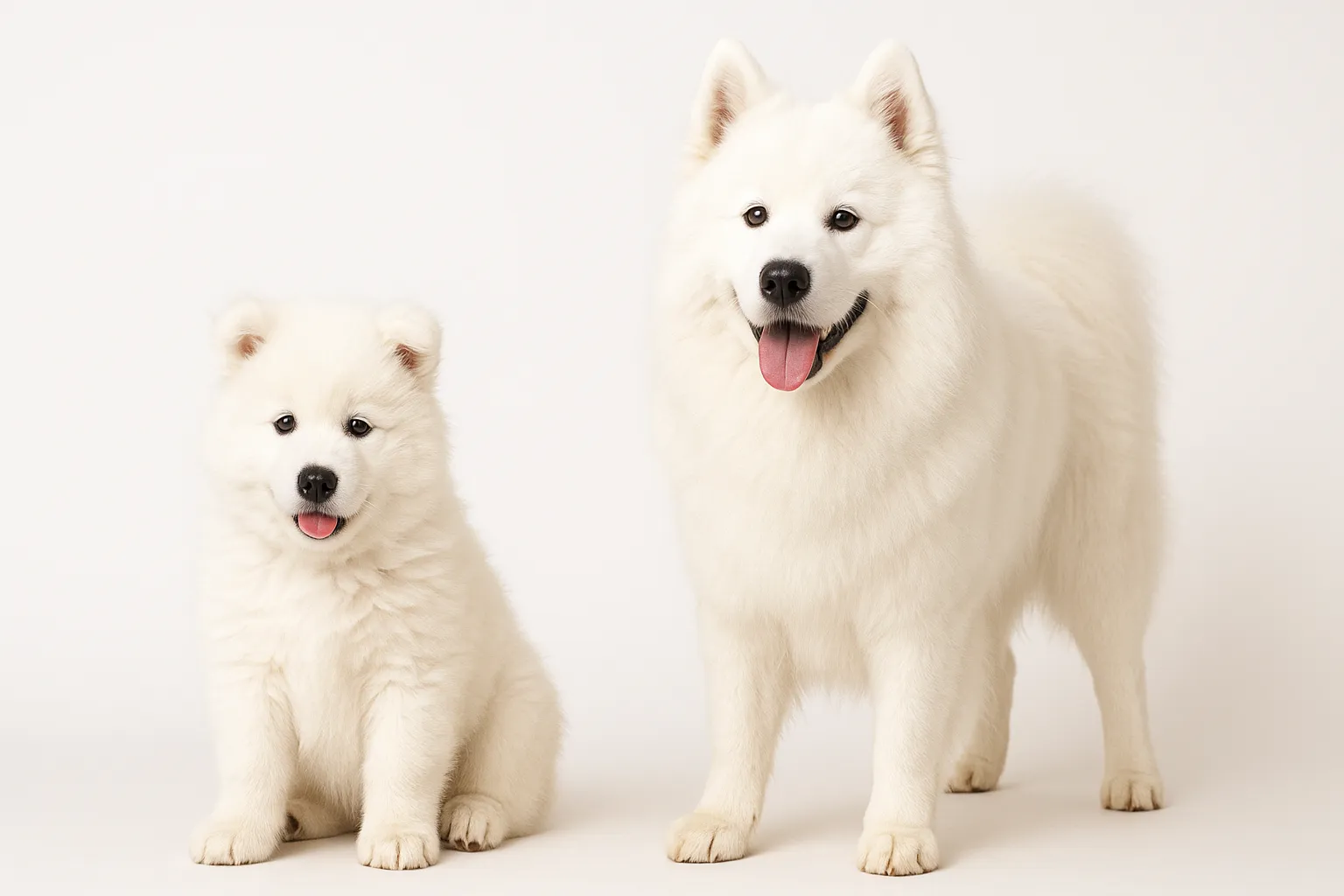
The Samoyed’s Longevity Profile
The Samoyed smile is famous. The Samoyed kidney disease is not — and that is a problem. Samoyeds typically live 12-14 years, a good range for a medium-to-large spitz breed. These working dogs were bred in Siberia for sled pulling, herding reindeer, and keeping nomadic Samoyedic peoples warm at night. They carry strong constitutions. But the breed also carries several specific health concerns, particularly Samoyed hereditary glomerulopathy (SHG), a progressive kidney disease that makes targeted monitoring more important here than for most other breeds.
SHG is an X-linked progressive kidney disease that causes early renal failure in affected males. DNA testing identifies carriers and affected dogs. Beyond SHG, hip dysplasia, diabetes, and hypothyroidism are the primary conditions that limit longevity. And that dense double coat — beautiful as it is — requires consistent grooming to prevent skin disease from developing beneath matted fur.
Health Risks Worth Knowing
Hip Dysplasia
Hip dysplasia affects approximately 7% of Samoyeds based on OFA data. That is lower than many breeds of similar size, but still clinically significant. OFA evaluation at 24 months is standard for breeding dogs. Weight management during growth and throughout adulthood remains the primary modifiable protective factor.
See the Hip Dysplasia guide for full prevention and management detail.
Diabetes
Diabetes mellitus occurs at above-average rates in Samoyeds compared to other breeds. Annual fasting glucose monitoring starting at age 4-5 catches the disease before diabetic ketoacidosis develops. Watch for the early clinical triad: increased water intake, increased urination, and increased appetite paired with weight loss.
See the Diabetes guide for full prevention and management detail.
Hypothyroidism
Hypothyroidism develops at elevated rates in this breed. Annual thyroid panels (T4, free T4, TSH) starting at age 3-4 provide the best detection window. Because hypothyroidism and diabetes can present with overlapping signs, combined metabolic screening is efficient and practical. Levothyroxine treatment is effective and well tolerated.
See the Hypothyroidism guide for full prevention and management detail.
Heart Disease
Pulmonic stenosis — a congenital narrowing of the pulmonary valve — is overrepresented in Samoyeds. Severity ranges from subclinical to severe. Annual auscultation detects murmurs associated with this condition. Echocardiography grades severity precisely. Mild cases may need no intervention. Severe cases benefit from balloon valvuloplasty. Dogs with known pulmonic stenosis need exercise restriction calibrated to their individual severity.
See the Heart Disease guide for full prevention and management detail.
Cancer
Cancer rates in Samoyeds are similar to or slightly above average for medium breeds. Annual physical exams with lymph node palpation, combined with owner awareness of early warning signs, provide the best available surveillance. Do not wait on any new mass — get it checked promptly.
See the Cancer guide for full prevention and management detail.
Longevity Interventions That Have Data Behind Them
SHG Testing and Renal Monitoring
Samoyed hereditary glomerulopathy is an X-linked progressive kidney disease that deserves every owner’s attention. Affected males typically show proteinuria by 3 months of age and progress to renal failure between 8-15 months. Carrier females are usually asymptomatic or develop mild disease. DNA testing identifies carrier status in breeding dogs and is essential for responsible Samoyed breeding. For pet owners of unknown genetic status, annual urinalysis starting at puppy wellness visits screens for early proteinuria. Microalbuminuria testing provides an even more sensitive early marker.
Coat and Skin Management
That dense double coat requires regular brushing — 2-3 times weekly, daily during shedding season — to prevent mats that trap moisture and cause underlying skin disease. Brush all the way to the skin, not just the surface layer. Annual professional grooming with de-shedding treatment reduces the maintenance burden significantly. Monthly bathing prevents sebum and debris accumulation. And never shave a Samoyed’s double coat. It disrupts thermoregulation, and the coat may not regrow properly.
Metabolic Screening Protocol
Given elevated rates of both diabetes and hypothyroidism, a combined metabolic screening panel makes sense: fasting glucose, full thyroid panel, and urinalysis, run annually from age 4 onward. These conditions can co-occur, and early detection of either one changes management significantly. Between annual screenings, watch for the diabetes triad — polydipsia (increased drinking), polyuria (increased urination), and polyphagia (increased hunger) with weight loss.
The Longevity Priorities That Move the Needle
The prevention actions most Samoyed owners should prioritize above all else:
- Screen for Samoyed hereditary glomerulopathy (hereditary nephritis) early — it is breed-specific and progressive
- Annual thyroid and diabetes screening from age 4 given elevated rates of both conditions
- OFA hip evaluation at 24 months and lifelong weight management to protect joint health
Center your next vet conversation on these priorities and adjust the plan quarterly based on what the data shows. See Hip Dysplasia, Diabetes, Hypothyroidism for condition-specific guidance.
Evidence-Based Longevity Priorities
Body Composition and Muscle Maintenance
Maintaining stable weight and lean muscle mass is one of the highest-yield longevity interventions available for a Samoyed. Body composition stability directly predicts orthopedic longevity and cardiovascular reserve. Their history of weight-pulling and guarding means muscle maintenance is not just aesthetic — it directly affects functional longevity and quality of life.
Condition-Focused Prevention Stack
The greatest healthspan gains come from focusing prevention on Hip Dysplasia, Diabetes, Hypothyroidism. Acting at the first credible signal, rather than waiting for certainty, is what separates dogs who maintain function from those who lose it.
Behavior, Stress Load, and Recovery
Household rhythm quality directly affects how a Samoyed ages. Inconsistent schedules and unclear role structure often manifest as behavior drift, vigilance patterns, or recovery problems long before physical decline becomes obvious.
Preventive Screening Cadence
Schedule veterinary reassessment intervals by age band and trend changes rather than waiting for obvious deterioration. Planned checkpoints focused on orthopedic function and gait quality improve early detection and intervention timing.
Breed-Specific Research
Use these evidence deep dives to add mechanism-level context to your Samoyed longevity plan:
- Annual Wellness Testing Protocol For Dogs: guides combined metabolic screening decisions for diabetes and thyroid monitoring
- Senior Dog Screening Protocol: framework for annual wellness testing in medium breeds
- Canine Obesity And Lifespan Evidence: evidence base for weight management and diabetes risk
Using DNA Data to Guide Prevention
Genetic testing has the most value when results directly change what gets measured, how often, and what triggers escalation this quarter. Consider hip and elbow scoring (OFA or PennHIP) for orthopedic risk and breed-specific cancer panel or tumor marker surveillance when available as part of the initial risk assessment.
- Target your testing to the conditions this breed actually gets. Then track findings over time — a genetic predisposition only matters when clinical evidence starts to confirm it.
- Tie your first monitoring plan to Hip Dysplasia and Diabetes so test results translate into practical follow-through.
- A running health log that combines lab work, clinical notes, and your daily observations gives your vet a clearer picture in five minutes than a full workup without history.
- The right monitoring cadence at two years old is wrong at nine. Recalibrate at every life-stage transition and whenever you see sustained drift in energy, appetite, or mobility.
The value of any test is determined by whether it changes what you do next — not by the information it contains.
Breeding History & Health Implications
The Samoyed was bred for guarding, draft work, and companionship in one of the harshest climates on earth. That Siberian heritage creates structural load patterns that demand proactive orthopedic surveillance, and the breed’s cancer susceptibility benefits from serial tumor surveillance in modern companion settings.
- Prioritize surveillance around Hip Dysplasia, Diabetes, Hypothyroidism based on history-informed risk triage.
- The owner who notices “something is slightly off for the third time this month” catches problems earlier than the one waiting for an obvious crisis.
- Course-correct regularly. The point of ongoing monitoring is not to confirm the original plan — it is to improve it as your dog’s health picture becomes clearer.
Let history guide what to watch first. Let trend data confirm what to change next.
What to Test and When
- Puppy to 2 years: SHG DNA test, urinalysis baseline, cardiac auscultation, OFA hip evaluation
- 3 to 6 years: annual thyroid panel, fasting glucose, urinalysis, coat and skin assessment
- 7+ years: biannual exams, renal function monitoring, cancer surveillance, cognitive monitoring
Diet and Feeding Strategy
Samoyeds benefit from complete, high-quality diets appropriate for their size. Given elevated diabetes risk, avoid high-glycemic diets and excess treats. Measured portions prevent the obesity that increases both diabetes risk and joint load. For dogs with confirmed or suspected SHG, veterinary-guided protein and phosphorus management becomes important as renal function declines.
The Healthspan Horizon
Samoyeds have strong longevity potential when breed-specific concerns — particularly SHG — are identified early and metabolic health is consistently monitored. Their Siberian working heritage supports good muscular conditioning and cardiovascular fitness with appropriate exercise. Owners who pursue genetic testing and commit to annual metabolic screening give their Samoyeds the best foundation for reaching the upper end of the 12-14 year range. The breed rewards diligence.
Most-Missed Early Drift Pattern
Healthspan erosion in a Samoyed typically begins with subtle shifts that are easy to miss:
- Hind-limb stiffness after rest related to Hip Dysplasia that gets dismissed as “just waking up”
- Increased urination attributed to aging that actually signals early Diabetes progression
- Gradual drift toward Hypothyroidism signs that become harder to reverse: significant weight gain, hair loss, and cold intolerance
If baseline function has been drifting for 7-10 days, treat it as a prevention failure signal and reassess early.
Frequently Asked Questions
What is Samoyed hereditary glomerulopathy?
SHG is an X-linked progressive kidney disease unique to Samoyeds. Affected males show protein in urine from early puppyhood and develop renal failure between 8-15 months. Carrier females are usually spared severe disease. DNA testing identifies carrier status before breeding.
Are Samoyeds prone to diabetes?
Yes. Samoyeds have above-average diabetes rates compared to most other breeds. Annual fasting glucose screening from age 4 allows early detection before diabetic complications develop.
Can you shave a Samoyed’s coat?
No. Shaving disrupts the natural double-coat insulation system, and the coat may not regrow properly, leaving the dog vulnerable to both heat and cold stress. Regular brushing and professional de-shedding are the correct approach.
Do Samoyeds get heart disease?
Pulmonic stenosis is the primary cardiac concern. Severity ranges from subclinical to significant. Annual cardiac auscultation detects murmurs, and echocardiography grades severity. Severe cases benefit from balloon valvuloplasty.
What genetic test is most important for a Samoyed?
Samoyed hereditary glomerulopathy (SHG) mutation screening is the highest-priority genetic test for both breeding dogs and pets, given the severity of disease in affected males.
References
[1] Samoyed hereditary glomerulopathy: Jansen et al. Kidney International 1986. [2] OFA health statistics by breed. ofa.org. [3] Samoyed Club of America Health Committee. samoyedclubofamerica.org. [4] WSAVA global nutrition guidelines. wsava.org. [5] Merck Veterinary Manual: Glomerular Disease. merckvetmanual.com.
Related reads
Related Reading
Continue exploring