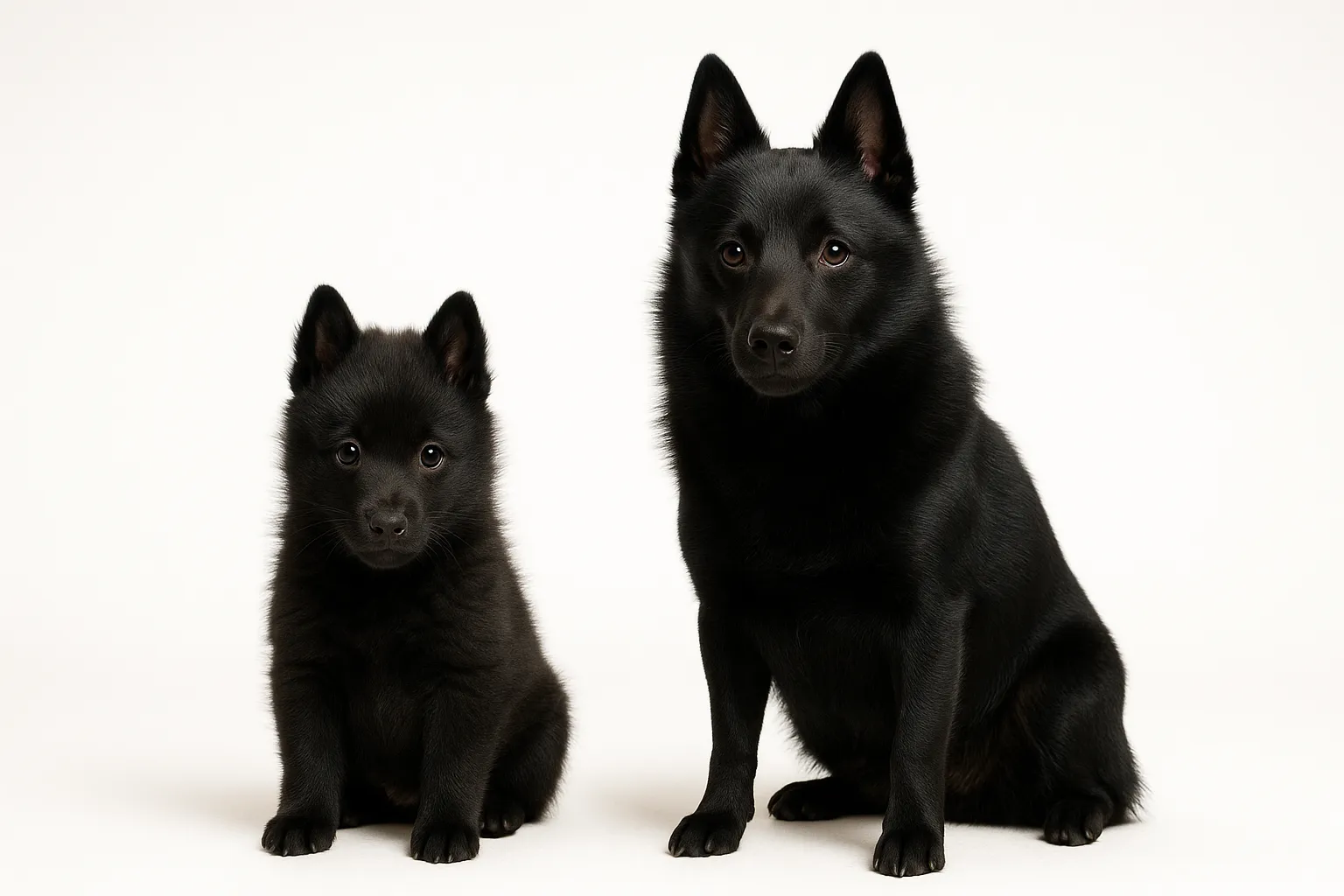
A Genetic Time Bomb Most Schipperke Owners Never Hear About
One DNA test separates a healthy 15-year companion from a puppy that deteriorates neurologically and dies by age 4. The Schipperke — a long-lived, energetic small dog that typically reaches 13-15 years — harbors mucopolysaccharidosis type IIIB (MPS IIIB, Sanfilippo syndrome), a lysosomal storage disease that causes progressive neurological deterioration and death in affected dogs. A single DNA test prevents it entirely.
For Schipperkes clear of MPS IIIB, the health picture brightens considerably. Hypothyroidism is the most practically significant ongoing concern, developing in middle age and responding well to treatment. Progressive retinal atrophy causes progressive blindness in affected dogs. Patellar luxation occurs at rates typical for small breeds.
The Health Conditions That Define This Breed
Hypothyroidism
Hypothyroidism develops at elevated rates in Schipperkes. The signs are familiar: weight gain despite stable intake, coat changes, lethargy, and cold intolerance. Annual thyroid panels (T4 + TSH) from age 4-5 catch the condition early. Daily levothyroxine supplementation effectively restores normal metabolic function and is well tolerated.
See the Hypothyroidism guide for full prevention and management detail.
Luxating Patella
Patellar luxation occurs in Schipperkes at rates typical for small breeds. Grades I-II are often managed conservatively with weight control and monitoring. Grades III-IV warrant surgical evaluation. If you notice an intermittent skipping gait or three-legged movement, schedule an orthopedic evaluation.
See the Luxating Patella guide for full prevention and management detail.
Progressive Retinal Atrophy
PRA in Schipperkes causes progressive vision loss that typically starts with night blindness and advances to complete blindness over months to years. DNA testing identifies affected and carrier dogs before clinical signs appear. Annual CAER examinations provide clinical monitoring alongside genetic screening.
See the Progressive Retinal Atrophy guide for full prevention and management detail.
Practical Longevity Strategies
MPS IIIB: The Test That Could Save a Life
MPS IIIB (Mucopolysaccharidosis Type IIIB) results from deficiency of the enzyme N-acetyl-alpha-glucosaminidase (NAGLU). Affected puppies appear normal at birth but develop progressive neurological signs — behavioral changes, ataxia — typically between ages 1 and 4. Death follows by age 4. DNA testing is available and should be performed on every breeding dog. Breeding two carriers produces 25% affected offspring. Responsible breeders test before pairing. If you are buying a Schipperke puppy, ask for MPS IIIB test results for both parents. This is non-negotiable.
Thyroid Management for Longevity
Hypothyroidism ranks among the breed’s most common age-related conditions. Left untreated, it reduces exercise tolerance, drives weight gain (which stresses joints and increases cardiac load), and degrades coat quality. Annual T4 + TSH screening from age 4-5 identifies subclinical dysfunction before it causes significant damage. Levothyroxine therapy is highly effective and low-risk — most dogs respond within 4-6 weeks and maintain normal function on treatment indefinitely.
Active Lifestyle Maintenance
Schipperkes are alert, curious, and wired for activity. Regular moderate exercise maintains muscle mass, supports metabolic rate, and provides the mental stimulation that keeps cognitive function sharp over a long lifespan. A breed that can live 14-15 years rewards owners who maintain physical and mental engagement from middle age forward — not just during the energetic puppy years.
Where to Focus Your Prevention Effort
These are the investments that pay the highest longevity dividend for a Schipperke:
- MPS IIIB (Sanfilippo syndrome type B) DNA testing — a fatal storage disease unique to Schipperkes
- Annual thyroid panel starting at age 4 given elevated hypothyroidism prevalence in this breed
- Patellar evaluation at 12-18 months and CAER eye exam annually
Anchor your next vet conversation to these targets and recalibrate every quarter. For prevention and management details by condition, use Hypothyroidism, Luxating Patella, Progressive Retinal Atrophy Pra.
Evidence-Based Longevity Priorities
Body Composition and Muscle Maintenance
Maintaining stable weight and lean muscle mass is one of the highest-yield longevity interventions for a Schipperke. Lean mass retention becomes especially critical around middle age when metabolic rate begins to slow. Consistent body condition monitoring prevents the metabolic and orthopedic drift that can erode quality of life.
Condition-Focused Prevention Stack
The conditions that most threaten longevity and quality of life — Hypothyroidism, Luxating Patella, Progressive Retinal Atrophy Pra — are also the ones most responsive to early, sustained prevention. Start here.
Behavior, Stress Load, and Recovery
Daily routine quality directly affects how a Schipperke ages. Predictable activity patterns and protected rest windows help maintain both cognitive and physical function across a 13-15 year lifespan.
Preventive Screening Cadence
Schedule veterinary reassessment intervals by age band and trend changes rather than waiting for obvious deterioration. Planned checkpoints focused on oral health and metabolic stability improve early detection and intervention timing.
Breed-Specific Research
Use these evidence deep dives to add mechanism-level context to your Schipperke longevity plan:
- Genetic Testing For Dogs Clinical Roi: evidence for DNA testing including storage disease screening in Schipperkes
- Annual Wellness Testing Protocol For Dogs: framework for thyroid panel timing and wellness monitoring
- Canine Cognitive Decline Early Action Plan: cognitive health maintenance for alert, active small breeds
From Genetic Data to Monitoring Decisions
Genetic testing should drive monitoring strategy, not replace it. Use results to tighten surveillance windows and calibrate intervention thresholds. Consider a CERF eye exam or PRA gene test for heritable eye disease as part of the initial risk assessment.
- Target your testing to the conditions this breed actually gets. Then track findings over time — a genetic predisposition only matters when clinical evidence starts to confirm it.
- Tie your first monitoring plan to Progressive Retinal Atrophy Pra and Hypothyroidism so test results translate into practical follow-through.
- A running health log that combines lab work, clinical notes, and your daily observations gives your vet a clearer picture in five minutes than a full workup without history.
- The right monitoring cadence at two years old is wrong at nine. Recalibrate at every life-stage transition and whenever you see sustained drift in energy, appetite, or mobility.
If a test result does not change what you measure, how often you screen, or what triggers escalation, it was premature.
Breeding History & Health Implications
The Schipperke was bred as a versatile small watchdog and ratter on Belgian canal boats and in shops. That diverse working background informs today’s health risks and prevention strategy.
- Prioritize surveillance around Progressive Retinal Atrophy Pra, Hypothyroidism, Seizures Epilepsy based on history-informed risk triage.
- The owner who notices “something is slightly off for the third time this month” catches problems earlier than the one waiting for an obvious crisis.
- Course-correct regularly. The point of ongoing monitoring is not to confirm the original plan — it is to improve it as your dog’s health picture becomes clearer.
Let history guide what to watch first. Let trend data confirm what to change next.
Age-Based Monitoring Milestones
- Puppy: MPS IIIB DNA test, PRA DNA test, CAER exam, patellar evaluation
- 3-7 years: annual thyroid panel, annual CAER, annual wellness bloodwork
- 8+ years: full senior panel including thyroid, renal, hepatic every 6-12 months
Nutrition That Supports a Longer Life
Schipperkes do well on a complete small-breed adult diet with controlled caloric density. Hypothyroid dogs require caloric management as their metabolism slows. Maintain BCS 4-5/9. Omega-3 supplementation supports coat, joint, and thyroid-related inflammation management.
What a Well-Managed Life Looks Like
Schipperkes whose MPS IIIB status is known — and who are clear or carrier-without-carrier partner — are long-lived dogs capable of reaching 14-15 years in strong condition. With annual thyroid monitoring and eye surveillance for PRA, the breed’s overall health picture is encouraging. The most important genetic risk is entirely avoidable through one test. Few breeds can say that.
Most-Missed Early Drift Pattern
Early disease progression in a Schipperke usually shows up as low-grade changes that owners attribute to normal aging:
- Hesitancy in dim light or bumping into furniture related to Progressive Retinal Atrophy Pra that gets dismissed as clumsiness
- Lethargy attributed to breed temperament or aging that actually signals Hypothyroidism progression
- A mild early sign tied to Seizures Epilepsy that appears intermittently and then vanishes
If baseline function has been drifting for 7-10 days, treat it as a prevention failure signal and reassess early.
Additional Health Risks to Monitor
Based on breed predisposition data, Schipperke owners should also be aware of:
Frequently Asked Questions
How long do Schipperkes live?
Schipperkes typically live 13-15 years. Key health investments are MPS IIIB DNA testing (to ensure the dog is not affected), annual thyroid monitoring from age 4, and eye exams for PRA detection.
What is MPS IIIB in Schipperkes?
MPS IIIB (Mucopolysaccharidosis Type IIIB) is a fatal lysosomal storage disease unique to Schipperkes. Affected dogs develop progressive neurological deterioration and die by age 4. DNA testing identifies affected and carrier dogs — responsible breeders test all breeding dogs before pairing.
Are Schipperkes difficult to train?
Schipperkes are intelligent but independent — they can be stubborn and require consistent, positive training methods. They excel at agility and obedience when motivated. Their watchdog instinct makes them alert but also prone to excessive barking without appropriate guidance.
Are Schipperkes good family dogs?
Schipperkes are loyal, curious, and energetic dogs that bond closely with family. They can be wary of strangers and protective of their household. They do well with older children and can coexist with other pets when properly socialized.
What does a Schipperke’s natural tail look like?
Schipperkes are naturally bobtailed or tailless — the tail gene produces variable expression from a natural short bobtail to complete absence. This is a breed characteristic, not a surgical dock.
References
[1] MPS IIIB in Schipperkes: Bhaumik M et al. J Clin Invest. 1999. [2] Schipperke Club of America health program. schipperkeclub-usa.org. [3] OFA health statistics by breed. ofa.org. [4] WSAVA global nutrition guidelines. wsava.org. [5] PRA genetics: Acland GM. Vet Ophthalmol. 1999.
Related reads
Related Reading
Continue exploring