Two of the Smartest Dogs in the Ring, One Unpredictable Coat
The Schnoodle combines two breeds that routinely outperform the rest of the canine world on trainability metrics. The Schnauzer — whether Miniature, Standard, or Giant — was bred as a versatile German farm dog: ratter, guard, herder, and companion all at once. The Poodle — Toy, Miniature, or Standard — was originally a water retriever with problem-solving capacity that remains unmatched in the sporting group. Cross them, and you get a dog that learns fast, remembers everything, and will test boundaries with the precision of a chess player.
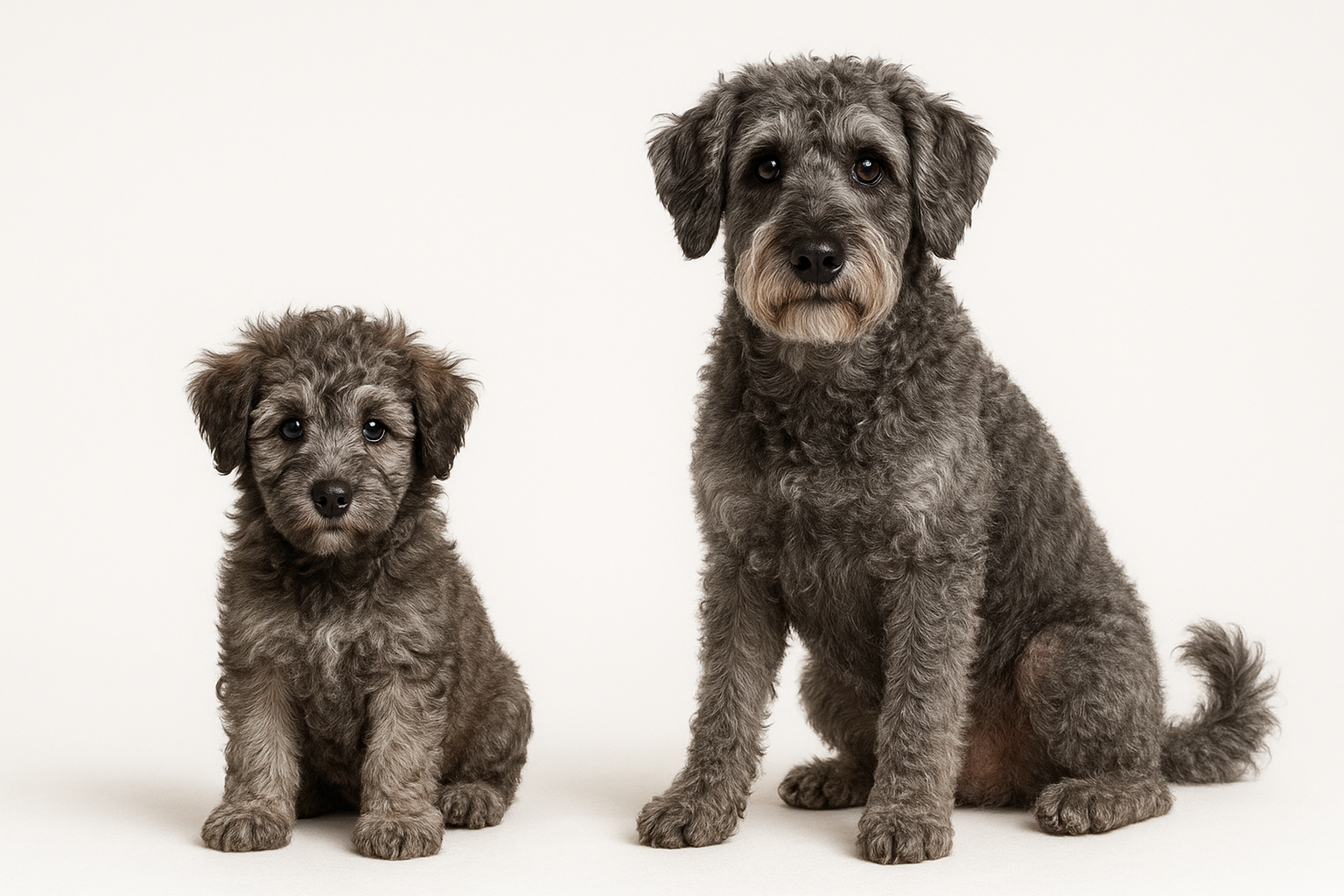
What makes Schnoodle longevity planning uniquely interesting is the enormous size range this cross produces. A Miniature Schnauzer crossed with a Toy Poodle creates a 10 to 15 lb dog with small-breed longevity patterns and dental disease as the primary concern. A Standard Schnauzer crossed with a Standard Poodle produces a 40 to 60 lb dog with large-breed orthopedic considerations and a different screening timeline. The 12 to 16 year lifespan range reflects this variability — smaller Schnoodles trend toward the upper end, larger ones toward the lower end, following the well-established inverse relationship between body size and canine lifespan [2].
The dogs who reach the upper end of their size-appropriate range are the ones whose owners identified which parent breed risks were most relevant to their individual dog’s size and structure, maintained lean body condition, protected pancreatic health through disciplined feeding, and provided the mental engagement that two working-intelligence lineages demand.
Hybrid Vigor: Two Smart Gene Pools, One Healthier Outcome
First-generation Schnoodles benefit from heterosis — the genetic diversity advantage of crossing two unrelated purebred lines. Research suggests F1 crosses show reduced incidence of certain recessive and autoimmune conditions compared to their purebred parents [2][4]. For Schnoodles specifically, this may mean lower rates of the immune-mediated conditions that affect both Schnauzers (pancreatitis, diabetes, hyperlipidemia) and Poodles (Addison’s disease, sebaceous adenitis).
However, conditions where both breeds contribute risk persist. Progressive retinal atrophy appears in both Schnauzer and Poodle lines. Hypothyroidism affects both breeds. Skin allergies are common across both lineages. And pancreatitis — while partially immune-mediated in Schnauzers — also has dietary and metabolic triggers that the cross does not eliminate. Screen as though both parent breed risk profiles apply.
Breed-Specific Risk Profile
Progressive Retinal Atrophy (PRA)
Both Schnauzers and Poodles carry elevated progressive retinal atrophy risk, making this a high-probability concern that hybrid vigor is unlikely to eliminate. PRA causes progressive photoreceptor degeneration leading to night blindness and eventual total vision loss. DNA testing can identify carrier status for known PRA variants (prcd-PRA in Poodles, Type A PRA in Miniature Schnauzers). Annual ophthalmologic exams detect clinical progression before functional vision is significantly compromised.
Luxating Patella
Smaller Schnoodles — those under 20 lbs — carry elevated luxating patella risk from both the Miniature Schnauzer and smaller Poodle parent lines. The kneecap intermittently slides out of its groove, causing skip-stepping, intermittent rear limb lameness, and progressive cartilage erosion. OFA patellar evaluation by 12 months establishes baseline grade. In larger Schnoodles, this risk diminishes but does not disappear entirely.
Pancreatitis
Miniature Schnauzers have the highest breed-specific pancreatitis prevalence in the canine world, driven partly by genetic hyperlipidemia. This predisposition carries into Schnoodle offspring. Pancreatitis presents as sudden vomiting, abdominal pain, anorexia, and lethargy — often triggered by high-fat meals, table scraps, or garbage ingestion. Chronic pancreatitis causes progressive exocrine damage that can lead to exocrine pancreatic insufficiency and diabetes. Dietary fat control is the primary prevention strategy. Avoid high-fat treats, table scraps, and sudden dietary changes.
Hypothyroidism
Both Schnauzers and Poodles show elevated hypothyroidism rates. Clinical signs — weight gain without dietary change, lethargy, bilateral coat changes, cold intolerance, and recurrent skin infections — develop gradually and are frequently attributed to normal aging. Annual thyroid panels starting at age 3 to 4 catch subclinical hypothyroidism before metabolic consequences compound. Early treatment with levothyroxine is straightforward and dramatically improves quality of life.
Skin Allergies
Both parent breeds carry elevated skin allergies risk, and the Schnoodle’s coat — which varies from wiry Schnauzer texture to curly Poodle texture — can trap allergens and moisture against the skin. Atopic dermatitis, contact sensitivity, and food allergies all appear in this cross. Persistent scratching, paw licking, ventral skin redness, and recurrent ear infections warrant systematic allergy workup rather than repeated antibiotic courses.
Dental Disease
Smaller Schnoodles face the dental disease burden common to all small breeds — crowded dentition, rapid tartar accumulation, and periodontal disease that drives systemic inflammation. Miniature Schnauzers rank among the breeds most affected by periodontal disease. Daily brushing from puppyhood and timely professional cleanings prevent the cascade from establishing.
The Longevity Priorities That Move the Needle
For most Schnoodle owners, these actions deliver the greatest return on health investment:
- Screen for eye disease inherited from both Schnauzer and Poodle lines — PRA genetic testing plus annual ophthalmologic exams provide complementary protection
- Manage pancreatitis risk through strict dietary fat control — no table scraps, no high-fat treats, consistent feeding protocols
- Maintain lean body condition and dental health throughout life — calibrated to your specific Schnoodle’s size
Eye health, pancreatic protection, and body composition are the three pillars of Schnoodle longevity [2][7][8].
Evidence-Based Longevity Priorities
Body Composition Across the Size Spectrum
Weight management strategy varies dramatically across the Schnoodle size range. A 12 lb Schnoodle needs toy-breed precision — portions measured in grams, weight tracked to the quarter-pound, caloric margins measured in single treats. A 50 lb Schnoodle needs large-breed joint protection — lean condition scoring, exercise calibrated to orthopedic findings, and muscle mass maintenance into senior years. Know which category your dog falls into and apply the corresponding standards.
Condition-Focused Prevention Stack
PRA, pancreatitis, hypothyroidism, and size-appropriate orthopedic screening represent the highest-yield intervention targets. Build your veterinary calendar around annual ophthalmologic exams, lipid panels for hyperlipidemia screening (especially in Miniature Schnauzer crosses), thyroid panels from age 3 to 4, and patellar or hip evaluation appropriate to your dog’s size.
Pancreatic Health Through Dietary Discipline
The Miniature Schnauzer’s genetic hyperlipidemia creates a uniquely specific dietary requirement in Schnoodles. Feed a consistent, moderate-fat diet. Never give table scraps or fatty leftovers. Avoid sudden dietary changes. If your veterinarian recommends lipid panel screening, follow the schedule — elevated triglycerides are a pancreatitis trigger that can be managed with dietary modification and, if necessary, medication.
Preventive Screening Cadence
Set routine veterinary checkpoints and escalate frequency when eye, pancreatic, thyroid, or orthopedic parameters show early drift. Lipid panels should be included in wellness bloodwork for Schnoodles with Miniature Schnauzer parentage.
Breed-Specific Research
Use these evidence deep dives to add mechanism-level context to your Schnoodle longevity plan:
- Eye Health Screening Frequency by Breed: ophthalmologic screening guidelines for breeds carrying PRA and cataract risk.
- Chronic Pancreatitis in Dogs: Evidence: pancreatitis prevention strategies and management protocols for high-risk breeds.
- Canine Hypothyroidism and Longevity Management: thyroid screening protocols for breeds with elevated hypothyroidism risk.
Genetic Testing: When It Matters
Genetic testing in Schnoodles delivers the most value when it identifies eye disease risk and metabolic predisposition.
- PRA panel (prcd-PRA and Type A PRA at minimum) determines whether progressive retinal atrophy is a realistic threat or a theoretical one. Positive results tighten ophthalmologic screening cadence immediately.
- Lipid panel establishes whether Schnauzer-inherited hyperlipidemia is present — a direct pancreatitis risk factor that guides dietary fat limits.
- Patellar evaluation (smaller Schnoodles) or hip screening (larger Schnoodles) by 12 to 24 months establishes orthopedic baseline.
- Build your monitoring playbook around Progressive Retinal Atrophy and Pancreatitis, so that every test result feeds into a specific follow-up action.
- Track everything in one place: test results, exam findings, medication changes, and what you notice at home.
Every genetic or diagnostic result should answer one question: what do I do differently starting now?
Breeding History and Health Implications
The Schnoodle combines a German farm utility dog (Schnauzer) with a French/German water retriever (Poodle). Both breeds were selected for intelligence, trainability, and versatility — traits that produce a dog with high cognitive demands and low tolerance for unstimulating environments. The Schnauzer’s guarding instincts and the Poodle’s social sensitivity create a dog that bonds deeply, reads household dynamics acutely, and needs structured engagement to age well.
- Direct your monitoring attention first to Progressive Retinal Atrophy, Pancreatitis, Hypothyroidism — these are the risks that both parent breed health histories identify as most probable.
- Treat repeat low-grade drift as a signal to tighten cadence early, not as background noise.
- Static prevention plans decay in value. The most effective owners treat their Schnoodle’s health plan as something that evolves with every vet visit and every home observation.
Breeding history narrows the search. Serial monitoring data makes the call.
Age-Based Monitoring Milestones
- Puppy to 2 years: PRA genetic testing, baseline ophthalmologic exam, patellar evaluation (small Schnoodles) or hip screening (large Schnoodles), establish feeding protocol with defined fat limits.
- 3 to 8 years: annual ophthalmologic exams, annual thyroid panels, lipid screening for Miniature Schnauzer crosses, dental assessment with professional cleanings on schedule.
- 9+ years: semi-annual veterinary visits, trend-based management for eyes, thyroid, and pancreatic function, cognitive assessment, senior bloodwork panel.
Longevity Outlook: Intelligence, Versatility, and the Longevity That Rewards Both
The Schnoodle’s longevity potential is among the highest of any cross, driven by the combination of two intelligent, physically capable breeds and genuine hybrid vigor from crossing unrelated gene pools. Smaller Schnoodles can reasonably target 14 to 16 years; larger ones 12 to 14 — both at the upper end of their respective size categories.
The Schnoodles who reach those upper targets share common threads: owners who identified PRA risk before vision loss began, maintained dietary discipline that protected pancreatic function, caught hypothyroidism before it became entrenched, and provided cognitive engagement that kept the dog’s exceptional brain active throughout life. The intelligence that makes Schnoodles remarkable also makes them vulnerable to cognitive decline if understimulated — and the Dog Aging Project data suggests that dogs with higher levels of social and cognitive engagement show fewer signs of age-related cognitive decline [4].
Most-Missed Early Drift Pattern
Long-term decline in Schnoodles often starts as small changes that owners normalize too quickly:
- Night blindness or hesitation in unfamiliar dim environments, signaling early Progressive Retinal Atrophy that owners attribute to unfamiliarity or anxiety
- A single episode of vomiting and anorexia after a fatty meal, dismissed as dietary indiscretion, actually representing the first clinical sign of Pancreatitis
- Gradual energy decline and weight gain attributed to aging, actually masking Hypothyroidism that is eminently treatable
If baseline function has drifted for 7 to 10 days, treat it as a prevention failure signal and reassess early.
Condition-Specific Monitoring Triggers
The difference between early detection and late diagnosis often comes down to recognizing these patterns:
- Progressive Retinal Atrophy: Night blindness is typically the first sign. If your Schnoodle hesitates at doorways in dim light, bumps into furniture in unfamiliar dark rooms, or has dilated pupils in normal light, schedule an ophthalmologic exam.
- Luxating Patella: Skip-stepping, intermittent rear limb lameness, or sudden yelping during direction changes — primarily in smaller Schnoodles.
- Pancreatitis: Vomiting, anorexia, abdominal pain (prayer position), and lethargy — especially after high-fat meals or dietary changes. Acute pancreatitis can escalate to life-threatening within hours.
- Hypothyroidism: Bilateral coat thinning, unexplained weight gain, lethargy, cold-seeking behavior, and recurrent skin infections.
- Skin Allergies: Persistent paw licking, ventral skin redness, recurrent ear infections, or seasonal pattern escalation. The Schnoodle coat can mask early skin changes — part the fur and inspect the skin directly.
- Dental Disease: Halitosis, gum redness, chewing reluctance, or face rubbing after eating — primarily in smaller Schnoodles.
12-Month Longevity Execution Plan
Use this quarterly framework to keep prevention proactive instead of reactive:
Quarter 1: Baseline and Risk Mapping
- Record starting weight and body condition score, complete PRA genetic testing and baseline ophthalmologic exam, and size-appropriate orthopedic screening
- Review the breed-specific risk profile with your veterinarian and set screening dates for lipid panel, thyroid baseline, and dental assessment
- Eliminate feeding variability: establish consistent moderate-fat diet, ban table scraps, define treat categories by fat content, and calibrate portions to ideal body condition
- Identify your Schnoodle’s size category and apply the corresponding monitoring protocol
Quarter 2: Adherence and Early Drift Control
- Audit first-quarter execution: where did the dietary plan hold, and where did fat control break down?
- If any tracked metric is drifting from baseline, increase monitoring frequency immediately
- Treat changes in vision confidence, appetite patterns, energy level, or skin condition as signals worth investigating
- Reassess calorie and fat intake against weight trend and adjust if drift is detected
Quarter 3: Midyear Reassessment
- Reassess which prevention strategies delivered measurable results and which need recalibration
- Match screening frequency to actual risk signals — if lipids were elevated, repeat panel and tighten dietary fat limits
- Modify exercise routines based on seasonal factors and current orthopedic and dermatologic status
- Schedule professional dental cleaning if tartar accumulation has progressed (smaller Schnoodles)
Quarter 4: Senior-Readiness Update
- Design year-two plan based on year-one findings
- Tighten the criteria that prompt a vet call using breed-specific patterns observed over the year
- Document lessons learned and translate into specific next-year commitments
- Repeat ophthalmologic exam and update PRA monitoring cadence based on findings
- Confirm thyroid status and plan next lipid screening interval
When to Escalate Fast
The following changes require urgent veterinary assessment:
- Acute vomiting with abdominal pain, anorexia, and lethargy — pancreatitis can progress to life-threatening systemic inflammation within hours
- Sudden appetite loss lasting more than 24 hours, especially with lethargy or withdrawal
- Sudden onset of labored breathing, collapse, or neurologic signs like circling, head tilt, or seizure activity
- Persistent GI distress: repeated vomiting, straining without production, or abdominal pain posturing
- Dramatic overnight change in how your dog moves, rests, or interacts with the household
Home Tracking Dashboard
A monthly review of these markers gives you the earliest possible signal that something is shifting:
- Body weight trend and body-condition score (calibrated to your Schnoodle’s size category)
- Vision confidence — ability to navigate in dim light, track moving objects, catch treats
- Appetite regularity and post-meal comfort (any discomfort after meals warrants attention)
- Energy level, exercise tolerance, and recovery patterns
- Skin and coat quality — texture changes, thinning, chronic irritation, ear health
- Dental comfort (smaller Schnoodles) — willingness to chew, breath quality, gum color
- Condition-specific drift markers tied to progressive retinal atrophy, pancreatitis, hypothyroidism
Fuel for the Long Run
Schnoodle nutrition must prioritize controlled fat intake to protect pancreatic health. Use the feeding guide appropriate to your Schnoodle’s size — Feeding Guide for Small Breeds, Feeding Guide for Medium Breeds, or Feeding Guide for Large Breeds — then apply a strict fat ceiling based on Schnauzer parentage. Layer targeted adjustments from Omega-3 Fish Oil for Dogs when inflammatory or skin targets are explicit, choosing lower-fat omega-3 delivery methods.
The cardinal rule for Schnoodle feeding: no table scraps, no high-fat treats, no exceptions. Pancreatitis prevention is a dietary discipline that pays dividends across a 12 to 16 year lifespan.
Frequently Asked Questions
Why is the Schnoodle size range so large? Schnoodles can result from crossing any size Schnauzer (Miniature, Standard, or Giant) with any size Poodle (Toy, Miniature, or Standard). A Miniature Schnauzer x Toy Poodle produces a 10 to 15 lb dog; a Standard Schnauzer x Standard Poodle produces a 40 to 60 lb dog. Each size combination has different health priorities and lifespan expectations.
Is my Schnoodle at risk for pancreatitis? If either parent is a Miniature Schnauzer, the risk is elevated. Miniature Schnauzers have the highest breed-specific pancreatitis prevalence, driven partly by genetic hyperlipidemia. Ask your veterinarian about lipid panel screening. Regardless of results, maintain a consistent moderate-fat diet and never give high-fat table scraps or treats.
How often should a Schnoodle have eye exams? Annual ophthalmologic exams by a veterinary ophthalmologist are the minimum standard, given that both parent breeds carry PRA risk. If PRA genetic testing reveals carrier or affected status, your ophthalmologist may recommend more frequent monitoring. General wellness exams do not substitute for specialist eye evaluation.
Do Schnoodles need a special diet? Not necessarily a prescription diet, but dietary fat must be controlled more carefully than in most breeds. Choose a consistent, moderate-fat food. Avoid sudden dietary changes, high-fat treats, and table scraps. If your Schnoodle has elevated triglycerides on bloodwork, your veterinarian may recommend specific dietary modifications or a prescription low-fat diet.
Are smaller Schnoodles healthier than larger ones? Smaller Schnoodles tend to live longer (14 to 16 years vs. 12 to 14 for larger ones), following the general canine size-lifespan relationship. However, smaller Schnoodles face higher dental disease and patellar luxation risk, while larger Schnoodles face more hip dysplasia risk. Neither size is universally “healthier” — they have different risk profiles requiring different monitoring priorities.
What is the most important longevity intervention for a Schnoodle? It depends on size. For smaller Schnoodles (under 20 lbs), dental care is the highest-yield intervention. For all Schnoodles regardless of size, dietary fat control to prevent pancreatitis and annual eye exams to catch PRA early are the interventions most likely to prevent premature quality-of-life decline.
Do Schnoodles need professional grooming? Yes. The coat varies from wiry to curly depending on which parent’s coat genes dominate, but nearly all Schnoodles require professional grooming every 6 to 8 weeks. Beyond appearance, matting traps moisture and allergens against the skin — a concern in a breed predisposed to skin allergies. Regular grooming is a health intervention.
References
[1] Miniature Schnauzer Health Information — AKC [2] Life expectancy, mortality, and longevity in companion dogs (Scientific Reports, 2024) [3] OFA CHIC Program [4] Dog Aging Project [5] AAHA Canine Life Stage Guidelines [6] Merck Veterinary Manual [7] WSAVA Global Nutrition Guidelines [8] Effects of Diet Restriction on Life Span and Age-Related Changes in Dogs (Kealy et al., 2002)
This content is for informational purposes only and does not constitute veterinary advice. Always consult a licensed veterinarian for decisions about your dog’s health care.
Related reads
Related Reading
Continue exploring