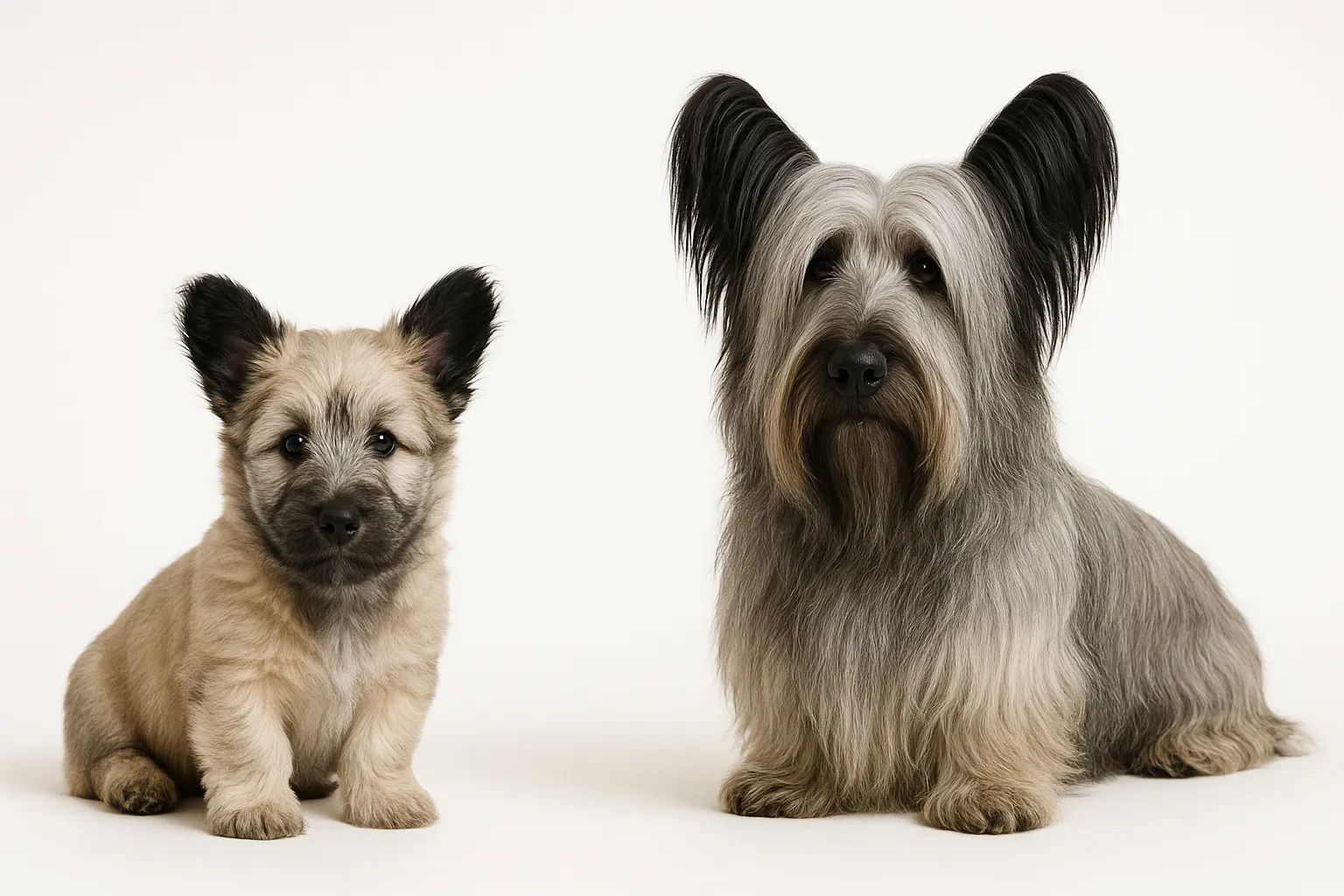
Twice as Long as Tall — and That Shape Creates Health Risks Found Nowhere Else
The Skye Terrier is one of the oldest Scottish terrier breeds and one of the rarest dogs alive. Bred on the Isle of Skye to hunt foxes and badgers, their body tells the story: twice as long as they are tall, low-set, with a distinctive flowing coat. That elongated build is not just cosmetic. It creates health considerations found in almost no other breed.
Lifespan runs 12-14 years. The breed’s most distinctive health feature is exceptional skeletal immaturity during growth — their bones remain soft and vulnerable far longer than other breeds. Skye Terrier disease, a hepatocellular condition causing liver dysfunction, affects a significant proportion of the breed and requires proactive monitoring. Hip dysplasia rounds out the primary structural concern for adults.
The Health Landscape for This Breed
Hip Dysplasia
Hip dysplasia occurs at elevated rates for a medium terrier breed. The Skye’s low, long body and restricted hip anatomy create unique mechanical stresses. OFA hip evaluation at 24 months provides a structural baseline. Weight management reduces mechanical stress on affected joints throughout life.
See the Hip Dysplasia guide for full prevention and management detail.
Liver Disease (Skye Terrier Disease)
Skye Terrier disease is a breed-specific hepatocellular condition causing elevated liver enzymes and eventual hepatic dysfunction. Annual liver function panels (ALT, ALP, bilirubin) from age 3 catch the problem early. Affected dogs may need dietary management, SAMe supplementation, and ongoing veterinary monitoring. The condition is recognized as a significant breed health concern by Skye Terrier breed clubs worldwide.
See the Liver Disease (Skye Terrier Disease) guide for full prevention and management detail.
Skin and Coat Conditions
The long double coat demands regular maintenance. Allergic dermatitis and seborrhea occur in the breed. The long ear feathering and body coat require monitoring for ear infections and skin fold irritation. Annual dermatological assessment catches skin disease before it becomes entrenched.
See the Skin and Coat Conditions guide for full prevention and management detail.
Practical Longevity Strategies
Skeletal Growth Protocol
This is the single most important thing a Skye Terrier puppy owner needs to know: restrict stair climbing, jumping, and rough play until 18 months of age. This is not excessive caution. It is breed-essential management.
Skye Terrier bones remain soft and cartilaginous significantly longer than other breeds. Premature loading can cause lasting skeletal deformity that affects the dog for the rest of its life. Ramps or steps should replace stairs for house access. Jumping onto or off furniture should be prevented until skeletal maturity at 18 months.
Liver Monitoring Protocol
Annual liver function panels starting at age 3 provide the best early detection for Skye Terrier disease. ALT and ALP elevations may be the first sign of underlying hepatocellular disease — sometimes appearing years before clinical symptoms. Dogs with confirmed liver disease benefit from low-copper diet management, SAMe supplementation, and regular ultrasound assessment of liver architecture.
Protect the liver proactively: minimize unnecessary hepatotoxic drug exposure. Avoid NSAID overuse and certain antibiotics in dogs with known hepatic vulnerability.
Coat and Grooming Discipline
The flowing coat needs brushing 2-3 times weekly to prevent mats. Check the ear feathering weekly for debris and odor — ear infections can develop under dense ear hair without visible signs. Bathe every 2-4 weeks with thorough drying to prevent skin issues under the dense coat. Many owners find a shorter maintenance trim more practical for daily management.
The Three Things That Matter Most
The prevention priorities with the best evidence behind them for Skye Terrier owners:
- Restrict jumping and stair use until 18 months — Skye Terrier skeletal development is uniquely prolonged and fragile
- Annual liver function panel from age 3 — documented liver disease predisposition in this breed
- OFA hip evaluation at 24 months — hip dysplasia is the primary structural concern
Frame your prevention investment around these targets. When resources are limited, these are where the evidence says to spend them first. See Hip Dysplasia, Liver Disease, Skin Allergies for the full clinical picture.
Evidence-Based Longevity Priorities
Body Composition and Muscle Maintenance
Body condition is the single most modifiable longevity factor for a Skye Terrier — every extra pound of fat amplifies risk across joints, heart, and metabolism simultaneously. Body composition stability directly predicts orthopedic longevity and cardiovascular reserve. Terriers burn energy at a high rate, making precise calorie governance essential to avoid gradual drift.
Condition-Focused Prevention Stack
The highest-return prevention investments for Skye Terriers target Hip Dysplasia, Liver Disease, and Skin Allergies. Starting treatment early — before clinical signs become entrenched — is the single most reliable way to preserve quality of life.
Behavior, Stress Load, and Recovery
Keeping workload, arousal, and rest deliberately structured prevents the cumulative stress load that accelerates aging in high-drive terrier breeds. Skye Terriers are calmer than many terriers, but they still benefit from intentional routine management.
Preventive Screening Cadence
Plan your vet visits before you need them, then compress the interval when your data shows something shifting. Early detection windows close faster than most owners expect.
Breed-Specific Research
Use these evidence deep dives to add mechanism-level context to your Skye Terrier longevity plan:
- Canine Size Lifespan Biology: skeletal development differences in low-built terrier breeds
- Annual Wellness Testing Protocol For Dogs: annual wellness panel including liver function monitoring framework
- Senior Dog Screening Protocol: progressive monitoring for a breed with known liver disease predisposition
How to Use Genetic Panel Results
Genetic testing in Skye Terriers should drive monitoring strategy, not replace it. Use results to tighten surveillance windows and calibrate intervention thresholds. A CERF eye exam or PRA gene testing to detect heritable eye disease is a reasonable starting point.
- Use a breed-appropriate genetic panel as your foundation, but remember that genetic risk is not the same as clinical disease. Serial veterinary observations bridge that gap.
- Anchor your initial monitoring to Intervertebral Disc Disease Ivdd and Liver Disease. Testing matters when it changes what you measure, how often, and what triggers escalation.
- A running health log that combines lab work, clinical notes, and your daily observations gives your vet a clearer picture in five minutes than a full workup without history.
- Treat each annual exam as a chance to re-read your genetic data against fresh clinical findings. The same panel results carry different weight as your Skye Terrier ages.
A test result that does not change your next action is just information. Make every panel result translate into a specific monitoring decision.
Breeding History & Health Implications
The Skye Terrier was bred for high-intensity underground hunting — pursuing foxes and badgers with tenacity and reactive courage. That heritage directly shapes the modern dog’s risk profile.
- Structural characteristics from the elongated, low-set frame require monitoring frequency calibrated to actual risk, not just annual wellness defaults.
- Focus your risk surveillance on Intervertebral Disc Disease Ivdd, Liver Disease, Skin Allergies — these are the conditions where this breed’s ancestry creates the most actionable risk profile.
- When a mild concern surfaces more than once, the right response is earlier screening — not more watching and waiting.
- Course-correct regularly. The point of ongoing monitoring is not to confirm the original plan — it is to improve it as your dog’s health picture becomes clearer.
What the breed was built for tells you where to look. What your dog’s trend data shows tells you when to move.
What to Test and When
- Puppy to 18 months: strict stair/jump restriction, skeletal development protection
- 18 months to 3 years: OFA hip evaluation, dental baseline, initial liver panel
- 3-8 years: annual liver function panel, dental cleaning, coat and skin assessment
- 9+ years: senior panel every 6 months, liver monitoring, mobility assessment
Nutritional Priorities for Healthspan
Skye Terriers with documented liver disease benefit from low-copper diets and may need prescription hepatic diets under veterinary guidance. For healthy Skye Terriers, quality medium-breed adult food is appropriate. Avoid excess treats with high copper content — shellfish and liver treats are the main culprits — given the breed’s hepatic vulnerability.
The Longevity Picture
Skye Terriers with proactive liver monitoring, strict puppy skeletal protection, and OFA screening are positioned for healthy lives in the 12-14 year range. As one of the rarest AKC breeds, each healthy Skye Terrier benefits from — and arguably deserves — meticulous preventive care.
Most-Missed Early Drift Pattern
Early disease progression in Skye Terriers usually presents as low-grade changes that owners attribute to normal aging:
- Intermittent signs tied to Intervertebral Disc Disease Ivdd — reluctance to jump, brief stiffness episodes that resolve
- Subtle compensation patterns that mask Liver Disease progression: gradual behavioral changes attributed to aging rather than organ decline
- Gradual drift toward Skin Allergies signs that become harder to reverse: chronic hot spots, secondary infections, and coat degradation
If baseline function is drifting for 7-10 days, treat it as a prevention failure signal and reassess early.
Additional Health Risks to Monitor
Based on breed predisposition data, Skye Terrier owners should also be aware of:
Frequently Asked Questions
How long do Skye Terriers live?
Skye Terriers typically live 12-14 years. Liver disease monitoring and skeletal growth protection during puppyhood are the most critical breed-specific longevity investments.
Why can’t Skye Terrier puppies climb stairs?
Skye Terriers have an unusually prolonged skeletal maturation period — their bones remain soft and prone to deformity from mechanical loading until 18 months of age. Stairs, jumping, and rough play during this window can cause lasting skeletal damage that affects the dog’s entire life.
What is Skye Terrier disease?
Skye Terrier disease refers to a documented hepatocellular condition causing liver enzyme elevations and eventual dysfunction in a significant proportion of Skye Terriers. Annual liver function panels allow early detection and management.
How rare are Skye Terriers?
The Skye Terrier is one of the rarest AKC-recognized breeds, with fewer than 40-50 puppies registered annually in the United States. The breed is critically endangered as a native Scottish breed and is listed on the Kennel Club’s Vulnerable Native Breeds list.
Do Skye Terriers shed a lot?
Skye Terriers shed moderately. The long double coat requires regular brushing to manage loose hair and prevent matting. They are not considered heavy seasonal shedders compared to double-coated Nordic breeds.
References
[1] Skye Terrier Club of America. skyeterrierclubofamerica.org. [2] Skye Terrier disease hepatocellular: Teske E et al. Vet Q. 1999. [3] OFA health statistics by breed. ofa.org. [4] Skeletal development in low-built terrier breeds: Hazewinkel HAW. Vet Clin NA. 1989. [5] AKC Skye Terrier breed information. akc.org.
Related reads
Related Reading
Continue exploring