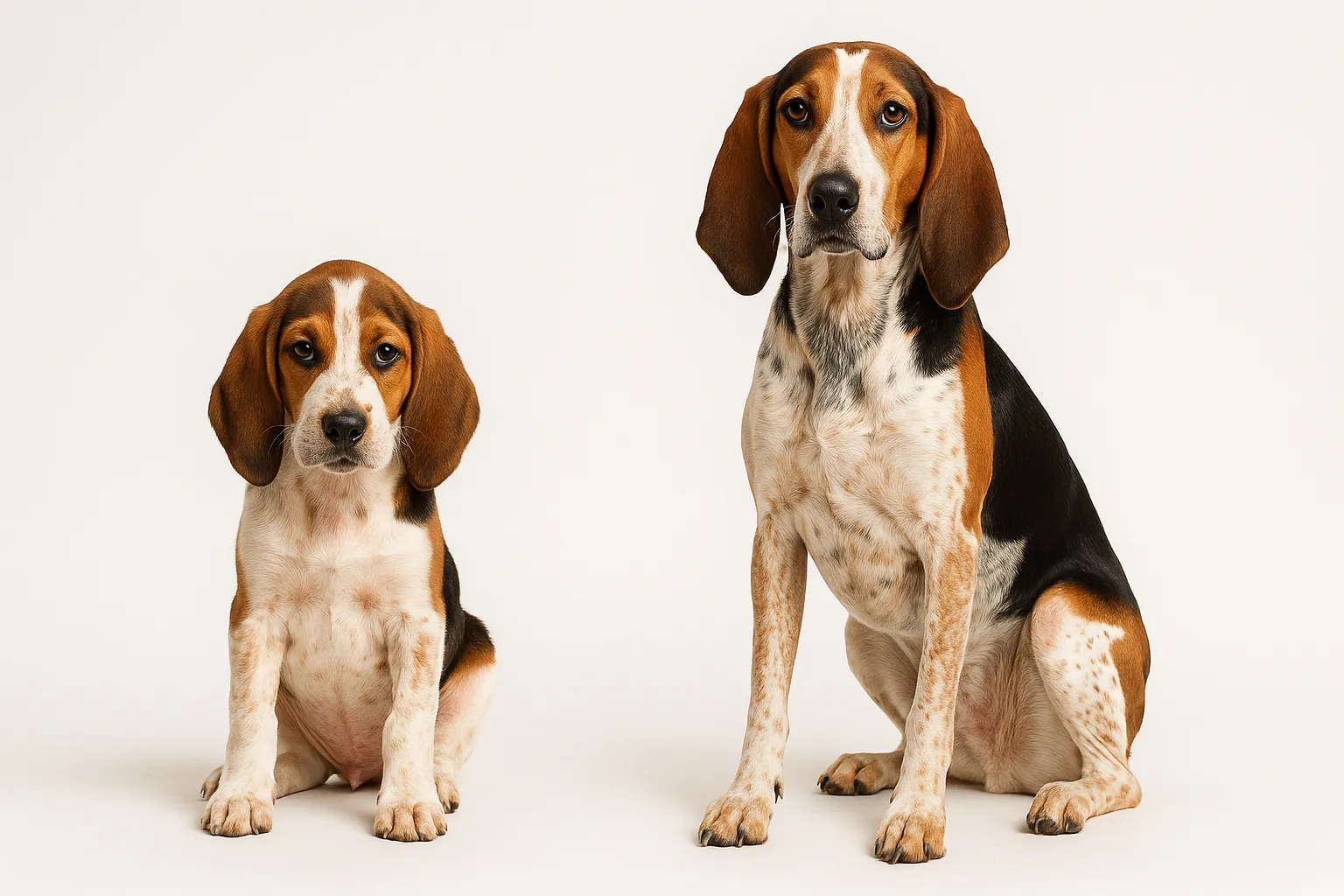
The Dual-Purpose Hound Built for Day and Night
American English Coonhounds are one of the few coonhound breeds bred for both fox hunting by day and raccoon tracking by night. Descended from English foxhounds imported to Virginia in the 18th century, they were maintained as working field hounds with the athleticism to do two jobs well.
That dual-purpose heritage gives them a typical lifespan of 11-12 years, following the standard large working hound pattern. No prominent breed-specific single-gene disorders have been documented as of 2026, which is relatively good news. The conditions you need to manage are practical ones: hip dysplasia, chronic ear infections from those pendulous hound ears, and GDV risk from the deep chest.
The Health Landscape for This Breed
Hip Dysplasia: Moderate and Manageable
Hip dysplasia is documented at moderate rates for a large working hound. OFA hip evaluation at 24 months provides structural baseline. Lean body condition is the single most impactful modifiable protective factor.
See the Hip Dysplasia guide for full prevention and management detail.
Ear Infections: The Weekly Commitment
Those long, pendulous hound ears look distinctive, but they create persistent otitis externa risk by trapping moisture and restricting air circulation. Weekly inspection and cleaning prevents infection. Post-water care is essential for working dogs. Persistent infections require culture-guided treatment rather than empiric antibiotic cycles.
See the Ear Infections (Otitis Externa) guide for full prevention and management detail.
Bloat (GDV): Preventable with Planning
The deep-chest anatomy creates GDV risk. Prophylactic gastropexy at spay/neuter eliminates volvulus risk. Twice-daily feeding and avoiding vigorous activity after meals provide additional protection.
See the Bloat (GDV) guide for full prevention and management detail.
What the Evidence Says About Living Longer
Fitness for a Dog That Hunts Day and Night
American English Coonhounds were bred for both daytime fox hunting speed and nighttime raccoon tracking endurance — a demanding dual athletic requirement that few breeds can match. Maintaining physical fitness through consistent daily exercise preserves the muscle mass and cardiovascular capacity that supports longevity.
Unlike hound breeds that have transitioned to purely companion roles, these dogs benefit from regular scent work and field activity that engages their dual tracking heritage. They were built to move, and they stay healthiest when they do.
Five Minutes a Week Prevents Chronic Problems
Combining weekly ear care with regular dental hygiene addresses the two most commonly neglected areas in working hound breeds. Dental disease in large breeds contributes to bacteremia and systemic inflammation. Ear disease causes pain and reduces quality of life. Both are preventable with consistent 5-10 minute weekly care routines.
Containment Is a Longevity Factor
American English Coonhounds have a powerful tracking instinct and should not be trusted off-leash in unfenced environments. Secure fencing, leash management, and microchipping reduce the significant injury and loss risk that comes with scent-driven escape behavior. Safe containment is not a convenience issue — it is a direct longevity factor.
The Prevention Plan That Pays Off
These are the investments that pay the highest longevity dividend for a American English Coonhound:
- OFA hip evaluation at 24 months given moderate hip dysplasia prevalence
- Weekly ear cleaning — hound ear anatomy requires consistent preventive care
- Prophylactic gastropexy for GDV risk management in this deep-chest breed
The conditions listed above are where proactive monitoring pays the highest dividend for this breed. Make them the backbone of your prevention plan. See Hip Dysplasia, Ear Infections, Bloat for the full breakdown.
Evidence-Based Longevity Priorities
Lean Mass Preserves Joint Function and Stamina
The relationship between body condition and lifespan in American English Coonhound dogs is direct: lean dogs live longer with fewer chronic diseases, and the data is unambiguous. Joint load and metabolic strain rise quickly in large breeds when body composition drifts. These are pursuit athletes — sustained lean mass preserves both joint function and cardiovascular efficiency.
Stack Prevention Around the Top Three Risks
Your highest-yield prevention effort targets Hip Dysplasia, Ear Infections, Bloat. Early, consistent action on these conditions preserves the interventions that late detection forecloses.
Scent Enrichment Replaces Stress
American English Coonhounds maintain better stability when scent enrichment, controlled exercise, and recovery time are deliberately balanced. Without adequate sensory engagement, these dogs develop chronic stress or obsessive patterns that erode both mental and physical health.
Routine Screening Catches What Observation Misses
Use planned veterinary reassessment intervals, then tighten cadence when trend logs show drift in orthopedic function and gait quality. Early intervention windows are where most healthspan gains are made.
Breed-Specific Research
Use these evidence deep dives to add mechanism-level context to your American English Coonhound longevity plan:
- Exercise Protocols By Breed Size: exercise management for large dual-purpose working hound breeds
- Dental Disease And Longevity In Dogs: dental health evidence applicable to large working breeds
- Annual Wellness Testing Protocol For Dogs: wellness monitoring framework for working hound breeds
Using DNA Data to Guide Prevention
The practical value of genetic testing in American English Coonhounds comes from linking results to monitoring cadence and owner execution — not treating test data as predictive certainty. Consider hip and elbow scoring (OFA or PennHIP) to quantify orthopedic risk, and CERF eye exam or PRA gene testing to detect heritable eye disease.
- Choose a genetic panel matched to your breed’s primary risk profile and treat the results as the beginning of a monitoring conversation, not the conclusion.
- Link your monitoring plan to Ear Infections and Hip Dysplasia first. When test results drive concrete changes in screening cadence or intervention, testing earns its cost.
- Your American English Coonhound’s health story unfolds across years, not appointments. A continuous record linking genetic data, lab trends, and daily observations makes each veterinary conversation more productive.
- Plan reassessment points at each major life transition — post-growth, mid-life, and the senior threshold. Each stage reframes what your genetic data means for daily management.
Every genetic or diagnostic result should answer one question: what do I do differently starting now?
From Colonial Virginia to Your Living Room
The American English Coonhound was bred for tracking endurance, pursuit speed, and scent-driven work. That heritage maintained reasonable genetic diversity, which is good for overall health. But it also created structural load patterns that demand proactive orthopedic surveillance throughout adulthood.
- Prioritize surveillance around Ear Infections, Hip Dysplasia, Obesity.
- The difference between catching a problem early and catching it late is often just paying attention to the small stuff that repeats. One off day is nothing. Three in a month is a trend.
- Prevention strategies that never get updated become prevention rituals. Revisit yours regularly and adjust based on what the data actually shows.
The breed’s working heritage points to the highest-probability risks. Your dog’s individual trajectory determines the timeline.
Monitoring Schedule by Life Stage
- Puppy to 2 years: OFA hip at 24 months, establish ear and dental care routine
- 3-7 years: monthly ear care, annual wellness panel, body condition monitoring
- 8+ years: senior panel annually, orthopedic pain assessment
Nutrition That Supports a Longer Life
American English Coonhounds do well on complete large-breed adult diets with activity-adjusted caloric management. Working dogs need higher intake; household pets need measured portions. Omega-3 supplementation supports joint health. Feed twice daily given GDV risk.
How the Pieces Connect
American English Coonhounds are working hounds with a robust health profile when preventive care is consistently maintained. Their dual-purpose breeding history provides reasonable genetic diversity that supports relatively good health. Ear management, weight control, and hip screening are the pillars that hold it together.
The Subtle Signs You Are Most Likely to Miss
Long-term decline in American English Coonhounds often starts as small changes that owners normalize too quickly:
- Head tilting or occasional ear scratching related to Ear Infections — dismissed as “just an itch” until it becomes chronic
- Bunny-hopping gait or reluctance to jump that signals Hip Dysplasia progression
- Gradual exercise intolerance, joint stress, and secondary disease acceleration from Obesity that creeps up over months
If baseline function is drifting for 7-10 days, treat it as a prevention failure signal and reassess early.
Additional Health Risks to Monitor
Based on breed predisposition data, American English Coonhound owners should also be aware of:
Frequently Asked Questions
How long do American English Coonhounds live?
American English Coonhounds typically live 11-12 years. Consistent ear care, OFA hip evaluation, and prophylactic gastropexy are the key longevity investments.
What makes American English Coonhounds different from other coonhounds?
They are the only coonhound breed bred for both fox and raccoon hunting, making them versatile day and night hunters. They have a distinctive loud baying voice and were developed directly from English foxhound stock.
Are American English Coonhounds easy to train?
They are intelligent for tracking work but independently minded. Positive reinforcement training with food rewards works best. Formal obedience training helps manage prey-drive behavior in household settings.
Do American English Coonhounds need a lot of exercise?
Yes. They are athletic working hounds that need at least 45-60 minutes of vigorous exercise daily. Without adequate exercise, they become restless and may vocalize excessively.
Are American English Coonhounds good with cats?
These dogs have a strong prey drive. Coexistence with cats and small animals requires careful introduction and ongoing supervision, particularly in the early stages. Many can coexist with family cats when properly socialized from puppyhood, but it is never guaranteed.
References
[1] American English Coonhound Club health resources. [2] OFA health statistics by breed. ofa.org. [3] WSAVA global nutrition guidelines. wsava.org. [4] Coonhound breed history: AKC Breed Standards. akc.org. [5] Hip dysplasia in working dogs: Morgan JP et al. JAVMA. 2000.
Related reads
Related Reading
Continue exploring