The Only Hairless Breed with a Full Set of Teeth
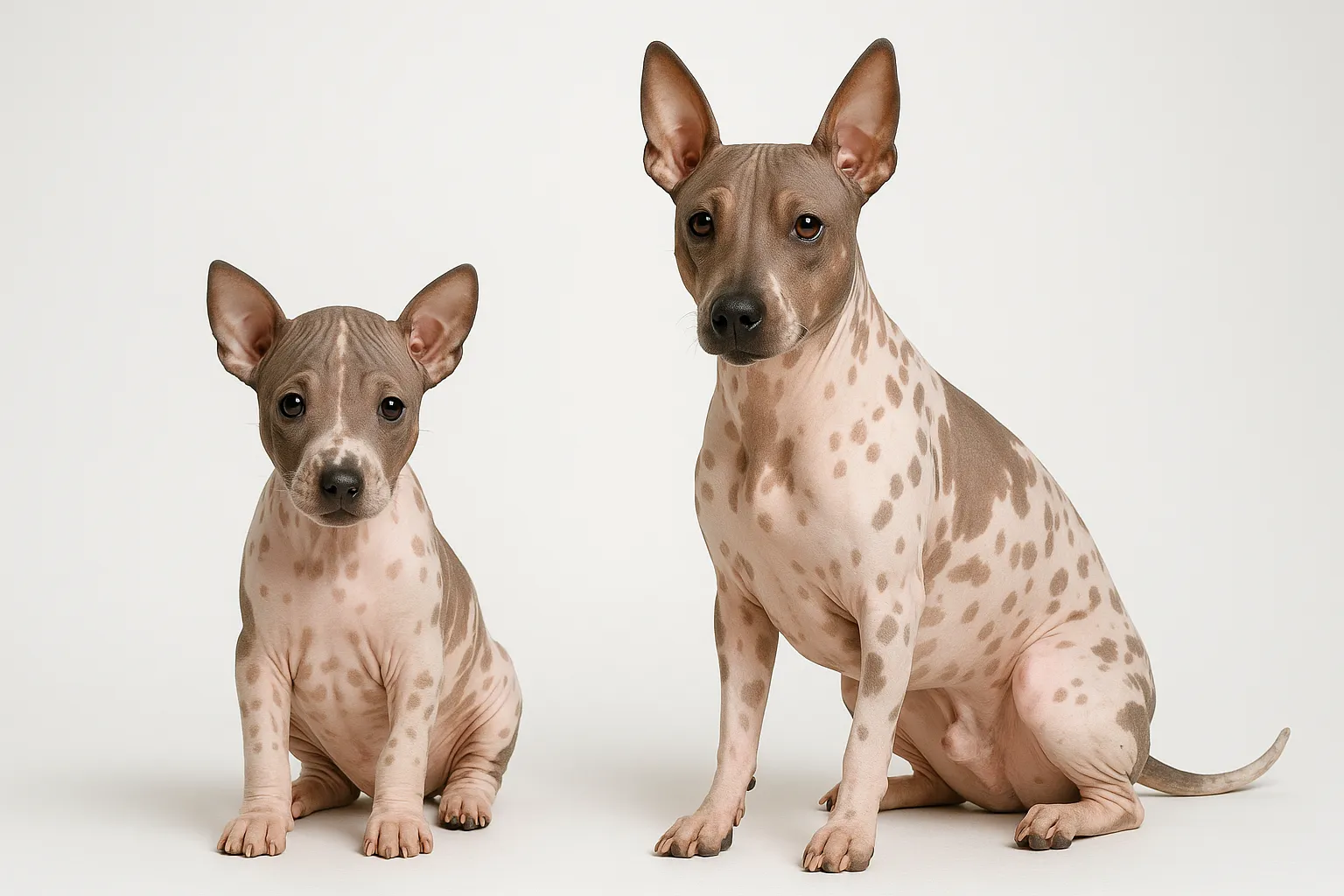
Most hairless dog breeds share a common trade-off: the same gene that removes the coat also disrupts tooth development. The American Hairless Terrier breaks that pattern. Its hairlessness comes from a different gene entirely — the SGK3 mutation — which leaves the teeth fully intact and normally positioned. That is a meaningful health advantage.
Developed in Louisiana from Rat Terriers and formally recognized by the AKC in 2016, the AHT typically lives 14-16 years. The breed has not been heavily inbred, which preserves reasonable genetic health for a recently recognized breed. The primary care requirements are skin protection (because there is no coat to provide it) and the standard small-breed health screens.
Health Risks Worth Knowing
Skin Conditions: The Sunburn-to-Cancer Pipeline
Without a coat, the skin is exposed to everything — UV radiation, environmental irritants, temperature extremes, and acne-like lesions. Weekly skin inspection, gentle cleansing, moisturizing after bathing, and sunscreen for outdoor sun exposure prevent most problems. The skin shows seasonal changes: drier in winter, more prone to blackheads in summer.
UV damage accumulates over the dog’s 14-16 year lifespan. What starts as a sunburn today can become keratosis or a skin tumor a decade later. Prevention starts on day one.
See the Skin Conditions guide for full prevention and management detail.
Luxating Patella: Standard Small-Breed Risk
Patellar luxation is documented at rates typical for small breeds. Annual patellar stability assessment identifies affected dogs. Grade 3-4 luxation causing persistent lameness benefits from surgical correction. Keeping weight at ideal body condition reduces mechanical stress on the patellar groove.
See the Luxating Patella guide for full prevention and management detail.
Dental Disease: Good Teeth Still Need Care
Despite having full dentition (unlike Xolos and Chinese Cresteds), AHTs are susceptible to dental disease due to the small jaw spacing typical of terrier body types. Daily tooth brushing and professional cleaning every 12-18 months prevent periodontal disease. Start the routine early — puppies acclimated to brushing maintain compliance throughout their lives.
See the Dental Disease guide for full prevention and management detail.
Evidence-Based Ways to Extend Healthspan
Sunscreen Is Not Optional
Apply sunscreen to exposed skin areas before any outdoor time in direct sunlight — particularly the dorsum, neck, and ears. Use pet-safe, zinc-free formulations. Sun damage is cumulative, and over a 14-16 year lifespan, it adds up.
In high-UV climates, lightweight UV-protective dog shirts provide additional coverage for extended outdoor exposure.
Temperature Management Goes Both Ways
Without coat insulation, AHTs need protection from both cold and heat. Below 45 degrees F (7 degrees C), a coat or sweater is necessary. In high temperatures, monitor for overheating.
The practical challenge: these dogs have terrier energy and will exercise vigorously regardless of temperature. Owners must enforce the limits their dog will not.
Terrier Drive Needs an Outlet
American Hairless Terriers retain strong terrier drive — curious, energetic, persistent. Mental enrichment through puzzle feeders, training sessions, and scent games is as important as physical exercise. The breed excels in agility, earthdog events, and rally, all of which provide stimulation that prevents anxiety-driven destructive behavior.
Exercise needs are moderate: 30-45 minutes of active play or walks daily meets most dogs’ requirements.
Your Highest-Return Health Investments
Start here — these are the highest-impact moves for American Hairless Terrier longevity:
- Daily sunscreen application for outdoor exposure — hairless skin is highly susceptible to UV damage
- Annual patella evaluation — luxating patella is common in small terrier breeds
- Monthly skin inspection for lesions — exposed skin requires active monitoring
Center your next vet conversation on these priorities and adjust the plan quarterly based on what the data shows. See Skin Allergies, Luxating Patella, Dental Disease for condition-specific guidance.
Evidence-Based Longevity Priorities
Calorie Precision in a Small, Active Body
Maintaining stable weight and lean muscle mass is one of the highest-yield longevity interventions for AHTs. Lean mass retention becomes critical around middle age when metabolic rate slows. High energy expenditure in terriers means calorie governance must be precise to avoid gradual drift.
Prevention Targets for This Breed
The conditions that most threaten longevity and quality of life — Skin Allergies, Luxating Patella, Dental Disease — are also the ones most responsive to early, sustained prevention. Start here.
Controlled Rhythm Protects Stability
Inconsistent schedules and uncontrolled arousal often show up first as behavior volatility, sleep fragmentation, or slower recovery in AHTs. A controlled daily rhythm protects both neurologic and physical stability.
Age-Based Screening Intervals
Schedule veterinary reassessment intervals by age band and trend changes rather than waiting for obvious deterioration. Planned checkpoints focused on cardiovascular and respiratory parameters improve early detection and intervention timing.
Breed-Specific Research
Use these evidence deep dives to add mechanism-level context to your American Hairless Terrier longevity plan:
- Exercise Protocols By Breed Size: exercise and activity management for a small active terrier breed
- Dental Disease And Longevity In Dogs: dental disease prevention relevant to small-breed terrier dental anatomy
- Canine Obesity And Lifespan Evidence: weight management for a long-lived small breed
Making Genetic Testing Actionable
For American Hairless Terriers, genetic testing delivers the most value when results directly change what gets measured, how often, and what triggers escalation. Consider baseline echocardiography to establish cardiac structure and function, and CERF eye exam or PRA gene testing to detect heritable eye disease.
- Start with a genetic panel designed around your American Hairless Terrier’s most common conditions. Let the results prioritize which health areas deserve closer surveillance.
- Connect your first monitoring protocol to Skin Allergies and Dental Disease — these are the conditions where test results should directly change what you do next.
- Review and adjust your American Hairless Terrier’s longevity plan every quarter. The right focus at age two is not the right focus at age eight — let age, weight trends, and vet findings guide the updates.
The breed’s DNA writes the risk profile. Your dog’s longitudinal health data writes the intervention plan.
When to Screen, Test, and Reassess
- Puppy to 2 years: skin care routine, dental baseline, patella evaluation
- 3-8 years: annual wellness panel, skin checks monthly, dental cleaning annually
- 9+ years: senior panel every 6 months, cognitive function monitoring, arthritis assessment
Nutrition That Supports a Longer Life
American Hairless Terriers do well on quality small-breed adult dry food. Omega-3 supplementation supports skin health — particularly important for a breed without the protective oils that coated dogs produce. Lean body condition is critical since excess weight worsens patellar luxation in a breed already at risk. Feed measured portions twice daily.
The Longevity Picture
American Hairless Terriers with consistent skin protection, dental care, and weight management are well-positioned for long, healthy lives in the 14-16 year range. Their terrier resilience and the absence of hairless-gene dental problems give them a real advantage over other hairless breeds. For owners willing to apply sunscreen, monitor skin, and manage weight, the payoff is a notably long-lived companion.
The Subtle Signs You Are Most Likely to Miss
Healthspan erosion in American Hairless Terriers typically begins with subtle shifts that are easy to dismiss:
- Intermittent scratching or paw licking related to Skin Allergies — written off as seasonal
- A gradual preference shift toward softer food that masks Dental Disease progression — mistaken for pickiness
- Brief episodes of disorientation or staring that may signal early Seizures Epilepsy
If baseline function is drifting for 7-10 days, treat it as a prevention failure signal and reassess early.
Additional Health Risks to Monitor
Based on breed predisposition data, American Hairless Terrier owners should also be aware of:
Frequently Asked Questions
How long do American Hairless Terriers live?
American Hairless Terriers typically live 14-16 years. Their long lifespan reflects their terrier heritage and relatively limited inbreeding as a recently developed breed.
Is the American Hairless Terrier truly hairless?
Puppies are born with a short coat of fine hair that is typically shed within the first few weeks of life. Adult hairless AHTs may have very fine, nearly invisible hair on the muzzle and feet. Coated varieties of the breed also exist.
Do American Hairless Terriers get cold easily?
Yes. Without coat insulation, AHTs are sensitive to cold. Dog sweaters or coats are appropriate and necessary for outdoor time in temperatures below 45 degrees F.
Are American Hairless Terriers good with children?
AHTs are generally energetic and playful and do well with children who respect the dog’s boundaries. The hairless skin is more sensitive to scratching and rough handling than coated breeds. Supervision with young children is appropriate.
Do American Hairless Terriers have dental problems?
Less than other hairless breeds. The AHT’s hairless gene (SGK3) does not affect tooth development, unlike the FOXI3 gene in Xolos and Chinese Cresteds. AHTs have full, normally positioned teeth, though regular dental care remains important as for all small breeds.
References
[1] American Hairless Terrier Club of America. ahterrier.org. [2] AKC breed recognition and standards. akc.org. [3] SGK3 hairless mutation in dogs: Drögemüller C et al. Science. 2008. [4] OFA health statistics by breed. ofa.org. [5] WSAVA small animal nutrition guidelines. wsava.org.
Related reads
Related Reading
Continue exploring