The Working Mind in a Companion Body
The Aussiedoodle is a cross between two of the most intelligent breeds in existence. The Australian Shepherd — a tireless herding dog bred for all-day mental and physical work — meets the Standard Poodle (or Miniature Poodle), a breed originally developed for water retrieval that has since been prized for its trainability and athleticism. The result is a dog that needs a job, craves engagement, and will create its own entertainment if you do not provide it.
That intelligence is directly relevant to longevity. Under-stimulated Aussiedoodles develop stress-related behaviors — anxiety, destructive behavior, hyperreactivity — that erode quality of life and can create chronic physiological stress. An Aussiedoodle that lives to 15 in good health is almost certainly one that received consistent mental stimulation throughout its life, not just physical exercise.
But the health story of this cross is also defined by a pharmacogenetic reality that every Aussiedoodle owner must understand before their dog receives its first prescription medication.
The MDR1 Gene: A Non-Negotiable Testing Priority
MDR1 drug sensitivity is the single most important breed-specific health consideration for any dog with Australian Shepherd heritage. The MDR1 gene (now technically called ABCB1) produces a protein called P-glycoprotein that acts as a gatekeeper in the blood-brain barrier, pumping certain drugs out of the brain before they can accumulate to toxic levels.
Dogs with the MDR1 mutation — estimated to affect roughly 50% of Australian Shepherds — have a defective version of this protein. This means common medications can cross the blood-brain barrier in toxic concentrations, causing neurological symptoms ranging from ataxia and tremors to seizures, coma, and death.
Medications known to pose risk in MDR1-affected dogs include:
- Ivermectin (common dewormer, used in some heartworm preventatives at higher doses)
- Loperamide (Imodium)
- Several chemotherapy agents
- Certain sedatives and anesthetics
- Some antibiotics including erythromycin
Test your Aussiedoodle for MDR1 status before any medication is administered. This is a simple, one-time genetic test available through multiple veterinary laboratories (Washington State University’s Veterinary Clinical Pharmacology Lab pioneered this testing). Share the results with every veterinarian who treats your dog, and keep a copy accessible for emergency situations.
An MDR1-affected dog can live a completely normal, full-length life — but only if every veterinary professional who treats it knows the status and adjusts drug protocols accordingly. An MDR1-affected dog given ivermectin at standard doses can die. This is preventable with a $70 test.
Heterosis in a High-Drive Cross
First-generation Aussiedoodle crosses benefit from hybrid vigor for conditions with strong single-gene recessive inheritance patterns. The 2013 Bellumori study in JAVMA confirmed lower prevalence of certain genetic disorders in mixed breeds compared to purebreds.
For the Aussiedoodle, heterosis may provide some protection against breed-specific conditions concentrated in one parent line. But the most relevant health concerns — hip dysplasia, eye disease, and epilepsy — are either polygenic, structural, or present in both parent breeds. These conditions respond to proactive management, not to the hope that crossing will wash them out.
Eye Health: Compounded Risk From Both Sides
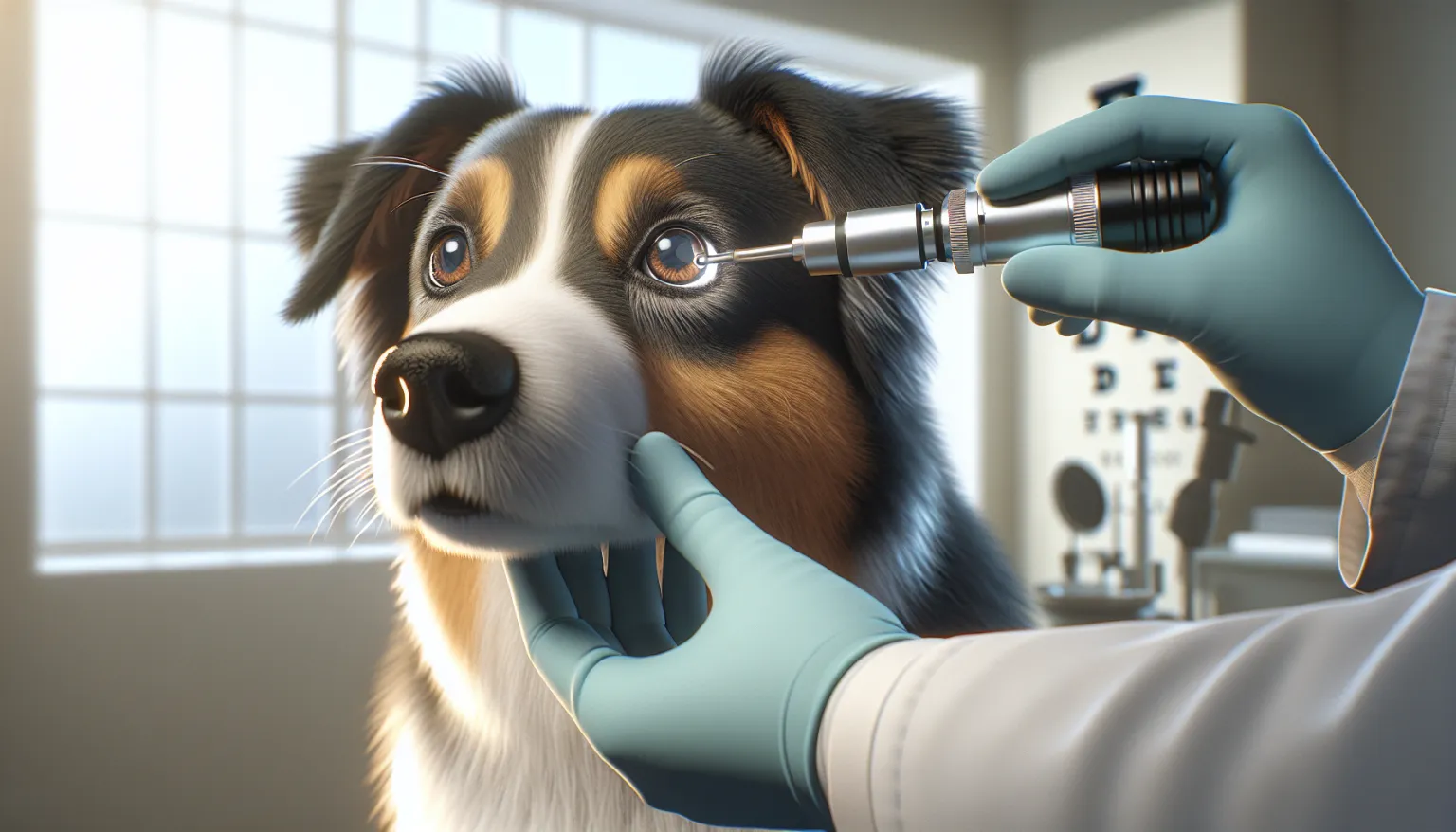
This cross inherits eye disease susceptibility from both parents, making ophthalmologic surveillance a core component of the prevention plan.
Progressive Retinal Atrophy
PRA is well-documented in both Australian Shepherd and Poodle lines. The condition causes gradual vision loss beginning with impaired night vision and progressing to complete blindness. Responsible breeders test for prcd-PRA and other PRA variants before crossing.
If your Aussiedoodle’s breeding background is unknown or testing was not performed, a baseline ophthalmologic exam by age 2-3 is essential. Follow up at least every two years, or annually if any retinal changes are detected.
Cataracts
Both Australian Shepherds and Poodles carry elevated cataract risk. Hereditary cataracts can develop at any age, from juvenile onset to senior-stage progression. Annual eye exams catch cataracts while surgical intervention (phacoemulsification) remains an option — waiting until a cataract is mature reduces surgical success rates.
Collie Eye Anomaly
Australian Shepherds carry risk for Collie Eye Anomaly (CEA), a congenital condition that affects eye development. While this condition is typically identified in puppyhood, mild cases can go undetected without formal examination. A comprehensive puppy eye exam with a veterinary ophthalmologist screens for this condition.
Hip Dysplasia in a Variable Frame
Aussiedoodles range widely in size — from 25 lbs (miniature crosses) to 70 lbs (standard crosses) — and the larger dogs face meaningful hip dysplasia risk. Both Australian Shepherds and Standard Poodles carry documented hip dysplasia prevalence in OFA databases.
For standard-size Aussiedoodles, baseline hip evaluation (OFA or PennHIP) provides data that guides exercise programming and weight management decisions. Lean body condition throughout life is the most impactful modifiable factor — the Purina Lifetime Study demonstrated a four-year delay in arthritis onset in lean versus overweight dogs.
Arthritis develops as a consequence of hip dysplasia in many cases. Early joint-health management, including controlled puppyhood growth, appropriate exercise, and anti-inflammatory nutrition, preserves mobility reserves that matter enormously in the senior years.
Epilepsy: Monitoring for Seizure Activity
Both Australian Shepherds and Poodles carry elevated epilepsy risk. Idiopathic epilepsy — seizures without identifiable structural cause — typically first presents between ages 1 and 5.
If your Aussiedoodle experiences a seizure, document everything: time of day, duration, pre-seizure behavior (the “aura”), seizure characteristics (localized or generalized), and post-seizure recovery time and behavior. Video recording, when safely possible, provides diagnostically valuable information.
A single seizure does not always require lifelong anticonvulsant therapy. Recurring seizures — particularly clusters (multiple seizures within 24 hours) or episodes lasting longer than 5 minutes (status epilepticus) — require veterinary evaluation and management planning.
Seizure management in MDR1-affected dogs requires additional care, as some anticonvulsant medications interact with the P-glycoprotein pathway. Ensure your neurologist or veterinarian has your dog’s MDR1 status before prescribing.
Mental Health as a Longevity Factor
The Aussiedoodle’s intelligence is a health asset when channeled and a health liability when neglected. Dogs bred from two high-drive working lines need more than physical exercise — they need cognitive engagement, problem-solving opportunities, and structured routines.
Under-stimulated Aussiedoodles can develop:
- Anxiety and stress-related behavioral patterns
- Compulsive behaviors (tail chasing, light fixation, excessive grooming)
- Reactivity and hyperarousal that disrupt household stability
- Chronic physiological stress that impairs immune function and accelerates aging
The prevention is straightforward: provide daily mental enrichment through training sessions, puzzle toys, scent work, and structured play. An Aussiedoodle that learns something new every day is a healthier dog than one that is merely walked for an hour.
Nutrition for a Variable-Size Cross
Aussiedoodle nutrition must be calibrated to the individual dog’s size. A 25 lb miniature Aussiedoodle and a 70 lb standard Aussiedoodle have fundamentally different caloric needs and growth patterns.
For standard-size dogs, use Feeding Guide for Large Breeds or Feeding Guide for Medium Breeds depending on adult weight. For miniature crosses, Feeding Guide for Small Breeds is the appropriate framework.
Omega-3 Fish Oil for Dogs supports eye health, joint health, and anti-inflammatory pathways — all directly relevant to the Aussiedoodle’s primary risk areas. For dogs with documented joint concerns, discuss Joint Supplement Stack Guide with your vet as a targeted adjunct.
Measured meals, treats capped at 10% of daily caloric intake, and monthly body condition scoring keep weight management on track throughout the dog’s life.
Exercise: Enough to Satisfy, Safe to Sustain
Aussiedoodles need 60-90 minutes of daily activity — a mix of physical exercise and mental engagement. The Australian Shepherd side demands variety and purpose; the Poodle side responds to training challenges and problem-solving.
Ideal activities:
- Varied terrain hiking and trail walks
- Swimming (cardiovascular conditioning with minimal joint impact)
- Agility, flyball, or similar dog sports
- Training sessions, trick work, and obedience challenges
- Scent work and tracking exercises
- Interactive puzzle toys and enrichment feeders
During the first 18 months, limit high-impact exercise. No sustained running on hard surfaces, no repetitive jumping, and no forced exercise on developing joints. Build conditioning progressively.
Preventive Screening by Life Stage
- Before first vet visit: MDR1 genetic testing. This must happen before any medication is prescribed.
- Puppy to 18 months: Comprehensive eye exam (screening for CEA, early cataracts, PRA baseline), hip evaluation for standard-size dogs, patellar check for miniature crosses. Establish mental enrichment routines.
- 2 to 5 years: Annual wellness with eye exam, cardiac auscultation, and mobility assessment. Monitor for seizure activity. Continue MDR1-aware medication management.
- 6 to 9 years: Add comprehensive bloodwork, thyroid screening, orthopedic trend monitoring. Discuss arthritis management if joint changes are progressing.
- 10+ years: Twice-yearly exams. Senior metabolic panel, mobility evaluation, cognitive assessment, eye exam, and pain scoring.
Breed-Specific Research
- Arthritis Pain Stack for Dogs: Mobility-First Framework: joint-protective exercise programming and orthopedic management.
- Blood Pressure Monitoring in Dogs: The Silent Risk Most Owners Miss: cardiac screening approaches.
- Senior Dog Screening Protocol: What to Test and When: structured screening for aging Aussiedoodles.
Condition-Specific Monitoring Triggers
- Hip Dysplasia: Bunny-hopping gait, difficulty rising, reluctance to exercise, or limping after activity.
- Progressive Retinal Atrophy: Night blindness, bumping into objects in dim light, dilated pupils in normal lighting.
- MDR1 Drug Sensitivity: Neurological symptoms (tremors, ataxia, seizures, excessive sedation) after medication administration. This is always an emergency.
- Seizures/Epilepsy: Sudden collapse with involuntary movements, loss of consciousness, post-event disorientation. Document duration and contact your vet.
- Cataracts: Cloudiness in the lens, reduced visual confidence, difficulty tracking objects or navigating new environments.
- Arthritis: Gradual decline in exercise enthusiasm, stiffness after rest, slower transitions, morning lameness.
12-Month Longevity Execution Plan
Quarter 1: Genetic and Structural Baseline
- Complete MDR1 genetic testing and share results with all veterinary providers
- Record weight, body condition score, and gait video
- Complete comprehensive eye exam and hip evaluation (standard-size dogs)
- Establish daily mental enrichment routine alongside physical exercise
Quarter 2: Monitoring Foundation
- Audit adherence to exercise, enrichment, and feeding protocols
- Compare weight and mobility against Q1 baselines
- Report any seizure activity, vision changes, or behavioral shifts
- Complete any outstanding genetic or ophthalmologic testing
Quarter 3: Midyear Review
- Reassess eye health, joint function, and neurological status
- Adjust exercise programming for seasonal changes and evolving capacity
- Verify MDR1 status is documented in all veterinary records
- Update mental enrichment routine to prevent habituation and maintain engagement
Quarter 4: Annual Assessment
- Synthesize full-year data into next year’s prevention plan
- Complete comprehensive bloodwork if age-appropriate
- Year-end eye exam, mobility assessment, and cardiac evaluation
- Update medication safety protocols based on any new prescriptions
When to Seek Emergency Care
- Neurological symptoms after medication administration (MDR1 emergency): tremors, incoordination, excessive sedation, seizures
- Seizure lasting more than 5 minutes or cluster seizures within 24 hours
- Sudden vision loss or acute eye pain
- Collapse or loss of consciousness
- Complete food refusal for 24+ hours with lethargy
- Sudden severe lameness or inability to bear weight
Home Tracking Dashboard
Monitor monthly:
- Weight and body condition score
- Vision confidence: navigation in dim light, tracking moving objects
- Gait quality and exercise recovery time
- Seizure log (if applicable): frequency, duration, triggers, post-event behavior
- Energy level and mental engagement
- Coat and skin condition
- Any new behavioral patterns (anxiety, compulsive behaviors, reactivity)
Frequently Asked Questions
How important is MDR1 testing? Non-negotiable. Approximately 50% of Australian Shepherds carry the MDR1 mutation, and your Aussiedoodle may have inherited it. Common medications, including some dewormers and anti-diarrheal drugs, can be fatal in MDR1-affected dogs. Test once, share results everywhere, and keep a copy on your phone.
Do Aussiedoodles need a lot of mental stimulation? Yes. Both parent breeds were developed for cognitively demanding work. An Aussiedoodle that receives only physical exercise without mental engagement will often develop anxiety, compulsive behaviors, or reactivity. Daily training, puzzle work, and structured enrichment are as important as walks.
Should I get my Aussiedoodle’s eyes checked even without symptoms? Yes. Both parent breeds carry risk for PRA, cataracts, and other eye conditions that can develop before visible symptoms appear. Baseline exam by age 2-3, with follow-ups at least every two years.
Is hip dysplasia a concern in miniature Aussiedoodles? Less than in standard-size dogs, but not absent. Smaller Aussiedoodles may face lower hip dysplasia risk but can develop luxating patella. Lean body condition protects joint health regardless of size.
Can seizures be managed in this breed? Yes. Most dogs with idiopathic epilepsy can be managed effectively with anticonvulsant medication. The critical consideration for Aussiedoodles is ensuring that medication choices account for MDR1 status — some anticonvulsants interact with the P-glycoprotein pathway.
What kind of exercise is best? A mix of physical activity and mental challenge. Hiking, swimming, agility, scent work, and training sessions satisfy both the body and the mind. Avoid monotonous exercise routines — variety matters for this breed’s wellbeing.
References
[1] Washington State University Veterinary Clinical Pharmacology Lab — MDR1 Testing [2] Prevalence of inherited disorders among mixed-breed and purebred dogs (Bellumori et al., JAVMA, 2013) [3] Life expectancy, mortality, and longevity in companion dogs (Scientific Reports, 2024) [4] AKC Australian Shepherd Breed Information [5] Orthopedic Foundation for Animals (OFA) [6] Merck Veterinary Manual
This content is for informational purposes only and does not constitute veterinary advice. Always consult a licensed veterinarian for decisions about your dog’s health, diagnosis, and treatment.
Related reads
Related Reading
Continue exploring