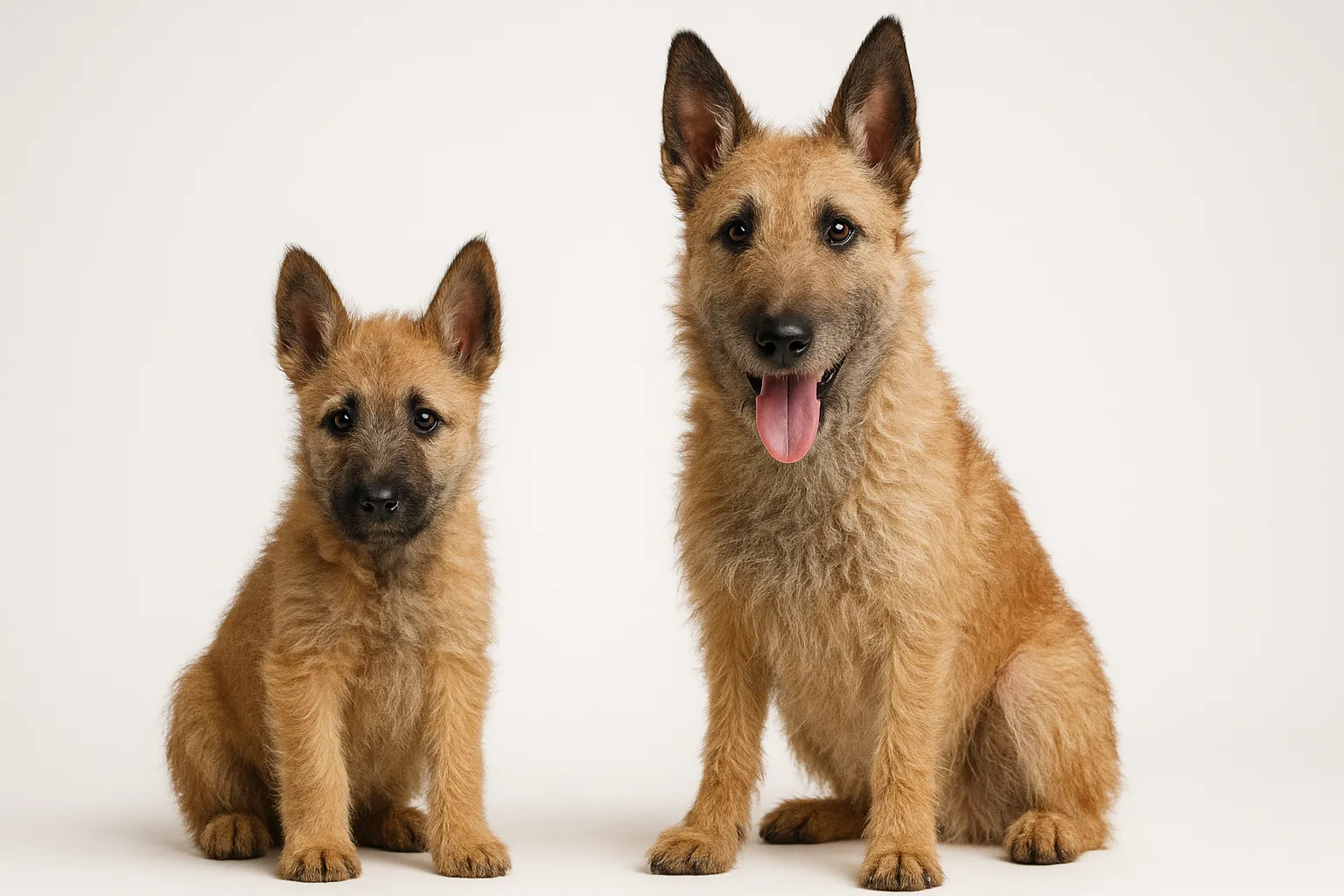
The Rarest Belgian Shepherd
The Belgian Laekenois holds a unique distinction. It is the rarest of the four Belgian shepherd varieties and the most recently AKC-recognized, gaining full status only in 2020. Its rough, wiry, tousled fawn-and-black coat sets it apart visually from the other varieties, and its health profile carries some breed-specific wrinkles worth understanding.
These are athletic, intelligent herding and protection dogs that share the same working heritage as the Malinois, Tervuren, and Groenendael. Lifespan runs 10-12 years. The primary health concerns center on hip and elbow dysplasia, skin conditions tied to that rough coat, and the Belgian shepherd tendency toward hypothyroidism and epilepsy.
Because so few Laekenois exist, the breed’s health database remains less complete than for its more popular siblings. That rarity makes owner vigilance even more important.
Health Risks Worth Knowing
Hip Dysplasia
Hip dysplasia is the leading structural concern. OFA hip and elbow evaluation at 24 months establishes a baseline you can track against for life. Lean body condition and omega-3 supplementation support joint integrity from day one.
See the Hip Dysplasia guide for full prevention and management detail.
Elbow Dysplasia
Elbow dysplasia should be evaluated alongside hip dysplasia at the same 24-month OFA screening. If a young Laekenois shows forelimb lameness, radiographic evaluation for elbow disease should follow promptly.
See the Elbow Dysplasia guide for full prevention and management detail.
Skin Conditions
That distinctive wiry coat creates a monitoring blind spot. Skin conditions can develop and progress beneath the dense outer layer without visible signs above it. Regular grooming sessions double as skin inspections. Allergic dermatitis, hot spots, and seborrhea all occur more readily under rough coats that trap moisture and heat.
See the Skin Conditions guide for full prevention and management detail.
How to Manage the Wiry Coat
The Laekenois coat requires brushing 2-3 times weekly and occasional hand-stripping or trimming to preserve its characteristic texture. Unlike the smooth or long-coated Belgian varieties, over-trimming works against the coat’s weather-resistant function.
During grooming, lift the outer coat and check the skin beneath for irritation, hot spots, or parasites. This is where problems hide.
Finding a Vet Who Knows the Breed
With AKC recognition dating only to 2020, the Laekenois is very new to most US veterinary practices. Many general practitioners have limited experience with its breed-specific health characteristics.
Providing your vet with breed health information from the Belgian Laekenois club helps bridge that gap. For ongoing skin management or endocrine concerns, consider consultation with veterinary dermatology and internal medicine specialists.
The Belgian Shepherd Health Framework
All four Belgian shepherd varieties share a common health profile. Epilepsy, hypothyroidism, hip and elbow dysplasia risks run consistently across the Laekenois, Malinois, Tervuren, and Groenendael.
This means protocols that work for one variety generally apply to the others. The same proactive monitoring framework — OFA at 24 months, annual thyroid from age 4, annual CAER, epilepsy log if relevant — supports Laekenois longevity just as effectively.
Where to Focus Your Prevention Effort
Start here — these are the highest-impact moves for Belgian Laekenois longevity:
- OFA hip and elbow evaluation at 24 months — orthopedic disease is the primary structural concern
- Regular skin monitoring under the rough wiry coat — skin conditions can develop undetected
- Annual thyroid panel from age 4 — hypothyroidism documented across Belgian shepherd varieties
Anchor your next vet conversation to these targets and recalibrate every quarter. For prevention and management details by condition, use Hip Dysplasia, Elbow Dysplasia, Skin Allergies.
Body Composition and Muscle Maintenance
Optimal body condition in your Belgian Laekenois protects joints, supports metabolic health, and reduces the inflammatory burden that drives premature aging. As a medium breed, body composition stability directly predicts orthopedic longevity and cardiovascular reserve. Herding dogs in sustained movement need stable muscle-to-fat ratios to protect their joints long-term.
Condition-Focused Prevention Stack
Concentrate your prevention investment on Hip Dysplasia, Elbow Dysplasia, Skin Allergies. These are the conditions where the gap between early and late action is widest, and the cost of delay is steepest.
Stress, Routine, and Recovery
Household rhythm matters for this breed. Consistent activity windows, controlled arousal, and deliberate downtime prevent the chronic vigilance patterns that accelerate cognitive and physical aging in herding dogs. A Laekenois with an unpredictable daily schedule will show the effects over time.
Preventive Screening Cadence
Plan veterinary reassessment intervals in advance, then tighten the schedule when trend logs show drift in orthopedic function or gait quality. Early intervention windows are where most healthspan gains happen.
Breed-Specific Research
Use these evidence deep dives to add mechanism-level context to your Laekenois longevity plan:
- Exercise Protocols By Breed Size: exercise management for a high-drive herding breed with orthopedic risk
- Annual Wellness Testing Protocol For Dogs: annual thyroid and orthopedic monitoring for Belgian shepherds
- Muscle And Mobility Longevity Protocol: joint health management for a Belgian working herding breed
How to Use Genetic Panel Results
For Belgian Laekenois, genetic testing delivers the most value when results directly change what you measure, how often, and what triggers escalation this quarter. MDR1 gene testing guides medication safety. Hip and elbow scoring (OFA or PennHIP) quantifies orthopedic risk as part of the initial assessment.
- Pick a genetic panel that covers your Belgian Laekenois’s primary risk conditions. Results guide monitoring intensity and focus — they do not predict destiny.
- Anchor your initial monitoring to Hip Dysplasia and Elbow Dysplasia. Testing matters when it changes what you measure, how often, and what triggers escalation.
- Your most powerful monitoring tool costs nothing — a running record linking test data to clinical findings to what you observe at home. The connections between entries are where the real insights live.
- Your monitoring plan should evolve with your dog. Review and adjust it at each life-stage transition and any time you notice sustained changes in daily function.
Testing is only as good as the decisions it drives. If nothing changes after you get the results, the test was premature or unnecessary.
What Breeding History Tells You
The Laekenois was bred for sustained movement, vigilance, and rapid decision-making under workload. That legacy creates structural load patterns demanding proactive orthopedic surveillance and cancer susceptibility that benefits from serial tumor monitoring.
- Structural load and cancer risk both require a surveillance rhythm that intensifies with age rather than waiting for clinical signs.
- Focus your risk surveillance on Hip Dysplasia, Elbow Dysplasia, Progressive Retinal Atrophy Pra — these are the conditions where this breed’s ancestry creates the most actionable risk profile.
- The biggest threat to your Belgian Laekenois’s healthspan is normalizing gradual decline. Any persistent change in mobility, appetite, energy, or recovery time is a data point, not an inevitability.
- As your Belgian Laekenois ages and health data accumulates, the plan should change with it. Schedule a quarterly review to recalibrate priorities based on what you are actually seeing.
Breed history defines the risk landscape. Your dog’s actual health data determines the response timeline.
When to Screen, Test, and Reassess
- Puppy to 2 years: OFA at 24 months, CAER baseline, coat and skin monitoring
- 3-8 years: annual thyroid from age 4, annual wellness panel, skin inspections during grooming
- 9+ years: senior panel every 6 months, mobility assessment, cognitive monitoring
Nutrition That Supports a Longer Life
Belgian Laekenois do well on quality medium-to-large breed adult food with portions adjusted for activity level. Lean body condition matters for orthopedic health. Omega-3 supplementation supports both joints and coat.
Putting It All Together
A Laekenois with OFA orthopedic screening, thyroid monitoring, and proactive coat and skin management is positioned for a healthy life in the 10-12 year range. As the rarest Belgian shepherd variety, every well-cared-for Laekenois contributes to the breed’s health data and long-term preservation.
The Drift Patterns Owners Miss First
Healthspan erosion in the Laekenois typically starts with subtle shifts that are easy to rationalize away:
- Hind-limb stiffness after rest related to Hip Dysplasia — often dismissed as “just waking up slow”
- Intermittent forelimb changes tied to Elbow Dysplasia that come and go
- Gradual hesitation in dim light tied to Progressive Retinal Atrophy Pra that develops so slowly it seems normal
If baseline function drifts for 7-10 days, treat it as a prevention failure signal and reassess early.
Additional Health Risks to Monitor
Based on breed predisposition data, Belgian Laekenois owners should also be aware of:
Frequently Asked Questions
How long do Belgian Laekenois live?
Belgian Laekenois typically live 10-12 years. Hip and elbow evaluation, thyroid monitoring, and regular skin inspection are the primary longevity investments.
What makes the Belgian Laekenois coat unique?
The Laekenois has a rough, wiry, tousled fawn-and-black coat — unlike the long-silky coat of the Tervuren and Groenendael, or the short coat of the Malinois. The rough texture makes the coat weather-resistant but requires different grooming care than the other Belgian shepherd varieties.
When did the Belgian Laekenois receive AKC recognition?
The Belgian Laekenois was recognized by the AKC in 2020, making it one of the most recently recognized breeds.
Is the Belgian Laekenois a good working dog?
Yes — Belgian Laekenois share the intelligence, trainability, and drive of other Belgian shepherd varieties. They are used in herding, protection sports, and general working dog competition.
How rare is the Belgian Laekenois?
Very rare — one of the least common of the Belgian shepherd varieties worldwide, with a small but dedicated global breeding community.
References
[1] Belgian Laekenois Association of America. laekenois.com. [2] AKC breed recognition. akc.org. [3] Belgian shepherd health: OFA statistics. ofa.org. [4] Epilepsy in Belgian shepherds: Berendt M et al. J Vet Intern Med. 2002. [5] WSAVA nutrition guidelines. wsava.org.
Related reads
Related Reading
Continue exploring