A Mahogany Coat, a Demanding Mind
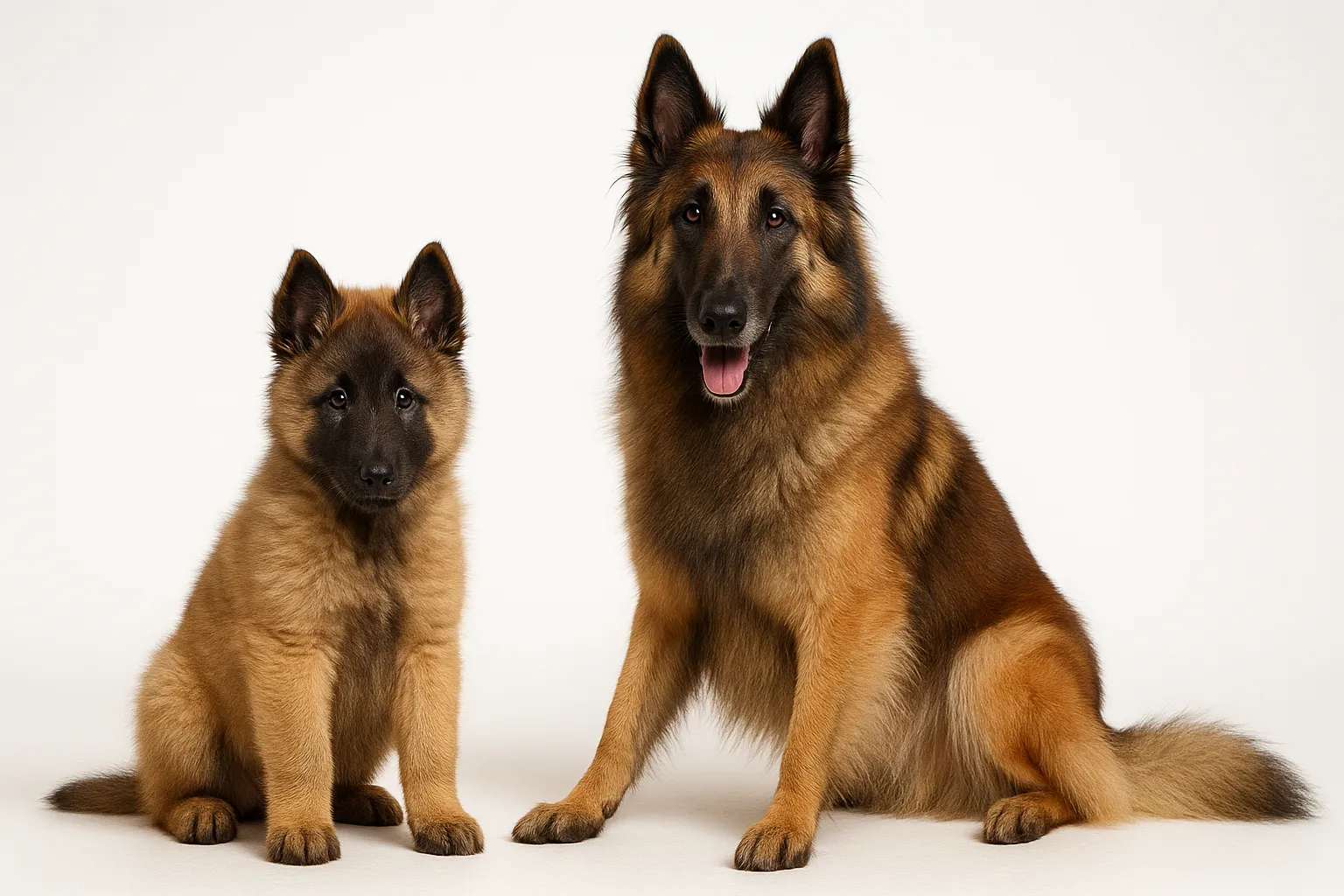
The Belgian Tervuren is one of four Belgian shepherd varieties, distinguished by its long mahogany-and-black double coat. In the US, all four hold separate registrations. In Belgium and most of Europe, they are coat varieties of a single breed.
What matters more than classification is temperament. Tervurens are athletic, highly intelligent working dogs that need genuine engagement to thrive. They live 12-14 years. Their primary health concerns center on hip and elbow dysplasia, epilepsy at above-average rates, and hypothyroidism.
The breed’s elevated epilepsy rate relative to most herding breeds stands out as the primary risk. Hypothyroidism develops at above-average rates in middle age. And the breed’s high mental energy and sensitivity mean stress management plays a real role in long-term health and behavioral stability.
Breed History and How It Shapes Modern Health
The Tervuren takes its name from the village of Tervuren near Brussels, where breeder M.F. Corbeel developed the long-coated fawn-and-black variety from the general Belgian shepherd population in the late 1800s. Like all Belgian shepherd varieties, the Tervuren was bred for versatile working tasks — herding livestock, guarding property, and later police and military applications.
The breed’s working history created a dog optimized for sustained mental and physical engagement under demanding conditions. That translates directly into modern health management requirements. The neurological wiring that makes Tervurens exceptional working dogs — rapid processing, high alertness, intense environmental awareness — also predisposes them to seizure disorders at rates higher than most herding breeds. A 2002 study by Berendt et al. documented elevated epilepsy prevalence across all four Belgian shepherd varieties, with the Tervuren among the most affected.
The structural demands of all-day herding work created joint stress patterns that persist today. Hip and elbow dysplasia screening is not optional for this breed — the repetitive locomotion built into their heritage demands proactive orthopedic surveillance.
Belgian Tervurens were also heavily used in Schutzhund (protection sport) and police work throughout the 20th century, further selecting for reactive temperaments and high drive. This selection pressure refined a dog with extraordinary trainability but also extraordinary sensitivity — a temperament that requires skilled handling and can deteriorate under chaotic conditions or inexperienced management.
The breed’s cancer susceptibility — shared across the Belgian shepherd varieties — may reflect both the genetic bottleneck of breed formation and the selection pressures of working dog breeding programs. Understanding these historical forces helps frame the prevention priorities that matter most.
What This Breed Is Most Likely to Face
Hip Dysplasia
Hip dysplasia occurs at significant rates in Belgian Tervurens. OFA data places the breed in the moderate-risk category for herding breeds. The condition begins with abnormal hip joint development and progresses into chronic arthritis, pain, and mobility loss. Early signs are subtle — hesitation on stairs, stiffness after rest, asymmetric gait after exercise.
OFA hip and elbow evaluation at 24 months provides the structural baseline you will track against for years. Lean body condition and omega-3 supplementation support joint health. Physical rehabilitation for diagnosed dogs slows progression. Weight control alone can reduce hip dysplasia severity by up to 50%.
See the Hip Dysplasia guide for full prevention and management detail.
Elbow Dysplasia
Elbow dysplasia should be evaluated alongside hips at the same 24-month screening. The condition encompasses fragmented coronoid process, osteochondrosis dissecans, and ununited anconeal process. If a young Tervuren develops forelimb lameness, radiographic evaluation for elbow disease should happen before secondary joint changes set in. CT imaging provides superior diagnostic sensitivity for elbow pathology.
See the Elbow Dysplasia guide for full prevention and management detail.
Epilepsy
Epilepsy occurs at above-average rates in Belgian Tervurens relative to most herding breeds. Idiopathic epilepsy is the most common form, and diagnosis requires excluding other causes (toxins, metabolic disease, structural brain lesions). The typical onset window is 1-5 years, though cases outside this range occur.
Seizure logs are essential for management. Record seizure date, time, duration, character (focal vs. generalized), pre-ictal behavior, and post-ictal recovery. Dogs on anticonvulsants need drug level monitoring and liver function checks every 6 months. First-line medications include phenobarbital and levetiracetam, with potassium bromide as an adjunct.
Importantly, stress is a documented seizure trigger in susceptible dogs. Environmental stability and routine consistency are not just behavioral management — they are seizure management tools.
See the Epilepsy guide for full prevention and management detail. For medication monitoring, see Seizure Medication Monitoring for Dogs.
Progressive Retinal Atrophy (PRA)
PRA is documented in the Belgian Tervuren, causing progressive vision loss typically beginning with night blindness. Annual CAER examinations detect early retinal changes. DNA testing for known PRA mutations should be included in the initial health screening. Affected dogs develop a characteristic hesitance in dim lighting conditions before daytime vision declines.
See the Progressive Retinal Atrophy guide for full prevention and management detail.
Cancer
Cancer is a significant cause of mortality in Belgian Tervurens. Hemangiosarcoma and lymphoma are the most concerning types. Regular veterinary exams with thorough palpation, and abdominal ultrasound after age 7, support early detection. Sudden lethargy, appetite loss, abdominal distension, or pale gums require immediate veterinary evaluation.
See the Cancer guide and Cancer Prevention Screening Stack for Dogs.
Allergic Dermatitis
Skin allergies occur in the breed, potentially exacerbated by the dense double coat that can trap allergens and moisture against the skin. Environmental allergies (atopy) and food allergies both occur. Persistent scratching, licking, ear infections, and hot spots warrant dermatological evaluation.
See the Skin Allergies guide and Atopic Dermatitis for detailed management frameworks.
A High-Drive Brain That Needs Real Work
Tervurens are among the most mentally demanding herding breeds. They require consistent engagement, clear boundaries, and daily challenge. Understimulated Tervurens develop anxiety-based behaviors — obsessive circling, excessive barking, destructive activity — that erode both quality of life and physical health.
Structured training sessions (10-15 minutes, multiple times daily), working dog sports, and social engagement are essential management tools. Their sensitivity means harsh training methods backfire catastrophically. Positive reinforcement and consistent structure produce the best results.
Mental health directly impacts physical longevity. Chronic understimulation drives cortisol elevation, immune suppression, and accelerated cellular aging. For Tervurens, cognitive enrichment is a medical intervention, not a lifestyle preference. See Anxiety Disorders and Canine Longevity and Environmental Enrichment for Cognitive Health.
Living with Epilepsy Risk
Tervuren owners should start a seizure log from puppyhood, even before any seizures occur. Establishing baseline behavior makes future comparison more meaningful.
If seizures happen, recording date, time, duration, character (focal vs. generalized), and post-ictal behavior creates the data your vet needs for confident treatment decisions. During seizures, moving the dog away from stairs and sharp objects reduces injury risk. Most Tervurens with epilepsy are well-controlled with medication.
Key emergency thresholds: a seizure lasting more than 5 minutes (status epilepticus), cluster seizures (multiple seizures within 24 hours), or a first seizure in a dog over age 5 all require emergency veterinary evaluation.
Exercise Protocols by Life Stage
Puppy (0-18 months)
Tervuren puppies are intense — high energy, high intelligence, and high sensitivity from birth. During the growth phase, protect developing joints with the “5 minutes per month of age” guideline for structured walks. Focus on socialization, basic obedience, and controlled play on soft surfaces.
Avoid repetitive high-impact activities (jumping, hard-surface running) until growth plates close around 14-18 months. Channel the puppy’s energy into mental work — obedience training, puzzle toys, and supervised socialization provide exhaustion without joint load.
Adult (18 months - 8 years)
Adult Tervurens need 60-90 minutes of daily physical activity plus dedicated mental work. The ideal mix includes long walks or hikes, structured training sessions (10-15 minutes, 2-3 times daily), working dog sports (herding, Schutzhund, agility, tracking, rally obedience), off-leash running in secure areas, and swimming for low-impact cardiovascular work.
These dogs deteriorate without a job. If working dog sports are not available, create structured daily tasks — search games, retrieve sequences, obstacle courses, or trick training — that engage their problem-solving drive. See Exercise Protocols by Breed Size.
Senior (8+ years)
Transition gradually. Watch for increased post-exercise recovery time, reluctance to jump, and morning stiffness. Maintain daily activity but reduce impact — shorter walks, gentle swimming, nose work. Mental enrichment becomes increasingly important as physical capacity declines. Puzzle toys, scent work, and training refreshers maintain cognitive function. See Age-Appropriate Exercise Transitions.
Coat Care That Matters
The Tervuren’s long, rich double coat requires brushing 2-3 times weekly to prevent matting, with intensive daily sessions during the twice-yearly coat blow. The coat traps heat in warm climates — monitor for heat stress after exercise in temperatures above 80F (27C).
Regular bathing with thorough drying prevents skin conditions beneath the dense undercoat. The neck mane (collarette) and tail plume need particular attention to stay mat-free. Grooming sessions double as skin inspection opportunities — lift the outer coat to check for hot spots, parasites, or irritation.
Never shave a Tervuren’s coat. The double coat provides insulation in both cold and warm conditions. Removing it disrupts thermoregulation and increases sunburn risk.
Breed-Specific Genetic Testing Recommendations
The following testing panels provide the highest clinical return for Belgian Tervurens:
- MDR1 gene test — Belgian shepherds carry the MDR1 mutation at clinically significant rates. Dogs with one or two copies cannot safely metabolize certain medications including ivermectin (high doses), loperamide, and some chemotherapy drugs. Safety-critical test.
- OFA hip and elbow evaluation at 24 months — Primary orthopedic screen for the breed.
- PennHIP evaluation — More precise predictive index for hip dysplasia, particularly useful for breeding decisions.
- CAER eye examination — Annual screening for PRA, cataracts, and heritable eye conditions.
- Thyroid panel — Baseline at age 3-4, then annually, for autoimmune thyroiditis detection.
- Cardiac auscultation — Annual screening for cardiac disease.
Start with a genetic panel designed around your Belgian Tervuren’s most common conditions. Let the results prioritize which health areas deserve closer surveillance. Build your initial monitoring playbook around Hip Dysplasia and Elbow Dysplasia, so that every test result feeds into a specific follow-up action. See Genetic Testing for Dogs: Clinical ROI.
Nutrition Guidance for Belgian Tervurens
Macronutrient Framework
Belgian Tervurens do well on quality medium-to-large breed adult food. Target 25-30% protein from animal sources to support lean muscle. Fat content of 12-18% supports coat health and energy needs. Working Tervurens in active training or competition may need 30-50% more calories than household companions.
Measure portions to maintain BCS 4-5 on the 9-point scale. Working dogs need caloric adjustment based on training load — increase during intensive training periods and reduce during rest periods.
Breed-Specific Nutritional Priorities
- Joint support: Omega-3 fatty acids (EPA and DHA from fish oil) at 50-100mg combined per kg body weight as a baseline given hip and elbow dysplasia risk. See Omega-3 Fish Oil for Dogs.
- Coat health: Adequate fat intake and omega balance support the long double coat. Coat deterioration may signal nutritional deficiency or thyroid dysfunction.
- Epilepsy nutrition considerations: For dogs on anticonvulsants, adequate protein and B-vitamin intake support liver function during chronic medication use. Medium-chain triglyceride (MCT) supplementation has preliminary evidence for seizure threshold support in some dogs. See Cognitive Health Nutrition for Dogs.
- Antioxidant support: Given cancer susceptibility, antioxidant-rich foods provide modest protective benefit. See Anti-Inflammatory Diet for Dogs.
- Feeding frequency: Feed twice daily with measured portions.
See Feeding Guide for Medium Breeds for the complete framework.
Supplement Recommendations with Reasoning
-
Omega-3 fish oil — Primary supplement for joint health, coat quality, and anti-inflammatory protection. Highest-return daily supplement for the breed. See Omega-3 Fish Oil for Dogs.
-
Glucosamine/chondroitin — Cartilage support for dogs with documented or at-risk hip and elbow dysplasia. See Glucosamine Chondroitin for Dogs.
-
SAM-e — Liver protective support, particularly critical for dogs on chronic phenobarbital or other hepatotoxic medications. See SAM-e for Dogs.
-
Probiotics — Gut health and immune function support. See Probiotics for Dogs.
-
Vitamin E — Antioxidant support that may benefit eye and neurological health. See Vitamin E for Dogs.
See Evaluating Longevity Supplement Claims for Dogs.
Environmental Considerations
Climate Tolerance
Tervurens tolerate cold weather well thanks to their dense double coat — comfortable down to approximately 20F (-7C) for moderate activity. However, the long coat creates heat vulnerability. In temperatures above 80F (27C), limit exercise to early morning and evening hours. The coat traps body heat generated during exercise, creating higher heat stress risk than the ambient temperature alone would suggest. See Heat Stress Risk Management for Dogs.
Living Space
Tervurens need a securely fenced yard and daily access to running space. These are not apartment dogs. A 6-foot fence is minimum — they are athletic and motivated. Indoor space should include a quiet retreat area for decompression, as the breed’s environmental sensitivity means they need a calm space to recover from stimulation.
Stress Management
Environmental stability matters more for this breed than for most. Chaotic households, unpredictable schedules, and frequent major changes in routine are documented stressors that can trigger anxiety, behavioral deterioration, and potentially lower seizure thresholds in susceptible dogs. If your household is high-traffic or unpredictable, the Tervuren needs a dedicated calm zone and a consistent daily schedule anchored to predictable routines.
Mental Health and Enrichment Needs
Structured Enrichment Protocol
- Working dog sports: The gold standard for this breed. Herding, Schutzhund/IPO, agility, tracking, and rally obedience.
- Training sessions: 10-15 minutes, 2-3 times daily, using positive reinforcement methods exclusively.
- Scent work: Structured search and detection exercises engage problem-solving without high physical impact.
- Puzzle feeders: Replace standard bowls to extend meal engagement.
- Novel experiences: Controlled exposure to new environments maintains cognitive flexibility.
Anxiety Prevention
Early socialization (8-16 weeks) is critical. Belgian Tervurens that miss this window are significantly more likely to develop fear-based behaviors and generalized anxiety. If anxiety develops, address it promptly — chronic anxiety drives cortisol elevation and immune suppression. See Stress and Dog Longevity and Separation Anxiety Health Impact in Dogs.
Senior Care Transition Timeline
Age 7-8: Pre-Senior Assessment
Increase screening cadence. Add baseline senior bloodwork. Establish gait video baselines for comparison. This is the detection window for subtle endocrine, orthopedic, and early cognitive changes.
Age 8-9: Early Senior Adjustments
Twice-yearly veterinary visits. Abdominal ultrasound for cancer surveillance. Modify exercise — maintain daily activity but reduce high-impact components. Introduce joint supplements if not in place. Begin cognitive monitoring.
Age 10-11: Active Senior Management
Senior bloodwork every 6 months. Blood pressure monitoring. Dietary transition to senior formulation. Physical therapy or hydrotherapy for mobility changes. Begin Canine Cognitive Decline Early Action Plan if cognitive drift is observed.
Age 12+: Geriatric Comfort and Quality of Life
Quarterly veterinary assessments. Home modifications — ramps, non-slip surfaces, raised bowls. Quality of life scoring. See Geriatric Dog Care Guide and How to Assess Dog Quality of Life.
Where to Focus Your Prevention Effort
Start here — these are the highest-impact moves for Belgian Tervuren longevity:
- OFA hip and elbow evaluation at 24 months — orthopedic disease is the primary structural concern
- Monitor for epilepsy signs — Tervurens have documented above-average epilepsy rates
- Annual thyroid panel from age 4 — hypothyroidism is documented at elevated rates in Belgian shepherds
These are your highest-return prevention targets. Build your next vet conversation around them and adjust quarterly as data accumulates. See Hip Dysplasia, Elbow Dysplasia, Epilepsy for detailed guidance.
Body Composition and Muscle Maintenance
Body composition control predicts long-term function more reliably than most other single factors in this breed. As a medium breed, composition stability directly predicts orthopedic longevity and cardiovascular reserve. Herding dogs in sustained movement need stable muscle-to-fat ratios for long-term joint health.
Target BCS 4-5 on the 9-point scale. The Purina Lifetime Study data showing 1.8-year lifespan extension for lean dogs is directly relevant. See Body Composition Tracking in Dogs.
Condition-Focused Prevention Stack
Build your prevention strategy around Hip Dysplasia, Elbow Dysplasia, Epilepsy. These are the conditions where early detection and sustained intervention most reliably extend healthy years.
Stress, Routine, and Recovery
Tervurens maintain better long-horizon stability when workload, recovery, and mental stimulation are intentionally balanced. Without structured cognitive engagement, these dogs often develop compulsive behaviors or chronic stress patterns that erode healthspan quietly.
Sleep quality is particularly important. Aim for 12-14 hours daily (including naps). Consistent evening wind-down routines support better sleep architecture. See Sleep Quality and Cognitive Aging in Dogs.
Comparison with Similar Breeds
Belgian Tervuren vs. Belgian Sheepdog (Groenendael)
The closest comparison — same foundation breed, different coat color. The Groenendael has a solid black coat; the Tervuren has mahogany-and-black. Health profiles are nearly identical. Both carry epilepsy, hip/elbow dysplasia, and thyroid risk at similar rates. Temperament is comparable, with the Tervuren sometimes described as slightly more outgoing. See the Belgian Sheepdog Longevity Guide.
Belgian Tervuren vs. German Shepherd
German Shepherds (9-13 years) have shorter typical lifespans and higher degenerative myelopathy rates. Both share hip dysplasia risk, but the GSD’s show-line conformation creates additional orthopedic burden. The Tervuren carries higher epilepsy risk. Both are high-intelligence, high-drive working breeds requiring experienced owners. See the German Shepherd Longevity Guide.
Belgian Tervuren vs. Rough Collie
Both are long-coated herding breeds with strong human bonds. Rough Collies (12-14 years) tend toward a calmer household demeanor and carry different breed-specific concerns (Collie Eye Anomaly, MDR1). The Tervuren is more intense, more drive-oriented, and requires more structured mental engagement. Both carry MDR1 mutation risk.
What Breeding History Tells You
The Tervuren was bred for sustained movement, vigilance, and rapid decision-making under workload. That heritage creates a practical risk profile owners can address through structured prevention.
- Structural load patterns and cancer susceptibility both require a surveillance rhythm that intensifies with age rather than waiting for clinical signs.
- Direct your monitoring attention first to Hip Dysplasia, Elbow Dysplasia, Progressive Retinal Atrophy Pra — these are the risks that the breed’s working history and health data identify as most likely.
- The changes that matter most in your Belgian Tervuren are the ones that arrive slowly enough to feel normal. If you find yourself saying “he’s just getting older,” challenge that assumption with data.
- As your Belgian Tervuren ages and health data accumulates, the plan should change with it. Schedule a quarterly review to recalibrate priorities based on what you are actually seeing.
Breed history defines the risk landscape. Your dog’s actual health data determines the response timeline.
Preventive Care Timeline
- Puppy to 2 years: OFA hip and elbow at 24 months, baseline CAER, MDR1 gene test, growth monitoring, seizure log initiation
- 3-8 years: Annual wellness panel with thyroid from age 4, annual CAER exam, epilepsy monitoring, body condition scoring monthly, dental assessment annually
- 9+ years: Senior panel every 6 months, mobility assessment, cognitive monitoring, abdominal ultrasound for cancer surveillance, blood pressure monitoring
Nutritional Priorities for Healthspan
Belgian Tervurens do well on quality medium-to-large breed adult food with portions adjusted for activity level. Working dogs may need significantly higher caloric intake. Lean body condition matters for orthopedic health. Omega-3 supplementation supports both joints and coat.
- Feeding Guide Medium Breeds
- Omega 3 Fish Oil For Dogs
- Glucosamine Chondroitin for Dogs
- SAM-e for Dogs
Putting It All Together
Belgian Tervurens with OFA orthopedic screening, thyroid monitoring, and epilepsy management when needed are positioned for healthy lives in the 12-14 year range. Their herding breed resilience supports favorable longevity with consistent preventive care. The breed’s moderate size provides a natural advantage over larger working breeds.
Emerging longevity science offers reason for cautious optimism. The Dog Aging Project continues generating data relevant to herding breed aging, and epigenetic age testing may soon enable more precise biological age assessment for individual dogs.
The Drift Patterns Owners Miss First
Long-term decline in a Tervuren often starts as small changes that get normalized too quickly:
- Hind-limb stiffness after rest related to Hip Dysplasia — often dismissed as “just getting up slow”
- Intermittent forelimb changes tied to Elbow Dysplasia that come and go
- Gradual visual hesitation tied to Progressive Retinal Atrophy Pra that develops so slowly it seems normal
- Brief “spacing out” episodes that may represent focal seizures rather than inattention
- Coat deterioration and unexplained weight gain signaling Hypothyroidism onset
A week of consistent deviation from your dog’s normal baseline is not a fluctuation. It is a signal that warrants veterinary reassessment.
12-Month Longevity Execution Plan
Quarter 1: Baseline and Risk Mapping
- Set baseline weight, mobility markers, and behavior/sleep logs
- Review prevention priorities with your veterinarian
- Confirm MDR1 status and file with all treating veterinarians
- Complete or update orthopedic and eye screening as age-appropriate
Quarter 2: Adherence and Early Drift Control
- Audit plan adherence and tighten weak points
- Increase trend-check frequency when any marker drifts
- Escalate neurologic, gait, or behavioral changes early
- Compare Q2 gait video against Q1 baseline
Quarter 3: Midyear Reassessment
- Reassess condition prevention efficacy
- Revalidate screening cadence against age and trend data
- Refresh exercise and recovery protocols for seasonal changes
- Review supplement stack and medication efficacy
Quarter 4: Senior-Readiness Update
- Draft next year’s screening schedule using the trend summaries from all four quarters — every interval should be justified by data
- Update escalation triggers for pain, cognition, and seizure patterns
- Document next-cycle priorities
- Complete annual comprehensive bloodwork and assessment
Frequently Asked Questions
How long do Belgian Tervurens live?
Belgian Tervurens typically live 12-14 years, which is favorable for a medium-to-large herding breed. Longevity depends significantly on proactive management of the breed’s key health risks — hip/elbow dysplasia, epilepsy, thyroid dysfunction, and cancer. Dogs receiving consistent preventive care including OFA screening, annual thyroid panels, and structured daily mental and physical engagement are well-positioned for the upper end of this range.
What is the difference between a Belgian Tervuren and a Belgian Malinois?
The Tervuren has a long mahogany-and-black double coat requiring 2-3 weekly brushing sessions; the Malinois has a short fawn-to-mahogany coat with minimal grooming needs. Both share the Belgian shepherd foundation — similar intelligence, drive, and working ability. The Malinois tends toward even higher drive intensity and is more commonly used in professional working roles (military, police). Health profiles overlap, with both carrying epilepsy, orthopedic, and thyroid risk.
Are Belgian Tervurens good sport dogs?
Excellent — Tervurens excel in herding, Schutzhund/IPO, agility, obedience, tracking, and rally. Their intelligence, drive, and trainability make them competitive at the highest levels. Sport participation also provides the mental and physical engagement this breed requires for behavioral stability and longevity. A Tervuren without a job is a Tervuren developing problems.
Are Belgian Tervurens good for first-time owners?
Generally no. Their high intelligence, sensitivity, and working drive require experienced handling. Harsh or inconsistent training creates behavioral problems rather than solving them. First-time owners who are committed to professional training, daily structured exercise, and working dog sport participation can succeed, but the learning curve is steep. The breed rewards skilled, consistent handling and deteriorates under inexperienced management.
Do Belgian Tervurens get along with other dogs?
With proper socialization beginning at 8-16 weeks, Tervurens can coexist well with other dogs. Their herding instinct may manifest as circling or chasing, which requires management. Same-sex aggression can develop, particularly in intact males. Early and consistent socialization shapes more balanced adult behavior. Multi-dog households work best when the Tervuren has adequate individual training and exercise time.
What should I do if my Tervuren has a seizure?
During a seizure, move the dog away from stairs, sharp objects, and other hazards. Do not put your hands near the dog’s mouth — they cannot swallow their tongue, and you risk a bite injury. Time the seizure with a clock, not estimation. Record seizure character (whole body vs. one-sided), duration, and recovery behavior. A seizure lasting more than 5 minutes, or multiple seizures within 24 hours, requires emergency veterinary care. After a first seizure at any age, schedule veterinary neurological evaluation to determine the cause and discuss management options.
How important is the MDR1 gene test for Belgian Tervurens?
The MDR1 test is safety-critical, not optional. Belgian Tervurens carry the MDR1 mutation at clinically significant rates. Dogs with one or two copies of the mutation cannot safely process certain common medications, including high-dose ivermectin, loperamide (Imodium), and several chemotherapy and sedation drugs. The test is inexpensive, widely available, and the results should be documented in the dog’s permanent medical record and shared with all treating veterinarians, groomers, and emergency clinics.
References
[1] American Belgian Tervuren Club health program. abtc.org. [2] OFA health statistics by breed. ofa.org. [3] AKC breed standards and breed history. akc.org. [4] Epilepsy in Belgian shepherds: Berendt M et al. J Vet Intern Med. 2002;16(3):298-303. [5] WSAVA global nutrition guidelines. wsava.org. [6] MDR1 allele frequency in herding breeds: Mealey KL et al. JAVMA. 2001;218(10):1570-1572. [7] Effects of Diet Restriction on Life Span: Kealy RD et al. JAVMA. 2002;220(9):1315-1320. [8] Dog Aging Project findings. dogagingproject.org. [9] Belgian shepherd breed health survey. Royal Belgian Kennel Club. [10] Canine hip dysplasia review. Fries CL, Remedios AM. Can Vet J. 1995;36(8):494-502.
Related reads
Related Reading
Continue exploring