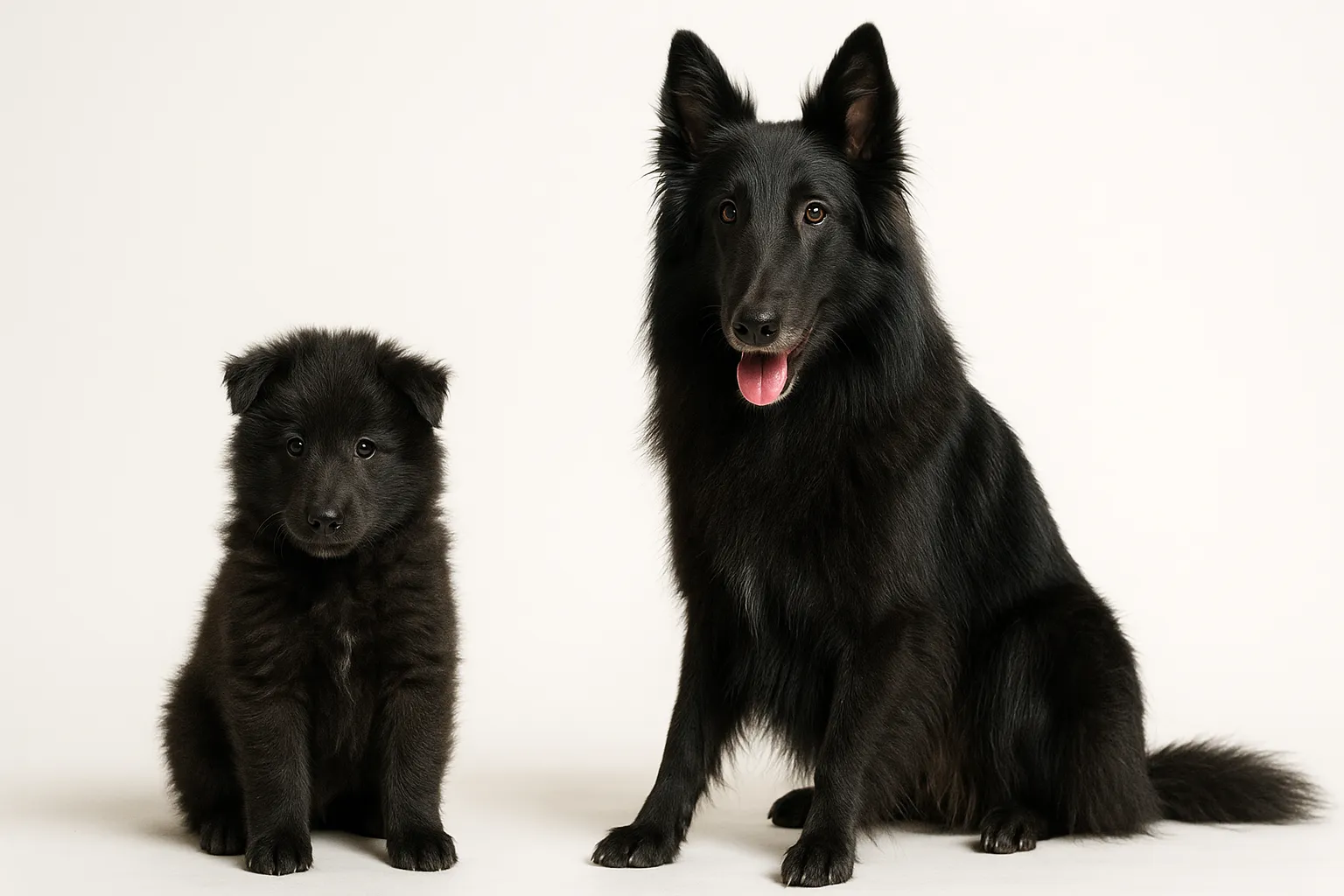
The All-Black Belgian
The Belgian Sheepdog — known internationally as the Groenendael — is the all-black, long-coated variety of the Belgian shepherd. In the US, the four Belgian shepherd varieties hold separate registrations. Elsewhere, they are considered coat varieties of a single breed.
That distinction matters less than what the varieties share: athletic builds, high intelligence, and a working drive that demands engagement. Belgian Sheepdogs live 12-14 years. Their primary health concerns mirror those of their Belgian siblings — hip and elbow dysplasia, epilepsy at above-average rates, and hypothyroidism.
Breed History and How It Shapes Modern Health
The Belgian Sheepdog traces its roots to the late 1800s, when Belgian breeder Nicolas Rose selected for the solid black, long-coated dogs from the general Belgian shepherd population at his Chateau de Groenendael. These dogs were bred for sustained herding work across the Belgian countryside — long days of vigilance, rapid directional changes, and constant low-to-moderate intensity movement.
That working heritage carries direct consequences for modern health. The repetitive locomotion patterns bred into the Groenendael created structural demands on the hip and elbow joints that persist today. Dogs bred for all-day movement develop joint wear differently than sprint-type breeds — the cumulative load is lower per stride but vastly higher over a lifetime. This is why hip and elbow dysplasia screening at 24 months is not optional for this breed.
World War I service as messengers, ambulance dogs, and sentries introduced another dimension. Military selection pressured dogs toward high alertness, rapid environmental assessment, and stress tolerance. That temperament legacy — extraordinary intelligence paired with environmental sensitivity — means Belgian Sheepdogs today carry neurological wiring that, without proper management, manifests as anxiety, hypervigilance, and seizure susceptibility.
Belgian Sheepdogs also served as police dogs throughout the 20th century, further selecting for reactive temperaments. Understanding this lineage helps explain why the breed shows elevated epilepsy rates compared to the general dog population — the same neural excitability that makes them exceptional working dogs may lower seizure thresholds.
Health Risks Worth Knowing
Hip Dysplasia
Hip dysplasia occurs at significant rates in Belgian Sheepdogs. OFA data shows the breed falls in the moderate-risk category among herding breeds. The condition begins with abnormal hip joint development during growth and progresses into chronic arthritis, pain, and mobility loss. Early signs are often subtle — slight hesitation on stairs, difficulty rising after rest, or a barely perceptible shift in gait symmetry.
OFA hip and elbow evaluation at 24 months establishes a structural baseline. Lean body condition and omega-3 supplementation support joint health, while physical rehabilitation for diagnosed dogs slows progression. Weight control alone can reduce hip dysplasia severity by up to 50%, making it the single most impactful modifiable factor.
See the Hip Dysplasia guide for full prevention and management detail.
Elbow Dysplasia
Elbow dysplasia should be evaluated alongside hips at the same 24-month screening. The condition encompasses several developmental abnormalities — fragmented coronoid process, osteochondrosis dissecans, and ununited anconeal process — any of which can cause chronic forelimb lameness.
Early forelimb lameness in a young Belgian Sheepdog warrants radiographic evaluation for elbow disease before secondary changes develop. CT imaging provides superior diagnostic sensitivity compared to standard radiographs for elbow pathology. Dogs with confirmed elbow dysplasia benefit from weight management, controlled exercise, and anti-inflammatory support — surgical intervention may be warranted for specific lesion types identified on imaging.
See the Elbow Dysplasia guide for full prevention and management detail.
Epilepsy
Epilepsy occurs at above-average rates in Belgian Sheepdogs. A 2002 study by Berendt et al. in the Journal of Veterinary Internal Medicine documented elevated epilepsy prevalence across all four Belgian shepherd varieties, with idiopathic epilepsy as the most common form. The typical onset window is 1-5 years of age, though cases outside this range occur.
Seizure logs are essential for management — they give your veterinarian the data needed to make confident treatment decisions. Record seizure date, time, duration, character (focal vs. generalized), pre-ictal behavior, and post-ictal recovery time. Dogs on anticonvulsants require drug level monitoring and liver function checks every 6 months. Phenobarbital is the most commonly prescribed first-line medication, with potassium bromide or levetiracetam as alternatives or adjuncts.
See the Epilepsy guide for full prevention and management detail. For medication monitoring details, see Seizure Medication Monitoring for Dogs.
Progressive Retinal Atrophy (PRA)
PRA is documented in the breed and causes progressive vision loss, typically beginning with night blindness and advancing to full blindness over months to years. Annual CAER (Companion Animal Eye Registry) examinations detect early retinal changes before clinical signs become obvious. DNA testing for known PRA mutations should be part of the initial health screening for any Belgian Sheepdog.
See the Progressive Retinal Atrophy guide for full prevention and management detail.
Cancer
Cancer is a leading cause of death in Belgian Sheepdogs, as it is across many herding breeds. Hemangiosarcoma and lymphoma appear at meaningful rates. Regular veterinary examinations with abdominal palpation, and abdominal ultrasound after age 7, support early detection. Unexplained lethargy, appetite loss, abdominal distension, or pale gums warrant immediate evaluation.
See the Cancer guide for full prevention and management detail. For screening protocols, see Cancer Prevention Screening Stack for Dogs.
Caring for the Long Black Coat
The Belgian Sheepdog’s long black double coat requires brushing 2-3 times weekly to prevent matting, with intensive sessions during the twice-yearly coat blow. Sun exposure can turn the black coat brown over time — limiting prolonged direct sun preserves the color.
After bathing, thorough drying prevents skin conditions from developing under the dense undercoat. Pay particular attention to the ear feathering, which traps moisture. The neck ruff (collarette) and hindquarter feathering are matting hotspots that need regular attention.
During grooming sessions, inspect the skin beneath the coat for hot spots, parasites, or irritation. The dense coat can hide developing skin conditions until they are well-established, making grooming sessions double as health screening opportunities.
Managing a High-Drive Working Brain
Belgian Sheepdogs are among the most mentally demanding herding breeds. They need consistent training, clear boundaries, and substantial daily challenge. Their sensitivity makes them highly responsive to positive training but vulnerable to anxiety in chaotic or unpredictable environments.
Structured working dog sports — herding, Schutzhund, agility, tracking — provide appropriate outlets. The investment in proper training and enrichment pays dividends in behavioral stability throughout the dog’s life. Research from the Dog Aging Project shows that dogs with higher levels of social engagement and mental stimulation demonstrate fewer signs of cognitive decline — a finding particularly relevant for a breed this intelligent.
Mental health is not separate from physical longevity. Chronic stress from inadequate mental engagement drives cortisol elevation, immune suppression, and accelerated cellular aging. For Belgian Sheepdogs, cognitive enrichment is a longevity intervention, not a lifestyle perk. See Anxiety Disorders and Canine Longevity and Environmental Enrichment for Cognitive Health for the evidence base.
Exercise Protocols by Life Stage
Puppy (0-18 months)
Belgian Sheepdog puppies are high-energy from birth, but their skeletal system is not yet ready for the load their enthusiasm generates. During the growth phase, follow the “5 minutes per month of age” rule for structured walks. Avoid repetitive high-impact activities — jumping, hard-surface running, and endless fetch on pavement — until growth plates close around 14-18 months.
Focus instead on controlled socialization walks, basic obedience training (which provides mental exhaustion without joint load), and supervised free play on soft surfaces. Swimming is excellent low-impact exercise once the puppy is confident in water.
Adult (18 months - 8 years)
Adult Belgian Sheepdogs need 60-90 minutes of daily physical activity combined with dedicated mental work. This is a breed that deteriorates without a job. Structure exercise to include long walks or hikes (endurance work), structured training sessions (10-15 minutes, 2-3 times daily), working dog sports (herding, agility, tracking, Schutzhund), and off-leash running in secure areas.
Swimming deserves special emphasis for this breed. It provides cardiovascular conditioning and muscle maintenance without joint impact — particularly valuable given the breed’s hip and elbow dysplasia risk. See Swimming vs. Land Exercise for Dogs for the comparative evidence.
Senior (8+ years)
The transition to senior exercise should be gradual, not sudden. Watch for increased post-exercise recovery time, reluctance to jump or climb, and morning stiffness as signals to modify intensity. Maintain daily activity but shift toward lower-impact options — shorter walks at a comfortable pace, gentle swimming, and nose work that provides mental stimulation without physical strain.
See Age-Appropriate Exercise Transitions and Resistance Training for Senior Dogs for evidence-based senior exercise frameworks.
Catching Hypothyroidism Early
Hypothyroidism in Belgian Sheepdogs can present subtly. Weight gain, coat dullness, lethargy, and cold intolerance often get attributed to normal aging. Annual T4/TSH panels from age 4 catch it early. Free T4 by equilibrium dialysis provides the most accurate assessment when screening results are borderline.
The good news: treated hypothyroidism is effectively controlled with daily levothyroxine. Once stabilized on an appropriate dose, the ongoing management burden is minimal — periodic dose adjustments based on follow-up bloodwork, typically every 6-12 months. Untreated hypothyroidism, however, drives progressive weight gain, skin and coat deterioration, reproductive issues, and behavioral changes that erode quality of life.
See Canine Hypothyroidism Longevity Management and Thyroid Screening Protocol for Dogs for detailed monitoring frameworks.
Breed-Specific Genetic Testing Recommendations
Genetic testing in Belgian Sheepdogs should be comprehensive given the breed’s known heritable conditions. The following panels provide the highest clinical return:
- MDR1 (Multi-Drug Resistance 1) gene test — Belgian Sheepdogs carry the MDR1 mutation at meaningful rates. Dogs with one or two copies of the mutation cannot safely metabolize certain common medications including ivermectin (at high doses), loperamide, and several chemotherapy agents. This is a safety-critical test, not optional.
- OFA hip and elbow evaluation at 24 months — radiographic scoring quantifies orthopedic risk and establishes the structural baseline for lifelong monitoring.
- PennHIP evaluation — provides a distraction index that more precisely predicts hip dysplasia development than standard OFA views, particularly useful in breeding decisions.
- CAER eye examination — annual ophthalmic evaluation screens for PRA, cataracts, and other heritable eye conditions. The Belgian Sheepdog Club of America recommends annual CAER exams.
- Thyroid panel — baseline at age 3-4, then annually, to detect autoimmune thyroiditis before clinical hypothyroidism develops.
Target your testing to the conditions this breed actually gets. Then track findings over time — a genetic predisposition only matters when clinical evidence starts to confirm it. Start your monitoring plan with Hip Dysplasia and Elbow Dysplasia so every test outcome has a clear next step attached to it. Consolidate genetic panel results, bloodwork trends, and your own notes into a single timeline. The connection between a genetic predisposition and an emerging clinical finding only becomes obvious when you can see both at once. Circle back to your genetic data after spay/neuter, at the adult-to-senior transition, and anytime a pattern emerges — weight creeping up, stamina dropping, or behavior shifting without obvious cause. Testing has the most value when it changes what gets measured this quarter. See Genetic Testing for Dogs: Clinical ROI for the full evidence framework.
Nutrition Guidance for Belgian Sheepdogs
Macronutrient Framework
Belgian Sheepdogs do well on quality medium-to-large breed adult food with portions adjusted for activity level. Target a minimum of 25% protein from animal sources to support the lean muscle mass this breed needs for joint protection and sustained energy. Fat content of 12-18% supports coat health and energy needs — working Belgian Sheepdogs may benefit from the higher end of that range.
Caloric needs vary significantly between working and companion Belgian Sheepdogs. A dog in active training or competition may need 30-50% more calories than a household companion. Measure portions rather than free-feeding to maintain the lean body condition (BCS 4-5 on the 9-point scale) that protects joints.
Breed-Specific Nutritional Priorities
- Joint support: Given the breed’s hip and elbow dysplasia risk, omega-3 fatty acids (EPA and DHA from fish oil, dosed at 50-100mg combined EPA/DHA per kg body weight) are a baseline recommendation. See Omega-3 Fish Oil for Dogs for dosing evidence.
- Coat health: The long double coat benefits from adequate fat intake and omega-3/omega-6 balance. Dry, brittle coat or excessive shedding outside normal seasonal patterns may indicate nutritional deficiency or thyroid dysfunction.
- Antioxidant support: Given the breed’s cancer susceptibility, diets rich in natural antioxidants (blueberries, leafy greens, colorful vegetables) may provide modest protective benefit. See Blueberries and Antioxidants for Dogs.
- Feeding frequency: Feed twice daily. Avoid single large meals, particularly given the breed’s deep-chested build.
See Feeding Guide for Medium Breeds for the complete framework.
Supplement Recommendations with Reasoning
The following supplements have the strongest evidence-to-benefit ratio for Belgian Sheepdogs specifically:
-
Omega-3 fish oil — Supports joint health, coat quality, and provides anti-inflammatory protection relevant to the breed’s orthopedic risks. This is the single highest-return supplement for the breed. See Omega-3 Fish Oil for Dogs.
-
Glucosamine/chondroitin — Provides structural support for cartilage in dogs with documented or at-risk hip and elbow dysplasia. The evidence is modest but the safety profile is excellent. See Glucosamine Chondroitin for Dogs.
-
Probiotics — Supports gut health and immune function, which may have downstream effects on the breed’s cancer and autoimmune susceptibility. See Probiotics for Dogs.
-
SAM-e — For dogs on long-term phenobarbital or other hepatotoxic anticonvulsants, SAM-e provides liver protective support. See SAM-e for Dogs.
-
CoQ10 — Supports mitochondrial function and may provide modest benefit for cardiac health and cellular energy production as dogs age. See CoQ10 for Dogs.
See Evaluating Longevity Supplement Claims for Dogs for how to assess supplement evidence critically.
Environmental Considerations
Climate Tolerance
Belgian Sheepdogs were developed in the moderate Belgian climate and tolerate cold weather well thanks to their dense double coat. They can work comfortably in temperatures down to approximately 20F (-7C) for moderate activity periods. However, the breed’s long black coat creates significant heat absorption in warm climates.
In temperatures above 80F (27C), limit exercise to early morning and evening hours. Watch for heat stress signs — excessive panting, drooling, stumbling, or bright red gums. The breed is at moderate risk for heat-related illness during summer months in warmer regions. See Heat Stress Risk Management for Dogs.
Living Space
Belgian Sheepdogs are not apartment dogs. They need a securely fenced yard and daily access to space for running and mental engagement. A 6-foot fence is the minimum — these are athletic dogs capable of clearing lower barriers when motivated. The breed’s intelligence means they can figure out gate latches and weak fence points.
Indoor space should provide a quiet retreat area where the dog can decompress. Given the breed’s environmental sensitivity, a dedicated calm space reduces baseline stress load.
Mental Health and Enrichment Needs
The Belgian Sheepdog’s intelligence is both a gift and a management obligation. These dogs process environmental information at a high rate, which makes them exceptional at working tasks but vulnerable to anxiety disorders when under-stimulated or exposed to unpredictable environments.
Structured Enrichment Protocol
- Daily training sessions: 10-15 minutes, 2-3 times daily, using positive reinforcement. Rotate between obedience, tricks, and task-based challenges.
- Scent work: Hide treats or specific scent targets throughout the home and yard. This engages the dog’s problem-solving abilities without physical strain.
- Novel experiences: Controlled exposure to new environments, surfaces, and social situations maintains neural plasticity and cognitive resilience.
- Puzzle feeders: Replace standard food bowls with puzzle feeders or scatter-feed to extend meal engagement.
- Working dog sports: Herding, agility, tracking, Schutzhund, or rally obedience provide the structured challenge this breed requires.
Anxiety Management
Belgian Sheepdogs are among the breeds most susceptible to separation anxiety, noise phobias, and generalized anxiety. Early socialization (8-16 weeks) is critical. If anxiety behaviors develop, address them promptly — chronic anxiety drives cortisol elevation, immune suppression, and accelerated aging. See Stress and Dog Longevity and Separation Anxiety Health Impact in Dogs.
Senior Care Transition Timeline
Age 7-8: Pre-Senior Assessment
Begin increasing screening cadence. Add baseline senior bloodwork (CBC, chemistry panel, urinalysis, thyroid panel) to identify emerging trends before clinical signs appear. Establish gait video baselines for future comparison. This is the window where subtle orthopedic, endocrine, and early cognitive changes first become detectable.
Age 8-9: Early Senior Adjustments
Shift to twice-yearly veterinary visits. Add abdominal ultrasound for cancer surveillance. Modify exercise intensity — maintain daily activity but reduce high-impact components. Introduce joint-supportive supplements if not already in place. Monitor for cognitive changes: disorientation, altered sleep-wake cycles, house-training regression, or decreased social engagement.
Age 10-11: Active Senior Management
Senior bloodwork every 6 months. Add blood pressure monitoring. Dietary adjustment to senior formulation with enhanced protein quality and joint support. Physical therapy or hydrotherapy for dogs with mobility changes. Begin Canine Cognitive Decline Early Action Plan protocols if any cognitive drift is observed.
Age 12+: Geriatric Comfort and Quality of Life
Focus shifts to comfort, quality of life maintenance, and early identification of decline. Quarterly veterinary assessments. Modify the home environment — ramps for bed/couch access, non-slip surfaces, raised food and water bowls. Regular quality of life assessments using validated scoring tools. See How to Assess Dog Quality of Life and Geriatric Dog Care Guide.
The Prevention Plan That Pays Off
Start here — these are the highest-impact moves for Belgian Sheepdog longevity:
- OFA hip and elbow evaluation at 24 months — orthopedic disease is the primary structural concern
- Annual thyroid panel from age 4 — hypothyroidism documented at elevated rates
- Monitor for epilepsy — above-average rates in Belgian shepherd varieties
These priorities drive the highest return on your preventive care investment. Revisit them seasonally and let your vet know you are tracking these specifically. Use Hip Dysplasia, Elbow Dysplasia, Seizures Epilepsy as your reference.
Body Composition and Muscle Maintenance
Body condition is the single most modifiable longevity factor for a Belgian Sheepdog — every extra pound of fat amplifies risk across joints, heart, and metabolism simultaneously. As a medium breed, body composition stability directly predicts orthopedic longevity and cardiovascular reserve. Herding dogs in sustained movement need stable muscle-to-fat ratios for long-term joint health.
The Purina Lifetime Study demonstrated that lean dogs lived 1.8 years longer than their overweight counterparts. For a breed already susceptible to hip and elbow disease, every excess pound accelerates joint deterioration. Target BCS 4-5 on the 9-point scale. You should see a defined waist from above and feel ribs without pressing through a fat layer. See Body Composition Tracking in Dogs and Canine Obesity and Lifespan Evidence.
Condition-Focused Prevention Stack
Concentrate your prevention investment on Hip Dysplasia, Elbow Dysplasia, Seizures Epilepsy. These are the conditions where the gap between early and late action is widest, and the cost of delay is steepest.
Additional condition targets for comprehensive prevention include Progressive Retinal Atrophy, Cancer, and Hypothyroidism.
Stress, Routine, and Recovery
Daily routine quality directly affects how a Belgian Sheepdog ages. Unpredictable schedules and insufficient mental work often show up as behavior drift, sleep disruption, or recovery problems — sometimes well before physical decline becomes visible.
Sleep quality matters. Belgian Sheepdogs in chaotic households or with irregular schedules show poorer sleep quality, which drives immune suppression and accelerated aging. Aim for 12-14 hours of sleep daily (including naps), with a consistent evening wind-down routine. See Sleep Quality and Cognitive Aging in Dogs and Circadian Rhythm and Dog Longevity.
Preventive Screening Cadence
Plan veterinary reassessment intervals in advance, then tighten cadence when trend logs show drift in orthopedic function or gait quality. Early intervention windows are where most healthspan gains happen.
Breed-Specific Research
Use these evidence deep dives to add context to your Belgian Sheepdog longevity plan:
- Exercise Protocols By Breed Size: exercise and enrichment management for a high-drive herding breed
- Annual Wellness Testing Protocol For Dogs: annual thyroid and orthopedic monitoring framework for Belgian shepherds
- Canine Cognitive Decline Early Action Plan: cognitive health for a highly intelligent herding breed
- Seizure Medication Monitoring for Dogs: anticonvulsant management for breeds with elevated epilepsy risk
- Spay-Neuter Timing and Longevity Context: timing considerations for orthopedic and cancer risk in herding breeds
Comparison with Similar Breeds
Belgian Sheepdog vs. Belgian Malinois
Both share the Belgian shepherd foundation, but the Malinois has a short coat requiring minimal grooming, while the Groenendael’s long coat demands 2-3 brushing sessions weekly. Health profiles are similar — both carry hip/elbow dysplasia and epilepsy risk. The Malinois tends toward even higher drive intensity, while the Sheepdog balances drive with slightly more environmental sensitivity. Lifespan ranges are comparable (12-14 years).
Belgian Sheepdog vs. German Shepherd
German Shepherds (9-13 years) have a shorter typical lifespan and higher rates of degenerative myelopathy — a condition less prominent in Belgian Sheepdogs. Both share hip dysplasia risk, but the German Shepherd’s show-line conformation issues (sloped back) create additional orthopedic burden not present in the Belgian Sheepdog. The Belgian Sheepdog carries higher epilepsy risk. See the German Shepherd Longevity Guide for comparison.
Belgian Sheepdog vs. Border Collie
Both are high-intelligence herding breeds with demanding mental needs. Border Collies (12-15 years) tend toward slightly longer lifespans and carry their own breed-specific conditions (Collie Eye Anomaly, epilepsy). Belgian Sheepdogs are generally larger and carry more orthopedic risk. Both breeds require substantial daily mental engagement for health and behavioral stability.
What Breeding History Tells You
The Belgian Sheepdog was bred for sustained movement, vigilance, and rapid decision-making under workload. That history directly informs current health risks and prevention strategy.
- Structural load patterns and cancer susceptibility both require screening cadence matched to the pace at which these conditions typically progress in this breed.
- Breed heritage and population health data both point to Hip Dysplasia, Elbow Dysplasia, Progressive Retinal Atrophy Pra as the surveillance priorities that deserve the tightest monitoring cadence.
- Small, recurring changes are easier to dismiss than dramatic ones, but they are often more important. A pattern of minor drift is your earliest warning that something is shifting.
- Review your prevention plan at least quarterly. A plan that was right six months ago may no longer match your Belgian Sheepdog’s current trajectory.
Start with what the breed’s history predicts. Adjust based on what your Belgian Sheepdog’s body actually shows over time.
When to Screen, Test, and Reassess
- Puppy to 2 years: OFA hip and elbow evaluation at 24 months, CAER baseline, MDR1 gene test, growth plate monitoring, puppy vaccination series with titer testing consideration
- 3-8 years: Annual thyroid panel from age 4, annual wellness panel with CBC and chemistry, annual CAER exam, seizure monitoring, body condition scoring monthly, dental assessment annually
- 9+ years: Senior panel every 6 months, mobility and gait assessment, cognitive monitoring with validated scoring tools, abdominal ultrasound for cancer surveillance, blood pressure monitoring
Fuel for the Long Run
Belgian Sheepdogs do well on quality medium-to-large breed adult food with portions adjusted for activity level. Lean body condition matters for orthopedic health. Omega-3 supplementation supports both joints and coat.
- Feeding Guide Medium Breeds
- Omega 3 Fish Oil For Dogs
- Glucosamine Chondroitin for Dogs
- Probiotics for Dogs
Putting It All Together
Belgian Sheepdogs with OFA orthopedic screening, thyroid monitoring, and epilepsy management when needed are positioned for healthy lives in the 12-14 year range. Their herding breed constitution supports favorable longevity with consistent preventive care. The breed’s moderate size gives it a natural advantage over larger herding breeds like the German Shepherd — but that advantage only materializes with proactive management of the breed’s specific vulnerabilities.
The emerging longevity science landscape offers potential additional tools. The Dog Aging Project continues to generate data relevant to herding breed aging patterns, and advances in epigenetic age testing may soon allow more precise biological age assessment for individual dogs.
The Drift Patterns Owners Miss First
Early disease progression in a Belgian Sheepdog usually presents as low-grade changes that get attributed to normal aging:
- Hind-limb stiffness after rest related to Hip Dysplasia — often dismissed as “just getting up slow”
- Intermittent forelimb changes tied to Elbow Dysplasia that come and go
- Gradual visual hesitation tied to Progressive Retinal Atrophy Pra that develops so slowly it seems normal
- Subtle seizure activity (focal seizures) that may present as brief “spacing out” episodes rather than full convulsions
- Coat quality deterioration and unexplained weight gain signaling hypothyroidism onset
If baseline function drifts for 7-10 days, treat it as a prevention failure signal and reassess early.
12-Month Longevity Execution Plan
Quarter 1: Baseline and Risk Mapping
- Lock in baseline measurements: body weight, body condition score, resting heart rate, and a short gait video you can compare against later
- Align with your vet on which conditions deserve proactive monitoring and what timeline makes sense for each
- Confirm feeding consistency and caloric accounting across household caregivers
- Complete or update MDR1, hip/elbow, and eye screening as age-appropriate
Quarter 2: Adherence and Early Drift Control
- Look at what worked and what slipped since Q1 — then adjust the plan to fit your actual routine rather than your ideal one
- Flag anything that has shifted since baseline — even minor changes in weight, stamina, or behavior — and check it more frequently
- Fast-track anything unusual: appetite shifts, stamina drops, breathing changes, limping, or behavioral shifts all warrant early vet conversations
- Compare Q2 gait video against Q1 baseline
Quarter 3: Midyear Reassessment
- Mid-year reality check: compare where your dog’s health markers are now against the Q1 baseline and adjust the plan accordingly
- Update your screening cadence using the symptom trends and lab data from the first half of the year
- Recalibrate exercise programming for seasonal changes and any shifts in your dog’s stamina, joint tolerance, or heat sensitivity
- Review supplement stack and adjust based on clinical findings
Quarter 4: Senior-Readiness Update
- Translate twelve months of health data into a specific, written plan for next year’s screening and monitoring priorities
- Update your list of warning signs that trigger a vet call — make it more specific based on what you observed this year
- Write down the specific actions and screening checkpoints for next year so the plan is concrete, not aspirational
- Complete annual comprehensive bloodwork and orthopedic assessment
When to Seek Emergency Care
Do not wait on any of the following:
- Seizure lasting more than 5 minutes, or cluster seizures (multiple seizures within 24 hours)
- Complete food refusal combined with unusual stillness, hiding, or reluctance to engage
- New respiratory distress, collapse, or sudden neurologic change
- Sudden loss of function: inability to bear weight, visible distress during movement, or refusal to stand
- Abdominal distension, pale gums, or unexplained collapse
- Sudden vision loss or acute eye pain (squinting, redness, tearing)
Additional Health Risks to Monitor
Based on breed predisposition data, Belgian Sheepdog owners should also be aware of:
Frequently Asked Questions
How long do Belgian Sheepdogs live?
Belgian Sheepdogs typically live 12-14 years, which is favorable for a medium-to-large herding breed. The breed’s longevity benefits from its moderate size and working dog constitution, but requires proactive management of hip/elbow dysplasia, epilepsy, and thyroid function. Dogs receiving consistent preventive care — including OFA screening, annual thyroid panels, and appropriate exercise — are well-positioned for the upper end of this range.
What is the difference between a Belgian Sheepdog and a Belgian Malinois?
Belgian Sheepdogs (Groenendaels) have a long, solid black double coat requiring 2-3 weekly brushing sessions. Belgian Malinois have a short, fawn-to-mahogany coat with black mask and minimal grooming needs. Both are Belgian shepherd varieties with similar intelligence and working drive. Health profiles overlap significantly, though the Malinois tends toward even higher drive intensity. In the US, they are separate breeds; internationally, they are coat varieties of one breed.
Are Belgian Sheepdogs good for protection work?
Yes — Belgian Sheepdogs have been used in police and military work alongside Belgian Malinois and German Shepherds since World War I. Their intelligence, trainability, and courage make them capable in protection applications. However, protection training should only be undertaken with professional guidance — their sensitivity means improper training methods can create dangerous behavioral instability rather than controlled protective behavior.
Do Belgian Sheepdogs make good family dogs?
For active, experienced dog owners who can provide consistent training and substantial daily exercise and mental stimulation, Belgian Sheepdogs are loyal and excellent family dogs. They bond deeply with their families and are typically good with children they are raised with. However, they are too demanding for sedentary households or owners without herding breed experience. Their herding instinct may manifest as nipping at running children, which requires early training management.
How much do Belgian Sheepdogs shed?
Belgian Sheepdogs shed year-round with two heavy seasonal coat blow periods (spring and fall) lasting 2-4 weeks each. During coat blow, daily brushing is necessary to manage the volume of loose undercoat. Regular year-round brushing (2-3 times weekly) manages normal shedding and prevents matting. They are not suitable for households that cannot tolerate moderate to heavy shedding or invest the time in regular grooming.
What is the MDR1 gene mutation and why does it matter for Belgian Sheepdogs?
The MDR1 (Multi-Drug Resistance 1) gene mutation affects the blood-brain barrier’s ability to pump certain drugs out of the central nervous system. Belgian Sheepdogs carry this mutation at clinically significant rates. Dogs with one or two copies cannot safely receive standard doses of certain medications, including ivermectin (at high doses), loperamide, and some chemotherapy and sedation drugs. Testing is inexpensive, widely available, and should be done before any medication is prescribed.
How do I know if my Belgian Sheepdog is having a seizure?
Full generalized seizures are unmistakable — the dog falls, becomes rigid, and may paddle their legs, salivate, and lose bladder/bowel control. However, Belgian Sheepdogs may also experience focal seizures that present as brief episodes of staring, jaw chattering, one-sided facial twitching, or fly-biting behavior. These subtle presentations are often missed or attributed to quirky behavior. Any repeated episodes of unusual, brief, involuntary behavior warrant veterinary neurological evaluation.
References
[1] Belgian Sheepdog Club of America health resources. bsca.info. [2] OFA health statistics by breed. ofa.org. [3] AKC breed standards and breed history. akc.org. [4] Epilepsy in Belgian shepherds: Berendt M et al. J Vet Intern Med. 2002;16(3):298-303. [5] WSAVA global nutrition guidelines. wsava.org. [6] Effects of Diet Restriction on Life Span and Age-Related Changes in Dogs. Kealy RD et al. JAVMA. 2002;220(9):1315-1320. [7] MDR1 allele frequency in herding breed dogs. Mealey KL et al. JAVMA. 2001;218(10):1570-1572. [8] Dog Aging Project findings. dogagingproject.org. [9] PennHIP evaluation methodology. antechimagingservices.com. [10] Belgian shepherd breed health survey. Royal Belgian Kennel Club.
Related reads
Related Reading
Continue exploring