An Alpine Original with an Extraordinary Coat
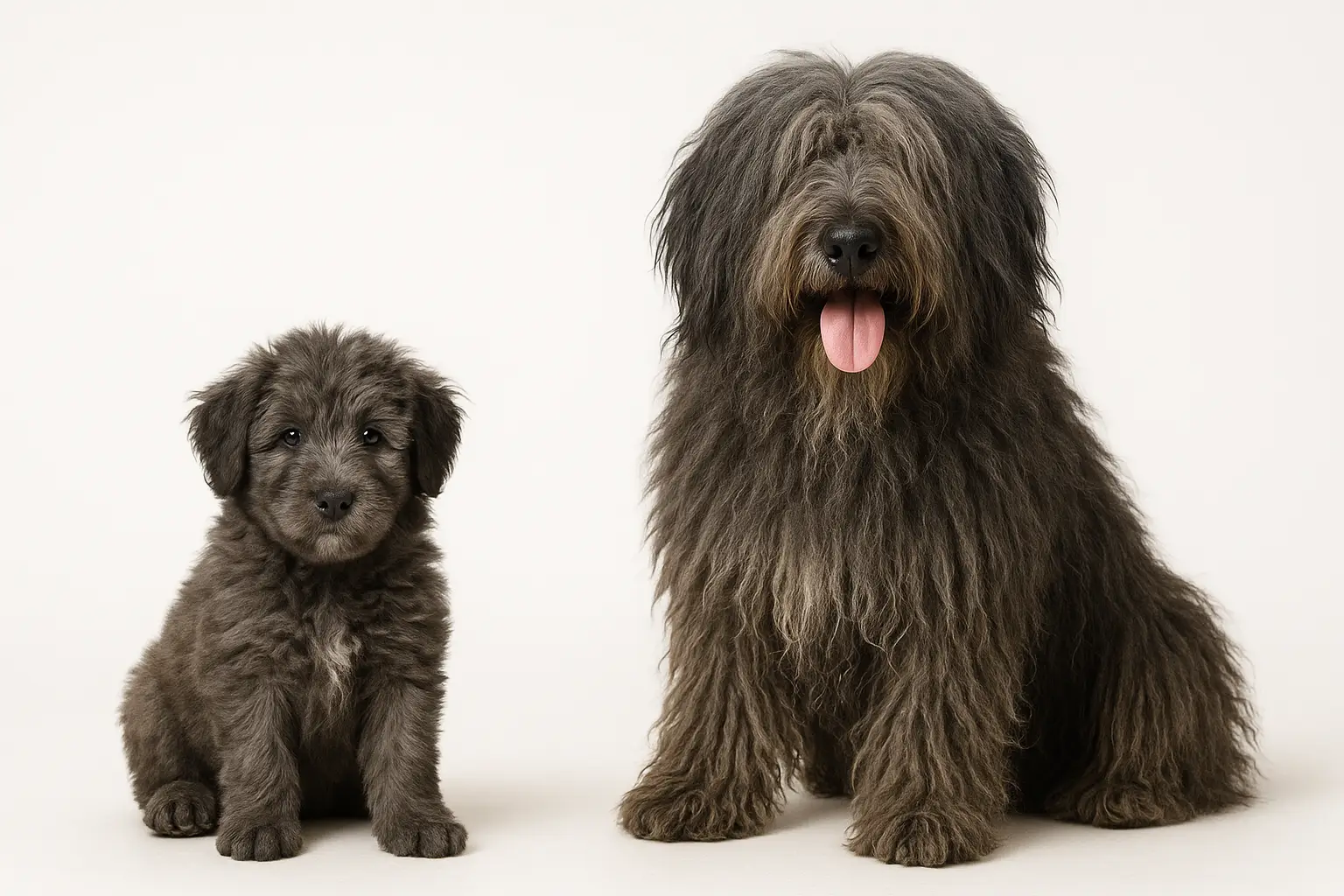
The Bergamasco Sheepdog is an ancient Italian herding breed from the Alps near Bergamo, and it looks like nothing else in the dog world. Three types of hair interweave to form flat mats resembling felt or dreadlocks — a natural coat that once protected these dogs from predators and alpine cold.
At 57-84 lbs, they are large, athletic, and independent thinkers. Their lifespan of 13-15 years is exceptional for a breed this size. Only a few thousand Bergamascos exist worldwide.
That longevity advantage reflects their status as a working-heritage breed with limited inbreeding relative to more popular breeds. They have not been heavily selected for extreme conformation that compromises health. Still, hip dysplasia remains the primary structural concern, and entropion (inward rolling of the eyelids) requires CAER monitoring. The coat itself demands management to prevent skin problems hiding underneath.
Health Risks Worth Knowing
Hip Dysplasia
Hip dysplasia is the most commonly documented orthopedic concern in Bergamascos. OFA hip evaluation at 24 months provides baseline documentation. The breed’s independent herding work depends on functional joints — lean body condition and controlled growth-phase exercise reduce dysplasia severity. Joint supplementation from middle age is appropriate for dogs with OFA borderline or mild findings.
See the Hip Dysplasia guide for full prevention and management detail.
Skin Health Under the Coat
That unique corded coat creates a warm, potentially humid microenvironment against the skin. Improper flocking management leads to skin fold dermatitis, fungal infections, or hot spots. Annual skin inspection under the mats — ensuring the skin beneath stays dry and healthy — prevents chronic problems from taking root.
The coat itself is low-maintenance once fully flocked. But during the mat-formation phase (9-24 months), it requires active, hands-on management.
See the Skin Health Under the Coat guide for full prevention and management detail.
Eye Conditions
Entropion and other inherited eye conditions are documented in the breed. CAER annual eye exams from age 1 detect early changes. Entropion causing corneal irritation may require surgical correction to prevent ulceration and chronic pain.
See the Eye Conditions guide for full prevention and management detail.
Guiding the Coat Through Its Transformation
The Bergamasco coat undergoes a major transformation beginning at 9-12 months, when puppy coat transitions to the adult triple coat. During this phase, owners must manually separate mat sections to form the distinctive flat-sided flocks rather than allowing random tangling.
This process typically takes 2-3 years to complete. Once the coat is fully flocked, it requires minimal daily maintenance — no brushing, only occasional separation of flock tips. Working with an experienced Bergamasco owner or breeder during the development phase is recommended. Getting it right early saves years of trouble.
An Independent Thinker, Not a People-Pleaser
Bergamascos were developed to work independently from shepherds, making decisions about flock movement without handler input. That independence makes them excellent problem-solvers but can challenge owners expecting eager obedience.
Training with positive reinforcement and providing meaningful decision-making opportunities prevents frustration on both sides. They excel in herding, tracking, and activities that leverage their problem-solving intelligence rather than demanding rote compliance.
Health in a Rare Breed
As one of the rarest AKC-recognized breeds, Bergamascos have limited health data compared to popular breeds. The responsibility for breed health falls heavily on breeders using OFA, CAER, and DNA screening tools.
When acquiring a Bergamasco, request health test documentation for both parents. The small gene pool means founder effects — health conditions from original foundation dogs propagate widely — making comprehensive testing especially important.
The Longevity Priorities That Move the Needle
Start here — these are the highest-impact moves for Bergamasco Sheepdog longevity:
- OFA hip evaluation at 24 months — hip dysplasia is the primary structural concern
- Annual CAER eye exam — entropion and inherited eye conditions documented in the breed
- Flocking coat management starting at 9-12 months — the unique matting coat requires specialized care
Frame your prevention investment around these targets. When resources are limited, these are where the evidence says to spend them first. See Hip Dysplasia, Skin Allergies, Eye Conditions for the full clinical picture.
Body Composition and Muscle Maintenance
Body condition is the single most modifiable longevity factor for a Bergamasco Sheepdog — every extra pound of fat amplifies risk across joints, heart, and metabolism simultaneously. As a large breed, joint load and metabolic strain rise quickly when body composition drifts. Herding dogs in sustained movement need stable muscle-to-fat ratios to protect their joints long-term.
Condition-Focused Prevention Stack
The greatest healthspan gains come from focusing prevention on Hip Dysplasia, Skin Allergies, Eye Conditions. Acting at the first credible signal, rather than waiting for certainty, is what separates dogs who maintain function from those who lose it.
Stress, Routine, and Recovery
Bergamascos maintain better long-term stability when workload, recovery, and mental stimulation are intentionally balanced. Without structured cognitive engagement, these independent dogs may develop compulsive behaviors or chronic stress patterns that erode healthspan quietly.
Preventive Screening Cadence
Plan veterinary reassessment intervals in advance, then tighten cadence when trend logs show drift in orthopedic function or gait quality. Early intervention windows are where most healthspan gains happen.
Breed-Specific Research
Use these evidence deep dives to add context to your Bergamasco longevity plan:
- Genetic Testing For Dogs Clinical Roi: health screening in a rare breed with limited published health data
- Hip Dysplasia Lifetime Load Management: hip dysplasia management for a large herding breed
- Senior Dog Screening Protocol: senior monitoring for a large breed with 13-15 year lifespan
How to Use Genetic Panel Results
In Bergamascos, genetic testing delivers value when results link to monitoring cadence and owner execution — not when treated as predictive certainty. MDR1 gene testing guides medication safety. Hip and elbow scoring (OFA or PennHIP) quantifies orthopedic risk.
- Match your initial testing to the breed’s established vulnerabilities. One round of results tells you where to look; repeated clinical assessment tells you what is actually happening.
- Link your monitoring plan to Hip Dysplasia and Eye Conditions first. When test results drive concrete changes in screening cadence or intervention, testing earns its cost.
- A simple log connecting test results, vet findings, and your daily observations is the most underrated diagnostic tool in veterinary medicine. Start one and update it consistently.
- Treat each annual exam as a chance to re-read your genetic data against fresh clinical findings. The same panel results carry different weight as your Bergamasco Sheepdog ages.
A test result that does not change your next action is just information. Make every panel result translate into a specific monitoring decision.
What Breeding History Tells You
The Bergamasco was bred for sustained movement, vigilance, and independent decision-making in alpine conditions. That heritage creates a practical risk profile owners can address through structured prevention.
- Structural load patterns and temperament sensitivity both benefit from tighter monitoring across adulthood.
- Channel your prevention effort toward Hip Dysplasia, Eye Conditions, Skin Allergies, the conditions where this breed’s genetic and functional history creates the greatest vulnerability.
- Small, recurring changes are easier to dismiss than dramatic ones, but they are often more important. A pattern of minor drift is your earliest warning that something is shifting.
- Review and adjust your Bergamasco Sheepdog’s longevity plan every quarter. The right focus at age two is not the right focus at age eight — let age, weight trends, and vet findings guide the updates.
The breed’s past shapes the risk landscape. Your Bergamasco Sheepdog’s present — measured in real data, not assumptions — shapes the response.
When to Screen, Test, and Reassess
- Puppy to 2 years: coat development monitoring, OFA hip evaluation at 24 months
- 3-8 years: annual CAER exam, wellness bloodwork every 2 years, annual skin inspection under coat
- 9+ years: senior panel annually, joint assessment, cognitive monitoring, dental care
Nutrition That Supports a Longer Life
Bergamasco Sheepdogs do well on quality large-breed adult dry food. Lean body condition matters for hip health. Omega-3 supplementation supports skin health under that unique coat. Joint supplementation from middle age is appropriate given hip dysplasia prevalence. The beard and facial furnishings need cleaning after meals.
The Healthspan Horizon
Bergamasco Sheepdogs are among the longer-lived large breeds, reflecting their working heritage and limited inbreeding. With proactive orthopedic screening, coat and skin management, and eye health monitoring, these dogs are well-positioned for functional lives into their mid-teens.
The Drift Patterns Owners Miss First
Long-term decline in a Bergamasco often starts as small changes that get normalized too quickly:
- Hind-limb stiffness after rest related to Hip Dysplasia — often dismissed as “just warming up”
- Subtle hesitation in dim light or unfamiliar spaces that masks Eye Conditions progression
- Chronic hot spots, secondary infections, or coat degradation signaling Skin Allergies that have become harder to reverse
If baseline function drifts for 7-10 days, treat it as a prevention failure signal and reassess early.
Additional Health Risks to Monitor
Based on breed predisposition data, Bergamasco Sheepdog owners should also be aware of:
Frequently Asked Questions
How long do Bergamasco Sheepdogs live?
Bergamasco Sheepdogs typically live 13-15 years — exceptional for a large breed. Their limited inbreeding and working-dog genetics support above-average longevity for their size.
How much grooming does a Bergamasco need?
The Bergamasco coat is paradoxically both demanding and low-maintenance. During coat formation (9-24 months), active mat separation is required to form proper flocks. Once fully flocked, the coat requires minimal maintenance — no brushing needed. Annual inspection of skin beneath flocks is important.
Are Bergamascos good guard dogs?
Bergamascos are alert, observant, and territorial when on watch — traits developed for predator protection of flocks. They are not aggressive but will alert to strangers. Proper socialization from puppyhood prevents excessive guardian reactivity toward non-threatening people.
How rare is the Bergamasco Sheepdog?
The Bergamasco is one of the rarest AKC-recognized breeds, with only a few hundred dogs in North America. Finding a reputable breeder may require patience and a waitlist. The Italian breed association maintains breeder registries.
Do Bergamascos need a lot of exercise?
Bergamascos need moderate daily exercise — 45-60 minutes of activity suits most dogs. They are not hyperactive but were bred for all-day alpine work and have good endurance. Mental stimulation through problem-solving activities is as important as physical exercise.
References
[1] Bergamasco Sheepdog Club of America. bergamascoclub.com. [2] AKC Bergamasco breed information. akc.org. [3] OFA health statistics. ofa.org. [4] Italian herding dog history: Enci registry documentation. [5] Rare breed health considerations: Farrell LL et al. Canine Genetics and Epidemiology. 2015.
Related reads
Related Reading
Continue exploring