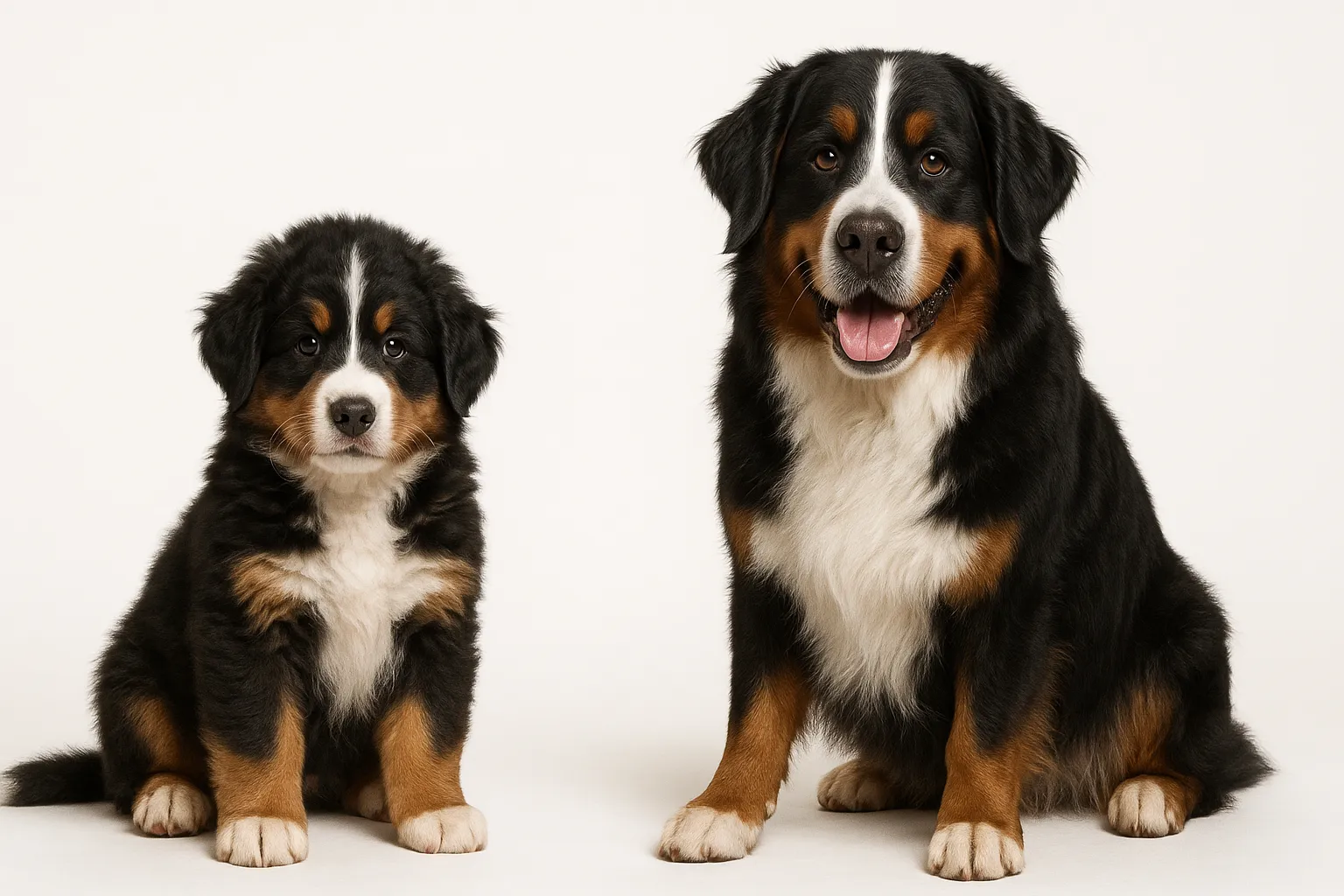
A 7-to-10-Year Window That Demands Early Action
Your Bernese Mountain Dog is statistically one of the shortest-lived popular breeds. That is not a death sentence — it is a signal to front-load prevention harder than any other breed owner. With an expected lifespan of just 7-10 years, driven primarily by an outsized cancer burden and the biological costs of giant-breed growth, every month of delay costs a larger share of the total life you get.
The decisions you make by age 4 or 5 shape what the last few years look like. Start now.
Why Bernese Mountain Dogs Age Faster Than Most Breeds
Several biological factors stack against this breed:
- Rapid giant-breed growth places heavy structural load on joints and organs early in life
- Malignant disease runs through many bloodlines at alarmingly high rates
- Large-joint orthopedic stress accumulates faster than in smaller dogs
- Deep-chested body conformation creates elevated bloat (GDV) risk
None of these factors are destiny. But each one narrows the margin for error, which is why proactive owners consistently get better outcomes than reactive ones.
The Conditions That Shorten Bernese Lives
Cancer: The Primary Threat
Cancer kills more Bernese Mountain Dogs than any other cause. Histiocytic sarcoma alone claims a disproportionate number. Run early mass checks, pursue faster diagnostic workups, and build a clear oncology plan with your vet. These steps are not optional in this breed — they are foundational.
Hip Dysplasia and Arthritis
Joint disease can erode mobility well before a Bernese reaches senior age. Keep weight lean and build a structured low-impact conditioning routine — these deliver the greatest long-term benefit for joint preservation.
Bloat (GDV)
A deep-chested giant breed carrying 70-115 lbs faces real GDV risk. Discuss prophylactic gastropexy with your vet, and know your nearest 24/7 emergency hospital before you ever need it.
Heart Disease
Cardiac changes in large breeds deserve early evaluation, not just late-stage monitoring. Ask your vet to establish a cardiac baseline while your dog is still young and healthy.
Five Actions That Move the Needle Most
- Start baseline screening by age 4-5, before symptoms appear.
- Maintain strict body-condition control through every life stage.
- Build a low-impact strength and mobility routine to protect joints.
- Plan for bloat prevention and know your emergency route.
- Act fast on any new mass, appetite change, or energy drop.
Evidence-Based Longevity Priorities
Keeping Weight Off Protects Everything Else
In Bernese Mountain Dogs, body composition predicts long-term function more reliably than almost any other single factor. Extra weight on a giant frame accelerates orthopedic breakdown and shortens lifespan more dramatically than in smaller breeds.
These dogs were bred for draft work and guarding. Maintaining muscle mass — not just controlling fat — directly affects how long they stay mobile and comfortable.
Layering Cancer Surveillance With Joint Protection
Cancer-risk monitoring and orthopedic preservation work best when treated as one integrated plan, not two separate checklists. The practical approach combines earlier mass/workup escalation, structured hip function monitoring, and planned arthritis mitigation before mobility reserves run out.
Stress, Routine, and Recovery
Bernese thrive on predictability. These guardian and draft breeds maintain better long-term stability when workload, recovery time, and social structure stay consistent. Chronic low-grade stress erodes health quietly, so build routines your dog can rely on.
Screening on a Schedule, Not After a Crisis
Do not wait for something to go wrong before booking a vet visit. Routine screening tied to orthopedic function and gait quality catches subtle drift before it compounds into serious disease.
Breed-Specific Research
Use these evidence deep dives to add mechanism-level context to your Bernese longevity plan:
- Loyal’s LOY-001 and LOY-002: FDA Progress, Clinical Data, and 2026: separates the large-dog LOY-001/LOY-003 pathway from the senior-dog LOY-002 pathway.
- Canine Size Lifespan Biology: explains why body size compresses the prevention timeline in giant breeds.
- Arthritis Pain Stack for Dogs: Mobility-First Framework: joint-protective exercise programming and screening protocols for orthopedic management.
- Blood Pressure Monitoring in Dogs: The Silent Risk Most Owners Miss: cardiac screening schedules and early detection strategies for breed-specific heart conditions.
- Senior Dog Screening Protocol: What to Test and When: evidence-based framework for structuring your breed-specific screening timeline.
What Genetic Testing Actually Tells You
A genetic test result is a starting point, not a verdict. The real value comes from linking results to monitoring cadence and action plans rather than treating test data as predictive certainty. Consider hip and elbow scoring (OFA or PennHIP) to quantify orthopedic risk and breed-specific cancer panel or tumor marker surveillance when available.
- Start with a breed-relevant panel, then confirm findings through serial clinical observations rather than one-time interpretation.
- Connect your first monitoring plan to Cancer and Hip Dysplasia so test results actually change what you do.
- Track everything in one place: test results, exam findings, medication changes, and what you notice at home. Patterns that span months or years only become visible when the data lives together.
- Revisit your genetic panel results at every life-stage transition and whenever your Bernese Mountain Dog shows sustained changes in recovery time, appetite, mobility, or behavior.
Every genetic or diagnostic result should answer one question: what do I do differently starting now?
How Breeding History Shapes Health Risks
Bernese Mountain Dogs were bred for guarding, draft work, and protective temperament. That history created a practical risk profile owners can address through structured prevention.
- Their structural load patterns demand proactive orthopedic surveillance, and their cancer susceptibility benefits from serial tumor monitoring across adulthood.
- Use history-informed triage to prioritize surveillance around Cancer, Hip Dysplasia, Arthritis.
- Treat repeat low-grade changes as a signal to tighten monitoring early, not as noise to watch passively.
- Static prevention plans decay in value. The most effective owners treat their Bernese Mountain Dog’s health plan as something that evolves with every vet visit and every home observation.
Breeding history narrows the search. Serial monitoring data makes the call.
Life-Stage Monitoring Timeline
- Puppy to 2 years: Control growth rate, provide traction surfaces, and keep activity joint-safe.
- 3 to 5 years: Begin early midlife screening with labs, orthopedic exams, and cardiac trend checks.
- 6+ years: Shift to high-frequency reassessment with cancer surveillance and mobility planning.
Owner Dashboard: What to Track Monthly
- Body weight and body condition score
- Gait and transition quality (sit-to-stand, stairs, post-walk recovery)
- Appetite, energy, and social engagement
- Any new mass, abdominal distress, or breathing change
When to Screen, Test, and Reassess
- Puppy to 2 years: Establish baseline weight, behavior, mobility, and preventive-care routines specific to this breed.
- 3 to 8 years: Annual preventive labs and exams with targeted screening for early trends in cancer, hip dysplasia, and arthritis.
- 9+ years: Shift to semiannual monitoring with faster response to subtle appetite, stamina, breathing, or neurologic changes.
Longevity Outlook: Seven Years Is Not a Ceiling
The hardest part of loving a Bernese Mountain Dog is knowing the math. Seven to ten years is not long enough for a dog this gentle, this devoted, this deeply embedded in the rhythm of a family. But the spread within that range matters enormously. The difference between a Bernese who declines at 6 and one who maintains quality of life at 9 or 10 is not genetics alone — it is what the owner did with the years they had.
The owners who get the best outcomes treat cancer surveillance and mobility protection as a single integrated system. They do not wait for a lump to grow or a limp to worsen. They run monthly mass checks, maintain lean body condition through every season, and escalate the moment appetite, gait, or stamina trends shift. In a breed with this timeline, a week of delay costs more than it would in a dog with 15 years to work with.
The Changes Owners Miss Most Often
Long-term decline in Bernese dogs often begins as small changes that get normalized too quickly:
- Intermittent appetite dips or unexplained fatigue linked to Cancer that owners dismiss as “just an off day”
- Subtle compensation patterns that mask Hip Dysplasia progression — bunny-hopping gait, reluctance to jump, or slower rises
- Gradual drift toward Arthritis that becomes harder to reverse — persistent limping, reluctance to walk, visible muscle loss
If your dog’s baseline function has been drifting for 7-10 days, treat it as a signal to reassess now rather than wait.
The Midlife Cancer Surveillance Window
In Bernese Mountain Dogs, the highest-value cancer surveillance starts in midlife, not late senior years. Building a structured mass-check habit, logging appetite and stamina trends, and shortening the gap between “something new” and diagnostics can meaningfully change treatment options.
Keep a low threshold for escalation when changes are new, persistent, and unexplained.
When a Stable Dog Starts Losing Reserve
Bernese dogs can look stable right up until reserve narrows quickly. Watch for these high-risk signals:
- A sharper drop in stamina over 2-4 weeks
- New reluctance during transitions — getting into the car, rising from rest, navigating stairs
- Appetite and engagement declining without a clear environmental cause
When these signals cluster, early diagnostics almost always outperform prolonged observation.
Bloat Emergency Readiness Audit
For deep-chested giant breeds, re-audit your emergency preparation quarterly:
- Identify primary and backup emergency hospitals with drive times mapped
- Build a transport plan for nights and weekends when staffing is limited
- Establish a household agreement on immediate response to retching, distension, or collapse
A prepared response often matters more than any single home intervention.
Questions to Ask at Every Cancer-Focused Vet Visit
Use this short script at midlife and senior visits so cancer discussions produce action, not just awareness:
- Ask what new signs in your specific dog should trigger same-week diagnostics.
- Confirm which tests are first-line for unexplained appetite or energy decline.
- Review expected turnaround time for cytology or biopsy and who owns follow-up communication.
- Set a written recheck date before leaving the clinic.
Reducing diagnostic delay matters more than identifying risk alone.
Protecting Functional Reserve Before It Disappears
Bernese Mountain Dogs often compensate well until reserve drops suddenly. Protect that reserve with explicit rules:
- Limit high-impact activity sessions and space them out rather than clustering on weekends
- Use recovery-day movement — controlled walks, gentle mobility work — instead of full inactivity
- Treat two-week declines in sit-to-stand speed, stair confidence, or post-walk recovery as reassessment triggers
This approach catches progressive decline before it becomes irreversible.
Condition-Specific Monitoring Triggers
Use this checklist so subtle drift gets addressed before disease burden compounds:
- Cancer: Track any new growth from first discovery. Measure it, photograph it, and note whether it changes. Lumps that grow, change texture, or become fixed to underlying tissue need prompt evaluation.
- Hip Dysplasia: Track post-exercise recovery: how long does stiffness last after a walk? If recovery time is lengthening month over month, schedule a reassessment.
- Arthritis: Watch for the small changes: slower to rise, hesitation before jumping, less interest in walks that used to excite them. These are not “just getting old” — they are treatable.
- Bloat (GDV): Track appetite, stool quality, and vomiting frequency; escalate for persistent GI signs or rapid weight change.
- Heart Disease: Learn to count sleeping respiratory rate and record it weekly. A consistent trend upward — even within normal range — can signal early decompensation before clinical signs appear.
- Lyme Disease: Track any lameness that shifts between legs, appears suddenly, or worsens without clear injury. Combined with tick exposure history, this pattern warrants Lyme testing.
12-Month Longevity Execution Plan
Use this quarterly framework to keep prevention proactive instead of reactive:
Quarter 1: Baseline and Risk Mapping
- Document where your dog stands now — weight, body condition score, mobility quality, and behavioral patterns — so future changes are measured against real data
- Identify the conditions most likely to affect this breed and agree on specific screening milestones with your veterinarian
- Eliminate feeding variability: one person measures meals, treats count toward daily calories, and table scraps are off the table
- Set up your cancer surveillance baseline: abdominal imaging plus a complete blood count that future results can be measured against
Quarter 2: Adherence and Early Drift Control
- Run a candid self-assessment: are you hitting the screening targets, feeding protocols, and exercise routines you set in Q1?
- If any tracked metric is drifting from baseline, increase how often you check it rather than waiting for the next scheduled review
- Bring any change in eating behavior, exercise tolerance, respiratory effort, gait, or mental sharpness to your vet’s attention early
- Take a fresh walking video under the same conditions as Q1 and note any changes in movement fluidity, pace, or gait symmetry
Quarter 3: Midyear Reassessment
- Reassess the first half of the year — which prevention strategies delivered measurable results, and which need recalibration?
- Recalibrate your screening schedule based on real-world findings, not the plan you wrote in January
- Adapt exercise type and intensity for the current season and your dog’s evolving physical capacity
- Repeat resting respiratory rate trending and cardiac auscultation if murmur or arrhythmia risk is present
Quarter 4: Senior-Readiness Update
- Build next year’s prevention calendar from this year’s data: what screening intervals worked, what needs to change?
- Refine your escalation criteria based on what you learned about how this breed’s conditions present and progress
- Document lessons learned and translate them into specific next-year commitments: what to measure, when to measure it, and what to do if something shifts
- Repeat abdominal ultrasound and senior bloodwork for year-end cancer surveillance
- Complete year-end orthopedic assessment and adjust exercise load for next year
When to Seek Same-Day Veterinary Care
Do not wait if you notice any of the following:
- Sudden appetite loss combined with marked lethargy
- Any combination of breathing difficulty, loss of consciousness, or sudden neurologic abnormality warrants immediate veterinary contact
- Persistent GI distress: repeated vomiting, straining without production, abdominal pain posturing, or sudden abdominal bloating
- Dramatic overnight change in how your dog moves, rests, or interacts with the household
- Unproductive retching, restlessness, and rigid abdomen (bloat emergency)
- Syncope or persistent tachypnea at rest — either sign points to cardiovascular or respiratory deterioration that needs same-day workup
This Year’s Highest-Yield Priorities
Focus on these three actions this year. Review progress every quarter and adjust with your veterinarian based on trend data and exam findings.
- Keep body condition lean to reduce orthopedic and cardiac strain
- Use proactive cancer surveillance after age 5-6
- Discuss bloat prevention
Home Tracking Dashboard
Monitor these indicators monthly so gradual shifts do not go unnoticed:
- Body weight and body-condition score documented side by side for trend comparison
- Appetite, water intake, and stool/urine pattern changes
- Any new lumps, bumps, or skin changes
- Energy level and recovery time after exercise
- Exercise tolerance and post-activity recovery quality
- How well your dog sleeps, whether daily behavior patterns remain stable, and any changes in social interest
- Condition-specific early drift markers tied to cancer, hip dysplasia, arthritis
Nutrition That Supports a Longer Life
Bernese Mountain Dogs need nutrition discipline from the growth phase through midlife to protect joints and metabolic reserve. Use Feeding Guide for Giant Breeds as your default structure, then add targeted supplements like Omega-3 Fish Oil for Dogs only when you have clear goals and metrics to track.
Avoid the “large-bowl compensation” trap after low-activity periods. In this breed, calorie overshoot compounds both orthopedic and cancer-pathway burden.
Frequently Asked Questions
Why does early nutrition discipline matter so much in Bernese dogs? Giant-breed growth puts enormous load on developing joints and organs. Getting nutrition right early prevents compounding orthopedic and metabolic risk that becomes much harder to reverse later.
Should I wait for obvious limping before tightening the feeding plan? No. By the time you see a limp, joint damage has already progressed. Earlier correction of weight drift preserves significantly more function.
Can supplements replace core feeding structure in this breed? No. Supplements are adjuncts that work alongside a solid feeding plan — they cannot compensate for poor baseline nutrition or chronic overfeeding.
How often should I review body condition in a Bernese? At least monthly, and more frequently during growth phases, treatment changes, or any period where weight or energy seems to be drifting.
What’s the biggest preventable nutrition mistake? Allowing slow calorie creep while assuming high body mass is “normal for the breed.” It is the most common and most damaging pattern.
References
[1] AKC Bernese Mountain Dog Breed Information [2] Life expectancy, mortality, and longevity in companion dogs (Scientific Reports, 2024) [3] OFA CHIC Program [4] Merck Veterinary Manual [5] AAHA Canine Life Stage Guidelines
Related reads
Related Reading
Continue exploring