A Genetic Time Bomb You Can Defuse With One Test
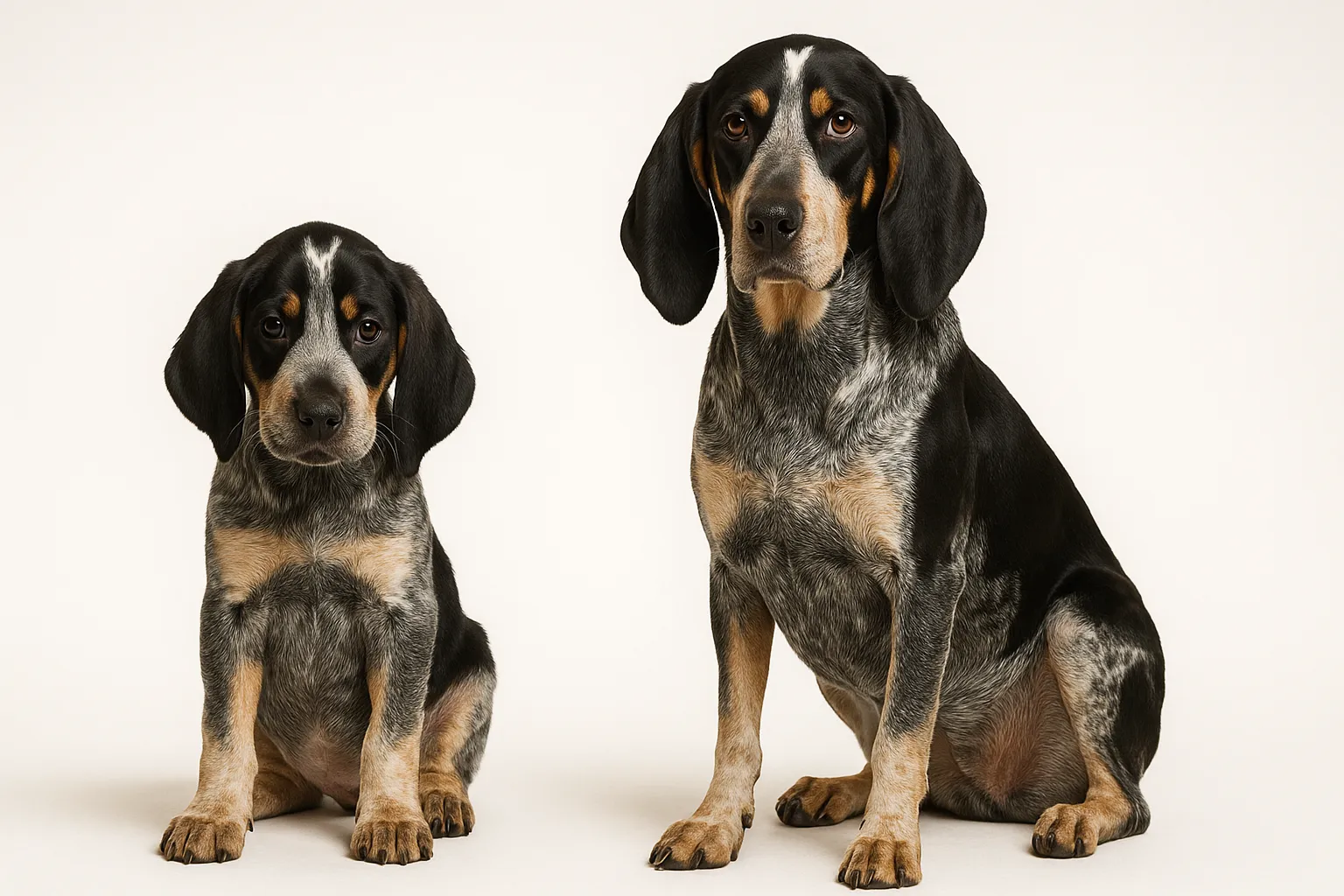
Few breeds carry a genetic time bomb as specific and preventable as the one hiding in the Bluetick Coonhound gene pool. These vocal, athletic American tracking hounds live 11-12 years on average, recognized instantly by their striking blue-ticked coat pattern — black mottling on a gray background. But the health story that defines this breed is GM1 gangliosidosis, a lysosomal storage disease that causes progressive neurological deterioration and death, found almost exclusively in Bluetick Coonhounds. A single DNA test can identify it. Beyond that, hip dysplasia and chronic ear infections are the day-to-day management priorities that shape quality of life.
GM1 gangliosidosis results from a deficiency of the enzyme beta-galactosidase. Without it, ganglioside GM1 accumulates in neurons, triggering progressive neurological decline — ataxia, tremors, behavioral changes — typically between 6 and 12 months of age. Affected dogs die by age 1-2. DNA testing can identify both affected and carrier dogs before breeding decisions are made. Hip dysplasia and ear infections round out the secondary health picture.
Health Risks Worth Knowing
Hip Dysplasia
Hip dysplasia occurs in Bluetick Coonhounds at moderate rates for a large working hound. OFA hip evaluation at 24 months gives you a structural baseline to work from. Keeping weight in check and adding omega-3 supplementation supports joint health across the long working life these dogs were built for.
See the Hip Dysplasia guide for full prevention and management detail.
Ear Infections (Otitis Externa)
Those beautiful pendulous hound ears come with a cost. The Bluetick Coonhound’s ear anatomy creates a warm, moist environment that bacteria and yeast love. Weekly inspection and cleaning with a veterinarian-recommended cleanser keeps infections at bay. Cleaning after every hunt and every swim is non-negotiable. When infections do take hold and persist, culture-guided treatment prevents chronic problems from developing.
See the Ear Infections (Otitis Externa) guide for full prevention and management detail.
Bloat (GDV)
Deep-chested and large-bodied, Bluetick Coonhounds carry real GDV risk. Prophylactic gastropexy performed at spay or neuter prevents the life-threatening volvulus component entirely. Beyond surgery, feeding twice daily and holding off on vigorous exercise after meals both reduce risk further.
See the Bloat (GDV) guide for full prevention and management detail.
Science-Backed Longevity Strategies
GM1 Gangliosidosis DNA Testing
This is the single most important health test you can run for a Bluetick Coonhound. Affected dogs — those homozygous for the mutation — develop progressive neurological disease and die before age 2. There is no treatment. The only management strategy is prevention through responsible breeding: pairing two carriers produces affected offspring 25% of the time, so all breeding dogs must be tested. For pet owners, a DNA test confirms your dog’s status and removes the uncertainty entirely.
Hound Ear Management
Ear care is a lifelong commitment with this breed. The heavy, pendulous ears trap moisture and block airflow into the canal — ideal conditions for bacterial and yeast overgrowth. Each week, lift the ear flap, inspect the canal, and clean with a vet-recommended solution. After any water exposure, dry the canal right away. Learning to recognize early infection signs — head shaking, scratching, odor — means you can treat promptly and prevent chronic damage.
Field Work Physical Monitoring
A Bluetick working in the field faces dense vegetation, water crossings, and rough terrain daily. After every hunt, inspect paws, ears, eyes, and body for injuries. Early treatment prevents complications. Keep in mind that this breed’s working drive and natural stoicism can mask significant injuries — a Bluetick may not limp or slow down even when something is genuinely wrong.
The Three Things That Matter Most
The prevention actions most Bluetick Coonhound owners should prioritize above all else:
- GM1 gangliosidosis DNA testing — a fatal lysosomal storage disease unique to Bluetick Coonhounds
- OFA hip evaluation at 24 months given moderate hip dysplasia prevalence
- Weekly ear cleaning — pendulous hound ear anatomy creates high infection susceptibility
Use these priorities to structure your veterinary conversations and home monitoring routine. The condition guides — Hip Dysplasia, Ear Infections, Bloat — provide the clinical detail behind each recommendation.
Evidence-Based Longevity Priorities
Body Composition and Muscle Maintenance
Keeping your Bluetick lean and well-muscled ranks among the highest-yield longevity interventions you can make. Joint load and metabolic strain climb fast in large breeds when body composition drifts even slightly. These pursuit athletes depend on sustained lean mass for both joint function and cardiovascular efficiency — letting that slip accelerates aging across every system.
Condition-Focused Prevention Stack
For Bluetick Coonhounds, the conditions most likely to shorten lifespan or erode quality of life are Hip Dysplasia, Ear Infections, and Bloat. Building your prevention strategy around these three targets — and executing consistently — preserves your options and prevents the slow treatment drift that happens when problems go unaddressed.
Behavior, Stress Load, and Recovery
Household consistency matters more than most Bluetick owners realize. Irregular schedules and insufficient scent work create behavior drift and recovery problems that show up well before any physical decline does. Structure their mental life and the physical health follows.
Preventive Screening Cadence
Schedule veterinary reassessments by age band and trend changes rather than waiting for something to go visibly wrong. Planned checkpoints focused on orthopedic function and gait quality improve early detection and intervention timing dramatically.
Breed-Specific Research
Use these evidence deep dives to add mechanism-level context to your Bluetick Coonhound longevity plan:
- Genetic Testing For Dogs Clinical Roi: evidence for GM1 gangliosidosis DNA testing and storage disease prevention
- Exercise Protocols By Breed Size: exercise management for large working scent hound breeds
- Annual Wellness Testing Protocol For Dogs: wellness monitoring framework for working hound breeds
Making Genetic Testing Actionable
For a Bluetick Coonhound, genetic testing delivers its greatest value when results directly change what you measure, how often, and what triggers your next move. Hip and elbow scoring (OFA or PennHIP) quantifies orthopedic risk. A CERF eye exam or PRA gene testing catches heritable eye disease early. Together, these give you a starting risk map.
- Run a genetic panel that targets the conditions most common in Bluetick Coonhounds. Treat the results as a monitoring guide, not a diagnosis — confirm findings through serial clinical follow-up.
- Link your first monitoring playbook to Hip Dysplasia and Ear Infections so that test results translate into changed daily practice.
- Consolidate lab results, exam notes, medication history, and what you see at home into a single health file. Trend recognition depends on having all the data in one view.
- Genetic results mean different things at different ages. What looked like a low-risk finding at two years old may deserve closer monitoring by age seven when the clinical picture has changed.
Genetic testing earns its cost when it directly changes which conditions you screen for and how often.
Breeding History & Health Implications
The Bluetick Coonhound was built for tracking endurance, pursuit speed, and scent-driven work. That heritage creates structural load patterns demanding proactive orthopedic surveillance in every modern companion dog from this lineage.
- Structural load from a lifetime of athletic work means orthopedic monitoring cadence should tighten, not loosen, as your dog moves through adulthood.
- Prioritize surveillance based on breed heritage — Hip Dysplasia, Ear Infections, and Bloat are the highest-probability targets that history and data both point to.
- Treat repeat low-grade drift as a signal to act earlier, not background noise to watch passively.
- Reassess your prevention plan every quarter so updates reflect real trend data instead of assumptions.
Breed heritage sets the surveillance priorities. Your Bluetick Coonhound’s individual data tells you when to act.
What to Test and When
- Puppy: GM1 gangliosidosis DNA test, OFA hip at 24 months, establish ear care routine
- 3-7 years: annual wellness panel, monthly ear care, body condition monitoring
- 8+ years: senior panel annually, ear monitoring, orthopedic assessment
What and How to Feed
Bluetick Coonhounds thrive on complete large-breed adult diets with caloric management calibrated to activity level. A working dog burning hundreds of calories in the field needs more fuel than a household companion — and household dogs need strictly measured portions to prevent creep. Omega-3 supplementation supports both joint and general health. Feed twice daily given GDV risk.
What the Future Can Hold
A Bluetick Coonhound whose GM1 gangliosidosis status is clear — or who comes from a carrier-without-carrier-mate pairing — and who receives consistent ear care and hip screening, can live a healthy, active life in the 11-12 year range. The breed’s most serious genetic risk is entirely preventable through one DNA test.
Most-Missed Early Drift Pattern
Healthspan erosion in a Bluetick Coonhound typically starts with subtle shifts that are easy to rationalize away:
- Subtle hind-limb stiffness after rest related to Hip Dysplasia that owners dismiss as “just getting up slowly”
- A mild ear odor tied to Ear Infections that gets written off as normal hound smell
- Gradual onset of Bloat warning signs — unproductive retching, rigid distended abdomen, rapid deterioration — that demand immediate emergency response
Treat any week-long departure from established baselines as a call to investigate, not a call to wait. Early reassessment preserves options that delay eliminates.
Additional Health Risks to Monitor
Based on breed predisposition data, Bluetick Coonhound owners should also be aware of:
Frequently Asked Questions
How long do Bluetick Coonhounds live?
Bluetick Coonhounds typically live 11-12 years. GM1 gangliosidosis DNA testing, consistent ear care, and hip evaluation are the key longevity investments.
What is GM1 gangliosidosis in Bluetick Coonhounds?
GM1 gangliosidosis is a fatal lysosomal storage disease unique to Bluetick Coonhounds that causes progressive neurological deterioration and death by age 1-2 in affected dogs. DNA testing identifies affected and carrier dogs — responsible breeders test all breeding animals.
Are Bluetick Coonhounds loud?
Yes — Bluetick Coonhounds are known for their loud, musical baying, particularly when on scent. This is a breed-characteristic trait essential for their hunting function. It makes them challenging in suburban or urban environments without adequate management.
Do Bluetick Coonhounds make good pets?
Bluetick Coonhounds are loyal, affectionate dogs with family but require substantial exercise and secure fencing. Their strong scent drive means they may follow a trail and ignore recall commands. They are best suited to active owners in rural or semi-rural settings.
Are Bluetick Coonhounds and Black and Tan Coonhounds the same?
No — they are distinct breeds with different coat patterns. Bluetick Coonhounds have a blue-ticked (black mottled on gray) coat; Black and Tan Coonhounds have a solid black body with tan markings. They share similar health profiles but have different breed-specific genetic concerns.
References
[1] GM1 gangliosidosis in Bluetick Coonhounds: Yamato O et al. Vet Pathol. 2000. [2] American Bluetick Coonhound Association health resources. [3] OFA health statistics by breed. ofa.org. [4] WSAVA global nutrition guidelines. wsava.org. [5] Lysosomal storage diseases in dogs: Bhaumik M et al. J Clin Invest. 1999.
Related reads
Related Reading
Continue exploring