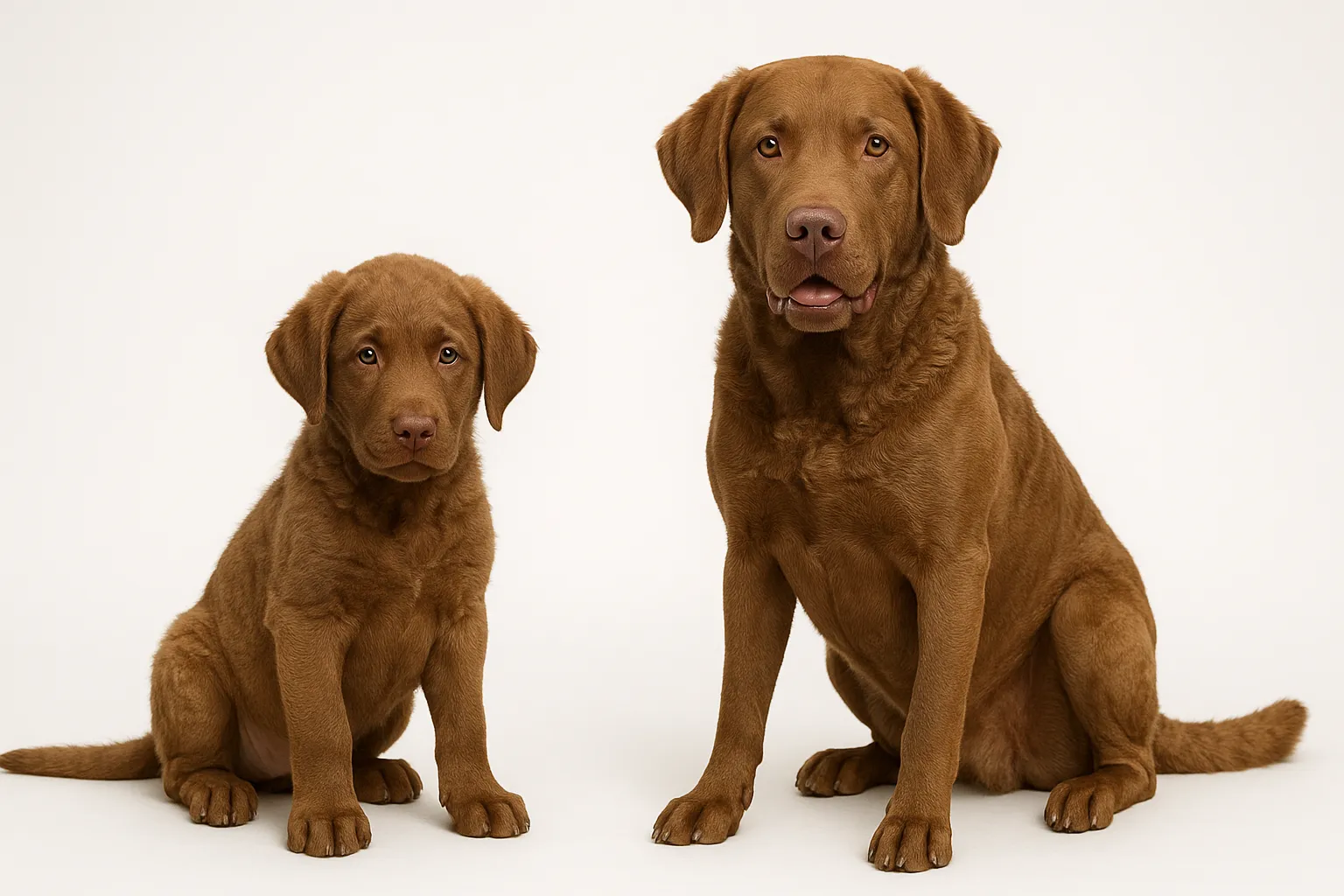
The Toughest Retriever — With Tradeoffs to Match
Chesapeake Bay Retrievers were developed to retrieve waterfowl from the frigid, choppy waters of the Chesapeake Bay. That ruggedness comes with tradeoffs. Typical lifespans of 10-13 years reflect both their large body size and elevated cancer mortality.
Hip dysplasia is the most prevalent structural condition — Chessies carry higher rates than other retriever breeds, according to OFA data. Progressive retinal atrophy and hereditary cataract are the primary eye concerns, requiring DNA testing and CAER monitoring.
Cancer mortality runs above average, with osteosarcoma, lymphoma, and hemangiosarcoma all appearing at elevated rates. Their distinctive wavy, oily coat provides exceptional cold-water insulation but tells you nothing about what is happening inside.
The Health Conditions That Define This Breed
Hip Dysplasia
Hip dysplasia is the most prevalent structural condition in Chesapeake Bay Retrievers, with OFA statistics showing significant rates of affected dogs. An OFA hip evaluation at 24 months establishes the structural baseline. Lean body condition management is the most impactful modifiable intervention. Surgical options exist for clinically significant dysplasia.
See the Hip Dysplasia guide for full prevention and management detail.
Progressive Retinal Atrophy
PRA is documented in Chesapeake Bay Retrievers with breed-specific mutations. DNA testing for prcd-PRA mutations identifies affected and carrier dogs before clinical signs develop. Annual CAER examinations provide clinical monitoring alongside genetic results. Affected dogs progress from night blindness to complete blindness over months to years.
See the Progressive Retinal Atrophy guide for full prevention and management detail.
Cancer
Cancer mortality is elevated in Chesapeake Bay Retrievers relative to many sporting breeds. Osteosarcoma, lymphoma, and hemangiosarcoma are among the cancers reported at above-average rates. Annual physical examination with lymph node palpation and abdominal assessment from age 4-5 provides a cancer surveillance baseline. Any unexplained weight loss, lameness, or lymph node enlargement warrants prompt veterinary evaluation.
See the Cancer guide for full prevention and management detail.
Evidence-Based Ways to Extend Healthspan
Hip Dysplasia Management
Chesapeake Bay Retrievers have among the highest OFA-documented hip dysplasia rates of any retriever breed. Weight management starting from puppyhood — maintaining lean body condition through the first 18 months when joints are most vulnerable — is the most evidence-supported preventive strategy.
OFA hip evaluation at 24 months provides structural data for both breeding decisions and individual health management. Dogs with diagnosed dysplasia benefit from a veterinarian-supervised program of appropriate exercise, omega-3 supplementation, and strict weight control.
Eye Health Baseline
PRA DNA testing early in life identifies Chessies that will develop progressive blindness. Annual CAER examinations monitor for early clinical signs and screen for other hereditary eye conditions, including hereditary cataract. Vision loss can be prepared for and adapted to. Sudden onset of visual signs requires same-day evaluation to rule out treatable causes.
Breed Character and Longevity Management
Chesapeake Bay Retrievers are independent, strong-willed, and intensely loyal dogs that can challenge inexperienced owners. Their resilience and stoicism mean they may not show pain or discomfort as obviously as more expressive breeds.
This matters for longevity management. Owners need to watch for subtle behavioral changes — reduced enthusiasm for water, reluctance to climb stairs, hesitation on certain surfaces — that may signal orthopedic pain long before overt lameness develops. A Chessie that stops wanting to swim is telling you something important.
Where to Focus Your Prevention Effort
The actions most likely to extend your Chesapeake Bay Retriever’s healthy years:
- OFA hip evaluation at 24 months — hip dysplasia is among the most prevalent conditions in this breed
- PRA DNA testing and annual CAER ophthalmology exam
- Annual cancer surveillance after age 5 — Chesapeake Bay Retrievers have elevated cancer mortality
These priorities drive the highest return on your preventive care investment. Revisit them seasonally and let your vet know you are tracking these specifically. Use Hip Dysplasia, Progressive Retinal Atrophy Pra, Cancer as your reference.
Evidence-Based Longevity Priorities
Body Composition and Muscle Maintenance
Keeping your Chesapeake Bay Retriever lean and well-muscled is one of the highest-yield longevity interventions available. As a large breed, joint load and metabolic strain rise quickly when body composition drifts above target. Bred for endurance work, these dogs maintain better muscle quality when activity patterns remain consistent — regular swimming is ideal.
Condition-Focused Prevention Stack
The highest-return prevention focus starts with the conditions most likely to reduce lifespan or quality of life: Hip Dysplasia, Progressive Retinal Atrophy Pra, Cancer. Intervening early keeps your treatment options open and prevents the compounding damage that delay invites.
Behavior, Stress Load, and Recovery
Keeping household rhythm deliberate — stable sleep windows, predictable activity cycles, and protected rest periods — prevents the stress-load accumulation that shortens healthspan in active sporting breeds. Chessies that work hard need structured recovery to match.
Preventive Screening Cadence
Schedule veterinary reassessment intervals by age band and trend changes rather than waiting for obvious deterioration. Planned checkpoints focused on orthopedic function and gait quality improve early detection and intervention timing.
Breed-Specific Research
Use these evidence deep dives to add mechanism-level context to your Chesapeake Bay Retriever longevity plan:
- Canine Cancer Early Warning Workflow: cancer surveillance framework applicable to high-cancer-risk retrievers
- Muscle And Mobility Longevity Protocol: joint health and muscle maintenance protocol for large retrievers with hip dysplasia
- Genetic Testing For Dogs Clinical Roi: evidence for PRA DNA testing and hereditary disease identification
What Genetic Testing Can and Cannot Tell You
Genetic testing in Chesapeake Bay Retrievers should drive monitoring strategy, not replace it. Use results to tighten surveillance windows and calibrate intervention thresholds. Consider hip and elbow scoring (OFA or PennHIP) to quantify orthopedic risk and SOD1 gene testing for degenerative myelopathy risk stratification as part of the initial assessment.
- Target your testing to the conditions this breed actually gets. Then track findings over time — a genetic predisposition only matters when clinical evidence starts to confirm it.
- Build your initial monitoring playbook around Hip Dysplasia and Progressive Retinal Atrophy Pra, so that every test result feeds into a specific follow-up action.
- Consolidate genetic panel results, bloodwork trends, and your own notes into a single timeline. The connection between a genetic predisposition and an emerging clinical finding only becomes obvious when you can see both at once.
- Circle back to your genetic data after spay/neuter, at the adult-to-senior transition, and anytime a pattern emerges — weight creeping up, stamina dropping, or behavior shifting without obvious cause.
Measure to decide, not to collect. If a result does not change your monitoring cadence or intervention threshold, question whether you needed it.
Breeding History & Health Implications
The Chesapeake Bay Retriever was bred for stamina, retrieval work, and sustained field activity in harsh conditions. That heritage directly shapes current health risks and prevention strategy.
- Joint and structural stress from this breed’s build and movement patterns require orthopedic monitoring earlier and more frequently than in lighter-framed breeds.
- Direct your monitoring attention first to Hip Dysplasia, Progressive Retinal Atrophy Pra, Degenerative Myelopathy — these are the risks that the breed’s working history and health data identify as most likely.
- Treat repeat low-grade drift as a signal to tighten cadence early, not as background noise.
- Review your prevention plan at least quarterly. A plan that was right six months ago may no longer match your Chesapeake Bay Retriever’s current trajectory.
Start with what the breed’s history predicts. Adjust based on what your Chesapeake Bay Retriever’s body actually shows over time.
Your Veterinary Screening Roadmap
- Puppy to 2 years: PRA DNA test, CAER exam, OFA hip at 24 months
- 3-7 years: annual CAER, cancer surveillance annual physical from age 5, body condition monitoring
- 8+ years: senior panel, aggressive cancer surveillance, orthopedic pain assessment every 6 months
The Feeding Plan That Matters
Chesapeake Bay Retrievers require complete large-breed adult diets with strict caloric management — hip dysplasia risk makes lean body condition essential. Feed measured portions and avoid free-feeding. Omega-3 supplementation at anti-inflammatory doses supports both joint health and general cancer risk management. Target a BCS of 4-5/9.
Putting It All Together
Chesapeake Bay Retrievers with proactive hip management, PRA monitoring, and cancer surveillance are positioned for healthy lives within the 10-13 year range. The breed’s independence and stoicism demand attentive owners who watch for subtle changes rather than waiting for obvious clinical signs. A Chessie will not always tell you when something is wrong — you have to look.
Most-Missed Early Drift Pattern
Early disease progression in Chesapeake Bay Retrievers usually presents as low-grade changes that owners attribute to normal aging:
- Subtle hind-limb stiffness after rest linked to Hip Dysplasia — easy to dismiss in a stoic breed
- Early vision changes from Progressive Retinal Atrophy Pra that appear intermittently and go unnoticed in familiar environments
- Progressive loss of hindquarter coordination and muscle mass signaling Degenerative Myelopathy that becomes harder to manage once advanced
If baseline function has drifted for 7-10 days, treat it as a prevention failure signal and reassess early.
Additional Health Risks to Monitor
Based on breed predisposition data, Chesapeake Bay Retriever owners should also be aware of:
Frequently Asked Questions
How long do Chesapeake Bay Retrievers live?
Chesapeake Bay Retrievers typically live 10-13 years. Hip dysplasia management, PRA screening, and cancer surveillance are the primary longevity health investments.
Do Chesapeake Bay Retrievers have more hip problems than other retrievers?
OFA data shows Chesapeake Bay Retrievers have higher hip dysplasia rates than Labrador or Golden Retrievers. This makes weight management and OFA screening particularly important for this breed.
Are Chesapeake Bay Retrievers good family dogs?
Chessies are loyal and devoted to their family but tend to be more independent and reserved with strangers than Golden or Lab Retrievers. They are not always recommended as first dogs — they are strong-willed and require consistent, experienced training.
What makes Chesapeake Bay Retrievers different from other retrievers?
Chesapeakes are the only US-developed retriever breed, are more independent and stubborn than Labs or Goldens, have a distinctive oily wavy coat for cold-water insulation, and have different breed-specific health profiles (particularly higher hip dysplasia rates).
Do Chesapeake Bay Retrievers love water?
Yes — water work is fundamental to the breed’s character and development. Most Chessies have a strong instinct to retrieve in water and can be excellent waterfowl hunting dogs. Regular swimming also provides low-impact exercise that supports joint health.
References
[1] American Chesapeake Club health program. amchessieclub.org. [2] OFA hip dysplasia data by breed — Chesapeake Bay Retriever. ofa.org. [3] PRA genetics: Acland GM. Vet Ophthalmol. 1999. [4] WSAVA global nutrition guidelines. wsava.org. [5] Cancer in retriever breeds: Fleming JM et al. JAVMA. 2011.
Related reads
Related Reading
Continue exploring