How Long Danish-Swedish Farmdogs Actually Live
The Danish-Swedish Farmdog (Dansk-Svensk Gaardhund) did everything on a Scandinavian farm. Ratting, herding, hunting small game, guarding the property, keeping the family company. That versatility was not a marketing angle — it was a job description refined over centuries.
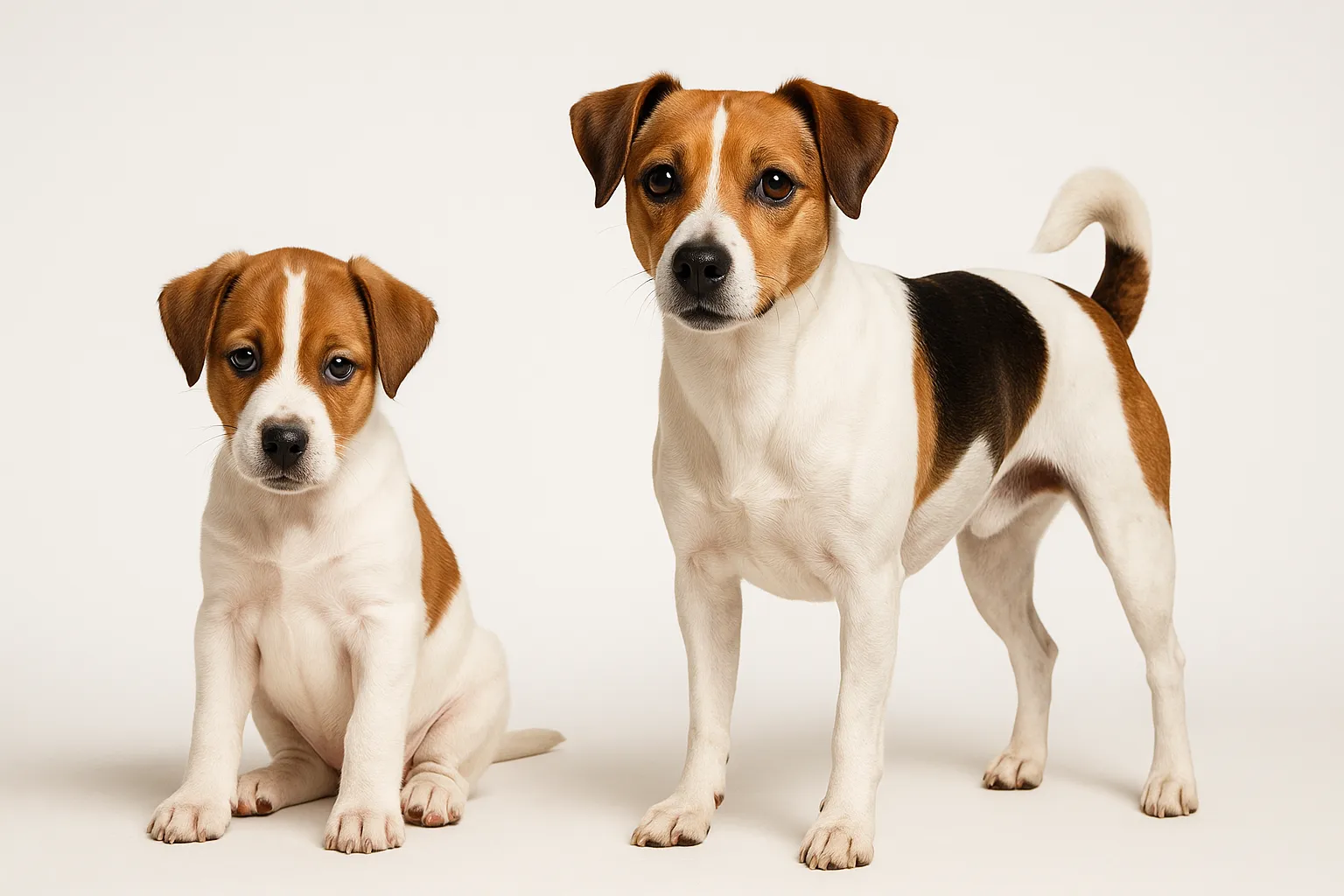
At 15 to 25 lbs with a short tricolor or bicolor coat and an alert, athletic build, these dogs earned AKC recognition only in 2021. They are one of the most recently recognized breeds in North America. Most live 11 to 13 years. Primary health concerns are luxating patella, hip dysplasia, and eye conditions. Because North American health data remains limited, Scandinavian breed registries provide the most substantial baseline.
Where This Breed Is Most Vulnerable
Luxating Patella
Luxating patella is the primary orthopedic concern in Danish-Swedish Farmdogs. OFA patella evaluation at 12 months detects grade and laterality early.
Grade I-II luxation often responds to conservative management through lean body condition and controlled activity. Grade III-IV causing lameness typically benefits from surgical correction. Joint supplementation starting around age 3 to 4 supports long-term stifle health.
See the Luxating Patella guide for full prevention and management detail.
Hip Dysplasia
Hip dysplasia is documented in Danish-Swedish Farmdogs at rates that warrant OFA screening for all breeding dogs. OFA evaluation at 24 months provides a structural baseline. Lean body condition throughout life reduces clinical impact. Given this breed’s active working heritage, hip integrity directly determines how well they can do what they were built to do.
See the Hip Dysplasia guide for full prevention and management detail.
Eye Conditions
Hereditary cataracts and other eye conditions have been reported in Danish-Swedish Farmdogs through Scandinavian registries. Annual CAER exams from age 1 provide ongoing surveillance.
With limited North American health data available, CAER registration of every breeding dog becomes especially important for establishing breed-wide disease prevalence in the US.
See the Eye Conditions guide for full prevention and management detail.
What Actually Extends a Danish-Swedish Farmdog’s Life
Give Them Real Work to Do
These dogs were bred for a diverse range of farm tasks, and their versatility demands diverse enrichment. They excel in earthdog trials, nose work, agility, obedience, and trick training. Their compact size makes them natural candidates for sports that reward agility and biddability.
Without 45 to 60 minutes of daily mental and physical engagement, they become vocal and inventive in undesirable ways. The good news: their adaptability makes them well suited for owners who enjoy rotating through different activities.
Contributing to a Breed Still Building Its Data
The Danish-Swedish Farmdog’s recent AKC recognition means North American breed health programs are still taking shape. The Danish Kennel Club and Swedish Kennel Club maintain more extensive health data from their longer breed histories.
If you own one of these dogs, contributing health data to breed registries and CAER is not just good practice — it is an investment in the breed’s future. Every data point from health-tested dogs builds the baseline that future breeding decisions will rely on.
A Low-Maintenance Coat With High-Visibility Benefits
The short, smooth coat is one of the most manageable among herding breeds. Weekly brushing removes dead hair and distributes skin oils. Shedding increases during seasonal changes but remains moderate.
One underappreciated advantage: the short coat makes skin condition assessment easy. Any changes are immediately visible, which means earlier detection of dermatologic issues compared to long-coated breeds.
The Prevention Plan That Pays Off
For most Danish-Swedish Farmdog owners, these are the actions that will matter most:
- OFA patella evaluation — luxating patella is the primary orthopedic concern in this small Nordic breed
- OFA hip evaluation at 24 months — hip dysplasia documented in the breed
- Annual CAER eye exam — eye conditions documented in Danish-Swedish Farmdogs
Frame your prevention investment around these targets. When resources are limited, these are where the evidence says to spend them first. See Luxating Patella, Hip Dysplasia, Eye Conditions for the full clinical picture.
Evidence-Based Longevity Priorities
Body Composition and Muscle Maintenance
Weight management in a Danish-Swedish Farmdog is not about aesthetics. It is about reducing the systemic inflammation and mechanical stress that shorten lifespan across every organ system. Lean mass retention becomes critical around middle age when metabolic rate starts to slow. Sustained herding-type movement patterns require stable muscle-to-fat ratios for long-term joint health.
Condition-Focused Prevention Stack
The highest-return prevention targets are Luxating Patella, Hip Dysplasia, and Eye Conditions. Acting at the first credible signal, rather than waiting for certainty, is what separates dogs who maintain function from those who lose it.
Behavior, Stress Load, and Recovery
These dogs maintain better long-term stability when workload, recovery, and mental stimulation are intentionally balanced. Without structured cognitive engagement, they can develop compulsive behaviors or chronic stress patterns that erode healthspan quietly.
Preventive Screening Cadence
Set your veterinary check-in cadence in advance, then accelerate it when trend data shows changes. Catching problems during early intervention windows — before they are clinically obvious — is where prevention pays off most.
Breed-Specific Research
Use these evidence deep dives to add mechanism-level context to your Danish-Swedish Farmdog longevity plan:
- Genetic Testing For Dogs Clinical Roi: health testing in a newly AKC-recognized Nordic breed with limited North American data
- Exercise Prescription By Life Stage: exercise management for a small versatile Nordic working breed
- Senior Dog Screening Protocol: monitoring framework for a small Nordic herding breed
What Genetic Testing Can and Cannot Tell You
The practical value of genetic testing comes from linking results to monitoring cadence and owner execution — not from treating test data as predictive certainty. Consider MDR1 gene testing to guide medication safety, and hip and elbow scoring (OFA or PennHIP) to quantify orthopedic risk as part of the initial assessment.
- Use a breed-appropriate genetic panel as your foundation, but remember that genetic risk is not the same as clinical disease. Serial veterinary observations bridge that gap.
- Build your initial monitoring playbook around Luxating Patella and Hip Dysplasia, so that every test result feeds into a specific follow-up action.
- A running health log that combines lab work, clinical notes, and your daily observations gives your vet a clearer picture in five minutes than a full workup without history.
- Treat each annual exam as a chance to re-read your genetic data against fresh clinical findings. The same panel results carry different weight as your Danish-Swedish Farmdog ages.
A test result that does not change your next action is just information. Make every panel result translate into a specific monitoring decision.
Breeding History and What It Means Today
The Danish-Swedish Farmdog was bred for sustained movement, vigilance, and rapid decision-making under workload. That history creates a practical risk profile that owners can address through structured prevention.
- Structural load patterns and temperament sensitivity both benefit from screening cadence matched to the pace at which these conditions typically progress in this breed.
- Direct your monitoring attention first to Luxating Patella, Hip Dysplasia, Eye Conditions — these are the risks that the breed’s working history and health data identify as most likely.
- Treat repeat low-grade drift as a signal to tighten monitoring early, not noise to watch passively.
- Course-correct regularly. The point of ongoing monitoring is not to confirm the original plan — it is to improve it as your dog’s health picture becomes clearer.
What the breed was built for tells you where to look. What your dog’s trend data shows tells you when to move.
Your Veterinary Screening Roadmap
- Puppy to 1 year: OFA patella evaluation, CAER exam, baseline wellness
- 2 years: OFA hip evaluation, annual CAER exam, wellness bloodwork
- 3-8 years: annual CAER exam, wellness bloodwork every 2 years
- 9+ years: biannual senior panel, mobility assessment, dental care
What and How to Feed
Danish-Swedish Farmdogs thrive on quality small-breed adult food. Their active heritage means caloric intake must be calibrated to actual exercise level — not assumed. Lean body condition supports patella and hip joint health directly. Omega-3 supplementation benefits both joints and coat.
Putting It All Together
Danish-Swedish Farmdogs with OFA orthopedic screening, annual CAER surveillance, and the kind of versatile enrichment their heritage demands are well positioned to reach their 11 to 13 year potential. Their Nordic farm dog background supports strong functional health when paired with appropriate preventive care.
Subtle Signs You Might Be Missing
Long-term decline in Danish-Swedish Farmdogs often starts as small changes that owners normalize too quickly:
- Occasional skipping step on one hind leg related to Luxating Patella that owners often dismiss as temporary
- Subtle compensation patterns that mask Hip Dysplasia progression: bunny-hopping gait or reluctance to jump
- Gradual drift toward Eye Conditions signs that become harder to reverse: visible cloudiness, chronic redness, or navigation difficulty
If baseline function is drifting for 7-10 days, treat it as a prevention failure signal and reassess early.
Additional Health Risks to Monitor
Based on breed predisposition data, Danish-Swedish Farmdog owners should also be aware of:
Frequently Asked Questions
How long do Danish-Swedish Farmdogs live?
Danish-Swedish Farmdogs typically live 11-13 years. OFA patella and hip evaluations, annual CAER eye exams, and appropriate working dog enrichment are the primary longevity investments.
Are Danish-Swedish Farmdogs a new breed?
The breed has existed in Scandinavia for centuries, but received AKC recognition in 2021, making it among the most recently recognized AKC breeds in North America. Danish and Swedish kennel clubs standardized the breed in 1987.
Are Danish-Swedish Farmdogs good family dogs?
Danish-Swedish Farmdogs are adaptable, affectionate, and trainable — good family dogs for active owners. Their farm dog versatility and moderate size make them well-suited to a range of lifestyles and dog sports.
Are Danish-Swedish Farmdogs rare?
Danish-Swedish Farmdogs are relatively uncommon in North America given their recent AKC recognition. They are more common in Scandinavia where they have a longer recognized history.
How much exercise does a Danish-Swedish Farmdog need?
Danish-Swedish Farmdogs need 45-60 minutes of daily exercise and significant mental engagement given their versatile working heritage. They excel in dog sports and outdoor activities and become vocal or destructive without adequate outlet.
References
[1] Danish-Swedish Farmdog Association of America. dsfa.us. [2] Danish Kennel Club breed health data. dkk.dk. [3] Swedish Kennel Club breed health data. skk.se. [4] AKC breed information. akc.org. [5] Nordic farm dog history: Scandinavian agricultural records.
Related reads
Related Reading
Continue exploring