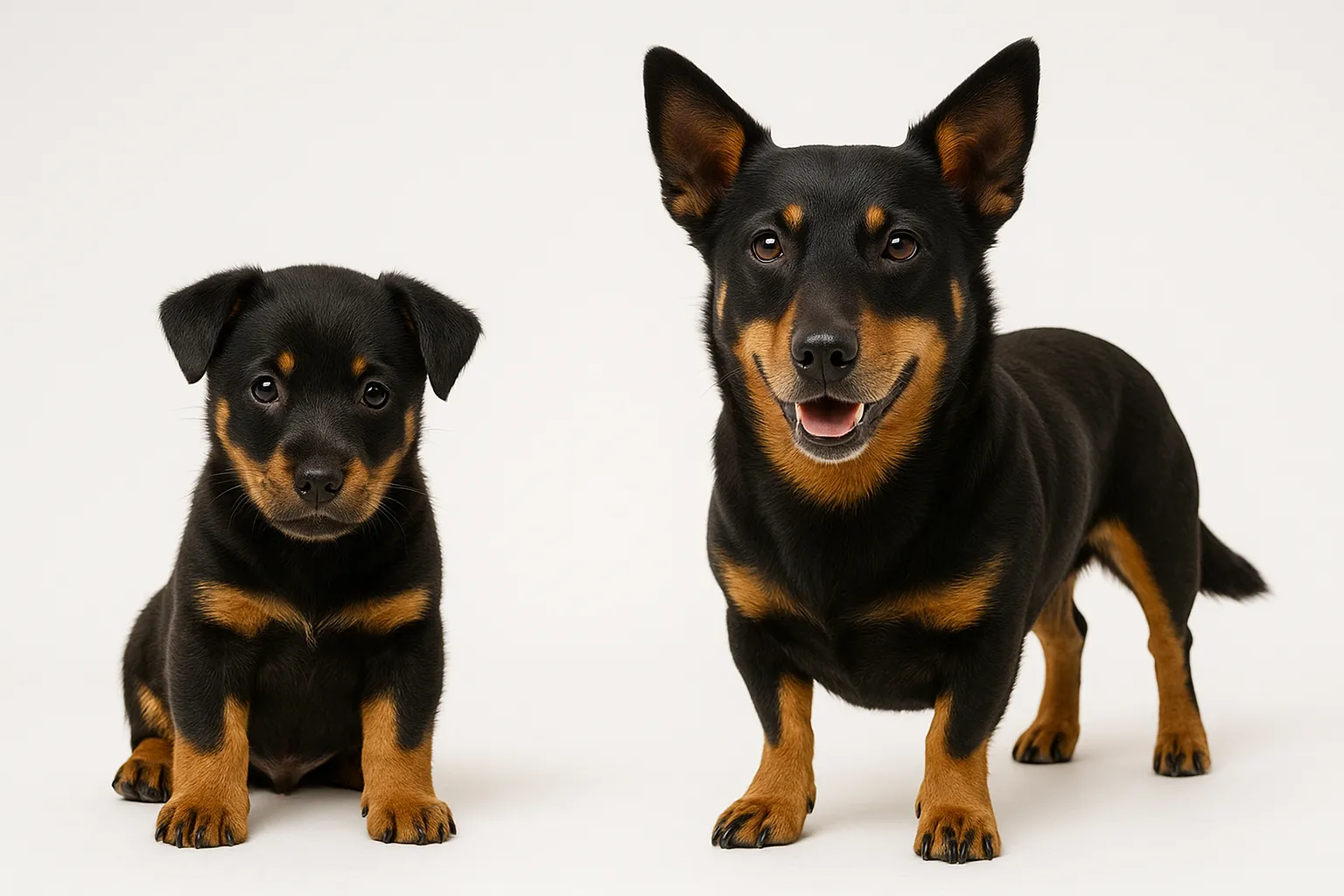
A Rare Cattle Dog With a Heavy Eye Disease Burden
The AKC did not recognize the Lancashire Heeler until 2024, making it one of the newest breeds in the registry — and one of the most genetically burdened for its size. At just 13-18 lbs, these small British herding dogs drove cattle and hunted rats across the Lancashire countryside, packing cattle-herding drive and terrier-like small game instinct into a surprisingly compact frame. Typical lifespans run 12-15 years.
What sets this breed apart medically is an unusually heavy inherited eye disease burden. Progressive retinal atrophy, hereditary cataracts, and Collie Eye Anomaly (CEA) — a condition far more commonly associated with collie-type breeds — have all been documented. Primary lens luxation has appeared in some lines as well.
Their small gene pool amplifies the importance of every health test. Luxating patella is the primary orthopedic concern.
The Conditions to Watch For
Progressive Retinal Atrophy
PRA is the primary inherited eye concern in Lancashire Heelers. DNA testing for prcd-PRA and other mutations is essential for all breeding stock.
PRA causes progressive bilateral vision loss that begins with night blindness and advances to complete blindness. Given the breed’s multiple documented eye conditions, annual CAER surveillance remains important even for DNA-tested clear dogs — you cannot test your way out of all eye risk in this breed.
See the Progressive Retinal Atrophy guide for full prevention and management detail.
Collie Eye Anomaly and Hereditary Cataracts
CEA — an inherited developmental eye malformation far more commonly seen in collie breeds — shows up in Lancashire Heelers, a finding that likely reflects collie influence somewhere in the breed’s ancestry. Severity ranges from clinically insignificant choroidal hypoplasia to retinal detachment causing blindness.
Hereditary cataracts are also documented. DNA testing for both conditions alongside annual CAER exams provides the comprehensive eye surveillance this breed demands.
See the Collie Eye Anomaly and Hereditary Cataracts guide for full prevention and management detail.
Luxating Patella
Luxating patella is the primary orthopedic concern. OFA patella evaluation at 12 months detects grade and laterality. Grade III-IV cases causing intermittent lameness typically benefit from surgical correction. Lean body condition throughout life slows clinical progression. Joint supplementation from age 3-4 supports long-term patella joint health.
See the Luxating Patella guide for full prevention and management detail.
Strategies With Research Support
Comprehensive Eye Disease DNA Testing
Lancashire Heelers carry three documented inherited eye conditions: prcd-PRA, Collie Eye Anomaly, and hereditary cataracts. Before purchasing a puppy, request DNA testing documentation for all three conditions from both parents. Maintain annual CAER exams even for DNA-tested clear dogs, given the overlapping eye disease risks. The Lancashire Heeler Club of America provides guidance on required testing and registered breeders who test comprehensively.
Managing the Heeling Instinct
Lancashire Heelers earned their name by nipping at cattle heels to move them forward — a low-to-the-ground technique that avoided kicks from hooves. That same instinct transfers readily to children, joggers, and bicycles if not managed through training. Early socialization and consistent positive training redirect herding behavior appropriately. The breed’s intelligence and drive make them strong candidates for herding trials, obedience, nose work, and agility. Daily exercise of 45-60 minutes meets their working dog needs.
Contributing to Rare Breed Health
Lancashire Heelers remain rare in North America. Connecting with the Lancashire Heeler Club of America and UK breed health programs matters more than usual given the small North American gene pool. Contributing CAER data, OFA results, and DNA testing records to breed registries builds the health baseline that future breeding decisions will depend on. Breeders committed to comprehensive testing and registry participation are the most reliable sources for healthy puppies.
The Prevention Plan That Pays Off
For most Lancashire Heeler owners, these are the actions that will matter most:
- DNA testing for progressive retinal atrophy (prcd-PRA) — PRA is the primary inherited eye concern in Lancashire Heelers
- Annual CAER eye exam from age 1 — multiple eye conditions documented including hereditary cataracts and Collie Eye Anomaly
- OFA patella evaluation — luxating patella is the primary orthopedic concern
These priorities drive the highest return on your preventive care investment. Revisit them seasonally and let your vet know you are tracking these specifically. Use Progressive Retinal Atrophy Pra, Eye Conditions, Luxating Patella as your reference.
Evidence-Based Longevity Priorities
Body Composition and Muscle Maintenance
For Lancashire Heelers, body composition predicts long-term function more reliably than most other single factors. As a small breed, lean mass retention becomes critical around middle age when metabolic rate slows. Sustained movement patterns in herding dogs require stable muscle-to-fat ratios for long-term joint health — and this breed was designed to move.
Condition-Focused Prevention Stack
The highest-return prevention targets for Lancashire Heelers are Progressive Retinal Atrophy Pra, Eye Conditions, and Luxating Patella. Starting treatment early — before clinical signs become entrenched — is the single most reliable way to preserve quality of life.
Behavior, Stress Load, and Recovery
Lancashire Heelers maintain better long-term stability when workload, recovery, and mental stimulation are intentionally balanced. Without structured cognitive engagement, these dogs often develop compulsive behaviors or chronic stress patterns that erode healthspan. Their herding intensity needs a productive channel.
Preventive Screening Cadence
Routine screening at planned intervals outperforms reactive veterinary visits every time. By the time you notice something is wrong enough to schedule an urgent appointment, the optimal intervention window may already be closing.
Breed-Specific Research
Use these evidence deep dives to add mechanism-level context to your Lancashire Heeler longevity plan:
- Genetic Testing For Dogs Clinical Roi: multi-disease eye DNA testing in Lancashire Heelers
- Senior Dog Screening Protocol: monitoring framework for a small herding breed with 12-15 year lifespan
- Exercise Prescription By Life Stage: exercise management for a small active cattle herding breed
Genetic Testing: When It Matters
For Lancashire Heelers, genetic testing delivers practical value when results link to monitoring cadence and owner execution rather than serving as predictive certainty. Consider MDR1 gene testing to guide medication safety and CERF eye exam or PRA gene testing to detect heritable eye disease as part of the initial risk assessment.
- Target your testing to the conditions this breed actually gets. Then track findings over time — a genetic predisposition only matters when clinical evidence starts to confirm it.
- Build your initial monitoring playbook around Progressive Retinal Atrophy Pra and Eye Conditions, so that every test result feeds into a specific follow-up action.
- Consolidate genetic panel results, bloodwork trends, and your own notes into a single timeline. The connection between a genetic predisposition and an emerging clinical finding only becomes obvious when you can see both at once.
- Circle back to your genetic data after spay/neuter, at the adult-to-senior transition, and anytime a pattern emerges — weight creeping up, stamina dropping, or behavior shifting without obvious cause.
Measure to decide, not to collect. If a result does not change your monitoring cadence or intervention threshold, question whether you needed it.
What Breeding History Means for Your Dog
The Lancashire Heeler was bred for sustained movement, vigilance, and rapid decision-making under workload. That heritage produced a dog with temperament sensitivity that benefits from stable routines and arousal management — traits that require screening cadence matched to the pace at which these conditions typically progress in this breed.
- Direct your monitoring attention first to Progressive Retinal Atrophy Pra, Eye Conditions, Luxating Patella — these are the risks that the breed’s working history and health data identify as most likely.
- Small, recurring changes are easier to dismiss than dramatic ones, but they are often more important. A pattern of minor drift is your earliest warning that something is shifting.
- Review your prevention plan at least quarterly. A plan that was right six months ago may no longer match your Lancashire Heeler’s current trajectory.
Start with what the breed’s history predicts. Adjust based on what your Lancashire Heeler’s body actually shows over time.
Age-Based Monitoring Milestones
- Puppy: prcd-PRA, CEA, and hereditary cataract DNA testing, CAER exam
- 1 year: OFA patella evaluation, CAER exam, wellness baseline
- 2-8 years: Annual CAER exam, wellness bloodwork every 2 years
- 9+ years: Biannual senior panel, eye monitoring, dental care
Diet and Feeding Strategy
Lancashire Heelers do well on quality small-breed adult food. Lean body condition throughout life supports patella and overall joint health. Their active herding nature requires caloric intake calibrated to actual exercise level. Omega-3 supplementation supports joint, eye, and coat health.
Putting It All Together
Lancashire Heelers with comprehensive eye disease DNA testing (prcd-PRA, CEA, cataracts), annual CAER surveillance, patella evaluation, and appropriate herding dog enrichment can reach their full longevity potential of 12-15 years. Their multiple eye disease risks make testing compliance especially critical — in a breed this rare, every owner who tests and reports results contributes to the long-term health of the breed itself.
The Drift Pattern Most Owners Miss
Long-term decline in Lancashire Heelers often starts as small changes that owners normalize too quickly:
- Intermittent hesitation in dim environments related to Progressive Retinal Atrophy Pra that gets written off as cautious behavior
- Subtle navigation changes that mask Eye Conditions progression: hesitation in dim light or unfamiliar spaces that gradually worsens
- Gradual drift toward Luxating Patella signs that become harder to reverse: persistent lameness and reluctance to bear weight
If baseline function is drifting for 7-10 days, treat it as a prevention failure signal and reassess early.
Additional Health Risks to Monitor
Based on breed predisposition data, Lancashire Heeler owners should also be aware of:
Frequently Asked Questions
How long do Lancashire Heelers live?
Lancashire Heelers typically live 12-15 years. Comprehensive eye disease DNA testing (prcd-PRA, CEA, hereditary cataracts) and annual CAER exams are the primary longevity investments.
Are Lancashire Heelers rare?
Lancashire Heelers are rare — listed on the UK Kennel Club’s Vulnerable Native Breeds list. They are extremely uncommon in North America following AKC recognition in 2024.
Do Lancashire Heelers have collie ancestry?
The presence of Collie Eye Anomaly — typically associated with collie-type breeds — in Lancashire Heelers suggests possible collie influence in the breed’s development, though the exact ancestral contribution is not fully documented.
Are Lancashire Heelers good family dogs?
Lancashire Heelers are intelligent, active, and loyal — suitable for experienced active owners. Their heeling instinct requires management around children and small animals. Their rare status makes finding a reputable breeder an extended process.
What does “heeler” mean in the breed name?
Lancashire Heelers earned the “heeler” name from their cattle-driving technique of nipping at the heels of cattle to move them — a low-to-the-ground approach that avoided kicks from cattle hooves. This same heritage drives their active, nipping behavior management requirements.
References
[1] Lancashire Heeler Club of America. lancashireheeler.org. [2] UK Kennel Club Vulnerable Native Breeds: Lancashire Heeler listing. [3] OFA health statistics. ofa.org. [4] AKC breed information. akc.org. [5] CEA genetics: Parker HG et al. Science. 2007.
Related reads
Related Reading
Continue exploring