Where the German Wirehaired Pointer Loses Time — and How to Buy It Back
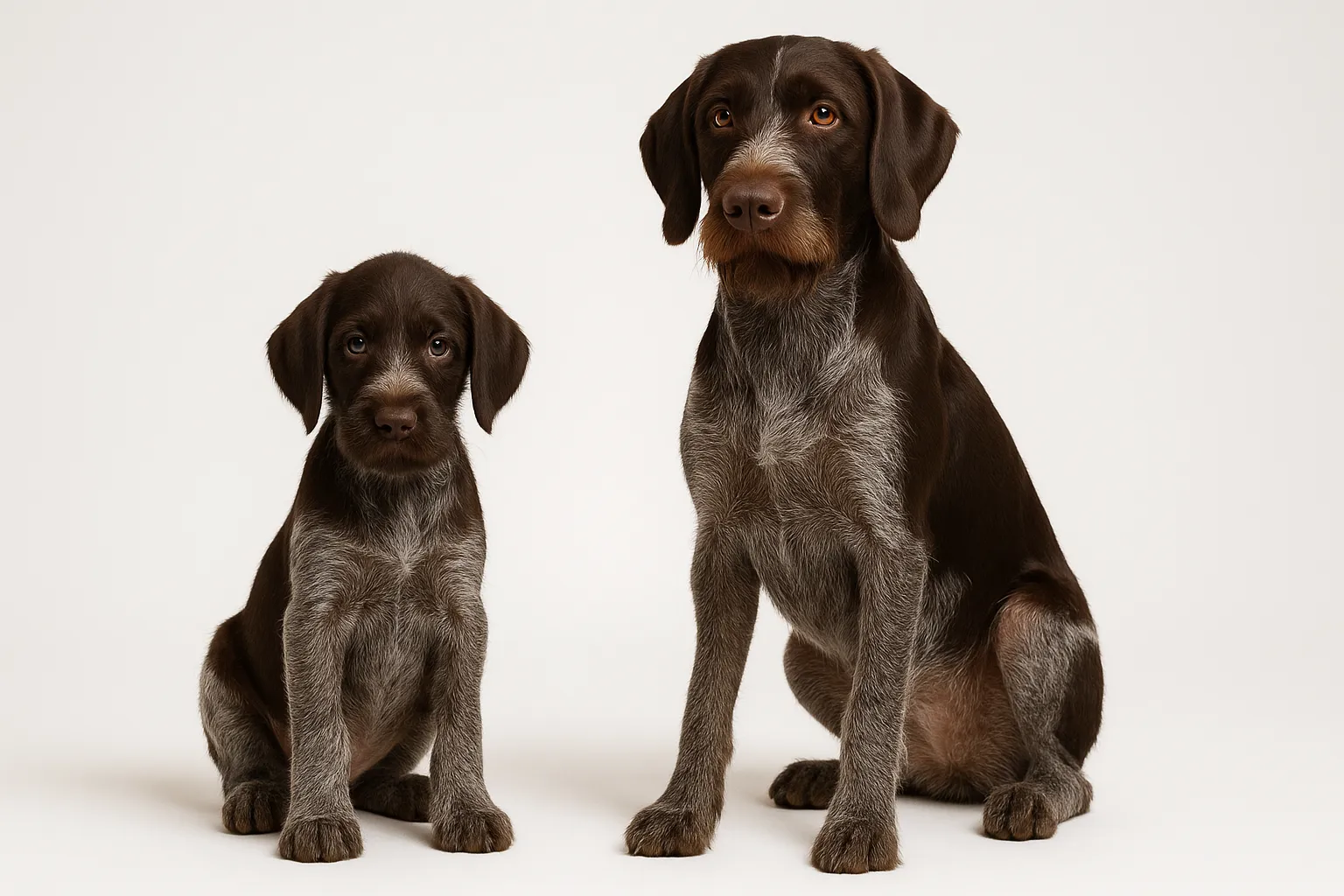
The German Wirehaired Pointer may be the most capable all-round hunting dog ever developed. Bred in Germany to point, track, flush, and retrieve on land and water — across any terrain, in any weather, for any game — the Deutsch Drahthaar is athletic, determined, and remarkably long-lived for its size. Most reach 14-16 years, a span that would be impressive for a medium breed and is exceptional for a large one.
Their longevity reflects a breeding program driven by function, not appearance. Performance-focused selection preserved the health traits that keep these dogs working into their teens. Hip dysplasia is the primary documented orthopedic concern.
Dilated cardiomyopathy and valve disease appear in some older dogs. Von Willebrand disease type I surfaces in certain lines. The wiry double coat can develop follicular cysts and skin infections when neglected. , the GWP ranks among the healthier large breeds available.
What This Breed Is Most Likely to Face
Hip Dysplasia
Hip dysplasia is the primary orthopedic concern. OFA hip evaluation at 24 months provides a structural baseline. For a breed whose hunting utility depends on hip integrity, this screening is not optional — it directly affects working longevity. Lean body condition, controlled exercise during skeletal development, and joint-supportive supplementation from middle age all reduce clinical impact.
See the Hip Dysplasia guide for full prevention and management detail.
Skin Conditions
The distinctive wiry, water-resistant double coat that makes the GWP a foul-weather hunter can also harbor follicular cysts and skin infections when matted or improperly maintained. Environmental allergies causing skin irritation are documented. Regular coat stripping — not clipping — maintains the coat’s natural texture and protects skin health. Dogs with recurrent hot spots, follicular cysts, or persistent itching warrant dermatological evaluation.
See the Skin Conditions guide for full prevention and management detail.
Cardiac Disease
Dilated cardiomyopathy and valve disease are documented in older GWPs. Annual cardiac auscultation from age 6 catches murmurs before clinical signs develop. Echocardiography provides definitive staging when a murmur is detected. Cardioprotective medication initiated at the right stage extends functional quality of life.
See the Cardiac Disease guide for full prevention and management detail.
Longevity Interventions That Have Data Behind Them
Versatile Hunting Drive and Exercise Needs
GWPs are among the most versatile hunting dogs in the world — capable of pointing, flushing, tracking, and retrieving in any terrain and weather. That versatility comes with extremely high daily exercise requirements. Hunting line dogs need 1-2 hours of vigorous activity minimum.
Companion GWPs need structured daily exercise that engages their hunting instincts: field work, tracking, agility, nose work. Without adequate outlet, they channel their energy into destructiveness and anxiety. This is not a breed that will settle for a walk around the block.
Hand-Stripping the Wiry Coat
The wiry outer coat should be hand-stripped every 6-12 months to maintain its texture and water resistance. Clipping changes the coat texture from wiry to soft — permanently — and reduces its protective properties. Many owners learn to hand-strip their own dog. Others work with groomers experienced in wire-coated breeds.
Field-worked dogs benefit from coat stripping in late summer before hunting season. Regular brushing between strips prevents matting. This is one of those breed-specific maintenance tasks that directly affects health outcomes.
Long-Lived Large Breed Monitoring
A GWP frequently reaching 14-16 years is exceptional for a large sporting breed, and it means the senior monitoring window is longer than many owners expect. Begin senior care protocols at age 9-10: biannual wellness visits, annual dental cleaning, cardiac monitoring, and cognitive function tracking.
Dogs living into their mid-teens may develop age-related hearing loss, lens changes, and cognitive decline. All are manageable with appropriate environmental adaptation and veterinary support. The reward for owning a long-lived breed is the responsibility of supporting those extra years well.
Start Here: Your Top Longevity Targets
The actions most likely to extend your German Wirehaired Pointer’s healthy years:
- OFA hip evaluation at 24 months — hip dysplasia is the primary structural concern
- Annual cardiac auscultation from age 6 — dilated cardiomyopathy and valve disease documented in the breed
- Skin and coat monitoring for wire-coated dogs — the wiry double coat requires specific maintenance
Make these the backbone of your German Wirehaired Pointer’s preventive care calendar. Each quarter, assess whether you are on track or need to escalate. Detailed protocols live in Hip Dysplasia, Skin Allergies, Heart Disease .
Evidence-Based Longevity Priorities
Body Composition and Muscle Maintenance
Body composition control predicts long-term function more reliably than most other single factors in a GWP. Joint load and metabolic strain rise quickly in a large breed when weight drifts. These endurance athletes maintain better muscle quality when activity patterns stay consistent throughout the year.
Condition-Focused Prevention Stack
The conditions most likely to reduce a GWP’s lifespan or quality of life are Hip Dysplasia, Skin Allergies, and Heart Disease. Consistent early intervention across all three preserves your options and prevents the compounding effect of delayed treatment.
Behavior, Stress Load, and Recovery
GWP owners get better long-term outcomes when daily activity is structured and recovery windows are protected. These dogs were bred for sustained work. Without consistent output, both physical and mental equilibrium suffer.
Preventive Screening Cadence
Proactive screening on a set schedule catches subtle drift long before a crisis-driven vet visit would. The dogs who do best are the ones whose owners detect changes while they are still early and reversible.
Breed-Specific Research
Use these evidence deep dives to add mechanism-level context to your German Wirehaired Pointer longevity plan:
- Senior Dog Screening Protocol: extended senior monitoring framework for a large breed that commonly lives 14-16 years
- Exercise Prescription By Life Stage: exercise management for a high-drive versatile hunting breed across life stages
- Hip Dysplasia Lifetime Load Management: hip dysplasia management in a large active sporting breed
The Role of Genetic Testing in Prevention
The practical value of genetic testing comes from linking results to monitoring cadence and owner action, not from treating test data as predictive certainty. Consider OFA or PennHIP hip and elbow scoring to quantify orthopedic risk and baseline echocardiography to establish cardiac structure and function.
- A well-chosen initial panel gives you a risk map. Follow-up assessments at regular intervals tell you which risks are materializing and which remain theoretical.
- Tie your first monitoring playbook to Hip Dysplasia and Skin Allergies so test results drive practical follow-through.
- Document weight, energy level, appetite patterns, and any changes you notice between vet visits. When combined with clinical data, home observations often reveal the earliest signs of drift.
- Genetic results mean different things at different ages. What looked like a low-risk finding at two years old may deserve closer monitoring by age seven when the clinical picture has changed.
The point of testing is not the result — it is what you do differently because of it.
Breeding History & Health Implications
The GWP was bred for stamina, retrieval work, and sustained field activity across every type of terrain. That heritage directly shapes today’s health risks.
- Functional demands from this breed’s working history translate directly into musculoskeletal wear that benefits from proactive screening.
- Focus your risk surveillance on Hip Dysplasia, Skin Allergies, Heart Disease — these are the conditions where this breed’s ancestry creates the most actionable risk profile.
- When you see the same subtle finding twice — a slight limp, a missed meal, a slower recovery — treat it as a signal, not a coincidence. Tighten your monitoring before it compounds.
- Anchor your prevention plan to the latest data, not the original risk assessment. What your German Wirehaired Pointer needed at two years old and what they need at eight are different conversations.
Breeding history narrows the search. Serial monitoring data makes the call.
The Screening Calendar That Matters
- Puppy to 2 years: OFA hip evaluation, CAER exam, coat care protocol established
- 3-8 years: annual wellness bloodwork, CAER exam every 2 years, coat stripping every 6-12 months
- 9+ years: senior panel biannually, cardiac auscultation annually, cognitive monitoring, dental care
The Feeding Plan That Matters
Feed according to actual activity level. Field-working GWPs need significantly higher caloric density than companion dogs — the difference between a weekend hunter and a working field dog can be substantial. Lean body condition is critical for maintaining hunting fitness and joint health across a long lifespan. Omega-3 supplementation supports coat, skin, and joint health. Joint supplementation from age 5-6 supports the orthopedic demands of an active large breed.
What the Future Can Hold
German Wirehaired Pointers with OFA screening, cardiac monitoring in senior years, and a lifestyle that channels their hunting drive are well-positioned for exceptionally long lives among large sporting breeds. Reaching 14-16 years with maintained quality of life is realistic and common for well-managed dogs. Few large breeds offer this combination of athletic capability and longevity.
Most-Missed Early Drift Pattern
Long-term decline in a GWP often starts as small changes that owners normalize too quickly:
- Subtle hind-limb stiffness after rest related to Hip Dysplasia that owners often dismiss as temporary
- Subtle compensation patterns that mask Skin Allergies progression: seasonal patterns dismissed as normal shedding cycles
- Gradual drift toward Heart Disease signs that become harder to reverse: coughing at night, fainting, or fluid accumulation
If baseline function is drifting for 7-10 days, treat it as a prevention failure signal and reassess early.
Additional Health Risks to Monitor
Based on breed predisposition data, German Wirehaired Pointer owners should also be aware of:
Frequently Asked Questions
How long do German Wirehaired Pointers live?
German Wirehaired Pointers typically live 14-16 years, which is exceptional for a large sporting breed. OFA orthopedic screening, cardiac monitoring, and active hunting lifestyle management are the primary longevity investments.
What is the difference between a German Wirehaired Pointer and a German Shorthaired Pointer?
The GWP has a distinctive wiry, weather-resistant double coat while the GSP has a short smooth coat. Both are versatile hunting breeds, but the GWP is generally considered more independent and tenacious, while the GSP is more bidable. Both were developed in Germany as all-round hunting dogs.
Are German Wirehaired Pointers good family dogs?
GWPs are loyal and energetic with experienced active owners. They require significant daily exercise and hunting or sport engagement. They can be reserved with strangers and do best with early socialization. Not recommended for first-time owners or sedentary households.
Do German Wirehaired Pointers need grooming?
Yes — the wiry double coat requires hand-stripping every 6-12 months to maintain its texture and protective properties. Clipping changes the coat texture permanently. Regular brushing prevents matting between stripping sessions.
Are German Wirehaired Pointers good for hunting?
Excellent — the GWP is considered one of the most capable versatile hunting dogs in the world, able to hunt any terrain, any game, in any weather. They are the most popular pointing breed in Germany and have a strong performance record across field trial and hunting contexts.
References
[1] German Wirehaired Pointer Club of America. gwpca.com. [2] OFA health statistics by breed. ofa.org. [3] Versatile hunting breed health survey: NAVHDA longevity data. [4] Deutsch Drahthaar history: German Wirehaired Pointer Club documentation. [5] AKC breed information. akc.org.
Related Reading
Continue exploring