A Giant Breed Where Every Year Counts
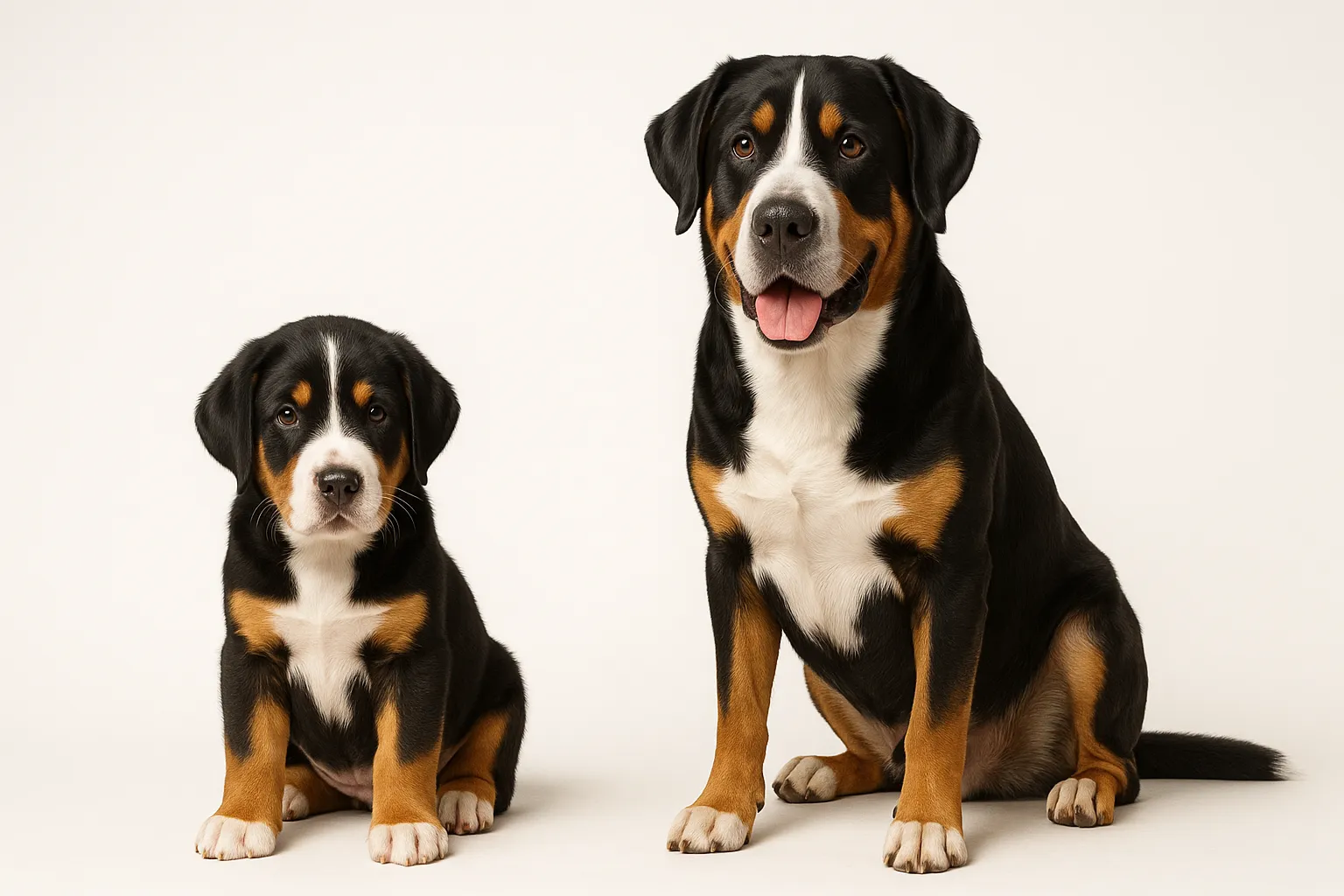
The Greater Swiss Mountain Dog — the Swissy — is the largest of the four Swiss Sennenhund breeds, originally a draft and droving dog in the Swiss Alps. Modern Swissies weigh 85-140 lbs and live 8-11 years, a typical range for giant working breeds.
Their primary health challenges reflect that size. Hip and elbow dysplasia rank among the most prevalent OFA-documented conditions. Bloat poses a life-threatening emergency risk given their deep-chested conformation.
Osteosarcoma and splenic hemangiosarcoma are the leading cancer concerns, and splenic torsion (without full GDV) also occurs at elevated rates.
Giant-breed biology drives much of this: high body mass pushes IGF-1 levels that accelerate cellular aging and increase cancer risk. Every health investment made in the first two years compounds across the dog’s shorter lifespan.
The Conditions to Watch For
Hip Dysplasia
Hip dysplasia is highly prevalent in Greater Swiss Mountain Dogs. Both OFA and PennHIP evaluations are available, and the breed club recommends OFA hip evaluation for all breeding stock. Keeping your Swissy lean from puppyhood through old age reduces dysplasia severity more than any other single intervention. Introduce joint support and pain management at the first signs of discomfort, not after the damage is obvious.
See the Hip Dysplasia guide for full prevention and management detail.
Bloat (GDV)
Swissies face high bloat risk — one of the most dangerous emergencies in veterinary medicine. Prophylactic gastropexy performed at the time of spay or neuter prevents GDV but does not prevent simple bloating. Know the warning signs: unproductive retching, a distended abdomen, hypersalivation, sudden severe restlessness. Any suspected GDV is a same-day emergency.
See the Bloat (GDV) guide for full prevention and management detail.
Osteosarcoma
Osteosarcoma occurs at elevated rates in giant breeds, including Swissies. It most commonly strikes the distal radius, proximal humerus, or distal femur. Early signs include progressive lameness, bone swelling, and touch sensitivity. Chest radiographs at diagnosis assess for metastasis. Treatment ranges from limb amputation with chemotherapy to stereotactic radiosurgery to palliative pain management.
See the Osteosarcoma guide for full prevention and management detail.
What the Evidence Says About Living Longer
Gastropexy for Bloat Prevention
Prophylactic gastropexy — surgically tacking the stomach to the body wall — prevents GDV while preserving normal stomach function. For Greater Swiss Mountain Dogs, it is recommended at the time of spay or neuter, or as a standalone procedure for intact dogs. Without it, Swissies carry significant lifetime GDV risk. One outpatient surgical procedure eliminates the most acutely fatal condition in the breed.
Giant Breed Joint Management Protocol
A Swissy’s body mass creates constant mechanical load on hips and elbows. Maintaining strict lean body condition from puppyhood is the most powerful joint-protective intervention available. Each 10% reduction in body weight reduces joint load disproportionately in giant breeds.
During skeletal maturation, avoid repetitive high-impact activities before 18 months. From age 2 onward, joint-supportive nutrition and early introduction of glucosamine and omega-3 supplementation help sustain long-term joint function.
Cancer Surveillance in Middle Age
Starting at age 5-6, annual chest radiographs and abdominal ultrasound provide cancer surveillance for osteosarcoma and splenic tumors. Monthly owner palpation of the long bones and lymph nodes, combined with attention to subtle lameness or behavioral changes, creates the earliest-possible detection window. Finding osteosarcoma before pulmonary metastasis significantly improves treatment options.
Priority Actions for a Longer Life
For most Greater Swiss Mountain Dog owners, these are the actions that will matter most:
- OFA hip and elbow evaluation — hip dysplasia is a primary concern in this giant breed
- Bloat risk reduction protocol: two meals daily, slow feeder, exercise restriction post-meal
- Lean body condition throughout life — every extra pound on a giant dog accelerates joint and systemic aging
Concentrate your prevention budget — time, money, and attention — on these conditions. They represent the highest-probability risks and the areas where early action matters most. See Hip Dysplasia, Bloat, Osteosarcoma for the full breakdown.
Evidence-Based Longevity Priorities
Body Composition and Muscle Maintenance
Weight stability and muscle quality are foundational to orthopedic health and metabolic longevity in Greater Swiss Mountain Dogs. Excess weight hits giant breeds harder than smaller dogs — orthopedic decline accelerates, lifespan compresses. These were draft dogs, and muscle maintenance directly affects how long they stay functional.
Condition-Focused Prevention Stack
The highest-return prevention targets are Hip Dysplasia, Bloat, and Osteosarcoma. Intervening early keeps your treatment options open and prevents the compounding damage that delay invites.
Behavior, Stress Load, and Recovery
Household rhythm quality directly affects healthspan in Swissies. Inconsistent schedules and unclear role structure often manifest as behavior drift, vigilance patterns, or poor recovery from exertion.
Preventive Screening Cadence
Set routine veterinary checkpoints and tighten the schedule whenever orthopedic function or gait quality starts to drift. Prevention windows close quickly once symptoms become obvious.
Breed-Specific Research
Use these evidence deep dives to add mechanism-level context to your Greater Swiss Mountain Dog longevity plan:
- Canine Size Lifespan Tradeoffs By Breed: why giant breeds like Greater Swiss Mountain Dogs have shorter lifespans
- Cancer Screening In Dogs What Helps: cancer surveillance strategies relevant for a giant breed with osteosarcoma and splenic tumor risk
- Elbow Dysplasia Lifetime Load Management: elbow dysplasia management in a large-to-giant working breed
From Genetic Data to Monitoring Decisions
Genetic testing has the most value when results directly change what gets measured, how often, and what triggers escalation. Hip and elbow scoring (OFA or PennHIP) quantifies orthopedic risk; breed-specific cancer panels or tumor marker surveillance add another layer when available.
- Run a panel targeted to your breed’s most common conditions. Then confirm what the genetics suggest through ongoing clinical evaluation — the panel sets direction, not destiny.
- Your first monitoring protocols should target Hip Dysplasia and Elbow Dysplasia. The goal is results that change behavior — not just data that sits in a file.
- Your Greater Swiss Mountain Dog’s health story unfolds across years, not appointments. A continuous record linking genetic data, lab trends, and daily observations makes each veterinary conversation more productive.
- Reassess your monitoring priorities at three key inflection points: after growth is complete, at the mid-life mark, and when senior-stage indicators emerge.
Every genetic or diagnostic result should answer one question: what do I do differently starting now?
Breeding History & Health Implications
Greater Swiss Mountain Dogs were bred for guarding, draft work, and protective temperament. That history creates structural load patterns demanding proactive orthopedic surveillance and cancer susceptibility that benefits from serial tumor screening.
- Structural demands require sustained surveillance intensity from early adulthood through the senior years.
- Prioritize surveillance around Hip Dysplasia, Elbow Dysplasia, and Bloat.
- The difference between catching a problem early and catching it late is often just paying attention to the small stuff that repeats. One off day is nothing. Three in a month is a trend.
- Prevention strategies that never get updated become prevention rituals. Revisit yours regularly and adjust based on what the data actually shows.
Breed heritage identifies the likely risks. Your dog’s longitudinal health data converts those probabilities into specific, timed actions.
Age-Based Monitoring Milestones
- Puppy to 18 months: controlled exercise, no high-impact repetitive jumping, joint-supportive nutrition
- 2 years: OFA hip and elbow evaluation, consider prophylactic gastropexy if not done at spay/neuter
- 3-6 years: annual wellness panel, weight monitoring, joint assessment
- 7+ years: senior panel every 6 months, chest radiograph and abdominal ultrasound annually for cancer surveillance
Feeding for Longevity
Keep Greater Swiss Mountain Dogs at lean body condition throughout life. Giant breed puppy food with controlled calcium-to-phosphorus ratios during growth prevents developmental orthopedic disease. Adult feeding with measured portions prevents the weight gain that accelerates joint disease. Omega-3 supplementation supports joint and coat health. Glucosamine supplementation from age 2-3 is widely used in the breed.
Your Long-Term Health Trajectory
Greater Swiss Mountain Dogs face the inherent lifespan constraints of giant breeds. With prophylactic gastropexy, rigorous joint health management, lean body condition, and cancer surveillance beginning in middle age, Swissies can approach or reach 11 years with good quality of life. The investments you make in the first two years pay dividends across a shorter timeline — which makes them even more important to get right.
Most-Missed Early Drift Pattern
Healthspan erosion in Swissies typically begins with subtle shifts that are easy to overlook:
- Hind-limb stiffness after rest related to Hip Dysplasia that owners dismiss as “just waking up slowly”
- Intermittent forelimb hesitation tied to Elbow Dysplasia that comes and goes
- Unproductive retching, rigid distended abdomen, or rapid deterioration signaling Bloat emergency
Seven to ten days of sustained change in appetite, mobility, energy, or behavior is the threshold for escalating to your vet rather than continuing to observe.
Additional Health Risks to Monitor
Based on breed predisposition data, Greater Swiss Mountain Dog owners should also be aware of:
Frequently Asked Questions
How long do Greater Swiss Mountain Dogs live?
Greater Swiss Mountain Dogs typically live 8-11 years. As a giant breed, their lifespan is constrained by the growth hormone and IGF-1 biology that produces their large body mass. Bloat prevention (gastropexy), joint management, and lean body condition are the most impactful longevity investments.
What is the bloat risk in Greater Swiss Mountain Dogs?
Swissies are at high risk for bloat (GDV) due to their deep-chested body conformation. Prophylactic gastropexy is recommended and dramatically reduces GDV risk. Without surgery, owners should feed two or more small meals, use slow feeders, and restrict exercise before and after eating.
Are Greater Swiss Mountain Dogs good family dogs?
Greater Swiss Mountain Dogs are gentle, confident, and devoted family dogs. Their size requires early training and socialization. They are less hyperactive than some herding breeds but still need regular exercise. Their drafting instinct makes them suitable for carting and hiking.
How much do Greater Swiss Mountain Dogs weigh?
Males typically weigh 105-140 lbs; females 85-110 lbs. They are the largest Swiss mountain dog breed. Giant breed weight management is critical — excess weight significantly accelerates joint disease and systemic aging.
Is osteosarcoma common in Greater Swiss Mountain Dogs?
Osteosarcoma is documented at elevated rates in large and giant breeds including Swissies. Progressive unexplained lameness, particularly in middle-aged to older dogs, warrants urgent evaluation. Early detection before metastasis offers the best treatment outcomes.
References
[1] Greater Swiss Mountain Dog Club of America (GSMDCA). gsmdca.org. [2] OFA hip and elbow statistics by breed. ofa.org. [3] Bloat and GDV in dogs: Glickman LT et al. J Am Vet Med Assoc. 2000. [4] Osteosarcoma in large breeds: Withrow SJ et al. Small Animal Clinical Oncology. 2013. [5] Giant breed lifespan biology: Kraus C et al. Am Nat. 2013.
Related reads
Related Reading
Continue exploring