The Longevity Challenge Every Komondor Owner Should Understand
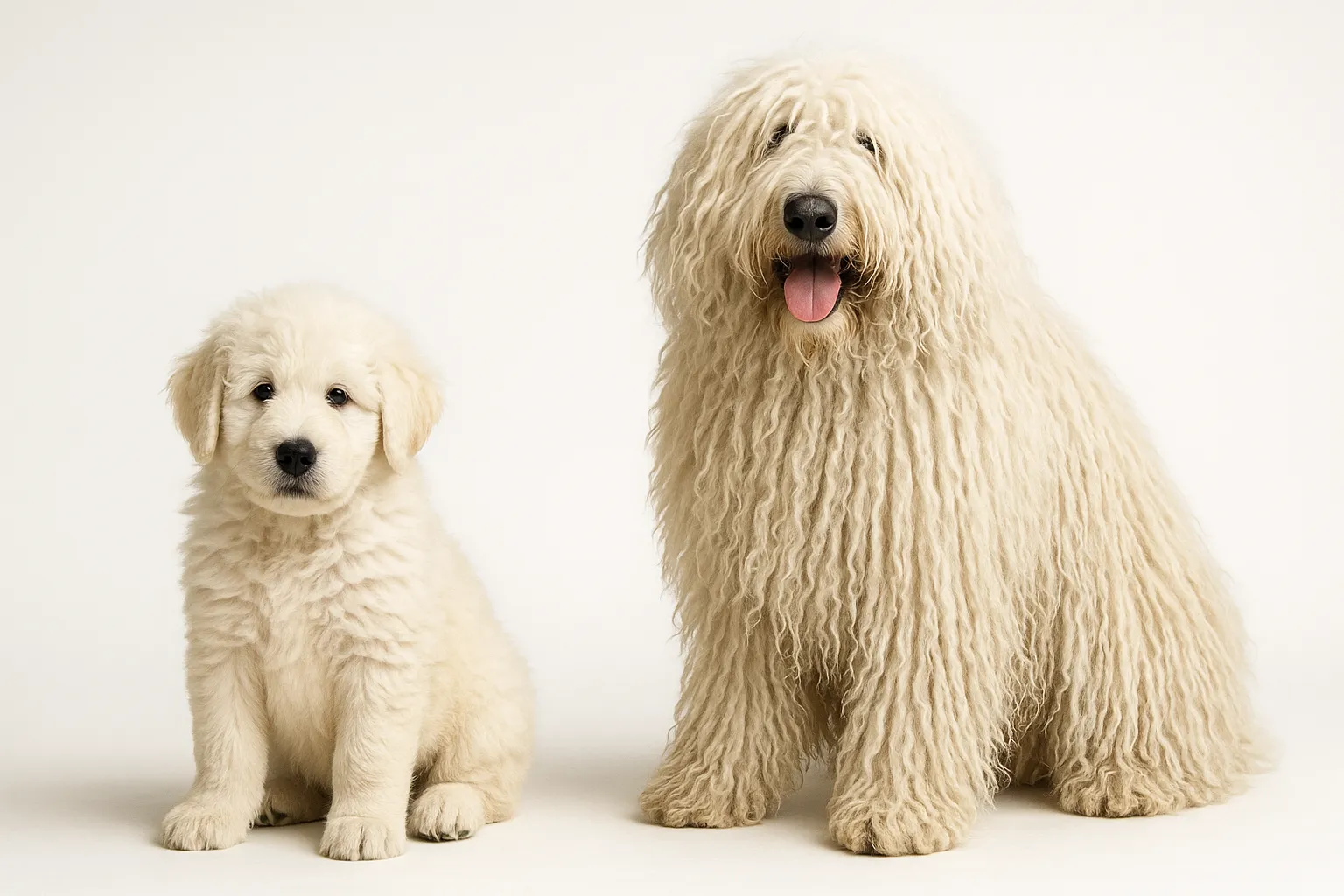
There is no other dog quite like the Komondor. A massive Hungarian livestock guardian draped in white cords, originally developed to blend with the sheep it protected — and armored against wolf bites by the very coat that makes it so visually striking. At 80-130 lbs with lifespans of 10-12 years, the Komondor is a working dog in the truest sense.
That iconic coat is not just cosmetic. It creates unique health management demands that prospective owners must understand before acquisition. Hip dysplasia is highly prevalent in the breed per OFA data. Bloat risk is elevated by deep-chested conformation.
Skin disease, hot spots, and tick infestations can develop silently under poorly maintained cords. And the breed’s guardian independence makes them unsuitable for inexperienced owners.
The Conditions to Watch For
Hip Dysplasia
Hip dysplasia is one of the Komondor’s primary health concerns, documented through OFA data at high rates. OFA hip evaluation at 24 months is mandatory for responsible breeding.
Lean body condition throughout life is the most important modifiable factor for clinical severity in a breed with this level of structural risk. Physical rehabilitation for diagnosed dogs reduces pain and preserves function.
See the Hip Dysplasia guide for full prevention and management detail.
Bloat (GDV)
Komondors carry significant bloat risk from their deep-chested, large body conformation. Prophylactic gastropexy at spay/neuter time is recommended for this breed.
Without gastropexy, twice-daily feeding, slow feeders, and exercise restriction after meals reduce risk — but do not eliminate it. Any suspected GDV is an immediate veterinary emergency. Minutes matter.
See the Bloat (GDV) guide for full prevention and management detail.
Skin Conditions Under Cords
The corded coat creates dermatological risk that is unique among dog breeds. Moisture, debris, and parasites accumulate under cords when maintenance is inadequate. Hot spots, yeast overgrowth, and tick infestations are documented problems in poorly maintained coats.
Regular manual inspection of cord bases, thorough drying after bathing (which takes hours, not minutes), and systematic tick checks after outdoor activity prevent skin disease from developing unseen.
See the Skin Conditions Under Cords guide for full prevention and management detail.
Longevity Interventions That Have Data Behind Them
Corded Coat Maintenance — A Non-Negotiable Commitment
The Komondor’s corded coat is not a casual grooming project. Cords begin forming at 9-24 months as the puppy fluff transitions, and they require manual separation during formation to prevent matting into an unmanageable mass. Once formed, cords need periodic hand-separation to prevent merging.
Bathing a fully corded Komondor takes 3-5 hours and requires thorough blow-drying to prevent skin disease from moisture retention. Many owners use professional groomers experienced with the breed. This is a lifelong commitment that must be researched before acquisition — not after.
Guardian Dog Independence
Komondors were bred to guard flocks independently for days in the Hungarian puszta, making life-or-death decisions without human direction. That independence is not a training deficiency. It is the breed’s core operating system.
They require experienced owners who provide early socialization (critical for any guardian breed), consistent positive training, and thoughtful management of territorial instincts. Their combination of independence, size, and protective drive makes them one of the more challenging breeds for first-time owners.
Parasite Management in Corded Dogs
The Komondor’s cords create an ideal hiding place for ticks. Parasites can reach the skin undetected and feed until engorged — invisible under the cord structure.
After outdoor time in tick-endemic areas, systematic inspection under cord bases is required. Year-round tick prevention using a veterinarian-recommended product is essential, not seasonal. Ticks transmitting Lyme disease, ehrlichiosis, and anaplasmosis pose particular danger in a breed where routine skin inspection is inherently challenging.
The Longevity Priorities That Move the Needle
The prevention actions most Komondor owners should prioritize above all else:
- OFA hip evaluation at 24 months — hip dysplasia is highly prevalent in this large guardian breed
- Prophylactic gastropexy at spay/neuter — bloat is a significant acute mortality risk
- Corded coat maintenance — improper coat care creates skin disease and parasite concerns under the cords
Build your annual wellness calendar around these targets. Review progress quarterly and shift resources toward whichever risk area is trending fastest. See Hip Dysplasia, Bloat, Skin Allergies for detailed protocols.
Evidence-Based Longevity Priorities
Body Composition and Muscle Maintenance
Optimal body condition in Komondors extends healthspan by reducing cumulative load across multiple systems. In a large breed, joint stress and metabolic strain rise quickly when body composition drifts. Their guarding heritage means muscle maintenance directly affects functional longevity — these dogs need to maintain strength to support their frame comfortably.
Condition-Focused Prevention Stack
The greatest healthspan gains come from focusing prevention on Hip Dysplasia, Bloat, Skin Allergies. Acting at the first credible signal, rather than waiting for certainty, is what separates dogs who maintain function from those who lose it.
Behavior, Stress Load, and Recovery
Household rhythm directly affects healthspan in Komondors. Inconsistent schedules and unclear social structure often manifest as vigilance behaviors, territorial escalation, or recovery problems. These dogs need to know their role and their routine.
Preventive Screening Cadence
Use planned veterinary reassessment intervals and tighten the schedule when trend logs show drift in orthopedic function or gait quality. The biggest healthspan gains come from catching changes during the early intervention window.
Breed-Specific Research
Use these evidence deep dives to add mechanism-level context to your Komondor longevity plan:
- Hip Dysplasia Lifetime Load Management: hip dysplasia management in a large guardian breed with high structural risk
- Parasite Prevention As Longevity Lever: tick and parasite prevention for a breed with challenging coat inspection
- Exercise Protocols By Breed Size: exercise management for a large independent working breed
How to Use Genetic Panel Results
Genetic testing in Komondors delivers the most value when results directly change what gets measured, how often, and what triggers escalation. Consider hip and elbow scoring (OFA or PennHIP) to quantify orthopedic risk, and breed-specific cancer panels or tumor marker surveillance when available.
- Begin with a panel designed for your breed’s known risks, then validate those findings through follow-up exams rather than treating a single test as the final word.
- Focus your first monitoring protocols on Hip Dysplasia and Bloat — the conditions where early data most directly shapes the intervention timeline.
- Document weight, energy level, appetite patterns, and any changes you notice between vet visits. When combined with clinical data, home observations often reveal the earliest signs of drift.
- The most important reassessment windows come at the transitions: growth to adulthood, adulthood to middle age, and middle age to senior status. Recalibrate at each one.
The best use of any test is to make your next veterinary conversation more specific and your monitoring plan more targeted.
Breeding History & Health Implications
The Komondor was bred for livestock guarding in Hungary — a role demanding independence, physical durability, and protective instinct. That heritage built a powerful, resilient animal, but also one with structural load patterns and cancer susceptibility that require proactive monitoring.
- Elevated orthopedic risk and large-breed cancer susceptibility require proactive screening at intervals that match the breed’s actual risk curve, not a generic wellness schedule.
- The breed’s history-informed risk profile highlights Hip Dysplasia, Bloat, Skin Allergies as the conditions warranting the closest ongoing attention.
- Subtle changes that recur are more diagnostically useful than dramatic one-time events. Track them, report them, and let your vet decide whether to investigate.
- Anchor your prevention plan to the latest data, not the original risk assessment. What your Komondor needed at two years old and what they need at eight are different conversations.
What the breed was originally built for shapes the risk landscape. What your individual dog’s trend data shows shapes the response plan.
Monitoring Schedule by Life Stage
- Puppy to 9 months: cord formation monitoring, tick prevention established
- 2 years: OFA hip evaluation, CAER exam, consider prophylactic gastropexy
- 3-7 years: annual wellness panel, systematic cord skin inspection, tick monitoring
- 8+ years: senior panel biannually, mobility assessment, cord maintenance, dental care
Fuel for the Long Run
Komondors need quality large-breed adult food in measured portions. Strict lean body condition is essential — excess weight in a breed with high hip dysplasia prevalence significantly accelerates joint disease progression.
Two meals daily reduces bloat risk. Omega-3 supplementation supports both joint and skin health under the cords.
The Healthspan Horizon
Komondors with OFA screening, prophylactic gastropexy, committed cord maintenance, and proactive parasite management can live healthy guardian lives in the 10-12 year range. Their ancient working heritage supports robust health — but only when breed-specific care requirements are consistently met. The coat demands dedication. The temperament demands experience. The health returns reward both.
Most-Missed Early Drift Pattern
Healthspan erosion in Komondors typically begins with subtle shifts that owners rationalize away:
- Hind-limb stiffness after rest related to Hip Dysplasia that gets attributed to a hard day rather than structural decline
- Intermittent mild abdominal discomfort after eating that may signal developing Bloat patterns
- Chronic hot spots, secondary infections, or coat degradation related to Skin Allergies building under the cords where they are not visible
Treat any week-long departure from established baselines as a call to investigate, not a call to wait. Early reassessment preserves options that delay eliminates.
Additional Health Risks to Monitor
Based on breed predisposition data, Komondor owners should also be aware of:
Frequently Asked Questions
How long do Komondors live?
Komondors typically live 10-12 years. OFA orthopedic screening, bloat prevention through prophylactic gastropexy, and dedicated coat maintenance are the primary longevity investments.
Why do Komondors have cords?
The Komondor’s corded coat evolved as an adaptation for livestock guarding in Hungary. The thick cords protect against wolf bites and harsh weather. In summer, the cords also provide insulation against heat. The white color helped Komondors blend with the sheep they guarded.
Are Komondors good family dogs?
Komondors are deeply loyal to their family but require experienced owners. Their guardian independence and protective instincts require extensive early socialization and consistent experienced handling. They are not suitable for first-time dog owners.
How do you groom a Komondor?
Cord formation requires hand-separating cords during puppy coat transition (9-24 months) to prevent matting. Formed cords require periodic separation and thorough drying after bathing — which takes 3-5 hours in a fully corded adult. Many owners use professional groomers experienced with the Komondor coat.
Are Komondors rare?
Komondors are uncommon in North America, with relatively few annual AKC registrations. They are more common in their native Hungary where the breed remains a working livestock guardian.
References
[1] Komondor Club of America. komondorclubofamerica.org. [2] OFA health statistics — Komondor hip dysplasia prevalence. ofa.org. [3] Bloat and GDV prevention: Glickman LT et al. J Am Vet Med Assoc. 2000. [4] Hungarian livestock guardian dog history: Magyar Kennel Club records. [5] AKC breed information. akc.org.
Related reads
Related Reading
Continue exploring