The Kuvasz’s Health Equation: What Matters Most
The Kuvasz (plural: Kuvaszok) nearly vanished. After World War II, fewer than 30 dogs remained in Hungary — a breed that had guarded royal estates and protected livestock for centuries, reduced to a handful of survivors. Recovery efforts since then have rebuilt the population, though the breed remains uncommon worldwide.
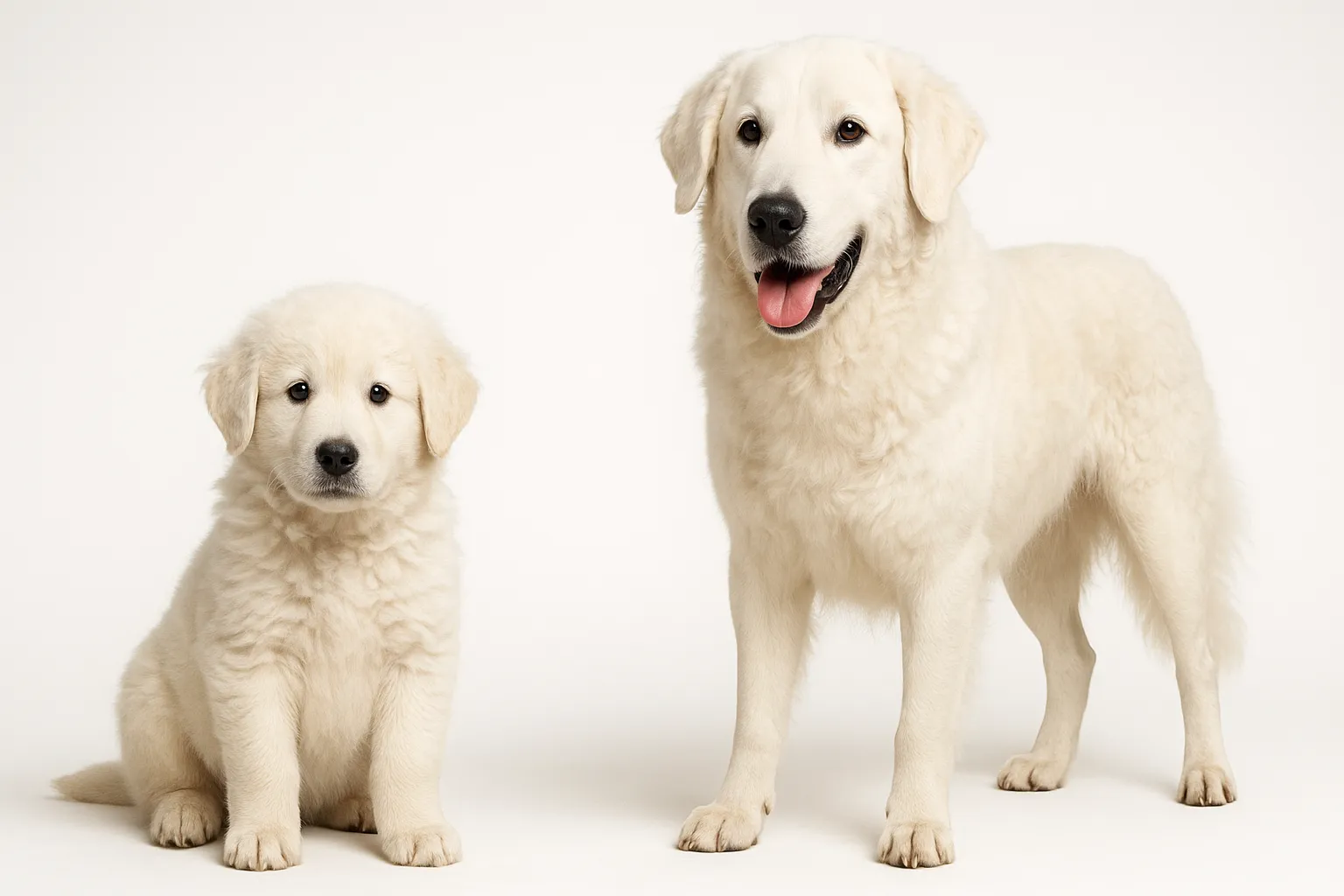
At 70-115 lbs with a dense, wavy white coat, modern Kuvaszok live 10-12 years. Their health profile reflects both their ancient working heritage and the genetic bottleneck of near-extinction. Hip dysplasia is highly prevalent — among the highest rates documented in large breeds through OFA data. Osteochondrosis dissecans affects developing joints during rapid growth. Bloat risk accompanies their deep-chested build. Managing these conditions starts before the puppy comes home.
Where This Breed Is Most Vulnerable
Hip Dysplasia
Hip dysplasia in Kuvaszok is not a marginal concern — the breed has some of the highest documented rates among large breeds. OFA hip evaluation at 24 months is mandatory for responsible breeding.
Strict lean body condition from puppyhood through adulthood is the most powerful modifier of clinical severity. Joint supplementation, physical rehabilitation, and pain management are important quality-of-life interventions for affected dogs.
See the Hip Dysplasia guide for full prevention and management detail.
Osteochondrosis Dissecans
Osteochondrosis dissecans (OCD) — abnormal cartilage development in major joints — occurs in Kuvaszok at elevated rates. The shoulder is most commonly affected, though the elbow, stifle, and hock may also be involved.
Controlled puppy nutrition (avoiding excess calcium and calories) and restricted high-impact exercise during growth reduce OCD risk. Radiographic diagnosis before secondary joint changes develop enables surgical intervention when appropriate. The growth period is the critical prevention window.
See the Osteochondrosis Dissecans guide for full prevention and management detail.
Bloat (GDV)
Kuvaszok carry significant bloat risk from their deep-chested conformation. Prophylactic gastropexy at spay/neuter is recommended.
Post-meal exercise restriction, twice-daily feeding, and slow feeders reduce risk but do not eliminate it without gastropexy. GDV is a same-day veterinary emergency — recognize the signs (unproductive retching, rigid distended abdomen, rapid deterioration) and act immediately.
See the Bloat (GDV) guide for full prevention and management detail.
What the Evidence Says About Living Longer
Puppy Growth Rate Management
A Kuvasz puppy grows from 2 lbs to over 90 lbs in 12-18 months. That velocity creates high vulnerability to developmental orthopedic disease — OCD, HOD, and hip dysplasia all have roots in the growth period.
Large breed puppy food with appropriate calcium-to-phosphorus ratios is essential. Avoid high-calcium supplements during growth. Limit high-impact exercise (jumping, running on hard surfaces, repetitive stairs) before 18 months. Controlled daily leash walks support cardiovascular development without imposing orthopedic stress. The habits you set during the first 18 months echo through the entire lifespan.
Independent Guardian Temperament
Kuvaszok were bred to guard royal estates and livestock independently, making autonomous decisions for days without human direction. That independence is not defiance — it is deeply encoded breed behavior.
They require experienced owners who provide extensive early socialization (8 weeks through 18 months), consistent positive training, and appropriate management of territorial instincts. Aloofness with strangers is a breed characteristic, not a socialization failure. It must be channeled appropriately, not corrected away.
White Coat Seasonal Shedding
The Kuvasz sheds heavily twice yearly — a complete coat blow that produces remarkable quantities of white hair. Regular brushing (several times weekly during shedding periods) prevents matting and reduces household accumulation.
Do not shave the dense, weather-resistant coat. It provides insulation in both cold and heat, and UV protection for the skin beneath. Year-round light brushing between seasonal sheds maintains skin health and allows early detection of developing skin conditions.
Priority Actions for a Longer Life
For most Kuvasz owners, these are the actions that will matter most:
- OFA hip evaluation at 24 months — hip dysplasia is highly prevalent in this large guardian breed
- Growth management in puppies — osteochondrosis and HOD risk requires controlled nutrition and exercise
- Prophylactic gastropexy at spay/neuter — bloat is a significant mortality risk in the breed
Frame your prevention investment around these targets. When resources are limited, these are where the evidence says to spend them first. See Hip Dysplasia, Osteochondrosis Dissecans, Bloat for the full clinical picture.
Evidence-Based Longevity Priorities
Body Composition and Muscle Maintenance
Maintaining stable weight and lean muscle mass in a Kuvasz is one of the highest-yield longevity interventions available. Joint load and metabolic strain rise quickly when body composition drifts in a large breed, so prevention must stay proactive. Muscle maintenance directly affects functional longevity — these dogs need strength to support their frame and maintain mobility.
Condition-Focused Prevention Stack
Prevention delivers the greatest return when aimed at Hip Dysplasia, Osteochondrosis Dissecans, Bloat. Acting on these early keeps your options wide and prevents the cascading complications that delayed treatment invites.
Behavior, Stress Load, and Recovery
Daily routine consistency matters more in working guardian breeds than in most other groups. Stable sleep windows, controlled activity, and clear social structure prevent stress-driven aging acceleration. These dogs need to know their boundaries and their role in the household hierarchy.
Preventive Screening Cadence
Schedule veterinary reassessment intervals by age band and trend changes rather than waiting for obvious deterioration. Planned checkpoints focused on orthopedic function and gait quality improve early detection and intervention timing.
Breed-Specific Research
Use these evidence deep dives to add mechanism-level context to your Kuvasz longevity plan:
- Hip Dysplasia Lifetime Load Management: hip dysplasia management in a large breed with very high structural risk
- Exercise Prescription By Life Stage: controlled growth management and exercise for a large working breed
- Canine Size Lifespan Tradeoffs By Breed: why large guardian breeds like the Kuvasz have shorter lifespans
From Genetic Data to Monitoring Decisions
Genetic testing in Kuvaszok should drive monitoring strategy, not replace it. Use results to tighten surveillance windows and calibrate intervention thresholds. Consider hip and elbow scoring (OFA or PennHIP) to quantify orthopedic risk, and breed-specific cancer panels or tumor marker surveillance when available.
- Use a breed-appropriate genetic panel as your foundation, but remember that genetic risk is not the same as clinical disease. Serial veterinary observations bridge that gap.
- Connect your first monitoring protocol to Hip Dysplasia and Osteochondrosis Dissecans — these are the conditions where test results should directly change what you do next.
- A running health log that combines lab work, clinical notes, and your daily observations gives your vet a clearer picture in five minutes than a full workup without history.
- Treat each annual exam as a chance to re-read your genetic data against fresh clinical findings. The same panel results carry different weight as your Kuvasz ages.
A test result that does not change your next action is just information. Make every panel result translate into a specific monitoring decision.
Breeding History & Health Implications
The Kuvasz was bred for estate guarding and livestock protection — roles demanding physical durability, independence, and protective temperament. That heritage, combined with the breed’s near-extinction in World War II, directly informs current health risks and prevention strategy.
- High orthopedic risk and large-breed cancer susceptibility require sustained surveillance intensity from early adulthood through the senior years.
- Prioritize surveillance based on breed heritage — Hip Dysplasia, Osteochondrosis Dissecans, Bloat are the highest-probability targets that history and data both point to.
- When a mild concern surfaces more than once, the right response is earlier screening — not more watching and waiting.
- Course-correct regularly. The point of ongoing monitoring is not to confirm the original plan — it is to improve it as your dog’s health picture becomes clearer.
What the breed was built for tells you where to look. What your dog’s trend data shows tells you when to move.
Your Veterinary Screening Roadmap
- Puppy to 18 months: controlled growth management, OCD monitoring, limited high-impact exercise
- 2 years: OFA hip and elbow evaluation, CAER exam, consider prophylactic gastropexy
- 3-7 years: annual wellness bloodwork, CAER exam every 2 years, joint assessment
- 8+ years: senior panel biannually, pain assessment, mobility support, dental care
Feeding for Longevity
Kuvaszok require large-breed puppy food during development with controlled calcium-to-phosphorus ratios — this is not optional for a breed with this level of developmental orthopedic risk. Adult feeding with measured portions prevents the obesity that accelerates joint disease.
Strict lean body condition is essential throughout life. Omega-3 and glucosamine supplementation from age 2-3 supports joint health. Two meals daily reduces bloat risk.
Your Long-Term Health Trajectory
Kuvaszok with OFA screening, controlled puppy growth, prophylactic gastropexy, and lifelong lean body condition maintenance can live healthy guardian lives in the 10-12 year range. Their ancient working heritage supports robust health — but the near-extinction bottleneck and high orthopedic risk mean that proactive management is not optional. The owners who invest in prevention from the puppy stage see the best outcomes.
Most-Missed Early Drift Pattern
Early disease progression in Kuvaszok usually presents as low-grade changes that owners attribute to normal aging or a hard day:
- Hind-limb stiffness after rest related to Hip Dysplasia that gets rationalized as temporary soreness
- Intermittent lameness during growth tied to Osteochondrosis Dissecans that appears to self-resolve before recurring
- Warning signs of Bloat that escalate rapidly: unproductive retching, rigid distended abdomen, and rapid deterioration
If baseline function drifts for 7-10 days, treat it as a prevention failure signal and reassess early.
Additional Health Risks to Monitor
Based on breed predisposition data, Kuvasz owners should also be aware of:
Frequently Asked Questions
How long do Kuvaszok live?
Kuvaszok typically live 10-12 years. OFA hip screening, puppy growth management, and bloat prevention are the primary longevity investments.
What is the difference between a Kuvasz and a Komondor?
The Kuvasz has a dense, wavy white coat, while the Komondor has the distinctive white cords. Both are large Hungarian livestock guardians, but the Kuvasz is generally somewhat smaller and has different coat maintenance requirements.
Are Kuvaszok good family dogs?
Kuvaszok are devoted to their family but require experienced ownership. They are aloof with strangers by nature and have strong protective instincts. Extensive early socialization is essential. They are not suitable for first-time dog owners.
Are Kuvaszok rare?
Kuvaszok are uncommon in North America, with limited annual AKC registrations. They remain more common in Hungary where the breed is considered a national treasure.
Do Kuvaszok get along with other dogs?
Kuvaszok can coexist with dogs they are raised with but may show dog-aggression with unfamiliar dogs, particularly same-sex adults. Early socialization from puppyhood shapes more tolerant adult behavior. Their guarding instincts mean they must be introduced carefully to new animals.
References
[1] Kuvasz Club of America. kuvaszclubofamerica.org. [2] OFA hip dysplasia statistics — Kuvasz. ofa.org. [3] Hungarian breed history: Magyar Kennel Club records. [4] AKC breed information. akc.org. [5] Giant breed developmental orthopedic disease: Richardson DC. Vet Clin North Am. 1992.
Related reads
Related Reading
Continue exploring