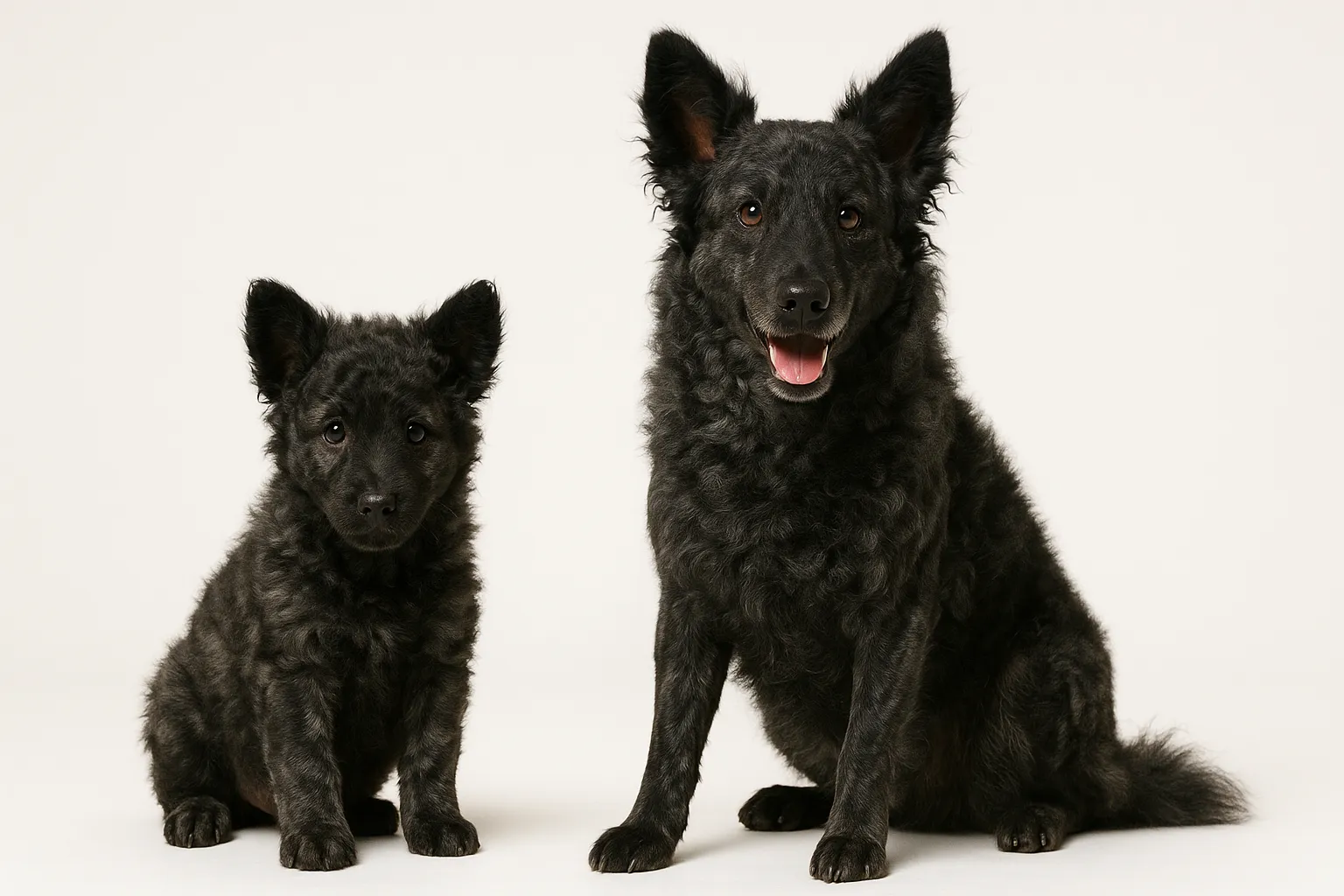
A Rare Hungarian Herder That Nearly Vanished in World War II
The Mudi (pronounced “moody”) almost ceased to exist during World War II. Rebuilt from a handful of surviving dogs, this rare Hungarian herding breed emerged with its working versatility intact — herding, hunting, agility, search-and-rescue — and a generally sound genetic profile. Mudi live 12-14 years, a range that reflects both their working dog heritage and a relatively limited history of extreme conformation breeding.
The primary structural concern is hip dysplasia, documented at rates notable for a medium herding breed. Progressive retinal atrophy is the other condition to watch.
The breed’s small global population makes genetic diversity monitoring important for long-term health at the breed level. Annual wellness monitoring from early adulthood provides the trend data needed to catch metabolic changes in an otherwise healthy dog.
Health Risks Worth Knowing
Hip Dysplasia
Hip dysplasia appears in Mudi at rates worth tracking for a medium herding breed. OFA hip evaluation at 24 months provides a structural baseline that informs exercise decisions and breeding. Lean body condition throughout life and controlled high-impact exercise during growth reduce severity when dysplasia is present.
See the Hip Dysplasia guide for full prevention and management detail.
Progressive Retinal Atrophy and Eye Conditions
PRA affects the Mudi at documented rates. Annual CAER exams catch retinal changes early, and DNA testing for available PRA mutations should cover all breeding stock.
Any progressive change in night vision or daytime visual behavior — bumping into objects in dim light, reluctance to navigate unfamiliar spaces — warrants ophthalmologic evaluation.
See the Progressive Retinal Atrophy and Eye Conditions guide for full prevention and management detail.
Skin Conditions
Mudi have a medium-length, slightly wavy coat that requires regular grooming but avoids the intensive maintenance of heavily coated breeds. Allergic dermatitis can develop, particularly in dogs with environmental allergen sensitivities. Regular grooming sessions serve double duty: coat maintenance and early detection of skin changes.
See the Skin Conditions guide for full prevention and management detail.
Science-Backed Longevity Strategies
Meeting the Needs of a Versatile Working Breed
Mudi are extraordinarily versatile. They excel in herding, agility, obedience, tracking, flyball, and search-and-rescue work. That intelligence and drive are assets — but they also mean the Mudi needs consistent daily challenge. Without adequate mental and physical stimulation, behavioral problems develop: excessive barking, destructive behavior, anxiety.
Two active daily exercise sessions plus structured training engagement meet the needs of most household Mudi.
Rare Breed Genetic Stewardship
The Mudi is rare enough globally that genetic diversity is a breed-level concern. The post-WWII reconstruction from a small surviving population created a genetic bottleneck similar to other Hungarian breeds. Owners and breeders who prioritize health testing (hip, eye) and support breed health databases help protect the breed’s future.
When acquiring a Mudi, prioritize breeders who perform OFA hip and CAER eye testing on breeding stock.
Coat Care Without the Drama
The Mudi’s coat is unique among herding breeds — wavy to curly, medium length, and relatively easy to maintain. Brushing 1-2 times weekly prevents mats, especially behind the ears and in leg feathering. The coat is weather-resistant and largely self-cleaning. Bathing every 4-6 weeks keeps things in good condition. Compared to Pulik or Polish Lowland Sheepdogs, the grooming burden is genuinely low.
Start Here: Your Top Longevity Targets
The prevention actions most Mudi owners should prioritize above all else:
- Annual CAER eye exam — progressive retinal atrophy documented in the breed
- OFA hip evaluation at 24 months — hip dysplasia documented at notable rates
- Annual wellness bloodwork from age 4 — generally healthy breed, regular monitoring supports long-term function
Use these priorities to structure your veterinary conversations and home monitoring routine. The condition guides — Hip Dysplasia, Eye Conditions, Skin Allergies — provide the clinical detail behind each recommendation.
Evidence-Based Longevity Priorities
Body Composition and Muscle Maintenance
Body composition control predicts long-term function in Mudi more reliably than most other single factors. As a medium breed, stable body composition directly supports orthopedic longevity and cardiovascular reserve. The sustained movement patterns inherent to herding work require stable muscle-to-fat ratios for long-term joint health.
Condition-Focused Prevention Stack
The highest-return prevention targets for Mudi are Hip Dysplasia, Eye Conditions, and Skin Allergies. Executed consistently, early intervention preserves options and prevents the delayed-treatment drift that erodes quality of life.
Behavior, Stress Load, and Recovery
Mudi maintain better long-term stability when workload, recovery, and mental stimulation are intentionally balanced. Without structured cognitive engagement, these dogs often develop compulsive behaviors or chronic stress patterns that quietly erode healthspan.
Preventive Screening Cadence
Prevention fails when veterinary visits are only triggered by visible problems. Build screening intervals into your calendar and tighten them when tracking data shows any sustained drift.
Breed-Specific Research
Use these evidence deep dives to add mechanism-level context to your Mudi longevity plan:
- Exercise Protocols By Breed Size: exercise and enrichment management for a highly versatile medium herding breed
- Genetic Testing For Dogs Clinical Roi: PRA testing and genetic diversity considerations for a rare breed
- Canine Obesity And Lifespan Evidence: weight management for a medium working breed
How to Use Genetic Panel Results
For Mudi, the practical value of genetic testing comes from connecting results to what you monitor and how often — not from treating test data as predictive certainty. Consider MDR1 gene testing to guide medication safety and hip and elbow scoring (OFA or PennHIP) to quantify orthopedic risk as part of the initial assessment.
- Run a breed-relevant panel and convert the findings into a concrete monitoring timeline. Results that do not change your screening calendar were not worth running.
- Anchor your initial monitoring to Hip Dysplasia and Progressive Retinal Atrophy Pra. Testing matters when it changes what you measure, how often, and what triggers escalation.
- Your Mudi’s health story unfolds across years, not appointments. A continuous record linking genetic data, lab trends, and daily observations makes each veterinary conversation more productive.
- Return to your test results whenever something changes — a new lameness, unexplained weight loss, or behavioral shift. Static data becomes useful again when the clinical context moves.
Results without follow-through are noise. Results that change your screening schedule, your daily observations, or your intervention threshold — those are signal.
Breeding History & Health Implications
Mudi were bred for sustained movement, vigilance, and rapid decision-making under workload. That heritage creates specific risks owners can address through structured prevention.
- Their structural load patterns demand proactive orthopedic surveillance, and their temperament sensitivity benefits from stable routines and arousal management. Both require a monitoring schedule that tightens as age-related risks compound.
- Focus your risk surveillance on Hip Dysplasia, Progressive Retinal Atrophy Pra, Degenerative Myelopathy — these are the conditions where this breed’s ancestry creates the most actionable risk profile.
- When you see the same subtle finding twice — a slight limp, a missed meal, a slower recovery — treat it as a signal, not a coincidence. Tighten your monitoring before it compounds.
- Prevention strategies that never get updated become prevention rituals. Revisit yours regularly and adjust based on what the data actually shows.
Use breeding history to build the initial watchlist. Use your dog’s own health trends to decide when surveillance becomes intervention.
What to Test and When
- Puppy to 2 years: OFA at 24 months, CAER baseline
- 3-8 years: annual CAER, wellness bloodwork from age 4, monthly BCS
- 9+ years: senior panel every 6 months, vision monitoring, mobility assessment
Diet and Feeding Strategy
Mudi do well on quality medium-breed adult food with portions adjusted for activity level. Lean body condition matters for hip health — and the coat can mask gradual body condition changes, making hands-on assessment essential. Omega-3 supplementation may support eye and joint health.
How the Pieces Connect
Mudi with OFA hip screening, annual eye exams, and lean body condition management are well-positioned for healthy, active lives in the 12-14 year range. Their working dog heritage and relatively uncompromised genetics support favorable longevity outcomes. This is a breed where prevention pays dividends precisely because the baseline health is already good.
Most-Missed Early Drift Pattern
Long-term decline in Mudi often starts with small changes that owners normalize too quickly:
- Subtle hind-limb stiffness after rest related to Hip Dysplasia that owners often dismiss as temporary
- A mild early sign tied to Progressive Retinal Atrophy Pra that appears intermittently
- Gradual drift toward Degenerative Myelopathy signs that become harder to reverse: progressive loss of hindquarter coordination and muscle mass
If baseline function is drifting for 7-10 days, treat it as a prevention failure signal and reassess early.
Additional Health Risks to Monitor
Based on breed predisposition data, Mudi owners should also be aware of:
Frequently Asked Questions
How long do Mudi live?
Mudi typically live 12-14 years. Annual eye exams and hip evaluation are the most important longevity investments for this generally healthy breed.
How are Mudi pronounced?
Mudi is pronounced “moody” — the singular and plural are both “Mudi” (or “Mudik” in Hungarian).
Are Mudi good family dogs?
Mudi are loyal, energetic, and bond strongly with their family. They do well with active households that can meet their substantial exercise and mental stimulation needs. Their herding instinct may lead to chasing and circling younger children.
How rare are Mudi?
Very rare — fewer than 100 puppies are registered in the US annually following 2022 AKC recognition. The breed is more common in Hungary and Central Europe but remains rare globally.
What makes Mudi different from Puli and Pumi?
Mudi have a wavy-to-curly medium coat (not corded like the Puli or semi-erect curled like the Pumi). They are the most versatile of the three — used for herding, hunting small game, and as general working dogs, whereas the Puli is primarily a herding breed and the Pumi a herding and small game hunting breed.
References
[1] Mudi Club of America. mudiclubofamerica.org. [2] AKC breed recognition 2022. akc.org. [3] Hungarian breed history: Fenyes D. A Magyar Puli es a Mudi. 1936. [4] OFA health statistics by breed. ofa.org. [5] WSAVA nutrition guidelines. wsava.org.
Related reads
Related Reading
Continue exploring