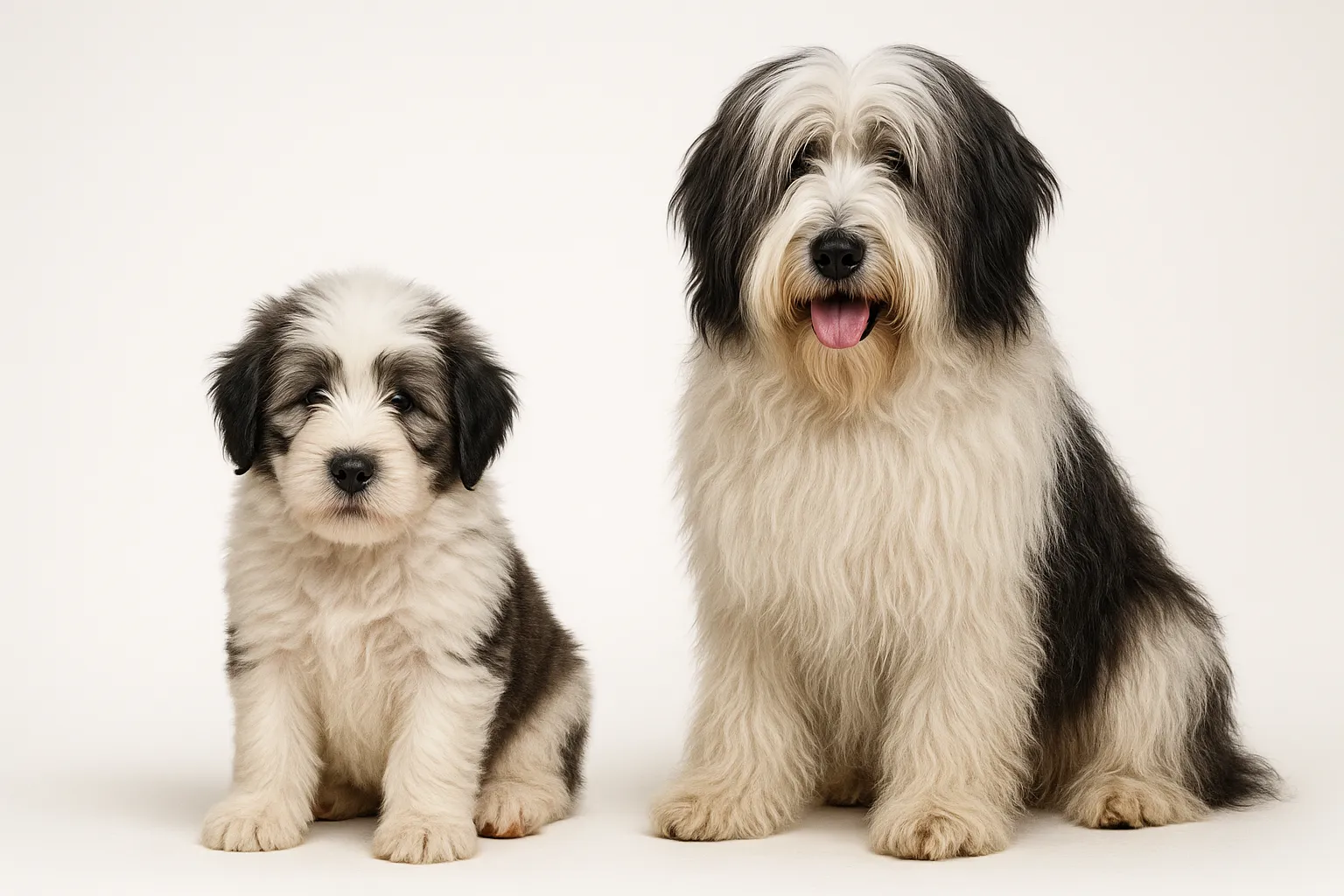
Rebuilt From a Handful of Survivors — and the Genetic Bottleneck Shows
The Polish Lowland Sheepdog (Polski Owczarek Nizinny, or PON) nearly disappeared during World War II. Breeders reconstructed the entire breed from a handful of surviving dogs — a genetic bottleneck that still shapes health considerations today. Descended from Central Asian herding dogs brought to Poland via ancient trade routes, PONs are medium-sized, shaggy-coated, and built for independent decision-making in the field.
They live 12-14 years. The primary health concerns are hip dysplasia, progressive retinal atrophy (PRA), and hypothyroidism. That small post-WWII founding population means slightly reduced genetic diversity, making proactive health testing more important in this breed than in many others.
The Health Conditions That Define This Breed
Hip Dysplasia
Hip dysplasia occurs in Polish Lowland Sheepdogs at moderate rates. OFA hip evaluation at 24 months provides a structural baseline. As an active herding breed, hip integrity directly affects working capacity. Lean body condition and controlled high-impact exercise during skeletal maturation are the most effective environmental modifiers.
See the Hip Dysplasia guide for full prevention and management detail.
Progressive Retinal Atrophy
PRA is documented in PONs at elevated rates. Annual CAER exams detect clinical retinal changes. DNA testing for available PRA mutations should be performed on all breeding stock. PRA causes progressive bilateral vision loss — early detection gives owners time to prepare the environment and the dog for reduced sight.
See the Progressive Retinal Atrophy guide for full prevention and management detail.
Hypothyroidism
Hypothyroidism develops at above-average rates in middle-aged PONs. Annual T4/TSH panels starting at age 4 catch it early. The signs are familiar: weight gain, lethargy, coat changes. Daily levothyroxine therapy effectively restores thyroid function, and most dogs respond well.
See the Hypothyroidism guide for full prevention and management detail.
Strategies With Research Support
Coat Maintenance for a Working Herding Dog
The PON’s thick, shaggy double coat needs brushing every 2-3 days to prevent matting, with more frequent attention during coat blowing periods. The facial fall — the characteristic hair over the eyes — requires owner management for the dog to see clearly.
Many owners opt for a shorter maintenance trim. This reduces grooming burden without compromising the dog’s working character. After outdoor activity in wet or muddy conditions, debris trapped in the coat must be brushed out before mats form.
Working Breed Mental Stimulation
PONs were bred to make independent decisions in herding work. They are highly intelligent, problem-solving dogs that need substantial mental engagement. Without adequate challenge, they develop behavioral issues including destructive behavior and obsessive habits.
Herding trials, obedience, agility, and tracking provide outlets for their working drive. Daily training sessions of 10-15 minutes, layered on top of physical exercise, maintain cognitive engagement.
WWII Genetic Bottleneck Awareness
The PON’s near-extinction during WWII and subsequent reconstruction from a small founding population means somewhat reduced genetic diversity compared to breeds with continuous populations. For owners acquiring a PON, this makes breeder selection critical. Prioritize breeders with documented health testing for hip dysplasia, PRA, and thyroid function. Responsible breeding using dogs from diverse genetic lines, verified via health testing and pedigree analysis, improves breed resilience over generations.
The Prevention Plan That Pays Off
These are the investments that pay the highest longevity dividend for a Polish Lowland Sheepdog:
- OFA hip evaluation at 24 months — moderate hip dysplasia prevalence in medium herding breeds
- Annual CAER eye exam for PRA monitoring — documented in the breed
- Annual thyroid panel from age 4 — hypothyroidism is documented in Polish Lowland Sheepdogs
Use these priorities to structure your veterinary conversations and home monitoring routine. The condition guides — Hip Dysplasia, Progressive Retinal Atrophy Pra, Hypothyroidism — provide the clinical detail behind each recommendation.
Evidence-Based Longevity Priorities
Body Composition and Muscle Maintenance
Body composition control predicts long-term function more reliably than most other single factors in the PON. As a medium herding breed, body composition stability directly predicts orthopedic longevity and cardiovascular reserve. Sustained herding movement patterns require stable muscle-to-fat ratios for long-term joint health.
Condition-Focused Prevention Stack
Your highest-yield prevention effort targets Hip Dysplasia, Progressive Retinal Atrophy Pra, Hypothyroidism. Early, consistent action on these conditions preserves the interventions that late detection forecloses.
Behavior, Stress Load, and Recovery
PONs maintain better long-term stability when workload, recovery, and mental stimulation are intentionally balanced. Without structured cognitive engagement, these dogs often develop compulsive behaviors or chronic stress patterns that erode healthspan quietly.
Preventive Screening Cadence
Prevention fails when veterinary visits are only triggered by visible problems. Build screening intervals into your calendar and tighten them when tracking data shows any sustained drift.
Breed-Specific Research
Use these evidence deep dives to add mechanism-level context to your Polish Lowland Sheepdog longevity plan:
- Genetic Testing For Dogs Clinical Roi: PRA DNA testing and genetic diversity considerations in a post-bottleneck breed
- Muscle And Mobility Longevity Protocol: joint health management for an active medium herding breed
- Annual Wellness Testing Protocol For Dogs: thyroid and hip monitoring framework for PONs
What Genetic Testing Can and Cannot Tell You
The practical value of genetic testing in the PON comes from linking results to monitoring cadence and owner execution, not from treating test data as predictive certainty. MDR1 gene testing guides medication safety; hip and elbow scoring (OFA or PennHIP) quantifies orthopedic risk as part of the initial assessment.
- Run a genetic panel that targets the conditions most common in Polish Lowland Sheepdogs. Treat the results as a monitoring guide, not a diagnosis — confirm findings through serial clinical follow-up.
- Focus your first monitoring protocols on Hip Dysplasia and Progressive Retinal Atrophy Pra — the conditions where early data most directly shapes the intervention timeline.
- Keep a unified record of all test results, vet findings, and home observations. The connections that matter most — slow trends, seasonal patterns — only show up when all the data lives in one place.
- Return to your test results whenever something changes — a new lameness, unexplained weight loss, or behavioral shift. Static data becomes useful again when the clinical context moves.
Results without follow-through are noise. Results that change your screening schedule, your daily observations, or your intervention threshold — those are signal.
Breeding History & Health Implications
The PON was bred for sustained movement, vigilance, and rapid decision-making under workload. That heritage shapes both the structural demands on their bodies and the temperament sensitivity that benefits from stable routines.
- Structural load and temperament sensitivity require screening cadence matched to the pace at which these conditions typically progress in this breed.
- The breed’s history-informed risk profile highlights Hip Dysplasia, Progressive Retinal Atrophy Pra, Hypothyroidism as the conditions warranting the closest ongoing attention.
- Subtle changes that recur are more diagnostically useful than dramatic one-time events. Track them, report them, and let your vet decide whether to investigate.
- Static prevention plans decay in value. The most effective owners treat their Polish Lowland Sheepdog’s health plan as something that evolves with every vet visit and every home observation.
Breed heritage sets the surveillance priorities. Your Polish Lowland Sheepdog’s individual data tells you when to act.
Age-Based Monitoring Milestones
- Puppy to 2 years: OFA at 24 months, CAER baseline, dental start
- 3-8 years: annual CAER, thyroid panel from age 4, annual wellness panel
- 9+ years: senior panel every 6 months, vision monitoring, mobility assessment
Diet and Feeding Strategy
Polish Lowland Sheepdogs do well on quality medium-breed adult food with caloric management appropriate for activity level. Lean body condition protects hip health. Omega-3 supplementation supports both the thick coat and joint function.
Putting It All Together
PONs with OFA hip screening, annual eye exams, and thyroid monitoring are positioned for healthy lives in the 12-14 year range. Their working dog constitution supports solid longevity when matched with the preventive care their genetic history demands.
Most-Missed Early Drift Pattern
Long-term decline in PONs often starts as small changes owners normalize too quickly:
- Subtle hind-limb stiffness after rest related to Hip Dysplasia that owners often dismiss as temporary
- A mild early sign tied to Progressive Retinal Atrophy Pra that appears intermittently
- Gradual drift toward Hypothyroidism signs that become harder to reverse: significant weight gain, hair loss, and cold intolerance
If baseline function is drifting for 7-10 days, treat it as a prevention failure signal and reassess early.
Additional Health Risks to Monitor
Based on breed predisposition data, Polish Lowland Sheepdog owners should also be aware of:
Frequently Asked Questions
How long do Polish Lowland Sheepdogs live?
Polish Lowland Sheepdogs typically live 12-14 years. Hip evaluation, annual eye exams, and thyroid monitoring are the primary longevity investments.
Are PONs good family dogs?
PONs are loyal and energetic — they bond strongly to their family. Their herding instinct may lead to chasing and circling children and other pets. They are best suited to active families who can provide regular mental and physical engagement.
How much grooming does a PON need?
Substantial — the thick, shaggy coat requires brushing every 2-3 days minimum to prevent matting. Many owners maintain a shorter trim for manageability. Professional grooming every 6-8 weeks for bathing, blow-out, and trim is typical.
Are Polish Lowland Sheepdogs good for first-time dog owners?
PONs are intelligent but can be independent and stubborn — they are better suited to experienced dog owners or those committed to consistent training. Their high intelligence means they train well when properly motivated.
What is the difference between a PON and a Bearded Collie?
PONs and Bearded Collies share a similar shaggy appearance and herding heritage but are distinct breeds. PONs originated in Poland; Bearded Collies in Scotland. PONs tend to be more assertive and independent; Beardies more exuberant and social.
References
[1] American Polish Lowland Sheepdog Club. aponc.org. [2] OFA health statistics by breed. ofa.org. [3] AKC breed standards. akc.org. [4] WWII effect on European dog breeds: von Stephanitz origin and breed reconstruction records. [5] WSAVA nutrition guidelines. wsava.org.
Related reads
Related Reading
Continue exploring