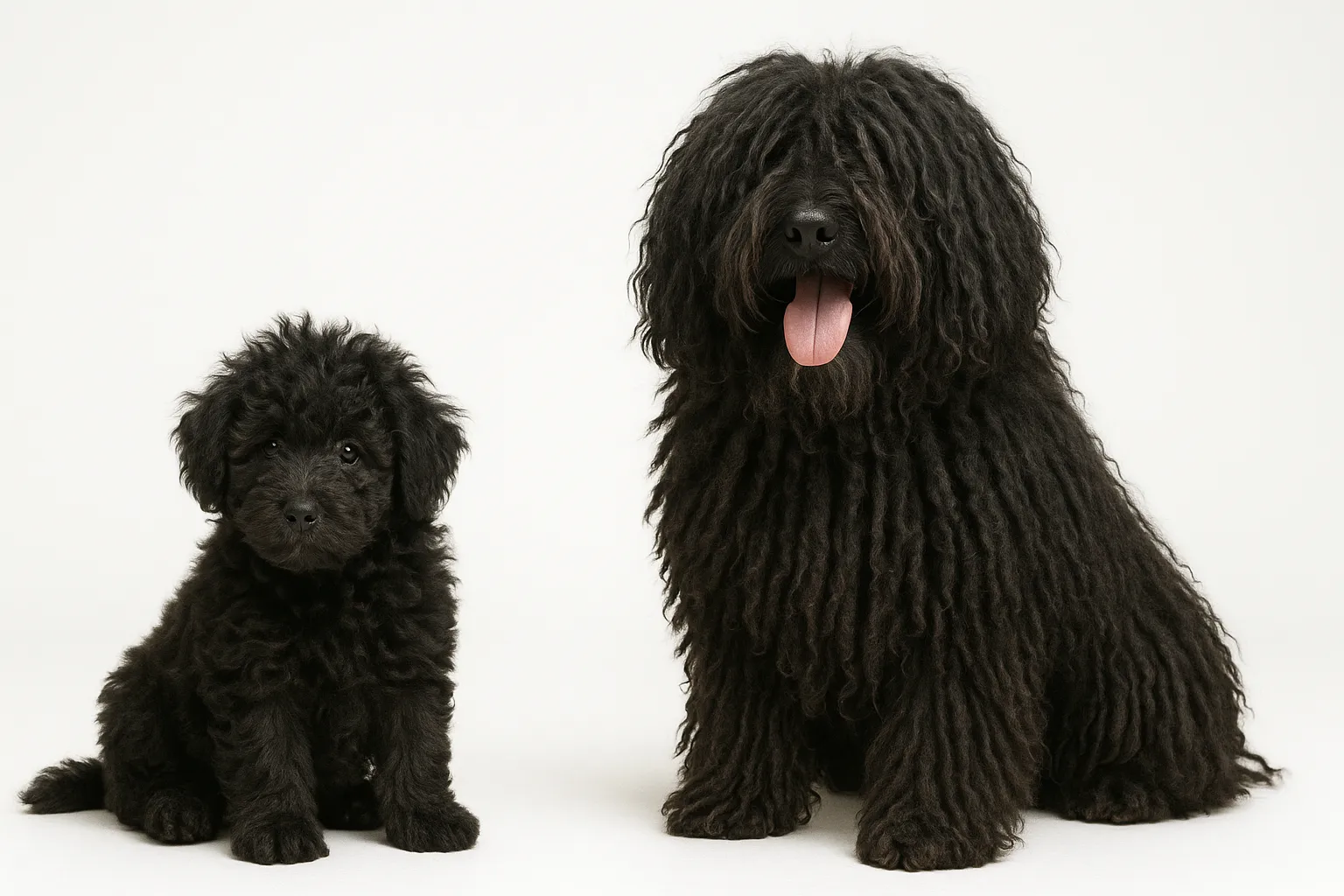
Dreadlocks, Speed, and a Health Profile Hidden Under the Cords
The Puli (plural: Pulik) looks like no other dog. This ancient Hungarian herding breed grows a naturally forming cord coat — long hair that mats into tight ropes by adulthood, creating one of the most distinctive silhouettes in the canine world. Beneath those cords hides a surprisingly agile, intelligent, and quick working dog.
Pulik live 10-15 years, a variable but generally favorable range. Hip dysplasia, progressive retinal atrophy, and ear infections — the last driven by the corded coat trapping moisture around the ear canals — are the primary health concerns. Their Hungarian working heritage has maintained reasonable genetic health, and these dogs hold onto physical function well into middle age.
Where This Breed Is Most Vulnerable
Hip Dysplasia
Hip dysplasia occurs in Pulik at moderate rates. OFA hip evaluation at 24 months provides a structural baseline. Lean body condition and controlled high-impact exercise during growth reduce severity in genetically predisposed dogs.
See the Hip Dysplasia guide for full prevention and management detail.
Progressive Retinal Atrophy
PRA is documented in Pulik at elevated rates. Annual CAER exams allow early detection of retinal changes. DNA testing for available PRA mutations should be performed on breeding stock. Early detection gives owners time to prepare the environment for a dog with declining vision.
See the Progressive Retinal Atrophy guide for full prevention and management detail.
Eye Irritation from Corded Fall
Pulik with cords covering the face need careful eye monitoring. The facial cords (the “fall”) can irritate the eyes if they grow too long or are improperly trained. Regular checking that the fall is not contacting the cornea, proper cord training, and annual CAER exams prevent coat-related eye problems from developing silently.
See the Eye Irritation from Corded Fall guide for full prevention and management detail.
What Actually Moves the Needle
Cord Coat Management
The Puli’s characteristic cords form naturally, but “naturally” does not mean “without effort.” Puppies begin forming mats around 9 months. At that stage, owners must manually separate forming mats into individual cords before they merge into one solid sheet.
Once cords form, they require regular separation to prevent merging. After bathing, cords must be thoroughly dried — often requiring hours — because moisture trapped in undried cords breeds skin and ear conditions. Many pet owners choose a shorter clip rather than the traditional corded style, which significantly reduces grooming burden without sacrificing the dog’s character.
Ear Care Under a Corded Coat
The corded coat adjacent to the ear canals traps moisture and debris, creating chronic ear infection risk. Weekly inspection and gentle cleaning with a veterinarian-recommended cleanser prevent infections from establishing. After bathing or swimming, thorough drying of the ear canals is essential — use a low-setting pet dryer or cotton.
Dogs with recurrent infections despite consistent preventive care need veterinary culture to identify the underlying organisms.
Athletic Breed Exercise Management
Do not let the coat fool you. Pulik are surprisingly athletic — their cords do not impede movement, and they are remarkably agile. They excel in herding, agility, and obedience. Their exercise needs are moderate to high. Daily structured activity prevents the behavioral restlessness common in under-exercised herding breeds.
As they age, transition to lower-impact exercise gradually and responsively, watching for signs of orthopedic discomfort.
The Three Things That Matter Most
For most Puli owners, these are the actions that will matter most:
- Annual CAER eye exam for PRA monitoring — documented in the breed
- OFA hip evaluation at 24 months — moderate hip dysplasia prevalence
- Monthly ear inspection — the corded coat creates ear infection risk from moisture trapping
These priorities drive the highest return on your preventive care investment. Revisit them seasonally and let your vet know you are tracking these specifically. Use Hip Dysplasia, Progressive Retinal Atrophy Pra, Eye Conditions as your reference.
Evidence-Based Longevity Priorities
Body Composition and Muscle Maintenance
Weight stability and muscle quality form the foundation of orthopedic health and metabolic longevity in the Puli. As a medium herding breed, body composition stability directly predicts orthopedic longevity and cardiovascular reserve. Sustained herding movement patterns require stable muscle-to-fat ratios for long-term joint health.
Condition-Focused Prevention Stack
Prevention delivers the greatest return when aimed at Hip Dysplasia, Progressive Retinal Atrophy Pra, Eye Conditions. Acting on these early keeps your options wide and prevents the cascading complications that delayed treatment invites.
Behavior, Stress Load, and Recovery
Daily routine quality directly affects how Pulik age. Unpredictable schedules and insufficient mental work often surface as behavior drift, sleep disruption, or recovery problems before physical decline becomes obvious.
Preventive Screening Cadence
Set routine veterinary review checkpoints and escalate frequency when orthopedic function and gait quality show early drift. Prevention windows close quickly once symptoms become obvious.
Breed-Specific Research
Use these evidence deep dives to add mechanism-level context to your Puli longevity plan:
- Genetic Testing For Dogs Clinical Roi: PRA DNA testing decisions for Puli owners and breeders
- Exercise Protocols By Breed Size: exercise management for an athletic medium herding breed
- Canine Obesity And Lifespan Evidence: weight management for a medium breed with variable activity levels
Using DNA Data to Guide Prevention
Genetic testing in the Puli should drive monitoring strategy, not replace it. Use results to tighten surveillance windows and calibrate intervention thresholds. MDR1 gene testing guides medication safety; hip and elbow scoring (OFA or PennHIP) quantifies orthopedic risk as part of the initial assessment.
- Use a breed-appropriate genetic panel as your foundation, but remember that genetic risk is not the same as clinical disease. Serial veterinary observations bridge that gap.
- Anchor your initial monitoring to Hip Dysplasia and Progressive Retinal Atrophy Pra. Testing matters when it changes what you measure, how often, and what triggers escalation.
- Keep all health data in one place — test results, exam summaries, medication changes, and your daily notes. Continuity across appointments depends on accessible history.
- Circle back to your genetic data after spay/neuter, at the adult-to-senior transition, and anytime a pattern emerges — weight creeping up, stamina dropping, or behavior shifting without obvious cause.
Measure to decide, not to collect. If a result does not change your monitoring cadence or intervention threshold, question whether you needed it.
Breeding History & Health Implications
Bred for sustained movement, vigilance, and rapid decision-making under workload, the Puli’s breeding history directly informs current health risks.
- Structural load and temperament sensitivity require consistent tracking that adapts as your dog ages — the right interval at three years is not the right interval at eight.
- Focus your risk surveillance on Hip Dysplasia, Progressive Retinal Atrophy Pra, Eye Conditions — these are the conditions where this breed’s ancestry creates the most actionable risk profile.
- The biggest threat to your Puli’s healthspan is normalizing gradual decline. Any persistent change in mobility, appetite, energy, or recovery time is a data point, not an inevitability.
- The best prevention plan is a living document. Adjust it whenever new data arrives, whenever a life stage changes, and whenever something surprises you.
What the breed was built for tells you where to look. What your dog’s trend data shows tells you when to move.
Your Veterinary Screening Roadmap
- Puppy to 2 years: OFA at 24 months, CAER baseline, cord management start
- 3-8 years: annual CAER, annual wellness panel, monthly ear checks
- 9+ years: senior panel every 6 months, vision monitoring, mobility assessment
The Feeding Plan That Matters
Pulik do well on quality medium-breed adult food with portions adjusted for activity level. Lean body condition supports hip health. Omega-3 supplementation may benefit eye and joint health. Regular weight monitoring is important — the cord coat can hide weight changes that would be obvious on a short-coated breed.
What the Future Can Hold
Pulik with annual eye exams, OFA hip screening, and proactive ear and coat management are well-positioned for long, healthy lives in the 10-15 year range. Their ancient herding constitution and moderate disease burden support favorable longevity — especially when the unique demands of cord coat care are met consistently.
Most-Missed Early Drift Pattern
Early disease progression in Pulik usually presents as low-grade changes that owners attribute to normal aging:
- Subtle hind-limb stiffness after rest related to Hip Dysplasia that owners often dismiss as temporary
- A mild early sign tied to Progressive Retinal Atrophy Pra that appears intermittently
- Gradual drift toward Eye Conditions signs that become harder to reverse: visible cloudiness, chronic redness, or navigation difficulty
If baseline function is drifting for 7-10 days, treat it as a prevention failure signal and reassess early.
Additional Health Risks to Monitor
Based on breed predisposition data, Puli owners should also be aware of:
Frequently Asked Questions
How long do Pulik live?
Pulik typically live 10-15 years. Annual eye exams, hip evaluation, and ear care management are the most important longevity investments.
Do Puli cords form naturally?
Yes — Puli cords form naturally from the interaction of the outer coat and undercoat beginning around 9 months. The owner must manually separate forming mats into individual cords before they merge. Once established, cords must be regularly separated to prevent merging.
Are Pulik good apartment dogs?
Pulik need daily exercise and mental stimulation, which can be provided in an apartment setting if the owner commits to structured daily activity. Their herding drive requires outlet. They are vocal dogs, which should be considered in close-living situations.
How long does it take for a Puli’s coat to fully cord?
Full cording typically completes by 3-5 years of age. The early cord formation phase from 9 months to 2 years requires the most active owner intervention to ensure proper individual cord development.
Can I cut a Puli’s cords?
Yes — many pet owners maintain their Pulik in a shorter clipped coat rather than the traditional corded style. This significantly reduces grooming burden while maintaining the breed’s character. The cords cannot be separated once fully matted and must be shaved if the coat becomes unmanageable.
References
[1] Puli Club of America. puliclub.org. [2] Hungarian breed history: Toth Z. Magyar Kutyafajtak. 2005. [3] OFA health statistics by breed. ofa.org. [4] AKC breed standards. akc.org. [5] Pariah dog genetics and ancient breed origins: Boyko AR et al. PNAS. 2009.
Related reads
Related Reading
Continue exploring