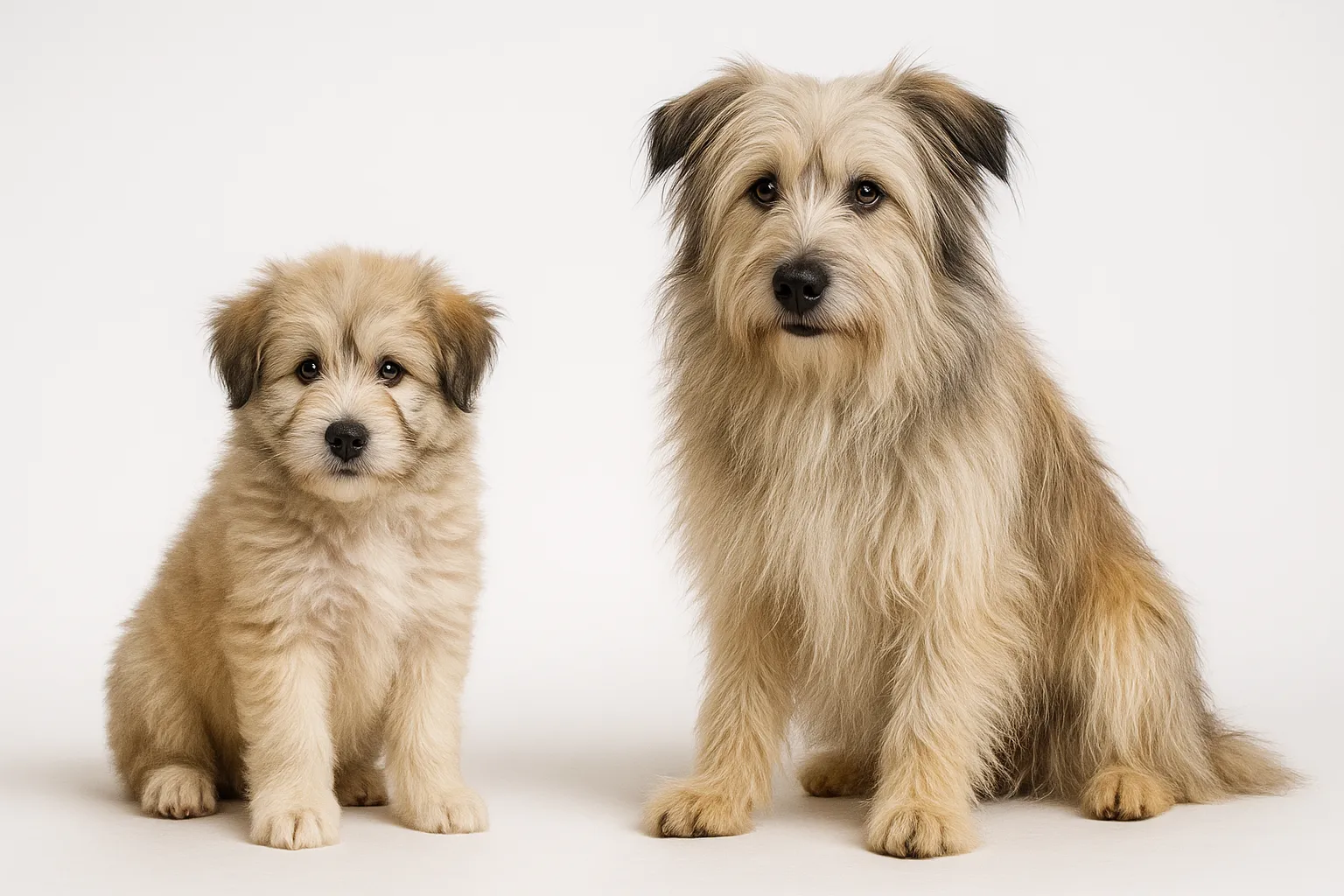
Fifteen to Seventeen Years — an Extraordinary Number for Any Herding Breed
While the Great Pyrenees stood guard, the Pyrenean Shepherd drove the flock. This small, ancient French herding breed from the Pyrenean mountains — one of France’s oldest working dogs — directed large flocks of sheep across mountain terrain at 15-30 lbs in two coat varieties (rough-faced and smooth-faced). And these dogs live 15-17 years, a span that dwarfs most herding breeds.
Their exceptional longevity reflects small size, ancient working selection without extreme inbreeding, and an energetic genetic background. Primary health concerns are hip dysplasia, epilepsy, and inherited eye conditions. The overall health profile is excellent for a small herding breed.
The Health Landscape for This Breed
Hip Dysplasia
Hip dysplasia is the primary orthopedic concern. OFA hip evaluation at 24 months provides a structural baseline. The breed’s extreme athleticism makes hip integrity critical — these dogs rely on high-speed, agile movement to do their work. Lean body condition across the long lifespan reduces clinical progression.
See the Hip Dysplasia guide for full prevention and management detail.
Epilepsy
Epilepsy occurs in Pyrenean Shepherds at above-average rates. Two or more unprovoked seizures require a full neurological evaluation. Anticonvulsant therapy with drug level monitoring every 6 months manages idiopathic epilepsy effectively. The breed club tracks epilepsy incidence to support ongoing research.
See the Epilepsy guide for full prevention and management detail.
Inherited Eye Conditions
Multiple inherited eye conditions are documented in this breed, including progressive retinal atrophy and hereditary cataracts. Annual CAER exams from age 1 provide ongoing surveillance. DNA testing for prcd-PRA and other mutations identifies carriers and affected dogs. Responsible breeders test all stock and provide CAER documentation.
See the Inherited Eye Conditions guide for full prevention and management detail.
Evidence-Based Ways to Extend Healthspan
Extreme Agility and Working Drive
Pyrenean Shepherds are among the most agile and energetic small herding breeds on earth. They were built to move large flocks rapidly across Pyrenean mountain terrain, covering enormous distances daily with extraordinary efficiency.
They need 60-90 minutes of vigorous daily exercise and intensive mental engagement. They excel in agility (where they compete at the highest levels despite their small size), herding, obedience, and nose work. Without adequate outlet, they become anxious and destructive. Their energy level surprises nearly every new owner.
Senior Planning for a 16+ Year Dog
When a Pyrenean Shepherd reaches 12, there is a realistic expectation of 4-5 more years of life. Senior care protocols should begin at age 10: biannual wellness visits, annual dental cleaning, cognitive function tracking, and proactive pain management for orthopedic comfort.
A lifespan this long means age-related changes — hearing reduction, lens cloudiness, muscle mass decline — require thoughtful environmental adaptation over years, not months. Long-lived working dogs benefit disproportionately from consistent health investments made during early and middle adulthood.
Two Coat Varieties
Pyrenean Shepherds come in rough-faced (long coat with beard and mustache) and smooth-faced (shorter, flat facial coat) varieties. Both require brushing 1-2 times weekly to prevent matting, with more frequent attention during seasonal coat blows. The rough-faced variety needs professional trimming every 3-4 months to prevent facial and body coat matting.
Regular ear cleaning prevents otitis in both varieties. Coat type does not affect health or temperament.
Where to Focus Your Prevention Effort
These are the investments that pay the highest longevity dividend for a Pyrenean Shepherd:
- OFA hip evaluation at 24 months — hip dysplasia is the primary orthopedic concern
- Annual CAER eye exam from age 1 — multiple inherited eye conditions documented in Pyrenean Shepherds
- Monitor for epilepsy — seizures documented in the breed above baseline rates
Frame your prevention investment around these targets. When resources are limited, these are where the evidence says to spend them first. See Hip Dysplasia, Seizures Epilepsy, Eye Conditions for the full clinical picture.
Evidence-Based Longevity Priorities
Body Composition and Muscle Maintenance
Optimal body condition extends healthspan by reducing cumulative disease load across multiple systems. As a small breed, lean mass retention becomes critical around middle age when metabolic rate begins to slow. Sustained herding movement patterns require stable muscle-to-fat ratios for long-term joint health.
Condition-Focused Prevention Stack
Concentrate your prevention investment on Hip Dysplasia, Seizures Epilepsy, Eye Conditions. These are the conditions where the gap between early and late action is widest, and the cost of delay is steepest.
Behavior, Stress Load, and Recovery
Daily routine quality directly affects how these dogs age. Unpredictable schedules and insufficient mental work often surface as behavior drift, sleep disruption, or recovery problems before physical decline becomes obvious.
Preventive Screening Cadence
Use planned veterinary reassessment intervals, then tighten cadence when trend logs show drift in orthopedic function and gait quality. Early intervention windows are where most healthspan gains are made.
Breed-Specific Research
Use these evidence deep dives to add mechanism-level context to your Pyrenean Shepherd longevity plan:
- Senior Dog Screening Protocol: extended senior monitoring framework for a breed commonly living 15-17 years
- Genetic Testing For Dogs Clinical Roi: eye disease DNA testing in Pyrenean Shepherds
- Exercise Prescription By Life Stage: exercise management for a high-drive small herding breed across a very long lifespan
Making Genetic Testing Actionable
Genetic testing in the Pyrenean Shepherd should drive monitoring strategy, not replace it. Use results to tighten surveillance windows and calibrate intervention thresholds. MDR1 gene testing guides medication safety; hip and elbow scoring (OFA or PennHIP) quantifies orthopedic risk as part of the initial assessment.
- Match your initial testing to the breed’s established vulnerabilities. One round of results tells you where to look; repeated clinical assessment tells you what is actually happening.
- Connect your first monitoring protocol to Hip Dysplasia and Seizures Epilepsy — these are the conditions where test results should directly change what you do next.
- Your most powerful monitoring tool costs nothing — a running record linking test data to clinical findings to what you observe at home. The connections between entries are where the real insights live.
- Treat each annual exam as a chance to re-read your genetic data against fresh clinical findings. The same panel results carry different weight as your Pyrenean Shepherd ages.
A test result that does not change your next action is just information. Make every panel result translate into a specific monitoring decision.
Breeding History & Health Implications
Bred for sustained movement, vigilance, and rapid decision-making in demanding mountain terrain, the Pyrenean Shepherd’s breeding history directly informs current health risks.
- Structural load and temperament sensitivity require a surveillance rhythm that intensifies with age rather than waiting for clinical signs.
- Prioritize surveillance based on breed heritage — Hip Dysplasia, Seizures Epilepsy, Eye Conditions are the highest-probability targets that history and data both point to.
- Small, recurring changes are easier to dismiss than dramatic ones, but they are often more important. A pattern of minor drift is your earliest warning that something is shifting.
- As your Pyrenean Shepherd ages and health data accumulates, the plan should change with it. Schedule a quarterly review to recalibrate priorities based on what you are actually seeing.
The breed’s past shapes the risk landscape. Your Pyrenean Shepherd’s present — measured in real data, not assumptions — shapes the response.
Monitoring Schedule by Life Stage
- Puppy: prcd-PRA DNA testing, CAER exam, baseline wellness
- 2 years: OFA hip evaluation, CAER exam, epilepsy monitoring
- 3-10 years: annual CAER exam, wellness bloodwork every 2 years
- 11+ years: biannual senior panel, dental care annually, mobility and cognitive monitoring
Diet and Feeding Strategy
Pyrenean Shepherds do well on quality small-breed adult food. Their extraordinary energy level requires caloric intake calibrated to actual activity output. Lean body condition supports hip health and is strongly associated with exceptional longevity in small breeds. Omega-3 supplementation supports coat, joint, and cognitive health across their very long lifespan. Transitioning to a senior formula around age 12 supports evolving metabolic needs.
Putting It All Together
Pyrenean Shepherds with OFA hip evaluation, eye disease genetic testing, annual CAER surveillance, and appropriate high-energy herding enrichment across their long lifespan are well-positioned for 15-17 years with excellent quality of life. Their ancient mountain heritage gives them one of the strongest longevity foundations of any herding breed. Consistent preventive care protects that advantage.
Most-Missed Early Drift Pattern
Early disease progression in Pyrenean Shepherds usually presents as low-grade changes that owners attribute to normal aging:
- Subtle hind-limb stiffness after rest related to Hip Dysplasia that owners often dismiss as temporary
- A mild early sign tied to Seizures Epilepsy that appears intermittently
- Gradual drift toward Eye Conditions signs that become harder to reverse: visible cloudiness, chronic redness, or navigation difficulty
If baseline function is drifting for 7-10 days, treat it as a prevention failure signal and reassess early.
Additional Health Risks to Monitor
Based on breed predisposition data, Pyrenean Shepherd owners should also be aware of:
Frequently Asked Questions
How long do Pyrenean Shepherds live?
Pyrenean Shepherds typically live 15-17 years, among the longest-lived of any herding breed. OFA hip evaluation, eye disease genetic testing, and annual CAER exams are the primary longevity investments.
How are Pyrenean Shepherds different from Great Pyrenees?
Pyrenean Shepherds and Great Pyrenees are distinct breeds from the same mountainous region. Great Pyrenees are large (80-120 lbs) livestock guardian dogs; Pyrenean Shepherds are small (15-30 lbs) herding dogs. They worked in partnership on traditional Pyrenean sheep farms.
Are Pyrenean Shepherds good family dogs?
Pyrenean Shepherds are loyal and affectionate with their family but require active, experienced owners who can meet their extraordinary exercise and mental engagement needs. They are one of the most high-energy small herding breeds.
What are the two varieties of Pyrenean Shepherd?
The rough-faced (poil long) variety has a long coat with characteristic facial hair (beard and mustache). The smooth-faced (face rase) variety has a shorter, flat coat on the face. Both varieties are the same breed with similar health profiles and temperament.
Are Pyrenean Shepherds rare?
Pyrenean Shepherds are uncommon in North America but more established in France where they remain working herding dogs. Following AKC recognition in 2009, North American availability has improved through breed club networks.
References
[1] Pyrenean Shepherd Club of America. pyrshepclub.com. [2] OFA health statistics. ofa.org. [3] AKC breed information. akc.org. [4] World War I French military dog records. [5] Pyrenean mountain shepherd culture: French ethnographic records.
Related reads
Related Reading
Continue exploring