A Gentle Giant Whose Heart Is Its Greatest Vulnerability
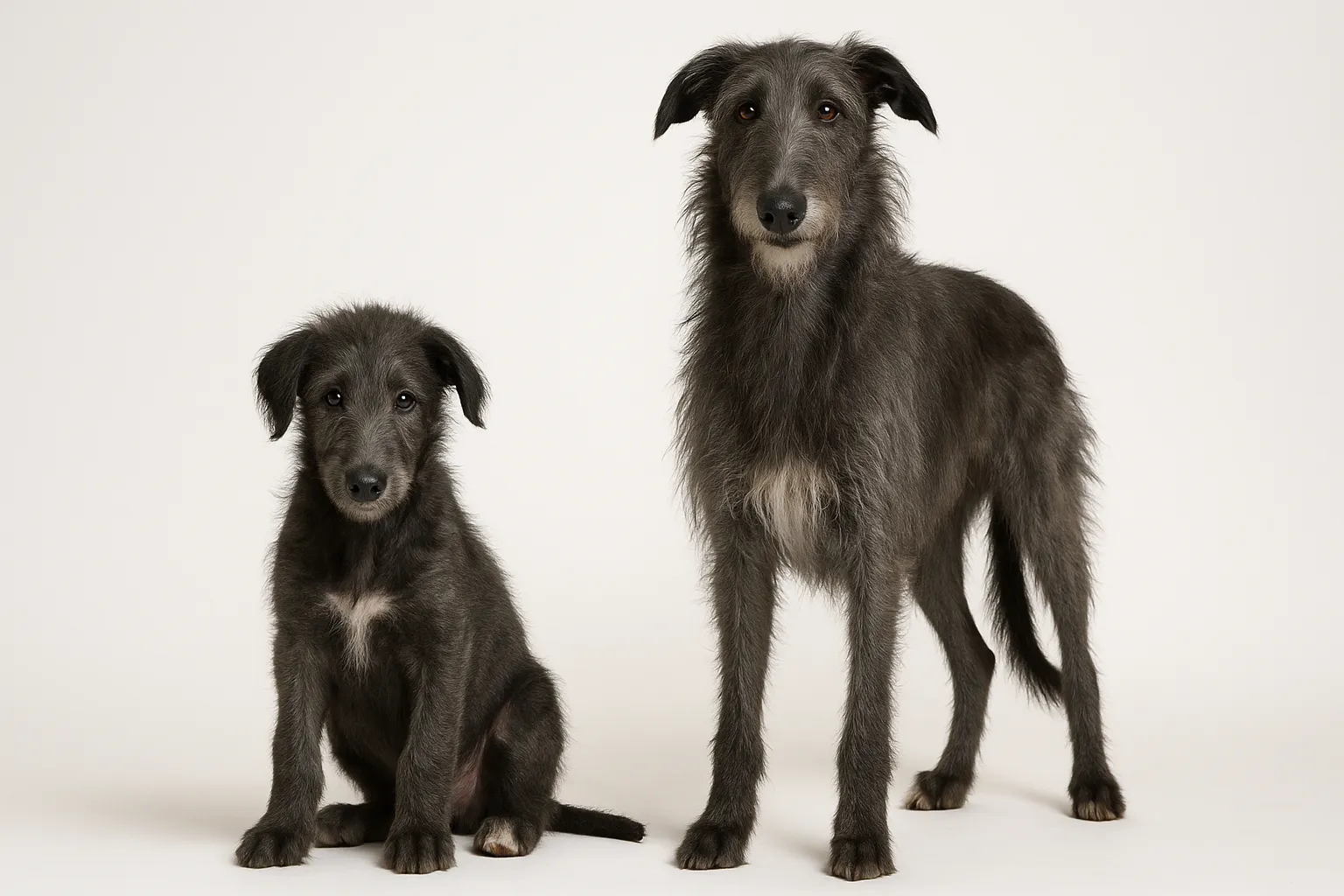
One of the oldest sighthound breeds, the Scottish Deerhound was built to course red deer across Highland terrain. At 75-110 lbs, these are large, lean, gentle dogs with rough wiry coats and a dignity that belies their speed. Lifespans of 8-11 years reflect the combined weight of giant-breed body mass and a cardiac vulnerability that sets this breed apart from other sighthounds.
Dilated cardiomyopathy and cardiac arrhythmias occur in Deerhounds at rates far exceeding most sighthound breeds, making heart disease a primary mortality cause rather than a secondary concern. Osteosarcoma and bloat from deep-chested conformation add further pressure to an already compressed timeline.
Their gracile frame partially protects joints compared to mastiff-type giants — but it does nothing to reduce cancer or cardiac risk.
The Health Landscape for This Breed
Osteosarcoma
Bone cancer occurs at elevated rates in Scottish Deerhounds, following the pattern seen in other large and giant breeds. The distal radius, proximal humerus, and distal femur are the most commonly affected sites. Progressive unexplained lameness in a middle-aged or older Deerhound warrants urgent evaluation — not watchful waiting. Chest radiographs at diagnosis assess for pulmonary metastasis. Treatment options include limb amputation with chemotherapy or palliative pain management.
See the Osteosarcoma guide for full prevention and management detail.
Bloat (GDV)
Scottish Deerhounds face significant bloat risk from their deep-chested, large-breed conformation. Prophylactic gastropexy at spay/neuter is recommended. The breed’s lean sighthound build moderates but does not eliminate GDV risk compared to massively muscled giant breeds. Without gastropexy, twice-daily feeding, slow feeders, and post-meal exercise restriction reduce risk. GDV is always a same-day veterinary emergency.
See the Bloat (GDV) guide for full prevention and management detail.
Cardiac Disease
Here is where the Deerhound diverges from its sighthound peers. DCM and cardiac arrhythmias occur at unusually high rates for the sighthound group. Annual cardiac auscultation beginning at age 2-3, combined with Holter monitoring and echocardiography in at-risk dogs, provides comprehensive surveillance. The Scottish Deerhound Club of America maintains a specific cardiac health program tracking DCM prevalence and outcomes.
See the Cardiac Disease guide for full prevention and management detail.
What the Evidence Says About Living Longer
Cardiac Disease Is the Primary Health Priority
The Scottish Deerhound’s cardiac burden makes heart health the number-one monitoring priority — not secondary, not incidental, but primary. The breed club recommends Holter monitoring (24-hour cardiac ECG) and echocardiography from age 3 for all breeding dogs, and annual cardiac auscultation for every dog regardless of breeding status. Dogs with detected arrhythmias or echocardiographic DCM changes need cardiology consultation. This breed-specific cardiac program is among the most comprehensive in the sighthound world, and it exists because the problem demands it.
Sighthound Anesthesia Protocol
Like all sighthounds, Deerhounds have minimal body fat and metabolize barbiturate-based anesthetics differently. Sighthound-specific anesthesia protocols using inhalant anesthesia with appropriate pre-medication are required. The Deerhound’s elevated cardiac disease rates make pre-anesthetic cardiac evaluation especially important. If your veterinarian is unfamiliar with sighthound anesthesia, raise the issue before any procedure. This is a breed where anesthesia protocol matters more than average.
Cancer Surveillance Protocol
Starting at age 5-6, annual cancer surveillance should include chest radiographs, abdominal ultrasound, and systematic monthly owner palpation of long bones and lymph nodes. Early osteosarcoma detection before pulmonary metastasis significantly expands treatment options. Progressive lameness or bone sensitivity that does not respond to standard treatment in an older Deerhound should trigger urgent radiographic evaluation for bone lesions. Do not assume it is arthritis.
Priority Actions for a Longer Life
The prevention priorities with the best evidence behind them for Scottish Deerhound owners:
- Annual cardiac monitoring from age 3 — dilated cardiomyopathy and congenital heart disease documented in Deerhounds
- Prophylactic gastropexy at spay/neuter — bloat is a significant acute mortality risk in this deep-chested giant
- Annual cancer surveillance from age 5 — osteosarcoma is a major mortality cause in the breed
These are your highest-return prevention targets. Build your next vet conversation around them and adjust quarterly as data accumulates. See Osteosarcoma, Bloat, Heart Disease for detailed guidance.
Evidence-Based Longevity Priorities
Body Composition and Muscle Maintenance
Body composition control predicts long-term function more reliably than most other single factors in this breed. Excess weight accelerates orthopedic decline and shortens lifespan more dramatically in giant breeds than in smaller dogs. These pursuit athletes need sustained lean mass to preserve both joint function and cardiovascular efficiency.
Condition-Focused Prevention Stack
Your highest-yield prevention effort targets Osteosarcoma, Bloat, Heart Disease. Early, consistent action on these conditions preserves the interventions that late detection forecloses.
Behavior, Stress Load, and Recovery
Household consistency matters more than most Deerhound owners realize. Irregular schedules and insufficient scent enrichment often show up as behavior drift or recovery problems before physical decline becomes visible.
Preventive Screening Cadence
Do not rely on crisis-driven veterinary appointments. Routine screening intervals tied to cardiovascular and respiratory parameters catch subtle drift before it compounds into serious disease burden.
Breed-Specific Research
Use these evidence deep dives to add mechanism-level context to your Scottish Deerhound longevity plan:
- Dilated Cardiomyopathy Screening In Dogs: DCM screening in Scottish Deerhounds — a breed with unusually high cardiac disease rates for a sighthound
- Cancer Screening In Dogs What Helps: osteosarcoma and cancer surveillance strategies for a large sighthound breed
- Canine Size Lifespan Tradeoffs By Breed: why giant sighthound breeds like the Deerhound have shorter lifespans
From Genetic Data to Monitoring Decisions
Genetic testing has the most value when results directly change what gets measured, how often, and what triggers escalation. Consider baseline echocardiography to establish cardiac structure and function as part of the initial risk assessment.
- Start with a genetic panel designed around your Scottish Deerhound’s most common conditions. Let the results prioritize which health areas deserve closer surveillance.
- Tie your first monitoring plan to Osteosarcoma and Bloat so test results translate into practical follow-through.
- A simple log connecting test results, vet findings, and your daily observations is the most underrated diagnostic tool in veterinary medicine. Start one and update it consistently.
- Your monitoring plan should evolve with your dog. Review and adjust it at each life-stage transition and any time you notice sustained changes in daily function.
The value of any test is determined by whether it changes what you do next — not by the information it contains.
Breeding History & Health Implications
The Scottish Deerhound was bred for coursing speed, endurance, and the courage to run down large game in demanding terrain. That heritage created a breed with cardiac aging patterns that require respiratory rate tracking and murmur reassessment, compounded by the accelerated aging tied to elevated IGF-1 and shorter cellular lifespan common to giant breeds.
- Prioritize surveillance around Osteosarcoma, Bloat, Heart Disease based on history-informed risk triage.
- The changes that matter most in your Scottish Deerhound are the ones that arrive slowly enough to feel normal. If you find yourself saying “he’s just getting older,” challenge that assumption with data.
- Review and adjust your Scottish Deerhound’s longevity plan every quarter. The right focus at age two is not the right focus at age eight — let age, weight trends, and vet findings guide the updates.
Let history guide what to watch first. Let trend data confirm what to change next.
What to Test and When
- Puppy: sighthound anesthesia documentation, giant breed controlled growth
- 2 years: OFA hip evaluation, initial cardiac auscultation
- 3+ years: annual cardiac auscultation + Holter/echo for breeding dogs, CAER exam
- 6+ years: cancer surveillance annually (chest radiograph, abdominal ultrasound), senior panel
Diet and Feeding Strategy
Scottish Deerhounds should maintain lean sighthound body condition — not the rounded profile of heavy-muscled giant breeds. Use quality large-breed adult food sized to the individual’s activity level. Omega-3 supplementation supports cardiovascular health, coat, and joint function. Avoid overfeeding. Obesity in a sighthound is visually obvious and significantly stresses the cardiovascular system.
Your Long-Term Health Trajectory
Scottish Deerhounds with proactive cardiac surveillance, prophylactic gastropexy, cancer monitoring, and sighthound-appropriate care can live quality lives in the 9-11 year range. Their unique cardiac disease profile demands monitoring that goes beyond standard giant breed protocols. Owners who accept this and act accordingly give their Deerhounds the best chance at a longer, more comfortable life.
Most-Missed Early Drift Pattern
Healthspan erosion in a Scottish Deerhound typically begins with subtle shifts that are easy to miss:
- Intermittent unexplained lameness tied to Osteosarcoma that gets attributed to a minor injury
- Subtle post-meal discomfort masking early Bloat patterns: mild abdominal tension that resolves on its own
- Gradual drift toward Heart Disease signs that become harder to reverse: coughing at night, fainting, or fluid accumulation
If baseline function has been drifting for 7-10 days, treat it as a prevention failure signal and reassess early.
Additional Health Risks to Monitor
Based on breed predisposition data, Scottish Deerhound owners should also be aware of:
Frequently Asked Questions
How long do Scottish Deerhounds live?
Scottish Deerhounds typically live 8-11 years. Proactive cardiac monitoring, prophylactic gastropexy, and cancer surveillance are the primary longevity investments for this breed.
Do Scottish Deerhounds have heart problems?
Yes — Scottish Deerhounds have unusually high rates of dilated cardiomyopathy and cardiac arrhythmias for a sighthound. Annual cardiac auscultation from age 2-3 and Holter monitoring for breeding dogs are recommended by the breed club.
Are Scottish Deerhounds good family dogs?
Scottish Deerhounds are gentle, quiet, and affectionate with their family. They are calm indoors but need space for occasional galloping outdoors. Their gentle nature makes them good with older children. Securely fenced areas are required for safe exercise.
How fast can a Scottish Deerhound run?
Scottish Deerhounds can reach speeds of 28-35 mph, fast enough to course red deer across Highland terrain. Their sighthound speed and prey drive mean they must be exercised only in securely fenced areas.
Are Scottish Deerhounds rare?
Scottish Deerhounds are uncommon in North America, with limited annual AKC registrations. They remain a uncommon breed globally, though dedicated breed clubs maintain active preservation and health programs.
References
[1] Scottish Deerhound Club of America. deerhound.org. [2] Cardiac disease in Scottish Deerhounds: Meurs KM et al. J Vet Cardiol. 2011. [3] OFA health statistics. ofa.org. [4] Giant sighthound lifespan biology. various breed health surveys. [5] AKC breed information. akc.org.
Related Reading
Continue exploring