Thousands of Years Guarding the Himalayas — and the Health Cost of Giant Size
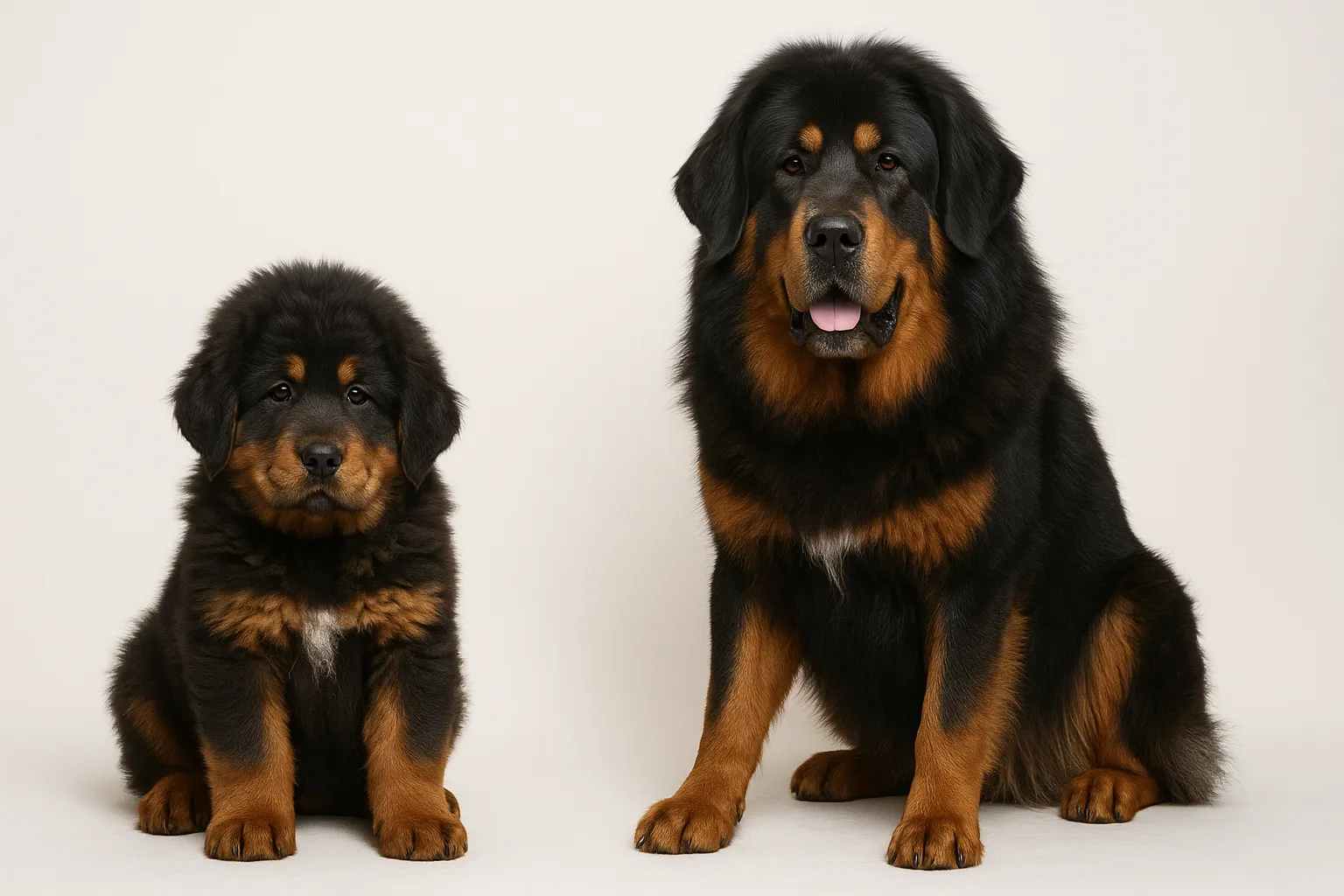
Tibetan Mastiffs have guarded Himalayan livestock and monasteries for thousands of years, ranking among the most ancient and most massive of all dog breeds. Males reach 90-150 lbs. That size comes at a cost: giant breeds age faster and die younger than smaller dogs, and Tibetan Mastiffs typically live 10-12 years.
Hip dysplasia dominates the structural health picture, with OFA data showing significant prevalence. Hypothyroidism develops at elevated rates during middle age. The breed’s massive body and deep chest create meaningful GDV risk.
An inherited juvenile-onset myopathy (muscle disease) has also been documented, with DNA testing available. These are serious concerns, but every one of them is addressable with early screening and disciplined preventive care.
The Health Landscape for This Breed
Hip Dysplasia
Hip dysplasia is among the most prevalent conditions in this breed. The giant body amplifies the mechanical impact of abnormal joint conformation — in a dog over 100 lbs, even modest excess weight substantially increases joint load.
OFA hip and elbow evaluation at 24 months establishes a structural baseline. Weight management is the single most impactful modifiable intervention available.
See the Hip Dysplasia guide for full prevention and management detail.
Hypothyroidism
Hypothyroidism develops at elevated rates in Tibetan Mastiffs during middle age. Signs include weight gain, coat changes, lethargy, and cold intolerance — all of which can be subtle in a large, naturally reserved breed.
Annual T4/TSH panels starting at age 3 catch it early. Daily levothyroxine therapy effectively restores metabolic function once diagnosed.
See the Hypothyroidism guide for full prevention and management detail.
Bloat (GDV)
The Tibetan Mastiff’s deep-chest giant-breed anatomy creates GDV risk that should be addressed proactively. Prophylactic gastropexy performed at the time of spay/neuter eliminates the volvulus component. Feeding twice daily and avoiding vigorous exercise for 2 hours after meals provide additional risk reduction. Acute GDV is a life-threatening emergency requiring immediate veterinary intervention.
See the Bloat (GDV) guide for full prevention and management detail.
What the Evidence Says About Living Longer
Giant Breed Weight Management
At 100-150 lbs, every pound above ideal body weight creates proportionally greater orthopedic impact than in smaller breeds. Monthly BCS assessment, measured portions, and avoiding overfeeding high-calorie puppy diets during growth form the foundation of preventive orthopedic health.
Giant-breed-specific puppy diets with controlled energy and calcium prevent the excessive growth velocity that damages developing joints. This is not a place to cut corners.
Inherited Myopathy Awareness
Juvenile hereditary myopathy in Tibetan Mastiffs causes progressive muscle weakness, exercise intolerance, and megaesophagus. Signs typically appear before 1 year of age. DNA testing for the breed-specific mutation allows identification before symptoms emerge.
Acquired megaesophagus requires management including elevated feeding and aspiration pneumonia prevention. Ask breeders for DNA testing records on both parents before purchasing a puppy.
Seasonal Care for a Himalayan Coat
The thick double coat evolved for high-altitude cold. In warmer climates, heat management becomes essential — Tibetan Mastiffs are susceptible to heat stress. Limit outdoor activity during high temperature and humidity.
The annual spring coat blow requires increased grooming effort. Dental care also deserves attention given the large jaw and deep gingival sulcus anatomy.
The Prevention Plan That Pays Off
These are the investments that pay the highest longevity dividend for a Tibetan Mastiff:
- OFA hip and elbow evaluation at 24 months — significant hip dysplasia prevalence in this giant breed
- Annual thyroid panel starting at age 3 given elevated hypothyroidism risk
- Prophylactic gastropexy for GDV prevention — deep chest and giant body size create elevated risk
Center your next vet conversation on these priorities and adjust the plan quarterly based on what the data shows. See Hip Dysplasia, Hypothyroidism, Bloat for condition-specific guidance.
Evidence-Based Longevity Priorities
Body Composition and Muscle Maintenance
Body condition is the single most modifiable longevity factor for a Tibetan Mastiff — every extra pound of fat amplifies risk across joints, heart, and metabolism simultaneously. In a giant breed, excess weight accelerates orthopedic decline and shortens lifespan more dramatically than in smaller dogs. Their guarding heritage means muscle maintenance directly supports functional longevity.
Condition-Focused Prevention Stack
The highest-return prevention targets are Hip Dysplasia, Hypothyroidism, and Bloat. The cost of early action is almost always lower than the cost of delay — in treatment complexity, in quality of life, and in total lifespan.
Behavior, Stress Load, and Recovery
Daily routine consistency matters more in Tibetan Mastiffs than owners often realize. Stable sleep windows, controlled activity, and clear social structure prevent stress-driven aging acceleration. These are dogs that thrive on predictability.
Preventive Screening Cadence
The highest-return veterinary visits are the ones scheduled before symptoms appear. Tighten reassessment intervals when your tracking data shows drift, not when you notice something is wrong.
Breed-Specific Research
Use these evidence deep dives to add mechanism-level context to your Tibetan Mastiff longevity plan:
- Canine Size Lifespan Biology: evidence for the body size and lifespan relationship in giant breed dogs
- Muscle And Mobility Longevity Protocol: joint health and muscle maintenance relevant to giant breeds with orthopedic risk
- Heat Stress Risk Management For Dogs: heat management applicable to heavy-coated giant breeds
Genetic Testing: When It Matters
Genetic testing should drive your monitoring strategy, not replace it. Use results to tighten surveillance windows and calibrate when to escalate. Consider hip and elbow scoring (OFA or PennHIP) to quantify orthopedic risk and CERF eye exam or PRA gene testing to detect heritable eye disease.
- Start with a genetic panel designed around your Tibetan Mastiff’s most common conditions. Let the results prioritize which health areas deserve closer surveillance.
- Build your initial monitoring playbook around Hip Dysplasia and Hypothyroidism, so that every test result feeds into a specific follow-up action.
- Your most powerful monitoring tool costs nothing — a running record linking test data to clinical findings to what you observe at home. The connections between entries are where the real insights live.
- Your monitoring plan should evolve with your dog. Review and adjust it at each life-stage transition and any time you notice sustained changes in daily function.
Testing is only as good as the decisions it drives. If nothing changes after you get the results, the test was premature or unnecessary.
Breeding History & Health Implications
The Tibetan Mastiff was bred for guarding, draft work, and a protective temperament that needed to function independently in extreme environments. That history directly shapes modern health risks.
- Structural load patterns and accelerated aging tied to elevated IGF-1 and shorter cellular lifespan require sustained surveillance intensity from early adulthood through the senior years.
- Direct your monitoring attention first to Hip Dysplasia, Hypothyroidism, Eye Conditions — these are the risks that the breed’s working history and health data identify as most likely.
- The biggest threat to your Tibetan Mastiff’s healthspan is normalizing gradual decline. Any persistent change in mobility, appetite, energy, or recovery time is a data point, not an inevitability.
- As your Tibetan Mastiff ages and health data accumulates, the plan should change with it. Schedule a quarterly review to recalibrate priorities based on what you are actually seeing.
The breed’s DNA writes the risk profile. Your dog’s longitudinal health data writes the intervention plan.
Monitoring Schedule by Life Stage
- Puppy to 2 years: inherited myopathy DNA test, giant-breed puppy nutrition, OFA at 24 months
- 3-7 years: annual thyroid panel, annual cardiac auscultation, monthly BCS
- 8+ years: senior panel including thyroid, renal, cardiac every 6 months; orthopedic pain management
Diet and Feeding Strategy
Feed giant-breed puppy formula during growth (under 24 months) to control growth rate. Adults do well on large-to-giant breed adult diets with measured portions.
Tibetan Mastiffs tend to eat less than expected for their size — a trait from their high-altitude heritage of surviving on minimal, sparse food. Avoid force-feeding or supplementing beyond a balanced diet. Omega-3 supplementation supports joint and coat health. Feed twice daily given GDV risk.
How the Pieces Connect
Tibetan Mastiffs with known myopathy status, proactive thyroid monitoring, lean body weight, and prophylactic gastropexy can live comfortably within the 10-12 year typical range. Giant breed longevity is inherently compressed, but disciplined preventive care optimizes both the quality and duration of healthy years.
Most-Missed Early Drift Pattern
Disease progression in Tibetan Mastiffs often starts as low-grade changes that owners attribute to the breed’s naturally calm, reserved temperament:
- Hind-limb stiffness after rest related to Hip Dysplasia that looks like the dog is just “slow to get going”
- Lethargy attributed to breed temperament or aging that actually signals Hypothyroidism progression
- Visible cloudiness, chronic redness, or navigation difficulty pointing to Eye Conditions that become harder to reverse
If baseline function drifts for 7-10 days, treat it as a prevention failure signal and reassess early.
Additional Health Risks to Monitor
Based on breed predisposition data, Tibetan Mastiff owners should also be aware of:
Frequently Asked Questions
How long do Tibetan Mastiffs live?
Tibetan Mastiffs typically live 10-12 years. Inherited myopathy DNA testing, hip and elbow OFA evaluation, annual thyroid monitoring, and prophylactic gastropexy are the key longevity investments.
Are Tibetan Mastiffs good family dogs?
Tibetan Mastiffs are independent, protective, and reserved — they bond to their family but are naturally wary of strangers. They are not suited to families seeking a highly social, people-friendly dog. They require an experienced owner who can provide consistent boundaries.
How big do Tibetan Mastiffs get?
Males typically weigh 90-150 lbs; females 70-120 lbs. The breed has significant individual variation. Giant-breed puppy nutrition protocols are essential to prevent orthopedic damage from excess growth velocity.
Are Tibetan Mastiffs high maintenance?
Yes — the thick double coat requires regular brushing, with intense grooming during the annual spring shedding season. The breed is also independent and requires experienced handling. Veterinary care for giant breeds also costs more than for smaller dogs.
Why do Tibetan Mastiffs eat so little?
Tibetan Mastiffs historically survived on minimal, sparse food in high-altitude environments. This “easy keeper” trait persists in modern dogs — they often eat significantly less than other dogs of similar size. Avoid forcing more food than they want, as overfeeding leads to obesity and its associated health consequences.
References
[1] Tibetan Mastiff inherited myopathy: Shelton GD et al. Neuromuscul Disord. 2015. [2] American Tibetan Mastiff Association health program. tibetanmastiff.org. [3] OFA health statistics by breed. ofa.org. [4] Canine size and lifespan: Kraus C et al. Am Nat. 2013. [5] WSAVA global nutrition guidelines. wsava.org.
Related Reading
Continue exploring