Built to Hunt Any Terrain — and the Diverse Foundation Stock Shows in the Health Profile
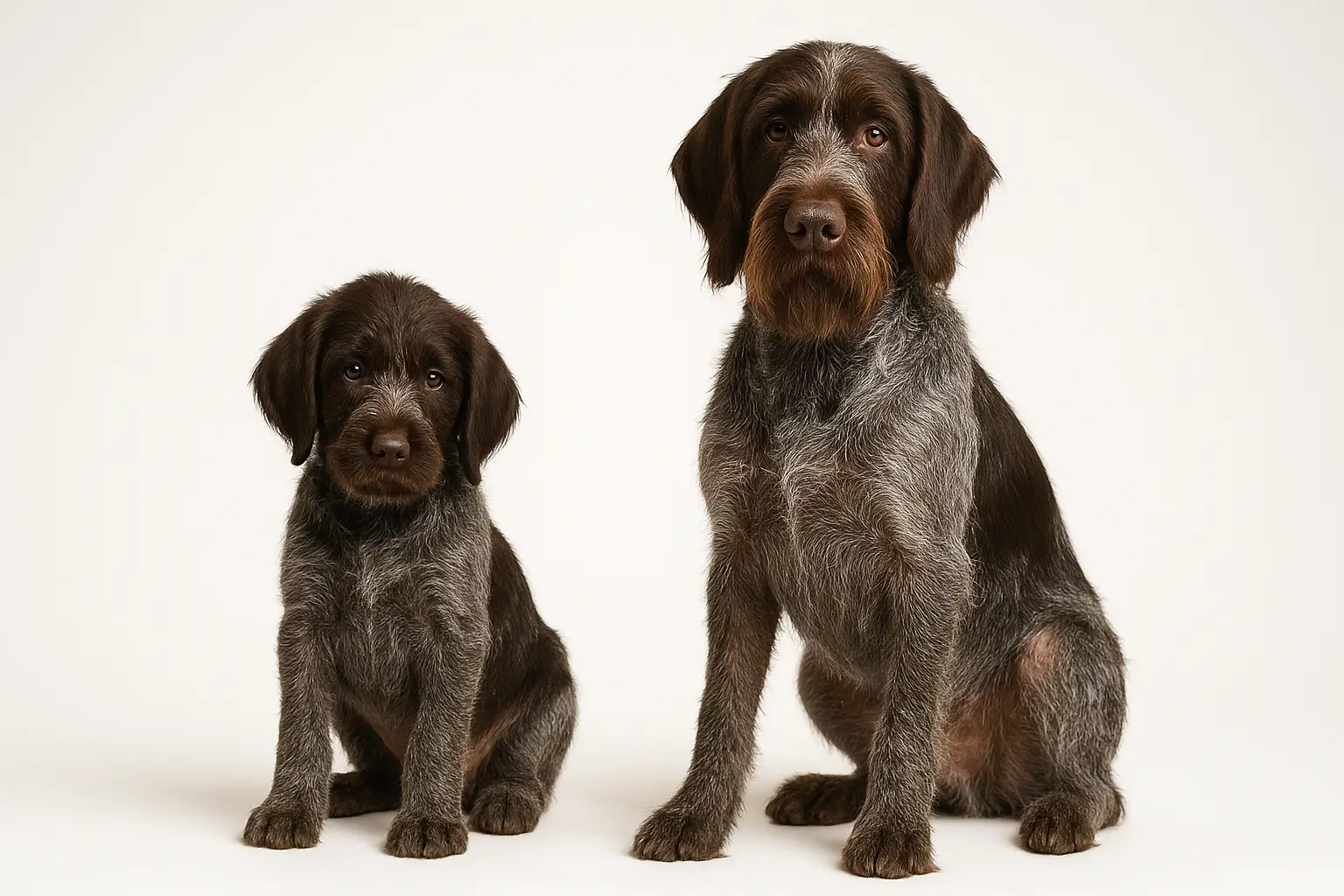
Eduard Korthals set out to create the ultimate all-terrain hunting dog — and the Wirehaired Pointing Griffon is what he built. Developed in the late 19th century from a diverse mix of foundation dogs, the Griffon points, tracks, and retrieves across any terrain: upland fields, marshes, swamps, and dense forest. Medium-sized with a distinctive harsh, wiry coat, these versatile hunters typically live 12-14 years.
Hip and elbow dysplasia are the primary structural concerns. Progressive retinal atrophy has been documented, and epilepsy occurs at above-average rates. Korthals’ use of diverse foundation stock generally benefits health, but some lines carry specific concerns — making comprehensive testing of breeding stock especially important.
The Health Landscape for This Breed
Hip Dysplasia
Hip dysplasia is the primary orthopedic concern in Wirehaired Pointing Griffons. OFA hip evaluation at 24 months, combined with elbow evaluation, provides a comprehensive orthopedic baseline. The breed’s versatile hunting use means hip integrity directly determines working longevity. Lean body condition from puppyhood reduces hip dysplasia expression significantly.
See the Hip Dysplasia guide for full prevention and management detail.
Elbow Dysplasia
Elbow dysplasia occurs in Wirehaired Pointing Griffons and should be evaluated at the same OFA appointment as hips. Early forelimb lameness in a young Griffon warrants radiographic evaluation before secondary joint changes develop. Joint-supportive management slows long-term progression.
See the Elbow Dysplasia guide for full prevention and management detail.
Epilepsy
Epilepsy appears in Wirehaired Pointing Griffons above general canine prevalence. Dogs with two or more unprovoked seizures need a full epilepsy workup. Idiopathic epilepsy is managed with anticonvulsant therapy, and drug level monitoring every 6 months maintains both efficacy and safety on long-term treatment.
See the Epilepsy guide for full prevention and management detail.
Evidence-Based Ways to Extend Healthspan
Meeting a Versatile Hunting Dog’s Exercise Needs
Wirehaired Pointing Griffons were built for full-day hunts across every kind of terrain. That heritage translates to a minimum of 60-90 minutes of vigorous daily exercise. Hunting, tracking, agility, and nose work satisfy their multi-modal hunting drive best.
Their sociable, adaptable nature makes them easier to live with than some single-purpose hunting breeds. But do not mistake adaptability for low needs. Inadequate exercise creates behavioral problems that compound into health consequences.
Wiry Coat Maintenance
The Griffon’s harsh, wiry double coat should be hand-stripped periodically — once or twice yearly — to maintain its texture and weather-resistant properties. Clipping softens the coat and reduces its protective function.
Between strippings, regular brushing prevents matting. After field work in water, rinse the coat to prevent bacterial growth in the thick undercoat. Ear canals need inspection and drying after every swim.
The People-Oriented Hunter
Korthals’ breed standard describes the ideal Griffon as “the hunter’s dog, par excellence” — combining hunting ability with exceptional human bonding. Unlike some hunting breeds, the Griffon is extremely people-oriented and does not thrive with isolation or kennel living.
They need daily close contact with their family. This sociability makes them easy to live with, but it also means they can develop separation anxiety in low-contact households. Plan for that.
Your Highest-Return Health Investments
These are the investments that pay the highest longevity dividend for a Wirehaired Pointing Griffon:
- OFA hip and elbow evaluation at 24 months — orthopedic disease is the primary structural concern
- Annual CAER eye exam — progressive retinal atrophy documented in some lines
- Wire coat stripping protocol — hand-stripping maintains coat health and reduces follicular skin problems
Build your annual wellness calendar around these targets. Review progress quarterly and shift resources toward whichever risk area is trending fastest. See Hip Dysplasia, Elbow Dysplasia, Seizures Epilepsy for detailed protocols.
Evidence-Based Longevity Priorities
Body Composition and Muscle Maintenance
Body composition control predicts long-term function more reliably than most other single factors in this breed. In a medium sporting dog, stable body composition directly predicts orthopedic longevity and cardiovascular reserve. These endurance-bred dogs maintain better muscle quality when activity patterns stay consistent year-round rather than swinging between hunt season intensity and off-season inactivity.
Condition-Focused Prevention Stack
Your highest-yield prevention effort targets Hip Dysplasia, Elbow Dysplasia, Seizures Epilepsy. Early, consistent action on these conditions preserves the interventions that late detection forecloses.
Behavior, Stress Load, and Recovery
Griffon owners see better long-term outcomes when daily activity is structured and recovery windows are protected. These bred-for-work dogs need consistent output to maintain physical and mental equilibrium. The gap between “enough exercise” and “not enough” shows up faster in this breed than in many others.
Preventive Screening Cadence
Prevention fails when veterinary visits are only triggered by visible problems. Build screening intervals into your calendar and tighten them when tracking data shows any sustained drift.
Breed-Specific Research
Use these evidence deep dives to add mechanism-level context to your Wirehaired Pointing Griffon longevity plan:
- Exercise Prescription By Life Stage: exercise management for a versatile hunting breed across life stages
- Hip Dysplasia Lifetime Load Management: hip and elbow dysplasia management in an active medium sporting breed
- Genetic Testing For Dogs Clinical Roi: PRA and orthopedic screening decisions in Wirehaired Pointing Griffons
Using DNA Data to Guide Prevention
The practical value of genetic testing in Wirehaired Pointing Griffons comes from linking results to monitoring cadence and owner execution — not from treating test data as predictive certainty. Consider hip and elbow scoring (OFA or PennHIP) to quantify orthopedic risk, and CERF eye exam or PRA gene testing to detect heritable eye disease.
- Run a breed-relevant panel and convert the findings into a concrete monitoring timeline. Results that do not change your screening calendar were not worth running.
- Link your monitoring plan to Hip Dysplasia and Elbow Dysplasia first. When test results drive concrete changes in screening cadence or intervention, testing earns its cost.
- Create a health timeline that follows your Wirehaired Pointing Griffon across life stages. Include test results, clinical findings, medications, and home observations — it turns isolated data points into a readable trajectory.
- Reassess your monitoring priorities at three key inflection points: after growth is complete, at the mid-life mark, and when senior-stage indicators emerge.
Testing earns its cost when results directly alter your monitoring plan, screening intervals, or intervention decisions.
Breeding History & Health Implications
The Wirehaired Pointing Griffon was bred for stamina, retrieval work, and sustained field activity across diverse terrain. That heritage creates a practical risk profile owners can address through structured prevention.
- Skeletal and joint loading from this breed’s conformation creates predictable wear patterns that proactive screening can catch early.
- Channel your prevention effort toward Hip Dysplasia, Elbow Dysplasia, Seizures Epilepsy, the conditions where this breed’s genetic and functional history creates the greatest vulnerability.
- Repeated low-grade signals are how most chronic conditions announce themselves. Respond to the pattern, not just the individual data point.
- Lock in a regular cadence for reviewing your monitoring plan — at minimum every three to four months. What you should be watching for at five years old is different from what mattered at two.
Use breeding history to build the initial watchlist. Use your dog’s own health trends to decide when surveillance becomes intervention.
Monitoring Schedule by Life Stage
- Puppy to 2 years: OFA hip and elbow evaluation, CAER exam
- 3-7 years: annual CAER exam, wellness bloodwork every 2 years
- 8+ years: senior panel annually, mobility assessment, dental care, cognitive monitoring
Nutrition That Supports a Longer Life
Wirehaired Pointing Griffons do well on quality medium-breed adult food sized to activity level. Active hunting dogs during season need higher caloric density than off-season companions. Lean body condition throughout life protects joint health. Omega-3 supplementation supports coat, skin, and joint function.
The Longevity Picture
Wirehaired Pointing Griffons with OFA orthopedic screening, CAER eye monitoring, and a lifestyle that matches their versatile hunting heritage are positioned for healthy lives in the 13-14 year range. Their exceptional human bond and multi-modal working drive support engaged, resilient longevity — the kind of aging that keeps a dog mentally sharp and physically active deep into senior years.
Most-Missed Early Drift Pattern
Long-term decline in Wirehaired Pointing Griffons often starts with small changes that owners normalize too quickly:
- Hind-limb stiffness after rest related to Hip Dysplasia that owners attribute to a hard day in the field rather than progressive joint deterioration
- Forelimb head-bobbing or subtle lameness on turns related to Elbow Dysplasia that owners dismiss as a minor tweak from rough terrain
- Brief staring episodes, disorientation after waking, or unprovoked startle responses that may signal early Seizures Epilepsy before full seizure events develop
Seven to ten days of sustained change in appetite, mobility, energy, or behavior is the threshold for escalating to your vet rather than continuing to observe.
Additional Health Risks to Monitor
Based on breed predisposition data, Wirehaired Pointing Griffon owners should also be aware of:
Frequently Asked Questions
How long do Wirehaired Pointing Griffons live?
Wirehaired Pointing Griffons typically live 12-14 years. OFA orthopedic screening, CAER eye monitoring, and active hunting lifestyle management are the primary longevity investments.
Are Wirehaired Pointing Griffons good family dogs?
Excellent — the Griffon is one of the most family-friendly hunting breeds. They are devoted, affectionate, and tolerant. They need significant exercise but bond closely with all family members and do well with children when socialized.
Are Wirehaired Pointing Griffons hypoallergenic?
The Griffon’s wiry, dense coat sheds minimally compared to smooth-coated breeds. They are sometimes described as low-shedding or hypoallergenic, though no breed is truly hypoallergenic. Reduced shedding may benefit some allergy sufferers.
What is the Wirehaired Pointing Griffon bred to do?
The Griffon was bred as the ultimate versatile hunting dog — capable of pointing, tracking wounded game, and retrieving from both land and water in all terrain and weather conditions. They are considered a close-working breed that stays in contact with the hunter.
Are Wirehaired Pointing Griffons good for novice hunters?
Yes — the Griffon’s people-oriented nature and versatility make them one of the more accessible versatile hunting breeds for hunters new to upland hunting. Their trainability and desire to please reduce the learning curve compared to more independent breeds.
References
[1] American Wirehaired Pointing Griffon Association (AWPGA). awpga.com. [2] OFA health statistics by breed. ofa.org. [3] Korthals breed development history: AWPGA documentation. [4] AKC breed information. akc.org. [5] Versatile hunting dog health surveys: NAVHDA data.
Related reads
Related Reading
Continue exploring