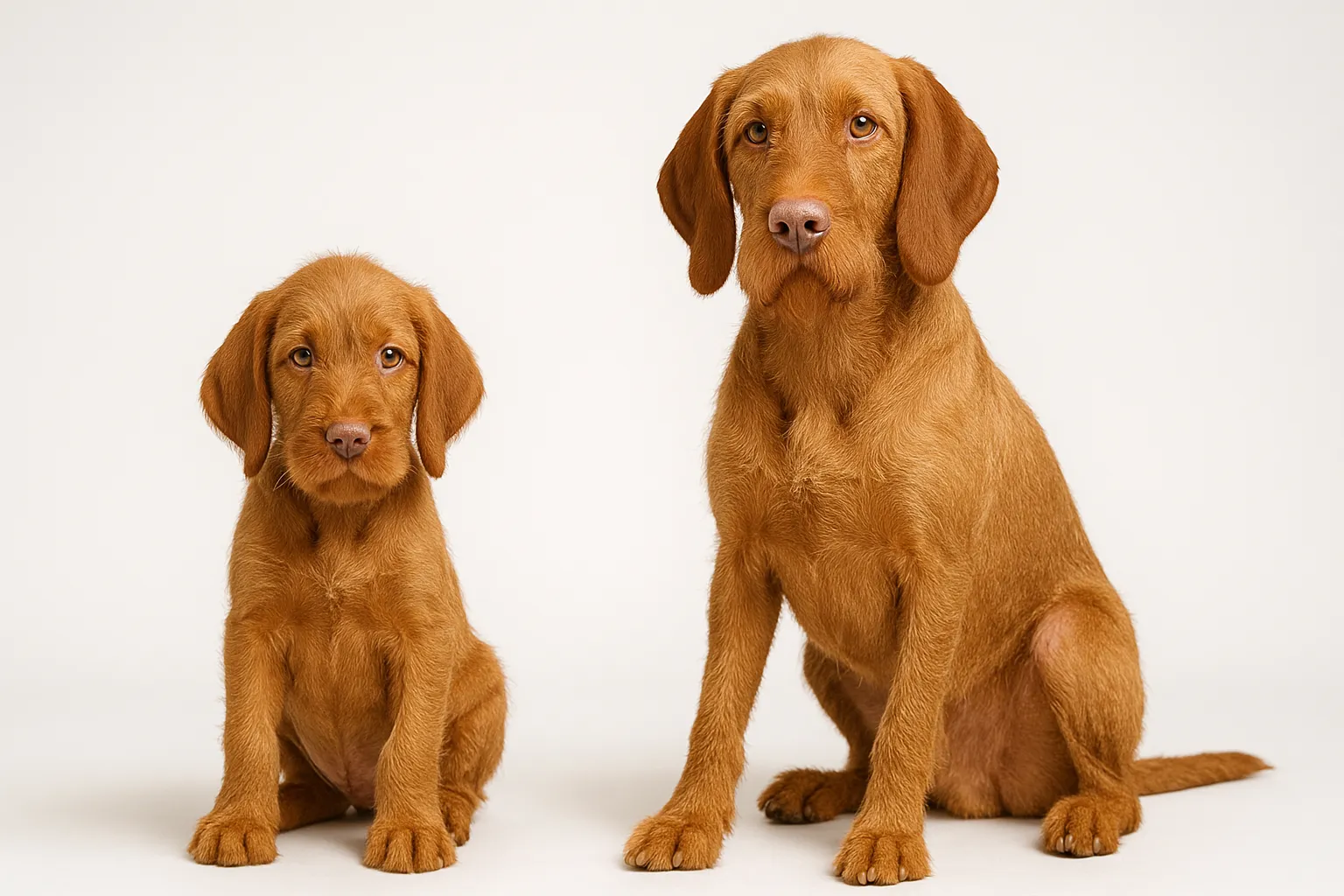
The Vizsla’s Wire-Coated Sibling — With Cancer Rates That Deserve Attention
In the 1930s, Hungarian breeders crossed the smooth-coated Vizsla with the German Wirehaired Pointer to create a dog that combined the Vizsla’s exceptional nose and gentle temperament with a denser wire coat for cold-weather hunting. The result was the Wirehaired Vizsla — a versatile, medium-sized hunter that lives 12-14 years.
Health concerns parallel the smooth Vizsla: hip dysplasia, epilepsy, and elevated cancer rates. The wire coat adds dermatological monitoring requirements the smooth variety does not carry. AKC-recognized only in 2014 and still less common than its smooth-coated sibling, the Wirehaired Vizsla has a smaller gene pool — making comprehensive health testing of all breeding stock especially important.
The Conditions to Watch For
Hip Dysplasia
Hip dysplasia is the primary orthopedic concern. OFA hip evaluation at 24 months provides the structural baseline. Lean body condition and appropriate exercise during skeletal development reduce clinical severity. For a breed built to hunt, hip integrity directly determines working longevity.
See the Hip Dysplasia guide for full prevention and management detail.
Epilepsy
Epilepsy occurs in Wirehaired Vizslas at above-average rates, consistent with the smooth Vizsla population. Idiopathic epilepsy typically presents between ages 1 and 5. Dogs with two or more unprovoked seizures warrant a full neurological evaluation. Anticonvulsant therapy with drug level monitoring every 6 months manages most cases effectively.
See the Epilepsy guide for full prevention and management detail.
Cancer
Elevated cancer rates run in the Vizsla breed family. Lymphoma, hemangiosarcoma, and mast cell tumors are the most frequently reported types. Beginning at age 6-7, annual cancer surveillance — lymph node palpation, abdominal palpation, and skin inspection — provides early detection opportunity. Any rapidly growing or non-healing skin mass should be evaluated without delay.
See the Cancer guide for full prevention and management detail.
Practical Longevity Strategies
Hunting Drive and Exercise Needs
Wirehaired Vizslas are versatile hunting dogs that need 60-90 minutes of vigorous daily exercise. Their combined Vizsla-GWP heritage gives them exceptional nose, stamina, and versatility across terrain. Without adequate outlet, they become anxious and destructive.
They excel in field trials, tracking, agility, and dock diving. The wire coat provides meaningful additional protection for cold-weather hunting compared to the smooth Vizsla — an advantage worth using.
Wire Coat Grooming Protocol
The wire outer coat requires periodic hand-stripping to maintain its texture and weather-resistant properties. Clipping softens the coat and compromises its function. Professional hand-stripping or owner-learned stripping every 6-12 months works well.
Between sessions, regular brushing prevents matting. After water work, dry the dense coat thoroughly — skin conditions develop under wet undercoat if moisture lingers.
The Velcro Dog Temperament
Wirehaired Vizslas share the smooth Vizsla’s characteristic intense human bonding — the “Velcro dog” need to maintain constant contact with their person. This strong attachment supports mental health and strengthens the owner-dog partnership, but it can become separation anxiety if the dog is left alone frequently or for long periods.
Structure, gradual alone-time training, and enrichment activities reduce this risk. Address it early rather than after it becomes entrenched.
The Three Things That Matter Most
For most Wirehaired Vizsla owners, these are the actions that will matter most:
- OFA hip evaluation at 24 months — hip dysplasia is the primary orthopedic concern
- Annual CAER eye exam — eye conditions documented in the breed
- Cancer surveillance from age 7 — elevated cancer rates documented in the Vizsla family
Center your next vet conversation on these priorities and adjust the plan quarterly based on what the data shows. See Hip Dysplasia, Seizures Epilepsy, Cancer for condition-specific guidance.
Evidence-Based Longevity Priorities
Body Composition and Muscle Maintenance
Optimal body condition in your Wirehaired Vizsla protects joints, supports metabolic health, and reduces the inflammatory burden that drives premature aging. Body composition stability directly predicts orthopedic longevity and cardiovascular reserve. These endurance-bred dogs maintain better muscle quality when activity patterns stay consistent rather than cycling between hunt-season intensity and off-season inactivity.
Condition-Focused Prevention Stack
The conditions that most threaten longevity and quality of life — Hip Dysplasia, Seizures Epilepsy, Cancer — are also the ones most responsive to early, sustained prevention. Start here.
Behavior, Stress Load, and Recovery
Keeping household rhythm deliberate — stable sleep windows, predictable activity cycles, and protected rest periods — prevents the stress-load accumulation that shortens healthspan in active sporting breeds. Wirehaired Vizslas wear stress physically more than many breeds realize.
Preventive Screening Cadence
Plan veterinary reassessment intervals proactively, then tighten cadence when trend logs show drift in orthopedic function or gait quality. Early intervention windows are where most healthspan gains happen.
Breed-Specific Research
Use these evidence deep dives to add mechanism-level context to your Wirehaired Vizsla longevity plan:
- Cancer Screening In Dogs What Helps: cancer surveillance strategies for a breed with elevated cancer rates
- Exercise Prescription By Life Stage: exercise management for a high-drive hunting breed across life stages
- Genetic Testing For Dogs Clinical Roi: health testing priorities in a newer breed with small founder population
How to Use Genetic Panel Results
Genetic testing in Wirehaired Vizslas should drive monitoring strategy, not replace it. Use results to tighten surveillance windows and calibrate intervention thresholds. Consider hip and elbow scoring (OFA or PennHIP) to quantify orthopedic risk, and a breed-specific cancer panel or tumor marker surveillance when available.
- Select a genetic panel matched to your Wirehaired Vizsla’s known risk profile. The results tell you where to look harder, not what will happen.
- Anchor your initial monitoring to Hip Dysplasia and Seizures Epilepsy. Testing matters when it changes what you measure, how often, and what triggers escalation.
- Your most powerful monitoring tool costs nothing — a running record linking test data to clinical findings to what you observe at home. The connections between entries are where the real insights live.
- Your monitoring plan should evolve with your dog. Review and adjust it at each life-stage transition and any time you notice sustained changes in daily function.
Testing without follow-through is just data collection. Every panel result should connect to a monitoring action with a timeline.
Breeding History & Health Implications
The Wirehaired Vizsla was bred for stamina, retrieval work, and sustained field activity in harsh conditions. That history directly informs current health risks and prevention strategy.
- Structural load patterns and cancer susceptibility both require monitoring frequency calibrated to actual risk, not just annual wellness defaults.
- Focus your risk surveillance on Hip Dysplasia, Seizures Epilepsy, Cancer — these are the conditions where this breed’s ancestry creates the most actionable risk profile.
- The biggest threat to your Wirehaired Vizsla’s healthspan is normalizing gradual decline. Any persistent change in mobility, appetite, energy, or recovery time is a data point, not an inevitability.
- As your Wirehaired Vizsla ages and health data accumulates, the plan should change with it. Schedule a quarterly review to recalibrate priorities based on what you are actually seeing.
What the breed contributes is a set of weighted risks. What your data contributes is the signal to act — or to hold.
Age-Based Monitoring Milestones
- Puppy to 2 years: OFA hip evaluation, CAER exam
- 3-6 years: annual CAER exam, wellness bloodwork every 2 years
- 7+ years: senior panel annually, cancer surveillance (lymph node palpation, abdominal ultrasound)
Diet and Feeding Strategy
Wirehaired Vizslas do well on quality medium-breed adult food sized to activity level. Active hunting dogs need higher caloric intake during season. Lean body condition matters for both joint health and cancer risk management. Omega-3 supplementation supports coat and joint function.
The Longevity Picture
Wirehaired Vizslas with OFA orthopedic screening, cancer surveillance from middle age, and an active hunting or sport lifestyle are positioned for healthy lives in the 13-14 year range. Their versatile working heritage and intense human bond support the kind of engaged longevity that keeps a dog sharp and active well into senior years.
Most-Missed Early Drift Pattern
Early disease progression in Wirehaired Vizslas usually presents as low-grade changes that owners attribute to normal aging:
- Hind-limb stiffness after rest related to Hip Dysplasia that owners dismiss as the dog “loosening up” rather than recognizing progressive joint damage
- Brief focal seizure signs — fly-biting, sudden freezing, or disorientation after waking — related to Seizures Epilepsy that owners attribute to quirky Vizsla behavior
- Intermittent appetite dips, unexplained weight loss, or a new mass under the skin pointing to Cancer progression that becomes harder to treat with each passing week
If baseline function drifts for 7-10 days, treat it as a prevention failure signal and reassess early.
Additional Health Risks to Monitor
Based on breed predisposition data, Wirehaired Vizsla owners should also be aware of:
Frequently Asked Questions
How long do Wirehaired Vizslas live?
Wirehaired Vizslas typically live 12-14 years. OFA orthopedic screening, cancer surveillance from age 7, and active exercise management are the primary longevity investments.
What is the difference between a Wirehaired Vizsla and a Vizsla?
The Wirehaired Vizsla has a dense wire outer coat and heavier bone structure compared to the smooth Vizsla’s short, rust-gold coat. Both are Hungarian hunting breeds with very similar temperament. The wire coat provides additional protection for cold-weather hunting.
Are Wirehaired Vizslas rare?
Wirehaired Vizslas are less common than smooth Vizslas in North America, having only been AKC-recognized in 2014. They are more established in Hungary and Central Europe where the breed originated.
Are Wirehaired Vizslas good family dogs?
Wirehaired Vizslas are gentle, affectionate, and devoted family dogs. They bond intensely with their owners and need regular contact and engagement. They are excellent with active families who can provide daily vigorous exercise and hunting or sport outlet.
Do Wirehaired Vizslas need a lot of exercise?
Yes — Wirehaired Vizslas are high-energy hunting dogs requiring 60-90 minutes of vigorous daily exercise. Without adequate outlet, they develop anxiety and behavioral problems. Active outdoor families and hunters are the ideal match.
References
[1] Wirehaired Vizsla Club of America. wirehaired-vizsla.org. [2] AKC breed recognition. akc.org. [3] OFA health statistics. ofa.org. [4] Vizsla cancer surveys: breed club health committee data. [5] Hungarian hunting dog history: Magyar Vizsla Club documentation.
Related reads
Related Reading
Continue exploring