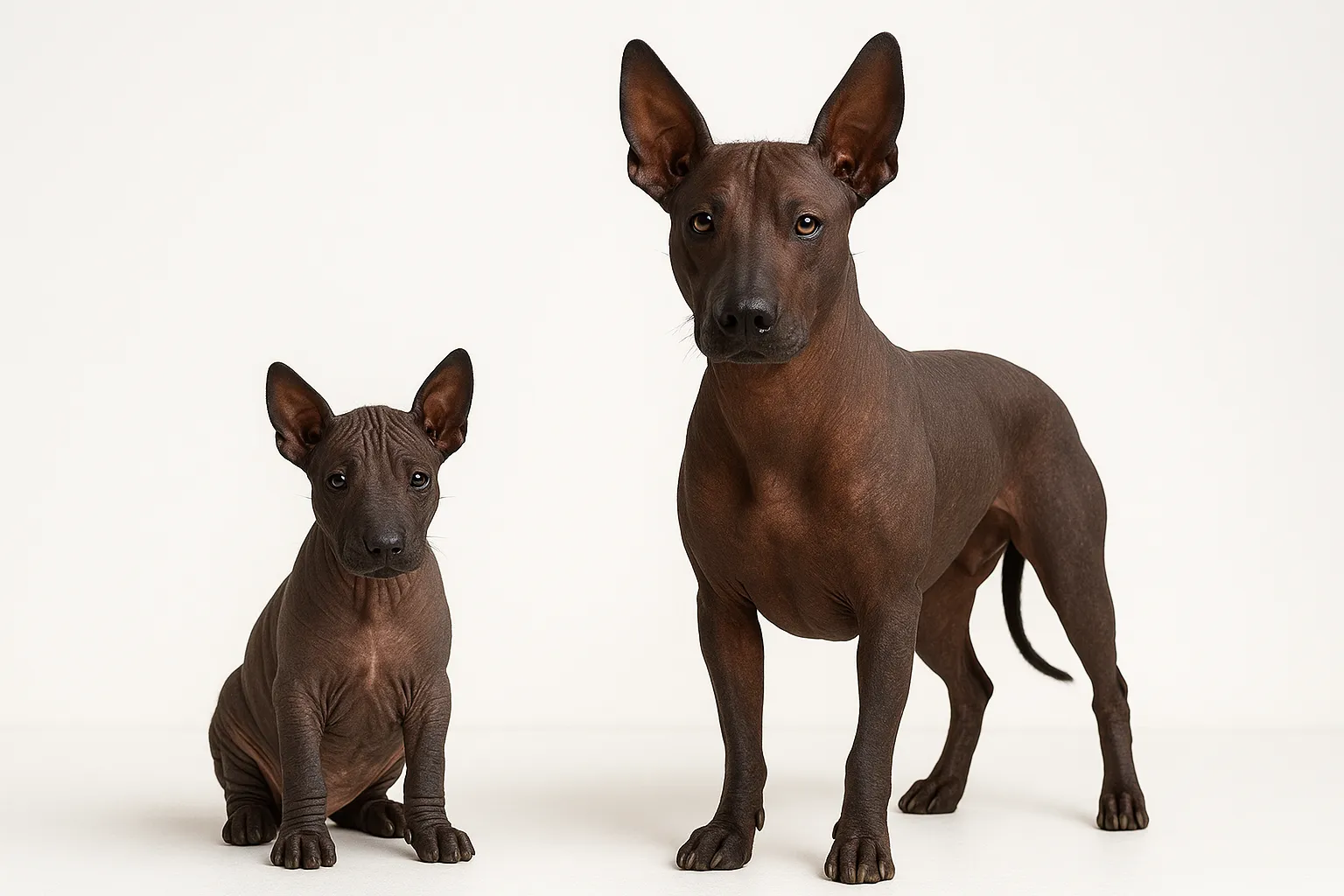
3,000 Years of Natural Selection — and a Dog That Outlives Nearly Everything
Three thousand years of natural selection produced a dog that outlives almost everything else with four legs. The Xoloitzcuintli — Xolo for short, also called the Mexican Hairless Dog — is one of the oldest and rarest breeds in the world, with roots deep in Mesoamerican history. They come in three sizes (toy, miniature, standard) and two coat types (hairless and coated).
Their exceptional longevity — frequently 15-18 years — reflects the genetic resilience of a breed shaped more by survival than by show-ring selection. Hairless Xolos require active skin protection but avoid many coat-related conditions that affect other breeds. The primary concerns are dental disease (common in hairless breeds), skin care needs for the hairless variety, and an elevated rate of epilepsy. Xolos do not carry the orthopedic or cardiac genetic burdens that limit many purpose-bred modern breeds.
Where This Breed Is Most Vulnerable
Skin Conditions
Hairless Xolos need active skin management throughout life. Without coat protection, their skin is vulnerable to sunburn, abrasion, acne-like lesions, and dryness. A simple daily routine — moisturizing with pet-safe products, applying sunscreen for outdoor exposure, and keeping skin clean and dry — prevents the majority of problems. Coated Xolos have standard skin needs.
See the Skin Conditions guide for full prevention and management detail.
Dental Disease
Xoloitzcuintlis, like many hairless breeds, face elevated dental disease rates and may have incomplete or irregular dentition as part of the hairless gene expression. Professional dental cleaning by age 2, daily tooth brushing, and dental chews maintain oral health and prevent the systemic consequences of advanced periodontal disease — including cardiac and inflammatory damage.
See the Dental Disease guide for full prevention and management detail.
Epilepsy
Seizures occur at above-average rates in Xoloitzcuintlis. The breed carries a documented genetic predisposition to primary epilepsy. Dogs diagnosed with epilepsy are managed with anticonvulsant medication (phenobarbital or potassium bromide), with monitoring of drug levels and liver function every 6 months while on therapy.
See the Epilepsy guide for full prevention and management detail.
What Actually Moves the Needle
Skin Care for Hairless Xolos
Hairless Xolos need a simple but consistent daily skincare routine. After bathing (weekly or biweekly), apply a pet-safe, fragrance-free moisturizer to prevent dryness and cracking. For dogs spending time outdoors, apply pet-safe sunscreen to the dorsal skin and face to prevent sunburn and reduce long-term UV damage.
Monitor skin weekly for blackheads, acne-like lesions, or irritation. These respond well to gentle cleansing and topical treatment but worsen if neglected. The routine is not complicated — consistency is what matters.
Temperature Regulation
Without a coat, hairless Xolos are vulnerable to both cold and heat extremes. In cold climates, sweaters or coats for outdoor time below 50 degrees F are practical necessities, not accessories. In heat, exposed skin absorbs more solar radiation than a coated dog — provide shaded outdoor access, apply sunscreen, and limit activity during peak heat.
These needs are year-round and practical, not cosmetic.
Longevity-Focused Wellness for a 15-Plus-Year Dog
A dog that can live 13-18 years requires proactive management of age-related changes with the same diligence applied to small long-lived breeds. Senior bloodwork annually from age 8, monthly body condition assessment, dental cleaning every 12-18 months, and cognitive function monitoring as the dog approaches its second decade — all of these support quality of life into very old age.
Xolos can remain functional and mentally sharp well into their teens with appropriate care. The long lifespan is an opportunity, but it demands a long-term management commitment.
The Three Things That Matter Most
For most Xoloitzcuintli owners, these are the actions that will matter most:
- Daily sun protection and moisturizing for hairless varieties — exposed skin requires active protection year-round
- Dental cleaning starting at age 2 — Xolos have prominent dental disease susceptibility
- Annual wellness panel including thyroid and metabolic markers — long-lived breed requires proactive baseline tracking
Make these the backbone of your Xoloitzcuintli’s preventive care calendar. Each quarter, assess whether you are on track or need to escalate. Detailed protocols live in Skin Allergies, Dental Disease, Seizures Epilepsy .
Evidence-Based Longevity Priorities
Body Composition and Muscle Maintenance
Body composition control predicts long-term function more reliably than most other single factors in Xolos. With three size varieties and a lifespan that can stretch to 18 years, consistent body condition monitoring prevents the metabolic and orthopedic drift that accumulates quietly over many years.
Condition-Focused Prevention Stack
Your highest-yield prevention effort targets Skin Allergies, Dental Disease, Seizures Epilepsy. Early, consistent action on these conditions preserves the interventions that late detection forecloses.
Behavior, Stress Load, and Recovery
Xolos maintain better stability when household routines, activity levels, and recovery windows are deliberately structured. Consistency tailored to the individual dog’s temperament matters more than rigid protocols.
Preventive Screening Cadence
Prevention fails when veterinary visits are only triggered by visible problems. Build screening intervals into your calendar and tighten them when tracking data shows any sustained drift.
Breed-Specific Research
Use these evidence deep dives to add mechanism-level context to your Xoloitzcuintli longevity plan:
- Senior Dog Screening Protocol: extended senior care framework for a breed that regularly reaches 15+ years
- Dental Disease And Longevity In Dogs: dental disease longevity impact especially relevant for hairless-gene breeds
- Sleep Quality And Cognitive Aging In Dogs: cognitive aging monitoring in a very long-lived breed
Making Genetic Testing Actionable
The practical value of genetic testing in Xolos comes from linking results to monitoring cadence and owner execution — not from treating test data as predictive certainty. Consider CERF eye exam or PRA gene testing to detect heritable eye disease as part of the initial risk assessment.
- A well-chosen initial panel gives you a risk map. Follow-up assessments at regular intervals tell you which risks are materializing and which remain theoretical.
- Connect your first monitoring protocol to Skin Allergies and Seizures Epilepsy — these are the conditions where test results should directly change what you do next.
- Document weight, energy level, appetite patterns, and any changes you notice between vet visits. When combined with clinical data, home observations often reveal the earliest signs of drift.
- Return to your test results whenever something changes — a new lameness, unexplained weight loss, or behavioral shift. Static data becomes useful again when the clinical context moves.
Testing earns its cost when results directly alter your monitoring plan, screening intervals, or intervention decisions.
Breeding History & Health Implications
The Xoloitzcuintli is not a designed breed in the modern sense. Over three millennia, natural selection in Mesoamerica produced a dog with genuine genetic resilience and low inherited disease burden. That history creates a favorable health foundation — but a few breed-specific vulnerabilities still require attention.
- Dental disease, skin care needs, and epilepsy risk all require consistent tracking that adapts as your dog ages — the right interval at three years is not the right interval at eight.
- Prioritize surveillance based on breed heritage — Skin Allergies, Seizures Epilepsy, Dental Disease are the highest-probability targets that history and data both point to.
- When you see the same subtle finding twice — a slight limp, a missed meal, a slower recovery — treat it as a signal, not a coincidence. Tighten your monitoring before it compounds.
- Anchor your prevention plan to the latest data, not the original risk assessment. What your Xoloitzcuintli needed at two years old and what they need at eight are different conversations.
Breeding history narrows the search. Serial monitoring data makes the call.
Your Veterinary Screening Roadmap
- Puppy to 2 years: skin care routine establishment, dental baseline, epilepsy screening awareness
- 3-8 years: annual wellness panel, skin checks every 6 months, dental cleaning every 12-18 months
- 9+ years: senior panel every 6 months, cognitive function assessment, arthritis monitoring
What and How to Feed
Xolos do well on high-quality adult food appropriate for their size (toy, miniature, or standard). Skin health benefits from omega-3 supplementation. Hairless dogs may have slightly elevated caloric needs in cold climates due to their lack of insulating coat. Maintain strict lean body condition — with a lifespan that can reach 18 years, overweight years accumulate more joint and metabolic impact than in any short-lived breed.
What the Future Can Hold
Xoloitzcuintlis with consistent skin care, proactive dental management, and epilepsy monitoring where indicated are among the longest-lived dog breeds in existence. Their natural resilience, genetic diversity as an ancient breed, and relatively low disease burden create an excellent longevity foundation. The owners who take full advantage of that foundation treat daily skin and dental care as non-negotiable infrastructure, not optional extras.
Most-Missed Early Drift Pattern
Long-term decline in Xolos often starts with small changes that owners normalize too quickly:
- Persistent dry patches, acne-like lesions, or recurring sunburn on exposed skin related to Skin Allergies that owners treat as cosmetic rather than recognizing chronic barrier damage
- Brief staring episodes, sudden freezing, or disorientation after waking that may signal early Seizures Epilepsy before full seizure events develop
- Halitosis, reluctance to chew hard items, or visible tartar buildup related to Dental Disease that owners accept as normal in an older dog rather than treating as a systemic inflammation source
When any measured function stays below baseline for a week or more, investigate — waiting for spontaneous recovery risks missing a treatable window.
Additional Health Risks to Monitor
Based on breed predisposition data, Xoloitzcuintli owners should also be aware of:
Frequently Asked Questions
How long do Xoloitzcuintlis live?
Xoloitzcuintlis typically live 13-18 years, making them one of the longest-lived breeds regardless of size. The combination of ancient genetics, minimal inbreeding, and a relatively low inherited disease burden supports their exceptional lifespan.
Do Xoloitzcuintlis need sunscreen?
Yes — for hairless varieties, sunscreen applied to exposed skin is necessary for outdoor time in sunny conditions. Pet-safe, zinc-free sunscreens are available. Sun protection reduces the risk of sunburn and long-term UV skin damage.
Are Xoloitzcuintlis hypoallergenic?
Hairless Xolos shed minimally and produce less dander than coated breeds, making them a lower-allergen option for some allergy sufferers. However, “hypoallergenic” is not absolute — people allergic to dog saliva or skin proteins may still react.
What are the three sizes of Xoloitzcuintli?
Toy (10-15 lbs), Miniature (15-30 lbs), and Standard (30-55 lbs). All three sizes share the same care requirements and lifespan profile.
Is the Xoloitzcuintli a good first dog?
Xolos are intelligent and loyal but require consistent socialization — they can be reserved with strangers and may be strong-willed. Their skin care and dental needs require an owner willing to commit to regular maintenance. For prepared owners, they are rewarding long-lived companions.
References
[1] Xoloitzcuintli Club of America. xoloitzcuintli.org. [2] AKC breed standards and health history. akc.org. [3] Casal ML et al. The genetics of canine hairlessness. J Dermatol Sci. 2005. [4] Epilepsy in dogs: Ekenstedt KJ et al. Vet J. 2012. [5] OFA health statistics by breed. ofa.org.
Related reads
Related Reading
Continue exploring