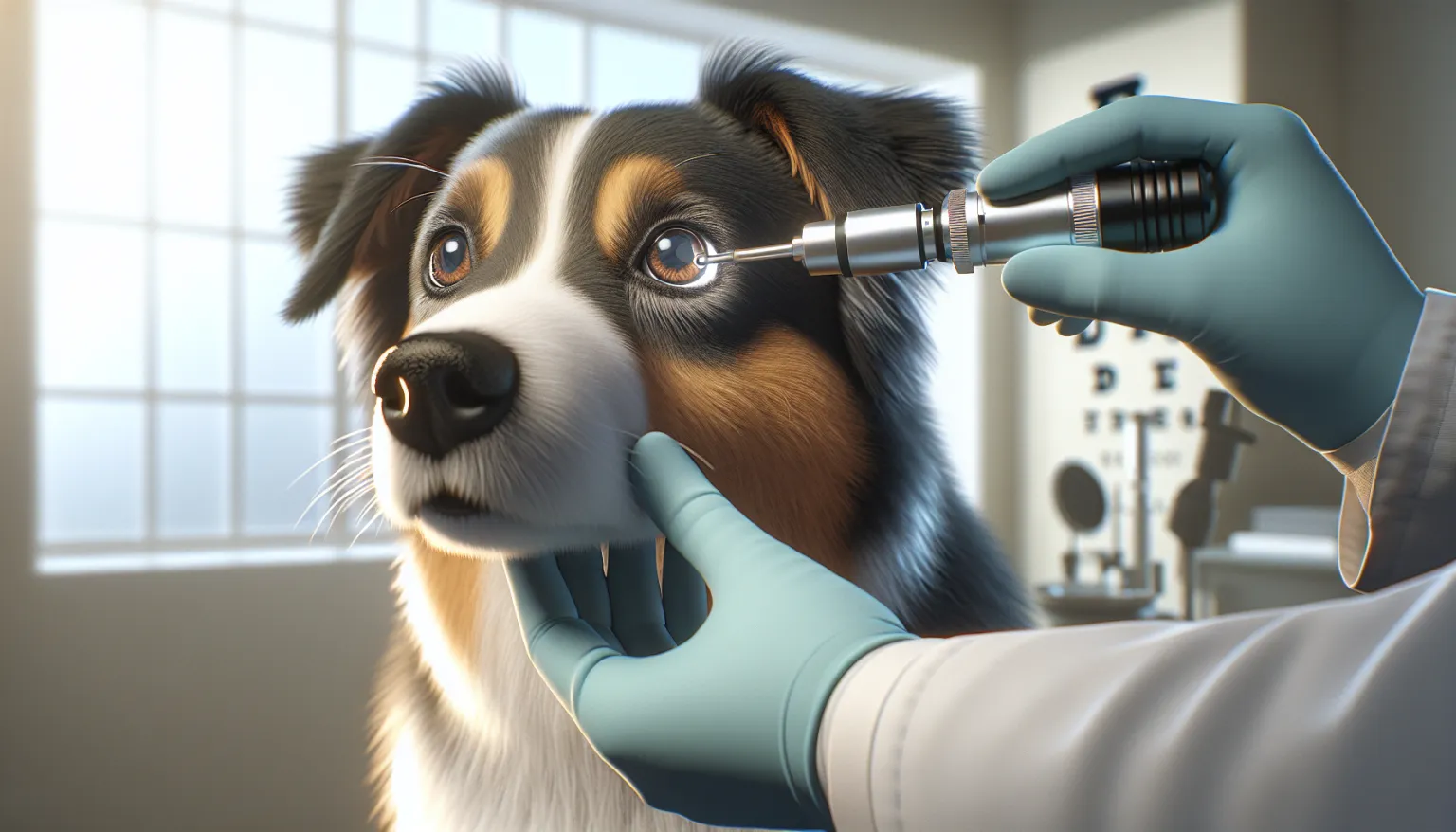
Evidence deep dives for Cataracts
Pair mechanism-level evidence with practical protocol context before discussing next steps with your veterinarian.
Your Dog’s World Is Getting Cloudier
A faint haze in your dog’s eye may look harmless, but cataracts can steal vision faster than most owners expect. These opacities form within the lens, blocking normal light transmission and impairing vision. They range from small, barely noticeable spots to dense white opacities that eliminate useful sight entirely.
They differ from nuclear sclerosis, a normal age-related lens change that gives older dogs’ eyes a bluish haze. Nuclear sclerosis rarely affects vision. Cataracts can.
Why Cataracts Matter for Healthspan
Cataracts affect quality-adjusted life in ways owners often underestimate.
Reduced visual confidence makes dogs hesitant — on stairs, in new spaces, in low light. Navigation stress increases injury risk.
Some cataracts also trigger secondary inflammation (lens-induced uveitis) that threatens the entire eye if left unmonitored.
When progression is significant, timely ophthalmic planning preserves both function and comfort.
What Causes Cataracts
Cataracts develop through several pathways:
- Inherited cataracts run in predisposed breed lines and can appear at any age
- Diabetic cataracts form rapidly when blood sugar is poorly controlled — sometimes within days to weeks of diabetes onset
- Age-related cataracts develop gradually in senior dogs
Because causes vary, diagnostic clarification matters before setting a management strategy.
Signs Owners Notice First
- Cloudy or white appearance in one or both lenses
- Bumping into objects, especially on one side
- Hesitation on stairs or in low light
- Reduced confidence in unfamiliar spaces
- Behavioral shifts linked to declining vision
These signs often appear gradually. Many owners initially attribute them to aging rather than a treatable condition.
How Cataracts Are Diagnosed
A typical workup includes:
- Ophthalmic exam to confirm lens pathology and assess cataract maturity
- Assessment for concurrent eye disease (uveitis, retinal detachment, glaucoma)
- Systemic context review, including diabetes screening when relevant
- Surgical candidacy evaluation in advanced cases
Distinguishing early cataracts from benign nuclear sclerosis requires a proper ophthalmic exam. Assumptions based on appearance alone can delay important decisions. Breed-specific screening cadence, outlined in the eye health screening protocol, can help catch early changes before they progress.
Treatment Pathways
Management depends on stage, progression rate, and goals:
- Monitoring for mild or stable cases with minimal functional impact
- Anti-inflammatory and supportive eye care when lens-induced uveitis is present
- Cataract surgery referral for dogs with significant vision loss who are good surgical candidates
Not every dog needs surgery. But not every dog should be left on monitoring either. The decision should integrate systemic health, expected benefit, and quality-of-life goals.
Living With Reduced Vision
Dogs adapt to vision loss better than most owners expect, especially with environmental support.
Practical strategies:
- Keep furniture layout stable and predictable
- Improve lighting in key pathways and at stair approaches
- Use baby gates or barriers at unsafe drop-offs
- Maintain consistent cue-based handling and routines
- Avoid rearranging the home frequently
These reduce stress and injury risk while your dog learns to navigate with reduced sight.
When to Escalate Promptly
Seek prompt reevaluation for:
- Rapid visual decline over days to weeks
- Eye redness, pain, or squinting
- Sudden behavior change suggesting disorientation
Emergency-level concern if severe pain, a suddenly swollen eye, or acute ocular crisis signs appear.
Is Your Dog a Surgical Candidate?
Surgery decisions should consider more than lens opacity alone. A practical candidate review includes:
- Degree of functional vision loss in daily life
- Retinal and ocular health compatibility with surgery (assessed by electroretinography)
- Systemic disease control (diabetic stability, for example)
- Expected postoperative care adherence — the drop schedule is demanding
- Owner goals for function and quality of life
This evaluation prevents both over-treatment in poor candidates and under-treatment in good ones.
When Surgery Is Not the Right Fit
When surgery is not selected, quality care still matters. Non-surgical management should be active, not passive.
- Environmental safety optimization
- Routine ophthalmic follow-up to catch secondary complications early
- Behavior and anxiety support for dogs struggling with vision loss adaptation
- Caregiver cue consistency and predictable daily routines
A dog managed non-surgically still needs regular eye exams. Lens-induced uveitis and secondary glaucoma develop silently and can cause pain.
The Mistake That Costs Time
Owners often assume all lens cloudiness is benign aging. If navigation confidence is declining or eye discomfort appears, escalation should not wait for severe impairment.
Early differentiation between benign nuclear sclerosis and true cataract progression improves long-term comfort and safety. A single ophthalmic exam can clarify the picture.
Diabetic Dogs Need Faster Action
In diabetic dogs, cataracts can form rapidly — sometimes progressing from clear lenses to dense opacity in a matter of days. This acceleration changes the timeline for every decision.
Practical implications:
- Lower threshold for ophthalmic reassessment when any cloudiness appears
- Tighter glucose-control coordination with primary care
- Earlier discussion of surgery candidacy and postoperative demands
When endocrine control and eye planning are disconnected, visual decline can outpace decision readiness.
Timing Surgery Well
For dogs being considered for cataract surgery, decision quality improves when owners and clinicians review:
- Current function loss in daily life, not lens appearance alone
- Retinal and ocular compatibility with expected surgical benefit
- Systemic stability and anesthesia risk profile
- Ability to execute the postoperative drop schedule and rechecks
- Expected quality-of-life gain relative to treatment burden
This framework helps avoid both delayed referral in good candidates and overextension in poor ones.
What to Bring to Your Ophthalmology Visit
Bring:
- Dated notes on navigation confidence changes (stairs, low light, unfamiliar spaces)
- Photos documenting cloudiness progression when available
- Diabetes-control status and recent medication changes (if relevant)
- Episodes of redness, pain, squinting, or behavior withdrawal
- Your goals for function versus treatment burden
Better pre-visit data shortens the time to a clear treatment pathway.
Long-Term Consequences and Prevention Value
Cataracts influence longevity through function and safety rather than through one catastrophic event. Progressive lens opacity reduces navigation confidence, lowers activity tolerance, and increases injury risk at home. Some dogs also develop painful secondary inflammation or pressure-related complications that require rapid reassessment.
The highest-yield strategy is staged monitoring with explicit escalation rules. Track vision behavior in familiar environments, low-light performance, and pain indicators, then review trends with your veterinarian at defined intervals. Earlier decision-making around ophthalmic referral and home-environment modifications usually protects both quality of life and independent daily function.
For households considering surgery, the key longevity question is not only whether vision can improve, but whether the dog is an appropriate anesthetic and postoperative-care candidate. That discussion should include concurrent disease burden, expected adherence to medication and recheck schedules, and the likelihood that earlier intervention will prevent secondary inflammatory complications.
Diet and Supplement Considerations
For Cataracts, tighter feeding execution can stabilize outcomes across routine monitoring windows.
- Feeding Guide for Adult Dogs: Maintenance Nutrition Without Drift: can improve plan adherence when the household needs clear defaults.
- Feeding Guide for Senior Dogs: Healthspan Nutrition: supports practical day-to-day decision quality while trend data is gathered.
- Prescription Diets for Dogs: Evidence, Use Cases, and Limits: helps reduce preventable drift when paired with scheduled reassessment.
Any protocol adjustment — timing, dose, or addition — should be confirmed with your veterinarian before implementation.
Related Condition Pathways
Cataracts often sit inside broader ocular and metabolic pathways. Reviewing adjacent conditions helps owners interpret change correctly and avoid waiting for severe visual decline before escalating.
- Eye Conditions: Baseline ocular-risk frameworks help owners distinguish routine aging changes from high-risk progression patterns.
- Glaucoma: Secondary pressure complications can rapidly threaten comfort and vision, so escalation pathways should be pre-planned.
- Diabetes: Metabolic dysregulation can accelerate lens change dynamics and should be reviewed during treatment planning.
These pathways are planning tools, not predictions. Their value is in improving triage speed and sharpening follow-up priorities when new signs appear.
Related Breed Longevity Guides
Breed context helps set an appropriate screening cadence for cataracts, especially when early changes are subtle and easily misattributed to normal aging.
- Miniature Poodle Lifespan & Longevity Guide: predisposition context can justify lower thresholds for early screening and escalation.
- Toy Poodle Lifespan & Longevity Guide: predisposition context can justify lower thresholds for early screening and escalation.
- Cocker Spaniel Lifespan & Longevity Guide: predisposition context can justify lower thresholds for early screening and escalation.
- Siberian Husky Lifespan & Longevity Guide: predisposition context can justify lower thresholds for early screening and escalation.
- Labrador Retriever Lifespan & Longevity Guide: predisposition context can justify lower thresholds for early screening and escalation.
- Bichon Frise Lifespan & Longevity Guide: predisposition context can justify lower thresholds for early screening and escalation.
Use these guides to calibrate exam frequency, referral thresholds, and home safety planning with your veterinarian. Mixed-breed dogs may still share meaningful risk patterns based on phenotype and family history.
At-home prevention planning should include lighting adjustments, non-slip navigation paths, and periodic re-evaluation of furniture layout as vision changes. These practical steps reduce fall risk, preserve confidence, and maintain routine participation while medical decisions are being made.
Further Reading: Longevity Context
- Eye Conditions
- Glaucoma in Dogs
- Diabetes in Dogs
- Eye Health Screening Frequency by Breed
- Antioxidant Supplementation Evidence in Dogs
- Senior Dog Screening Protocol
Frequently Asked Questions
Are cloudy eyes always cataracts?
No. Some cloudiness is age-related lens change (nuclear sclerosis). Veterinary exam is needed to distinguish causes.
Can cataracts be reversed without surgery?
Established lens opacities are generally not reversed with supplements alone.
Do all cataracts require surgery?
No. Surgery is considered based on progression, eye health, systemic context, and owner goals.
Can cataracts lead to other eye problems?
Yes. Inflammation and secondary complications can occur, which is why ongoing follow-up matters.
Medical Disclaimer
This page is educational and not a substitute for veterinary ophthalmic care. Dogs with sudden vision changes or painful eye signs should be evaluated promptly.
References
- AAHA life-stage and senior-care guidance for preventive visit cadence and longitudinal monitoring.
- ACVO-aligned veterinary ophthalmology frameworks for cataract assessment, referral timing, and pressure-risk surveillance.
- Evidence on lens-induced inflammation, secondary glaucoma risk, and cataract-surgery decision pathways in dogs.
- WSAVA nutrition and chronic-disease support guidance to maintain function during long-term management.
Related reads
Related Reading
Continue exploring