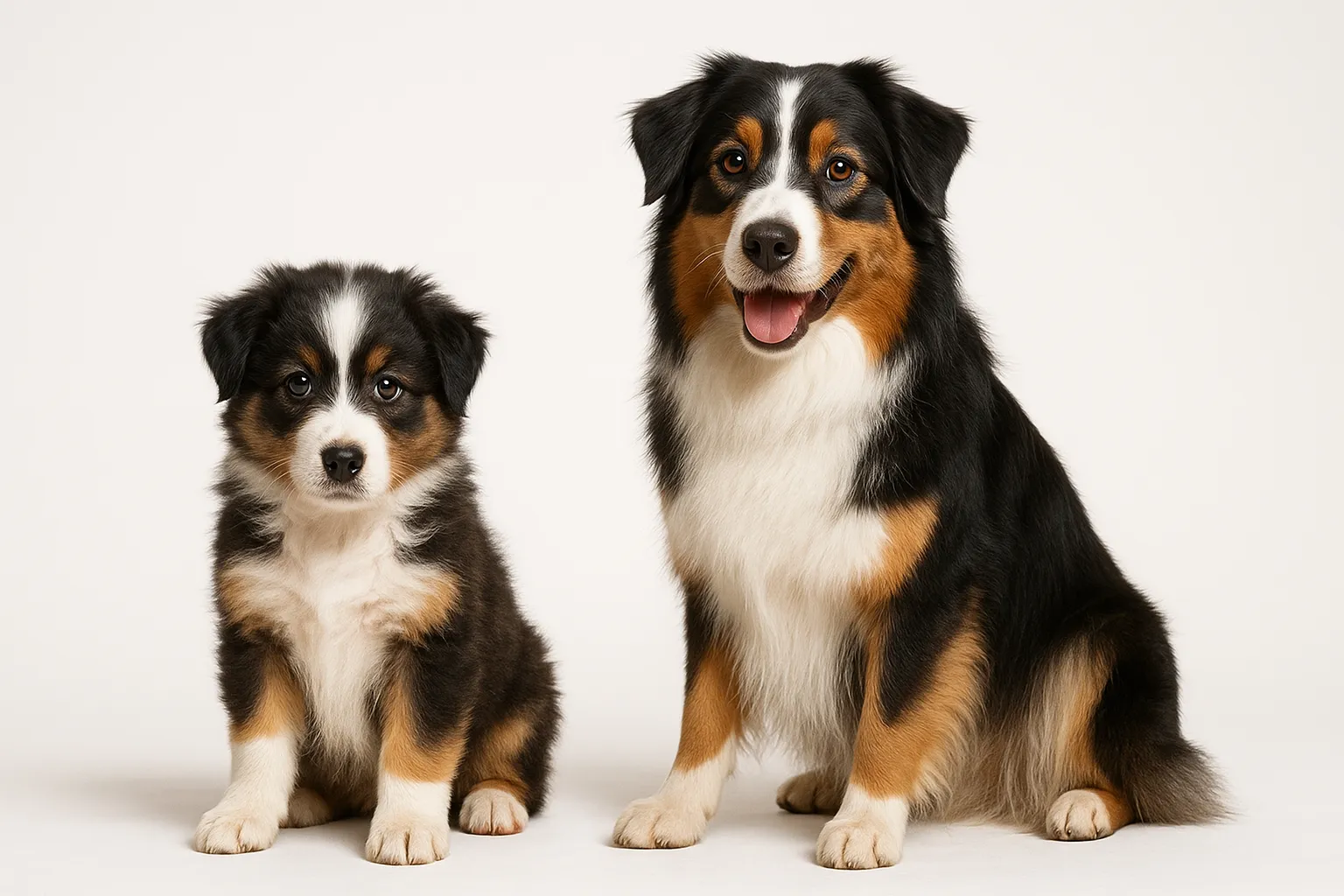
A 12-to-15-Year Athlete That Rarely Slows Down on Its Own
Australian Shepherds live 12-15 years, placing them among the longer-lived medium breeds. But lifespan alone does not tell the full story. These dogs were built to work all day, and that relentless drive is both their greatest asset and a quiet liability.
When you manage an Aussie’s body, brain, and recovery together, healthspan stays remarkably strong. When you do not, the most common losses come from places you rarely suspect: chronic stress masquerading as “energy,” joint wear hidden beneath athletic movement, and sensory changes that progress unnoticed until they limit daily life.
Where Australian Shepherds Are Most Vulnerable
Anxiety That Looks Like Personality
Aussies thrive on purposeful routine. Without enough structure, many slip into chronic hyperarousal, becoming reactive, restless, or unable to settle. Owners often misread this as the dog “just being an Aussie.”
It is not. Persistent high arousal erodes sleep quality, behavior stability, and long-term neurologic resilience.
Joint Wear Hidden by Athleticism
A fit Aussie can mask early joint deterioration for months. Their drive to keep moving overrides the subtle compensation patterns that signal arthritis in less active breeds.
Without deliberate conditioning and recovery planning, chronic mobility problems surface earlier than expected.
Eye Conditions That Demand Early Detection
In a breed that relies on precise visual tracking for safety and performance, any change in eye clarity, discharge, or navigation confidence warrants immediate attention. Herding dogs with undetected visual decline face compounding safety risks.
Cancer Risk That Rises With Age
Oncologic risk increases as Australian Shepherds age. Trend-based preventive screening gives you more options if abnormalities appear, and catches problems when they are still treatable.
Obesity That Undermines Everything Else
Even moderate weight gain in this breed lowers agility, amplifies inflammatory burden, and accelerates orthopedic decline. An Aussie carrying extra weight loses ground across every other health axis simultaneously.
The Three Highest-Impact Longevity Levers
- Program structured daily workload
- Protect joints with lean athletic conditioning
- Escalate visual or neurologic changes early
Building a Longevity Strategy Around How Aussies Actually Live
Design the Workload, Not Just the Exercise
Consistent training blocks that combine aerobic conditioning, proprioceptive work, and scheduled recovery days produce better outcomes than random activity. Avoid the “weekend warrior” trap of intense exercise after days of relative inactivity.
Keep Joints Ahead of the Curve
Maintain body condition in a lean athletic range. Prioritize controlled strength work that supports hips, stifles, and spine rather than repetitive high-impact drills that feel productive but accelerate wear.
Lower the Stress Floor
Build predictable daily routines with embedded cognitive tasks. When the baseline stress level drops, sleep quality improves, behavior stabilizes, and the dog recovers faster from both physical and mental work.
Watch for What the Dog Will Not Show You
Subtle navigation errors, visual hesitation, or gait asymmetry in an Aussie rarely come with obvious complaints. These signs warrant same-week veterinary review, not a wait-and-see approach.
Research That Applies Directly to This Breed
Use these evidence-based resources to deepen your Australian Shepherd longevity plan:
- Blood Pressure Monitoring in Dogs: The Silent Risk Most Owners Miss: ophthalmic screening guidelines and early intervention for heritable eye diseases.
- Senior Dog Screening Protocol: What to Test and When: evidence-based framework for structuring your breed-specific screening timeline.
- Canine Obesity and Lifespan: What the Evidence Actually Supports: evidence-based framework for structuring your breed-specific screening timeline.
Genetic Testing That Changes What You Actually Do
Use genetic testing in Australian Shepherds to drive monitoring strategy, not replace it. Results should tighten surveillance windows and calibrate intervention thresholds.
Two tests deserve particular attention: MDR1 gene testing to guide medication safety, and hip and elbow scoring (OFA or PennHIP) to quantify orthopedic risk early.
- Target your testing to the conditions this breed actually gets. Then track findings over time — a genetic predisposition only matters when clinical evidence starts to confirm it.
- Build your initial monitoring playbook around Anxiety and Arthritis, so that every test result feeds into a specific follow-up action.
- Consolidate genetic panel results, bloodwork trends, and your own notes into a single timeline. The connection between a genetic predisposition and an emerging clinical finding only becomes obvious when you can see both at once.
- Circle back to your genetic data after spay/neuter, at the adult-to-senior transition, and anytime a pattern emerges — weight creeping up, stamina dropping, or behavior shifting without obvious cause.
Testing only matters when it changes what gets measured this quarter.
How Breeding History Shapes Today’s Health Risks
Australian Shepherds were bred for sustained movement, vigilance, and rapid decision-making under workload. That heritage directly shapes their current vulnerability profile.
- Joint and structural stress from this breed’s build and movement patterns require orthopedic monitoring earlier and more frequently than in lighter-framed breeds.
- Direct your monitoring attention first to Anxiety, Arthritis, Eye Conditions — these are the risks that the breed’s working history and health data identify as most likely.
- Small, recurring changes are easier to dismiss than dramatic ones, but they are often more important. A pattern of minor drift is your earliest warning that something is shifting.
- Review your prevention plan at least quarterly. A plan that was right six months ago may no longer match your Australian Shepherd’s current trajectory.
Breeding history tells you what to watch first. Trend data confirms what to change next.
Veterinary Monitoring by Life Stage
- Puppy to 2 years: Establish orthopedic-safe movement habits, behavior baselines, and body-condition targets.
- 3 to 8 years: Annual preventive exams with mobility, ocular, and behavior trend review.
- 9+ years: Semiannual visits with deeper orthopedic, neurologic, and oncology surveillance.
What Good Longevity Looks Like in This Breed
Australian Shepherds can sustain excellent functional longevity well into their senior years. The dogs that age best share three things: structured daily routines, athletic conditioning that respects recovery, and owners who escalate sensory or neurologic drift before it becomes obvious.
The Subtle Drift Patterns Most Owners Miss
Early disease progression in Australian Shepherds usually presents as low-grade changes that owners attribute to normal aging. Here is what to watch for:
- Increased vigilance or difficulty settling in new contexts related to Anxiety that owners often dismiss as temporary
- Subtle compensation patterns that mask Arthritis progression: slower transitions from lying to standing, reluctance on stairs
- Gradual drift toward Eye Conditions signs that become harder to reverse: visible cloudiness, chronic redness, or navigation difficulty
If baseline function has been drifting for 7-10 days, treat it as a prevention failure signal. Reassess early rather than waiting for something definitive.
Managing the Cognitive Load Most People Underestimate
Australian Shepherds frequently accumulate stress through under-recovery rather than obvious inactivity. Chronic high arousal worsens behavior volatility, sleep quality, and long-term neurologic resilience.
Build predictable decompression windows into training weeks, not just more activity. Longevity improves when mental load is periodized like physical load. Your dog needs scheduled downtime the same way a professional athlete does.
A Three-Step Escalation Ladder for Behavior or Mobility Drift
This structure prevents the common pattern of repeated home adjustments without diagnostic clarity:
- Day 1-3: Reduce training intensity by 20-30%, protect sleep windows, and log specific triggers and events.
- Day 4-7: If drift persists, pause high-impact work and schedule veterinary reassessment with your tracking data in hand.
- Day 8-14: If decline continues despite adjustments, escalate diagnostics for pain, endocrine, neurologic, or vision contributors.
Five Owner Habits That Quietly Shorten an Aussie’s Life
- Using more exercise as the first response to every behavior problem.
- Ignoring sleep quality while focusing only on visible activity output.
- Letting repetitive high-impact drills replace strength and stability work.
- Waiting for obvious lameness before treating joint drift as clinically meaningful.
- Assuming “stubbornness” instead of evaluating sensory or pain-related behavior change.
The MDR1 Rule Every Aussie Household Needs
Australian Shepherds have meaningful MDR1/ABCB1 mutation prevalence. Medication safety should be built into routine care, not left to chance in an emergency:
- Confirm MDR1 status and share the result across all care providers
- Verify MDR1 relevance before starting new medications, especially in urgent settings
- Maintain one updated medication list with dose history and adverse reactions
- Escalate unexpected sedation, neurologic changes, or GI instability after new drugs
A written drug-safety rule prevents rare but serious adverse events that can derail years of careful health management.
Giving the Herding Drive Somewhere Productive to Go
Australian Shepherds age better when instinctive drive has structured outlets. Without this, stress load often shifts into reactivity and sleep disruption.
Build a weekly outlet protocol:
- Include controlled task work: patterned fetch, directional cues, scent and obedience problems
- Cap high-arousal repetitions before quality degrades
- Pair each high-drive block with decompression and low-arousal recovery
- Log next-day behavior quality, not just session intensity
The goal is cognitive satisfaction without chronic overarousal wear.
Work-Rest Rotation for a Brain That Tires Before the Body
Australian Shepherds can show cognitive fatigue well before physical fatigue. Protect long-term stability with planned rotation:
- Alternate high-focus task days with lower-complexity sessions
- Track cue accuracy drift as an early overload marker
- Reduce session length when frustration rises faster than learning
- Prioritize sleep and decompression after intense mental work
Managing cognitive load improves behavior consistency and builds long-term stress resilience.
Why Handler Consistency Matters More Than You Think
Australian Shepherds lose stability when command timing and standards differ across handlers. In multi-person households, this is one of the most underestimated sources of chronic stress.
- Align cue words, release markers, and correction thresholds across all caregivers
- Keep one shared log of training regressions and trigger contexts
- Avoid introducing new rules simultaneously from different handlers
- Escalate structured coaching if inconsistency drives reactivity or confusion
Condition-Specific Monitoring Triggers
Use this trigger checklist so subtle drift is addressed before disease burden compounds:
- Anxiety: Track anxiety triggers, recovery time, and baseline behavior stability; escalate when behavior changes persist or intensify.
- Arthritis: Track how your dog handles cold or damp weather. Arthritic joints often stiffen more in low-pressure weather systems — a consistent pattern is worth reporting to your vet.
- Eye Conditions: Track vision confidence, eye discharge, and redness; escalate for pain signs, squinting, or sudden vision changes.
- Cancer: Monitor for the warning signs that owners most often miss: subtle appetite decline, gradual energy loss, unexplained lameness, or a mass that appears and grows over weeks.
- Obesity: Use body condition scoring alongside weight. A dog can gain fat and lose muscle without the scale moving — so feel the ribs monthly and assess waist tuck visually.
12-Month Longevity Execution Plan
Use this quarterly framework to keep prevention proactive instead of reactive:
Quarter 1: Baseline and Risk Mapping
- Establish a documented baseline: body weight, gait video, resting respiratory rate, and daily energy patterns
- Map your breed’s top condition risks with your vet and agree on the screening schedule for the year
- Set the feeding ground rules now: measured meals, treats under 10% of daily calories, and one designated feeder to prevent double-dosing
- Complete an abdominal ultrasound and baseline blood panel as the foundation for ongoing cancer surveillance
Quarter 2: Adherence and Early Drift Control
- Review which parts of the Q1 plan you actually followed and which drifted — then fix the gaps before they become habits
- Pay closer attention to any marker that moved since Q1 — early drift caught now is far cheaper to address than late drift caught at the annual exam
- If you notice shifts in how your dog eats, moves, breathes, or engages with daily life, escalate to your vet rather than normalizing it
- Update your gait footage and compare against Q1 — escalate any visible change in stride pattern, limping, or post-exercise stiffness
Quarter 3: Midyear Reassessment
- Review the year’s health trajectory at the midpoint and recalibrate your approach based on what the data actually shows
- Let the data from H1 guide your H2 screening schedule: tighten monitoring where trends are concerning, maintain where stable
- Update the exercise plan: account for seasonal conditions, any new physical limitations, and changes in post-exercise recovery time
- Reassess joint supplement efficacy and adjust dosing or add modalities if stiffness persists
Quarter 4: Senior-Readiness Update
- Draft next year’s screening schedule using the trend summaries from all four quarters — every interval should be justified by data
- Revise your trigger list for emergency and urgent vet visits based on the patterns you actually saw this year
- Create a documented handoff to next year: what to screen, when, and what signals should trigger earlier investigation
When to Seek Same-Day Veterinary Care
Seek same-day veterinary care if you notice any of the following:
- Sudden refusal to eat with concurrent lethargy — in combination, these signal more than a skipped meal
- New respiratory distress, collapse episode, or any sudden neurologic change
- Vomiting that continues beyond two or three episodes, signs of belly pain, or any abdominal swelling — especially in deep-chested breeds
- Rapid decline in mobility, comfort, or normal behavior patterns
- Sudden abdominal distension, pale gums, or unexplained collapse (hemangiosarcoma warning)
This Year’s Highest-Yield Prevention Actions
Focus this year on the actions that move the needle most for your Australian Shepherd. Review progress every quarter and adjust with your veterinarian based on trend data and exam findings.
- Program structured daily workload
- Protect joints with lean athletic conditioning
- Escalate visual or neurologic changes early
Home Tracking Dashboard
Use this monthly checklist to detect early drift in your dog’s health trajectory:
- Weight trajectory and body-condition score, noting any change from the previous month
- How reliably your dog eats and drinks, and whether stool or urination patterns have shifted
- Visual tracking, bumping into objects, or hesitation
- Eye clarity, discharge, or squinting patterns
- Activity capacity and post-exercise recovery — compare month over month, not against breed averages
- Sleep patterns, behavioral consistency, and interest in interaction with people and other animals
- Condition-specific early drift markers tied to anxiety, arthritis, eye conditions
Nutritional Priorities for Healthspan
Australian Shepherd care is usually strongest when feeding is measured, predictable, and reviewed on a fixed cadence. Use Feeding Guide for Medium Breeds as the baseline framework, then layer targeted adjustments from Omega-3 Fish Oil for Dogs only when the goal and response metrics are explicit.
In this breed, long-term outcomes usually improve when treat calories are budgeted daily and corrected early when trend drift appears. Multi-caregiver households need one shared feeding plan rather than individual guesswork.
Frequently Asked Questions
How long do Australian Shepherds live? Australian Shepherds typically live 12-15 years, placing them among the longer-lived medium breeds. The dogs that age best share three things: structured daily routines, athletic conditioning that respects recovery, and owners who escalate sensory or neurologic drift before it becomes obvious.
Do Australian Shepherds have the MDR1 gene mutation? Many do. MDR1/ABCB1 mutation prevalence is meaningful in this breed, causing potentially severe reactions to common veterinary drugs including ivermectin and certain anesthetics. DNA testing is a one-time lifetime result that should be shared with every veterinary provider your dog ever sees. Alternative heartworm prevention protocols are readily available for affected dogs.
Are Australian Shepherds prone to anxiety? Yes, but owners often miss it because it looks like “just being an Aussie.” Without enough structure and purposeful routine, many Aussies slip into chronic hyperarousal — becoming reactive, restless, or unable to settle. Persistent high arousal erodes sleep quality, behavior stability, and long-term neurologic resilience. This is not personality. It is a health risk.
What eye conditions affect Australian Shepherds? Aussies are vulnerable to several heritable eye conditions, and because this breed relies on precise visual tracking for safety and daily function, any change in eye clarity, discharge, or navigation confidence warrants immediate attention. Annual CAER eye exams provide clinical monitoring, and MDR1-related drug sensitivity makes breed-specific ophthalmologic care especially important.
Do Australian Shepherds need a lot of exercise? They need structured workload, not just exercise. A well-designed program combines aerobic conditioning, proprioceptive work, cognitive tasks, and scheduled recovery days. The “weekend warrior” trap — intense exercise after days of relative inactivity — is one of the most common sources of preventable injury in this breed. Quality and consistency matter more than raw volume.
References
[1] AKC Australian Shepherd Breed Information [2] Dog Aging Project [3] AAHA Canine Life Stage Guidelines [4] Merck Veterinary Manual
Related reads
Related Reading
Continue exploring