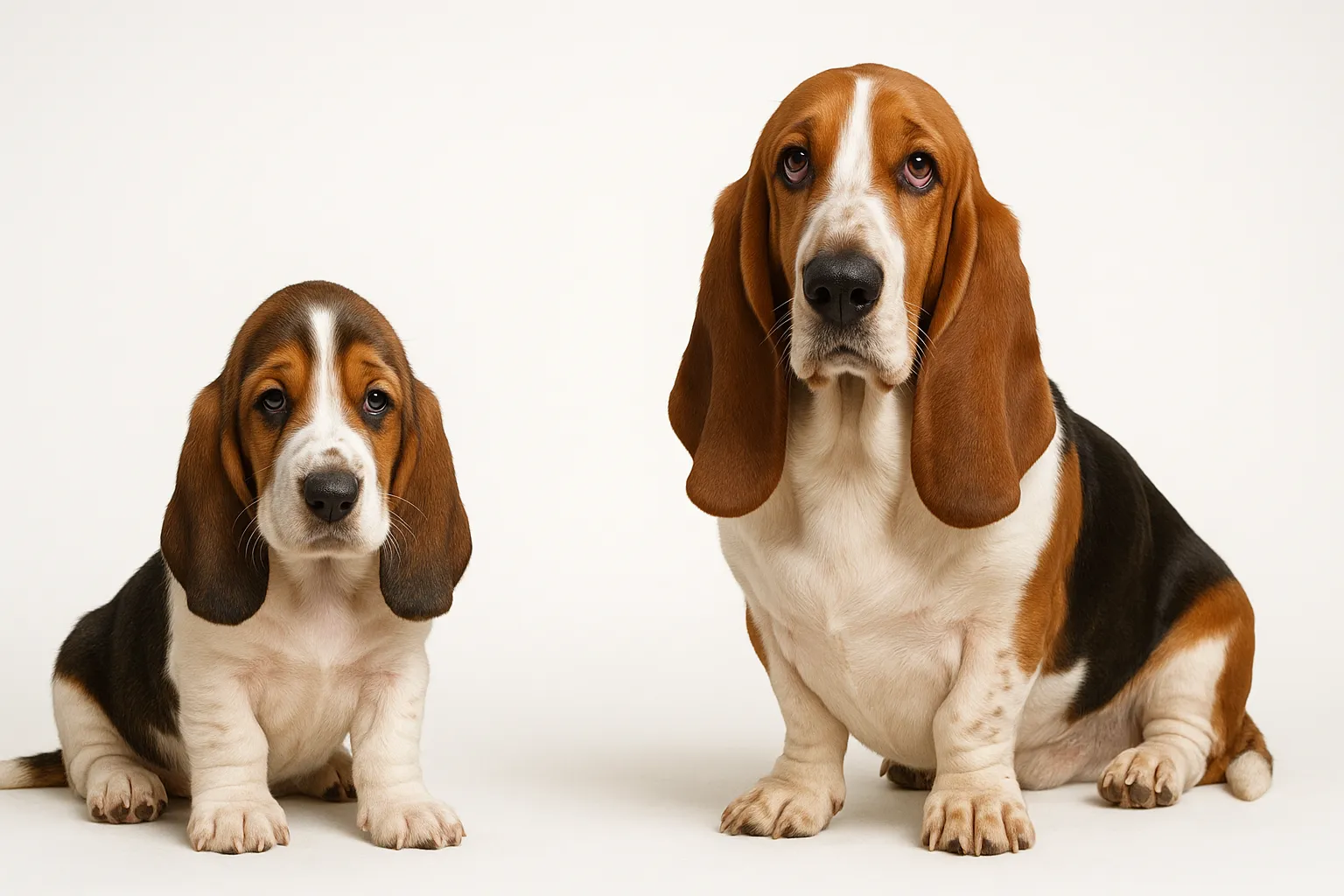
A Body Built for Scent, Not for Forgiveness
Basset Hounds live 10-12 years. That number is honest, but it hides the real story: how those years feel depends almost entirely on three things you can control. Weight, spine health, and ear care determine whether your Basset ages gracefully or declines through slow, preventable deterioration.
Their conformation — long body, short legs, heavy frame, pendulous ears — was engineered for ground-level scent tracking. It is brilliant at that job. But it also means every extra pound loads a spine that was already under structural stress, every humid ear canal is a petri dish waiting to culture, and every jump off the couch is a spinal event.
Breed-Specific Risk Profile
Obesity: The Risk Multiplier
Basset body shape and appetite patterns make gradual weight gain the most common long-term threat. Extra weight does not just shorten lifespan — it accelerates every other condition on this list.
Ear Infections: The Chronic Cycle
Pendulous ears and canal moisture drive recurrent otitis if maintenance is inconsistent. Left untreated, ear infections progress from occasional flares to permanent canal remodeling.
Spinal Disorders: Where Minutes Matter
Back pain and neurologic signs warrant rapid triage. Delayed care can mean the difference between recovery and permanent damage.
Arthritis: Cumulative Load Over Time
Joint stress accumulates with age and excess body weight. The Basset’s low-slung frame means joints absorb forces other breeds distribute more evenly.
Eye Conditions
Ocular irritation should be escalated early to preserve comfort and vision. The breed’s facial structure creates exposure and drainage issues that require monitoring.
Your Highest-Return Health Investments
- Keep body condition tightly controlled
- Protect spine with low-impact movement
- Stay aggressive on ear hygiene and infection follow-up
Evidence-Based Longevity Priorities
Weight Precision Is Not Optional
Measured feeding and monthly weight checks reduce burden on joints and spine. In a Basset Hound, the margin between “a little heavy” and “structurally compromised” is narrower than in most breeds.
Daily Movement That Protects the Spine
Use predictable low-impact exercise and avoid repetitive high-jump/drop patterns. A ramp to the couch is not an indulgence — it is a spinal health intervention.
Breaking the Ear Infection Cycle
Treat early flare signs and complete follow-up to prevent chronic canal remodeling. The goal is not just resolving each infection but preventing the structural ear damage that makes future infections inevitable.
Catching Pain Before It Becomes Obvious
Subtle reluctance to move, climb, or turn should prompt earlier orthopedic or neurologic assessment. Basset Hounds do not always show pain the way other breeds do — their stoic, easygoing demeanor can mask significant discomfort.
Breed-Specific Research
These deep dives add stronger context for day-to-day longevity decisions in Basset Hounds.
- Canine Obesity and Lifespan: What the Evidence Actually Supports: improves escalation timing decisions for early warning signs.
- Muscle and Mobility Longevity Protocol for Aging Dogs: clarifies monitoring tradeoffs for this breed’s key risk pathways.
- Elimination Diet Protocol for Dog Allergies: helps prioritize earlier action when health markers begin to drift.
Use this reading set as pre-visit prep so owner observations and veterinary decisions stay aligned.
Using DNA Data to Guide Prevention
The practical value of genetic testing comes from linking results to monitoring cadence and owner execution — not from treating test data as predictive certainty. Consider hip and elbow scoring (OFA or PennHIP) to quantify orthopedic risk and CERF eye exam or PRA gene testing to detect heritable eye disease.
- A breed-appropriate genetic panel gives you a starting point. Convert each result into a follow-up interval and a specific metric to track over time.
- Link your monitoring plan to Obesity and Ear Infections first. When test results drive concrete changes in screening cadence or intervention, testing earns its cost.
- Your Basset Hound’s health story unfolds across years, not appointments. A continuous record linking genetic data, lab trends, and daily observations makes each veterinary conversation more productive.
- Genetic results mean different things at different ages. What looked like a low-risk finding at two years old may deserve closer monitoring by age seven when the clinical picture has changed.
Results without follow-through are noise. Results that change your screening schedule, your daily observations, or your intervention threshold — those are signal.
Breeding History & Health Implications
The Basset Hound was bred for tracking endurance and scent-driven work at ground level. That heritage — the low clearance, the heavy bone, the relentless nose — creates a practical risk profile that every owner can address through structured prevention.
- Structural load patterns from the breed’s unique body geometry demand proactive orthopedic and spinal surveillance across adulthood.
- Channel your prevention effort toward Obesity, Ear Infections, and Spinal Disorders, the conditions where this breed’s genetic and functional history creates the greatest vulnerability.
- When you see the same subtle finding twice — a slight limp, a missed meal, a slower recovery — treat it as a signal, not a coincidence. Tighten your monitoring before it compounds.
- Prevention strategies that never get updated become prevention rituals. Revisit yours regularly and adjust based on what the data actually shows.
Use breeding history to build the initial watchlist. Use your dog’s own health trends to decide when surveillance becomes intervention.
The Screening Calendar That Matters
- Puppy to 2 years: establish feeding precision, ear-care routines, and spine-safe movement habits.
- 3 to 8 years: annual preventive care with mobility and otitis trend review.
- 9+ years: semiannual visits with spinal, orthopedic, and sensory reassessment.
Your Long-Term Health Trajectory
Basset Hounds can maintain good quality years when owners prioritize weight discipline, early ear treatment, and rapid escalation of spine-related red flags. The breed rewards consistency — not heroic interventions, but steady daily habits that prevent the slow accumulation of damage.
The Changes That Sneak Past You
Long-term decline often starts as small changes that owners normalize too quickly:
- Gradual waist-line loss on body-condition scoring related to Obesity — “he has always been a big boy” is not a body condition assessment
- Mild ear odor dismissed as normal that actually signals Ear Infections progression
- Gradual onset of back pain, limb weakness, or paralysis that marks Spinal Disorders — signs that become harder to reverse with every day of delay
If baseline function has been drifting for 7-10 days, treat it as a prevention failure signal and reassess early.
Design Your Home for a Low-Clearance Dog
Basset Hounds benefit from environmental design more than intensity-based exercise plans. Their body geometry increases strain from repeated awkward transitions.
Run a home ergonomics audit every quarter:
- verify non-slip routes between sleep, food, and outdoor areas
- minimize repetitive high-angle entries/exits (car, bed, couch)
- prioritize controlled ramps over jump assistance during fatigue
- reassess setup after any pain flare or gait change
Ergonomic consistency reduces cumulative spinal load and helps preserve day-to-day comfort.
Quarterly Prevention Audit
Basset Hound outcomes usually decline through small repeated process gaps, not one obvious event. Run a brief audit every quarter:
- Which daily prevention habit has drifted most since the last review?
- Are early signals from Obesity or Ear Infections showing up more often?
- Did escalation happen at the defined threshold, or after visible deterioration?
- Which household handoff or routine inconsistency needs correction this quarter?
Treat each audit as an operating reset to keep prevention proactive instead of reactive.
Monthly Decision-Log Prompt
Each month, document one decision: the trigger signal, what you changed, and the 2-4 week outcome trend. This keeps the plan evidence-driven and prevents reactive drift.
Traction and Nail Stability Check
Low-clearance body mechanics mean small footing problems drive chronic strain. Add a monthly traction audit:
- check high-traffic floors for slip points and add non-slip runners where needed
- keep nails short enough to maintain stable paw contact and clean push-off
- review cornering behavior for skid, hesitation, or repeated near-slips
- adjust walk routes and pace when surface control worsens
This low-cost routine reduces recurring torque stress on spine and joints across daily movement.
Catching Weight Creep Before It Compounds
Basset Hounds often gain weight gradually while activity appears unchanged, quietly amplifying spine and joint risk.
- set a tight monthly weigh-in cadence with a recorded trendline
- trigger intervention at early upward drift, not at visible obesity
- adjust treat budgets before reducing mobility opportunity
- pair weight changes with gait and rise-time checks
Early response to weight creep protects mobility durability in low-slung breeds.
Protecting Joints During Scent Work
Basset Hounds combine strong scent-drive persistence with heavy front-end load, which can hide early mobility decline. Use a structured workload rule:
- split long sniff walks into shorter sessions with recovery gaps
- avoid repetitive stair cycles and high-impact pivoting games
- track morning rise stiffness and post-walk recovery time weekly
- escalate if endurance drops while body weight is unchanged
This keeps enrichment high while reducing the slow musculoskeletal overuse that quietly shortens healthspan.
Spine Protection as Daily Habit
Daily environment design matters as much as exercise planning:
- prioritize non-slip flooring in common movement routes
- block unsupervised stair access during pain flares
- avoid repetitive jumping on/off furniture
Reducing routine torque events lowers cumulative spinal strain and flare frequency.
Breaking the Ear Infection Recurrence Loop
Recurrent Ear Infections are often managed too late in this breed. Use a strict recurrence protocol:
- escalate at first return of odor or head shaking rather than waiting for pain
- confirm cytology-guided treatment and follow-up clearance
- review moisture exposure and allergy contributors after each flare
This approach reduces chronic canal remodeling and antibiotic churn over time.
Condition-Specific Monitoring Triggers
Keep these condition-specific watchpoints on your radar throughout the year:
- Obesity: Weigh your dog monthly and track the trend line, not just individual readings. A half-pound gain per month adds up to six pounds in a year — enough to meaningfully shorten lifespan.
- Ear Infections: Monitor ear odor and appearance weekly. If infections recur more than twice a year, investigate for underlying allergies rather than treating each episode in isolation.
- Spinal Disorders: Track sleep-wake pattern, disorientation events, and behavior changes; escalate for sudden neurologic shifts or repeated episodes.
- Arthritis: Monitor stiffness duration after rest. Brief morning stiffness is common, but stiffness lasting beyond 15-20 minutes or worsening over weeks signals progression.
- Eye Conditions: Track vision confidence, eye discharge, and redness; escalate for pain signs, squinting, or sudden vision changes.
12-Month Longevity Execution Plan
Use this quarterly framework to keep prevention proactive instead of reactive:
Quarter 1: Baseline and Risk Mapping
- Document where your dog stands now — weight, body condition score, mobility quality, and behavioral patterns — so future changes are measured against real data
- Sit down with your vet and build a written prevention plan tied to the breed-specific conditions that matter most
- Standardize feeding amounts and treat limits across everyone in the household — inconsistency is the fastest path to weight gain
Quarter 2: Adherence and Early Drift Control
- Take stock of the first quarter: which prevention habits stuck, which fell off, and what needs restructuring to work in real life?
- Watch for subtle changes in any health marker and shorten your monitoring interval when something starts trending
- Bring any change in eating behavior, exercise tolerance, respiratory effort, gait, or mental sharpness to your vet’s attention early
- Film a new gait video and compare side by side with Q1 footage — visual comparison catches changes you cannot see day to day
Quarter 3: Midyear Reassessment
- Evaluate whether the prevention strategies from H1 actually reduced risk or just created the appearance of progress
- Recalibrate your screening schedule based on real-world findings, not the plan you wrote in January
- Adjust activity levels for weather, aging, and any changes in how your dog recovers from exercise
- Reassess joint supplement efficacy and adjust dosing or add modalities if stiffness persists
Quarter 4: Senior-Readiness Update
- Build next year’s prevention calendar from this year’s data: what screening intervals worked, what needs to change?
- Sharpen your escalation thresholds: which early signs of pain, cognitive change, or mobility loss should trigger action?
- Close out the year with a written summary of findings and a specific action plan for the next twelve months
When to Escalate Fast
Contact your veterinarian immediately if you observe any of these:
- Abrupt loss of interest in food paired with notable energy decline or behavioral withdrawal
- Acute breathing difficulty, loss of consciousness, or sudden onset of neurologic signs such as seizures or disorientation
- Repeated vomiting that does not resolve within a few hours, abdominal guarding, or a visibly swollen belly
- Any abrupt deterioration in mobility, comfort level, or engagement that was not present 24 hours ago
- Sudden paralysis, inability to stand, or loss of bladder/bowel control
Breed-Specific Priorities This Year
Concentrate on the prevention actions most likely to extend your Basset Hound’s healthy years. Reassess quarterly with your vet and adjust based on what the data actually shows.
- Keep body condition tightly controlled
- Protect spine with low-impact movement
- Stay aggressive on ear hygiene and infection follow-up
Home Tracking Dashboard
Monitor these indicators monthly so gradual shifts do not go unnoticed:
- Body weight trend and body-condition score
- Food interest, daily water consumption, and stool or urinary changes
- Daily willingness to engage in walks, play, and normal household activity
- Any changes in comfort, mobility, or behavior
- Exercise stamina relative to their personal norm, plus recovery time and next-day stiffness
- How well your dog sleeps, whether daily behavior patterns remain stable, and any changes in social interest
- Condition-specific early drift markers tied to obesity, ear infections, spinal disorders
Diet and Feeding Strategy
Nutrition operations work best when intake precision is tied to life-stage transitions. Use Feeding Guide for Medium Breeds as the baseline and add Probiotics for Dogs only when endpoints are explicit and reassessment cadence is pre-defined.
Run one feeder-of-record workflow and tie monthly adjustments to early signals linked with Obesity.
Frequently Asked Questions
How long do Basset Hounds live? Basset Hounds typically live 10-12 years. That number is honest, but how those years feel depends almost entirely on three things you can control: weight discipline, spine protection, and ear care. The Bassets that age well are the ones whose owners treat prevention as a daily habit, not an annual conversation.
Are Basset Hounds prone to back problems? Yes. Their long body and short legs create significant spinal stress, and intervertebral disc disease is a real concern. Every jump off the couch is a spinal event in this breed. Use ramps for furniture and car access, block unsupervised stair access during pain flares, and treat any back pain or neurologic signs — limb weakness, reluctance to move, loss of bladder control — as a same-day emergency. Minutes can determine outcomes.
Why do Basset Hounds get so many ear infections? Those pendulous ears create a warm, moist environment that bacteria and yeast thrive in. Without consistent weekly cleaning and drying, occasional flares become chronic, and chronic infections cause permanent canal remodeling that makes future infections harder to treat. The cycle is preventable with a 5-minute weekly routine. Post-water care is essential for swimming or bathing.
Are Basset Hounds easy to overfeed? Very much so. Basset body shape and strong appetite drive make gradual weight gain the single most common long-term threat. The margin between “a little heavy” and “structurally compromised” is narrower in this breed than almost any other. Measured feeding, no free-feeding, and monthly weigh-ins are essential. When multiple family members feed the dog without coordinating, intake control fails silently — and in a Basset, excess weight shows up in the spine.
Do Basset Hounds hide pain? Their easygoing, stoic demeanor can mask significant discomfort. Subtle reluctance to move, climb, or turn should prompt earlier orthopedic or neurologic assessment rather than being written off as “just being a Basset.” Objective monitoring — watching for changes in gait, rise time, and activity level — is more reliable than waiting for your dog to vocalize or limp.
References
[1] AKC Basset Hound Breed Information [2] Merck Veterinary Manual [3] AAHA Canine Life Stage Guidelines
Related reads
Related Reading
Continue exploring