A Powerful French Working Dog With Three Preventable Threats
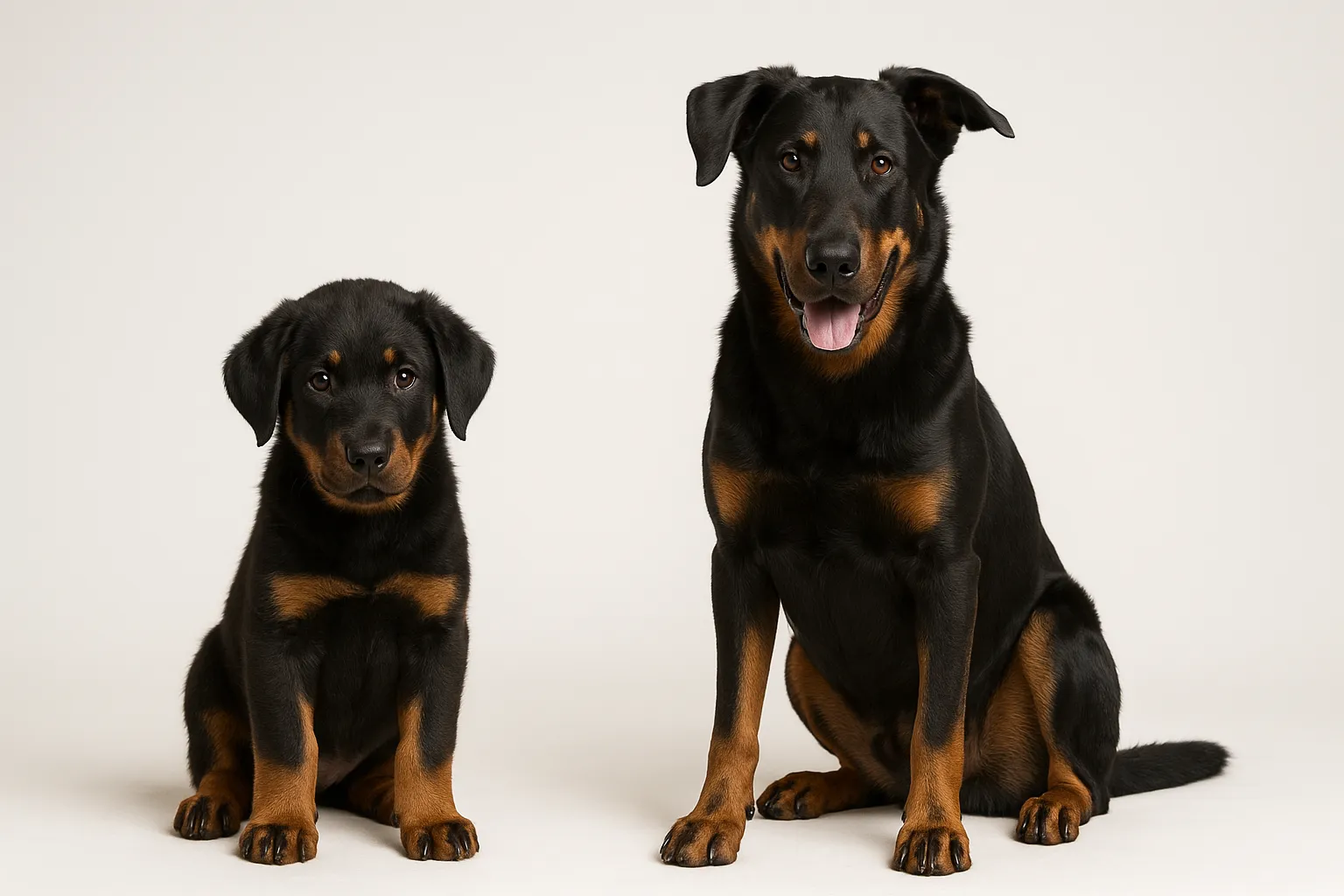
The Beauceron is one of the few herding breeds developed entirely in France — powerful, athletic, and distinguished by the double dewclaws on its hindlimbs that serve as a breed hallmark. At 70-110 lbs with a typical lifespan of 10-12 years, their longevity reflects their large body size. But the most impactful health decisions happen before symptoms appear.
Hip dysplasia, bloat (GDV), and dilated cardiomyopathy are the three conditions that most often shorten Beauceron lives. Each one is addressable through proactive screening or preventive intervention. The breed’s working selection history has maintained good structural health relative to many purpose-bred large breeds — an advantage that rewards early, informed management.
Health Risks Worth Knowing
Hip Dysplasia
Hip dysplasia is the primary structural concern in Beaucerons. OFA hip and elbow evaluation at 24 months provides the structural baseline for both breeders and owners. Lean body condition and omega-3 supplementation support joint health. Dogs with diagnosed hip dysplasia benefit from a veterinarian-guided program including physical rehabilitation and NSAIDs for pain management during flare episodes.
See the Hip Dysplasia guide for full prevention and management detail.
Bloat (GDV): A Surgical Emergency You Can Partially Prevent
Beaucerons have a deep-chest conformation with meaningful GDV risk. Prophylactic gastropexy — performed at spay/neuter — eliminates the volvulus (stomach twist) component. Feed twice daily and avoid vigorous exercise for 2 hours after eating. Acute GDV (distended abdomen, unproductive retching, collapse) is a life-threatening emergency requiring immediate surgical care. This is a condition where knowing the signs saves lives.
See the Bloat (GDV) guide for full prevention and management detail.
Dilated Cardiomyopathy: The Silent Heart Problem
DCM occurs in Beaucerons at above-average rates for large herding breeds. Annual cardiac auscultation from age 5 detects early murmurs or rhythm changes. A baseline echocardiogram at age 5-6 provides structural data. The critical insight: early-stage DCM treated with pimobendan before heart failure develops prolongs survival significantly. Detection through regular monitoring is the most impactful cardiac longevity intervention available.
See the Dilated Cardiomyopathy guide for full prevention and management detail.
What Actually Moves the Needle
Conditioning a Working Dog That Stays Athletic Into Middle Age
Unlike some giant breeds, Beaucerons maintain high exercise capacity well into middle age. Structured activity — herding, Schutzhund/IPO work, agility, tracking — is appropriate and beneficial. Under-exercised Beaucerons develop behavioral problems from unmet working drive. The transition to senior exercise patterns should begin around age 8 with gradual reduction in high-impact work, not an abrupt shift from full speed to inactivity.
Double Dewclaw Care: A Breed-Specific Detail That Matters
Beaucerons are one of few breeds with double dewclaws on the hindlimbs — a breed standard characteristic. These dewclaws do not wear naturally with exercise and must be trimmed regularly. Neglected rear dewclaws become ingrown or caught on obstacles. Monthly nail and dewclaw trimming prevents complications. Some owners work with veterinarians to remove non-functional rear dewclaws, though retention is preferred by breed standards.
Cardiac Monitoring That Catches DCM Early
Annual cardiac auscultation from age 5 detects the early murmur or rhythm abnormality that precedes clinical DCM. Any abnormal finding should trigger referral to a veterinary cardiologist for echocardiogram and Holter monitoring. Early-stage DCM treated with pimobendan before heart failure prolongs survival significantly. The difference between a Beauceron that dies of heart failure and one that lives years longer with managed DCM often comes down to whether that first murmur was caught at a routine visit.
The Three Things That Matter Most
Start here — these are the highest-impact moves for Beauceron longevity:
- OFA hip and elbow evaluation at 24 months — hip dysplasia is the primary structural concern
- Prophylactic gastropexy for GDV prevention — deep chest creates meaningful bloat risk
- Annual cardiac auscultation from age 5 — dilated cardiomyopathy documented in the breed
Anchor your next vet conversation to these targets and recalibrate every quarter. For prevention and management details by condition, use Hip Dysplasia, Bloat, Heart Disease.
Evidence-Based Longevity Priorities
Why Body Composition Drifts Faster in Large Breeds
Maintaining stable weight and lean muscle mass is one of the highest-yield longevity interventions for Beaucerons. Joint load and metabolic strain rise quickly when body composition drifts — the physics of a 100 lb dog are unforgiving. Herding dogs require stable muscle-to-fat ratios for long-term joint health, and the Beauceron’s sustained movement patterns amplify the consequences of any imbalance.
Condition-Focused Prevention Stack
The highest-return prevention targets are Hip Dysplasia, Bloat, and Heart Disease. The cost of early action is almost always lower than the cost of delay — in treatment complexity, in quality of life, and in total lifespan.
A Working Brain Needs Work
Beaucerons maintain better long-term stability when workload, recovery, and mental stimulation are intentionally balanced. Without structured cognitive engagement, these dogs develop compulsive behaviors or chronic stress patterns that erode healthspan. A bored Beauceron is a stressed Beauceron, and chronic stress accelerates aging.
Preventive Screening Cadence
Schedule veterinary reassessment intervals by age band and trend changes rather than waiting for obvious deterioration. Planned checkpoints focused on orthopedic function and gait quality improve early detection and intervention timing.
Breed-Specific Research
Use these evidence deep dives to add mechanism-level context to your Beauceron longevity plan:
- Canine Size Lifespan Biology: size-lifespan tradeoffs relevant to a large French herding breed
- Muscle And Mobility Longevity Protocol: joint health and physical conditioning for a large working herding dog
- Dilated Cardiomyopathy Screening In Dogs: DCM monitoring and early detection framework for Beaucerons
Using DNA Data to Guide Prevention
The practical value of genetic testing comes from linking results to monitoring cadence and owner execution — not from treating test data as certainty. Consider MDR1 gene testing to guide medication safety and hip and elbow scoring (OFA or PennHIP) to quantify orthopedic risk.
- Target your testing to the conditions this breed actually gets. Then track findings over time — a genetic predisposition only matters when clinical evidence starts to confirm it.
- Anchor your initial monitoring to Hip Dysplasia and Bloat. Testing matters when it changes what you measure, how often, and what triggers escalation.
- A running health log that combines lab work, clinical notes, and your daily observations gives your vet a clearer picture in five minutes than a full workup without history.
- The right monitoring cadence at two years old is wrong at nine. Recalibrate at every life-stage transition and whenever you see sustained drift in energy, appetite, or mobility.
Testing is only as good as the decisions it drives. If nothing changes after you get the results, the test was premature or unnecessary.
Breeding History & Health Implications
The Beauceron was bred for sustained movement, vigilance, and rapid decision-making under pressure — both herding livestock and protecting property. That legacy creates a practical risk profile every owner can address through structured prevention.
- The mechanical stress this breed’s frame sustains over a lifetime makes orthopedic surveillance a non-negotiable part of the prevention plan.
- Focus your risk surveillance on Hip Dysplasia, Bloat, and Heart Disease — these are the conditions where this breed’s ancestry creates the most actionable risk profile.
- The owner who notices “something is slightly off for the third time this month” catches problems earlier than the one waiting for an obvious crisis.
- Course-correct regularly. The point of ongoing monitoring is not to confirm the original plan — it is to improve it as your dog’s health picture becomes clearer.
Start with what the breed’s history predicts. Adjust based on what your Beauceron’s body actually shows over time.
When to Screen, Test, and Reassess
- Puppy to 2 years: giant-breed puppy nutrition, OFA at 24 months
- 3-7 years: annual cardiac auscultation, annual wellness panel, monthly BCS
- 8+ years: senior panel every 6 months, echocardiogram baseline by age 5-6, orthopedic monitoring
The Feeding Plan That Matters
Beaucerons need large-breed adult food with measured portions appropriate for activity level. Discuss prophylactic gastropexy at the spay/neuter appointment — it is the single most impactful GDV prevention measure. Feed twice daily given bloat risk. Omega-3 supplementation supports joint health. Lean body condition is the most impactful ongoing management parameter you can track.
What the Future Can Hold
Beaucerons with OFA hip screening, prophylactic gastropexy, and cardiac monitoring are positioned for healthy lives in the 10-12 year range. Their working breed constitution and French herding selection pressure support reasonable longevity — and each of the three major threats (hips, bloat, heart) has a clear prevention or early-detection pathway. The breed rewards owners who act before symptoms appear.
The Changes That Sneak Past You
Long-term decline often starts as small changes that owners normalize too quickly:
- Subtle hind-limb stiffness after rest related to Hip Dysplasia that gets dismissed as a slow start to the morning
- Intermittent mild abdominal discomfort after eating that may signal early Bloat risk patterns
- Night coughing, fainting, or fluid accumulation pointing toward Heart Disease — signs that become harder to reverse with every week of delay
If baseline function has been drifting for 7-10 days, treat it as a prevention failure signal and reassess early.
Additional Health Risks to Monitor
Based on breed predisposition data, Beauceron owners should also be aware of:
Frequently Asked Questions
How long do Beaucerons live?
Beaucerons typically live 10-12 years. Hip evaluation, prophylactic gastropexy, and annual cardiac monitoring from age 5 are the key longevity investments for this breed.
What are the double dewclaws in Beaucerons?
Beaucerons are one of few breeds required to have double dewclaws on the rear legs as a breed standard requirement. These are non-functional and must be kept trimmed to prevent injury. They are considered a hallmark of breed authenticity in France.
Are Beaucerons good for first-time dog owners?
No. Beaucerons are serious working dogs with significant physical and mental demands. They need experienced owners who provide consistent leadership, training, and substantial daily activity. Without this, they become difficult to manage and may develop behavioral problems.
How much exercise does a Beauceron need?
They require 1-2 hours of vigorous exercise daily. Herding, protection sports, agility, and tracking are all excellent outlets. Mental challenge is as important as physical exercise — an understimulated Beauceron will find its own outlets, and you will not like them.
Are Beaucerons related to Dobermans?
No direct relationship exists, though they share a black-and-tan coat pattern. The Beauceron is a French herding breed; the Doberman is a German protection/working breed developed from a different European mix. Their physical similarities are coincidental.
References
[1] American Beauceron Club. beauceronamericaclub.org. [2] OFA health statistics by breed. ofa.org. [3] AKC breed standards. akc.org. [4] DCM in large breeds: Dukes-McEwan J et al. J Vet Cardiol. 2003. [5] GDV prophylactic gastropexy: Glickman LT et al. JAVMA. 1994.
Related reads
Related Reading
Continue exploring