Built by the Soviet Military, Sustained by Owner Discipline
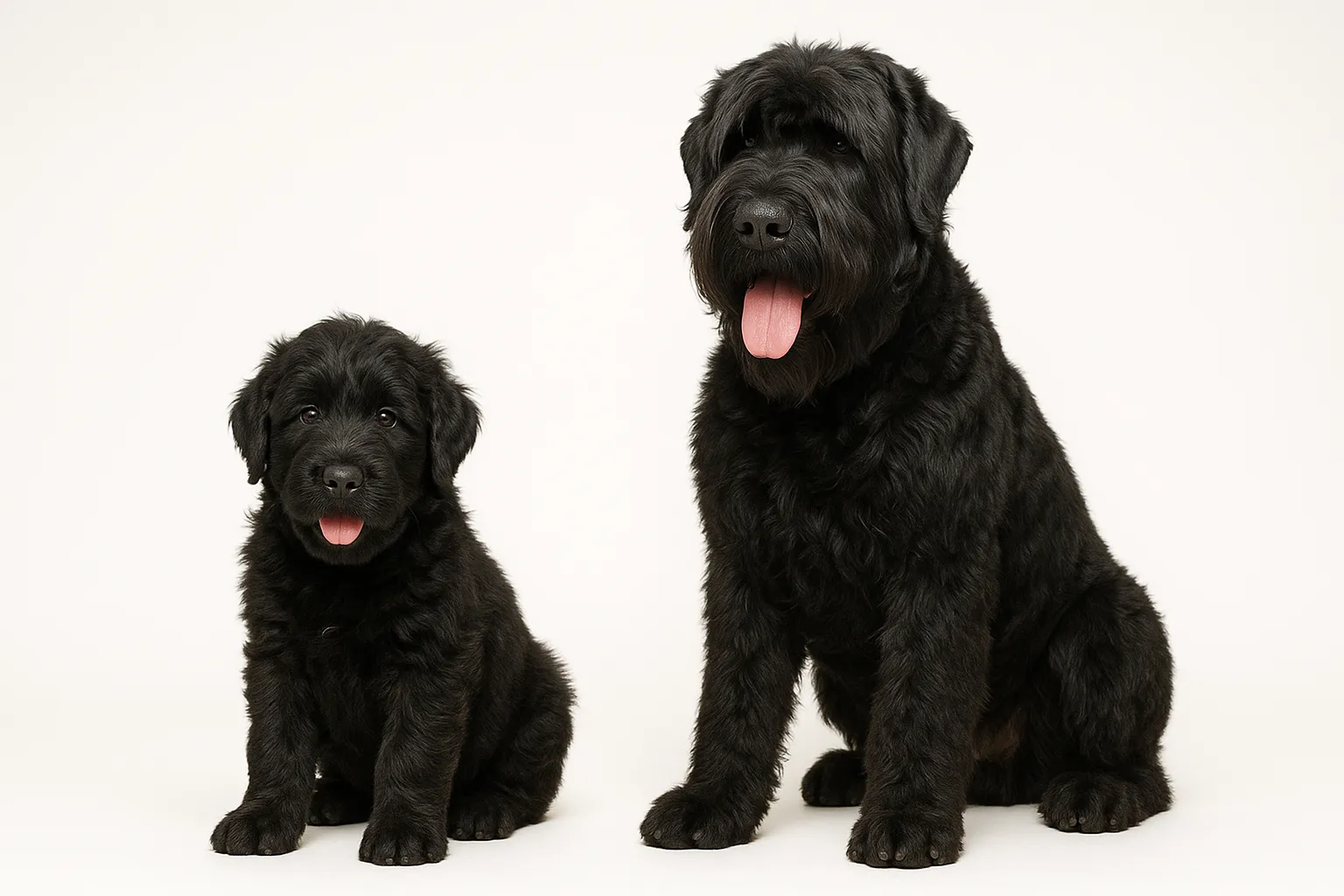
The Black Russian Terrier (Russkiy Tchiorny Terrier) is a large, powerful working breed forged at the Soviet military’s Red Star Kennel in the mid-20th century. Giant Schnauzer, Rottweiler, Airedale, and several other breeds contributed to its creation. The result: an imposing black-coated dog with a thick, wiry, water-resistant coat and the confidence to match.
Lifespans of 10-12 years reflect the realities of a large working frame. Primary health concerns include hip and elbow dysplasia, progressive retinal atrophy, and cardiac disease. But a counterbalancing factor exists: the breed’s Soviet military development prioritized functional health over appearance. That selection pressure helps offset some of the orthopedic risk inherent in dogs this size.
The Health Conditions That Define This Breed
Hip Dysplasia
Hip dysplasia ranks as the primary structural concern. OFA hip evaluation at 24 months alongside elbow evaluation provides a comprehensive orthopedic baseline.
The breed’s large frame and working heritage make lean body condition and controlled exercise during skeletal development especially important.
See the Hip Dysplasia guide for full prevention and management detail.
Elbow Dysplasia
Elbow dysplasia is documented in the breed and should be evaluated at the same 24-month OFA screening. Forelimb lameness in a young BRT requires radiographic evaluation before secondary joint changes develop. Joint-supportive management slows long-term progression.
See the Elbow Dysplasia guide for full prevention and management detail.
Progressive Retinal Atrophy
Progressive retinal atrophy (prcd-PRA) is documented in Black Russian Terriers. DNA testing identifies clear, carrier, and affected dogs. Responsible breeders test all breeding stock — carrier-to-carrier pairings produce 25% affected offspring. Annual CAER exams provide clinical monitoring even for DNA-tested clear dogs.
See the Progressive Retinal Atrophy guide for full prevention and management detail.
The Coat Is Not Optional Maintenance
The BRT’s thick, wiry double coat requires professional grooming every 6-8 weeks to prevent severe matting. The characteristic beard and mustache trap food and moisture, demanding daily brushing and cleaning.
Without regular grooming, BRT coats felt into solid mats that must be shaved — a welfare concern for the dog, not just a cosmetic issue. Budget for professional grooming throughout the breed’s 10-12 year lifespan as a non-negotiable care cost.
A Military Working Dog in Your Living Room
Black Russian Terriers were developed as confident, courageous military working dogs — not companion pets. They require an experienced owner who provides consistent leadership and daily mental engagement.
Without clear structure and appropriate work, BRTs can become overprotective and difficult to manage. They excel in protection sports, obedience, tracking, and agility. Even 15-20 minutes of structured daily training maintains the mental engagement these dogs need. Skipping it has consequences.
Protecting Joints in a Heavy Dog
At 80-130 lbs, the BRT carries significant mechanical load on hips and elbows with every step. Strict lean body condition from puppyhood is the most powerful joint-protective intervention available.
Giant breed puppy food with appropriate calcium-to-phosphorus ratios prevents developmental orthopedic disease during growth. Starting joint supplementation by age 3-4 supports long-term function. Every extra pound a BRT carries accelerates joint wear.
The Three Things That Matter Most
The actions most likely to extend your Black Russian Terrier’s healthy years:
- OFA hip and elbow evaluation at 24 months — orthopedic disease is the primary structural concern
- DNA testing for progressive retinal atrophy (prcd-PRA) — documented in the breed
- Annual CAER eye exam from age 1 — multiple eye conditions documented in Black Russian Terriers
Make these the backbone of your Black Russian Terrier’s preventive care calendar. Each quarter, assess whether you are on track or need to escalate. Detailed protocols live in Hip Dysplasia, Elbow Dysplasia, Progressive Retinal Atrophy Pra .
Body Composition and Muscle Maintenance
Body composition control predicts long-term function more reliably than most other single factors in this breed. As a large breed, joint load and metabolic strain rise quickly when composition drifts. The BRT’s history of weight-pulling and guarding means muscle maintenance directly affects functional longevity.
Condition-Focused Prevention Stack
The conditions that most threaten longevity and quality of life — Hip Dysplasia, Elbow Dysplasia, Progressive Retinal Atrophy Pra — are also the ones most responsive to early, sustained prevention. Start here.
Stress, Routine, and Recovery
Household rhythm quality directly affects BRT healthspan. Inconsistent schedules and unclear role structure often show up as behavior drift, vigilance patterns, or recovery problems before physical decline becomes visible.
Preventive Screening Cadence
Prevention fails when veterinary visits are only triggered by visible problems. Build screening intervals into your calendar and tighten them when tracking data shows any sustained drift.
Breed-Specific Research
Use these evidence deep dives to add context to your Black Russian Terrier longevity plan:
- Hip Dysplasia Lifetime Load Management: hip and elbow dysplasia management in a large working breed
- Genetic Testing For Dogs Clinical Roi: PRA genetic testing and orthopedic screening in Black Russian Terriers
- Exercise Protocols By Breed Size: exercise management for a large working breed
From Genetic Data to Monitoring Decisions
For Black Russian Terriers, genetic testing delivers the most value when results directly change what you measure, how often, and what triggers escalation. Hip and elbow scoring (OFA or PennHIP) quantifies orthopedic risk. Baseline echocardiography establishes cardiac structure and function.
- A well-chosen initial panel gives you a risk map. Follow-up assessments at regular intervals tell you which risks are materializing and which remain theoretical.
- Start your monitoring plan with Hip Dysplasia and Elbow Dysplasia so every test outcome has a clear next step attached to it.
- Document weight, energy level, appetite patterns, and any changes you notice between vet visits. When combined with clinical data, home observations often reveal the earliest signs of drift.
- Genetic results mean different things at different ages. What looked like a low-risk finding at two years old may deserve closer monitoring by age seven when the clinical picture has changed.
The point of testing is not the result — it is what you do differently because of it.
What Breeding History Tells You
The BRT was bred for guarding, draft work, and protective temperament. That legacy creates structural load patterns demanding proactive orthopedic surveillance and cardiac aging patterns requiring respiratory rate tracking and murmur reassessment.
- Both orthopedic and cardiac risks require monitoring frequency calibrated to actual risk, not just annual wellness defaults.
- Breed heritage and population health data both point to Hip Dysplasia, Elbow Dysplasia, Progressive Retinal Atrophy Pra as the surveillance priorities that deserve the tightest monitoring cadence.
- When you see the same subtle finding twice — a slight limp, a missed meal, a slower recovery — treat it as a signal, not a coincidence. Tighten your monitoring before it compounds.
- Anchor your prevention plan to the latest data, not the original risk assessment. What your Black Russian Terrier needed at two years old and what they need at eight are different conversations.
Breeding history narrows the search. Serial monitoring data makes the call.
Your Veterinary Screening Roadmap
- Puppy to 18 months: giant breed growth management, controlled exercise
- 2 years: OFA hip and elbow evaluation, prcd-PRA DNA testing, CAER exam
- 3-7 years: annual CAER exam, cardiac auscultation from age 4, wellness bloodwork
- 8+ years: senior panel biannually, mobility assessment, coat maintenance, dental care
Feeding for Longevity
Black Russian Terriers should be fed quality large-breed adult food. Giant breed puppy food during development prevents orthopedic disease. Strict lean body condition throughout life is essential — overweight BRTs experience significantly accelerated joint disease. Omega-3 supplementation supports joint, coat, and cardiovascular health.
The Longevity Picture
Black Russian Terriers with OFA orthopedic screening, PRA genetic testing, and appropriate large working dog management can live active lives reaching 11-12 years. Their Soviet working heritage emphasizes functional health — a foundation that supports good longevity when breed-specific care remains consistent.
The Drift Patterns Owners Miss First
Healthspan erosion in a BRT typically starts with subtle shifts that are easy to miss:
- Hind-limb stiffness after rest related to Hip Dysplasia — often dismissed as “just getting up slow”
- Intermittent forelimb changes tied to Elbow Dysplasia that come and go
- Gradual visual hesitation tied to Progressive Retinal Atrophy Pra that develops so slowly it seems normal
Seven to ten days of sustained change in appetite, mobility, energy, or behavior is the threshold for escalating to your vet rather than continuing to observe.
Additional Health Risks to Monitor
Based on breed predisposition data, Black Russian Terrier owners should also be aware of:
Frequently Asked Questions
How long do Black Russian Terriers live?
Black Russian Terriers typically live 10-12 years. OFA orthopedic screening, PRA genetic testing, and lean body condition management are the primary longevity investments.
Are Black Russian Terriers good family dogs?
BRTs are devoted to their family but require experienced owners who can provide firm, consistent leadership. They can be territorial and protective. Early socialization is essential. They are not recommended for first-time dog owners.
Do Black Russian Terriers shed?
BRTs have a wiry double coat that sheds minimally but requires significant grooming maintenance. Without regular grooming, the coat forms severe mats. Professional grooming every 6-8 weeks is required.
Are Black Russian Terriers truly terriers?
Despite the name, Black Russian Terriers are classified in the AKC Working Group, not the Terrier Group. The name reflects the terrier breeds used in their development, not a behavioral or classification terrier characteristic.
How much exercise does a Black Russian Terrier need?
BRTs need 60-90 minutes of vigorous daily exercise and significant mental engagement. They excel in protection sports, tracking, and obedience competition. Without adequate outlet, they become anxious and difficult.
References
[1] Black Russian Terrier Club of America. brtca.org. [2] OFA health statistics. ofa.org. [3] Soviet Red Star kennel historical documentation. [4] AKC breed information. akc.org. [5] Prcd-PRA genetics in working breeds: Zangerl U et al. Mol Vis. 2006.
Related reads
Related Reading
Continue exploring