Every Pound Matters When Your Dog Weighs 200
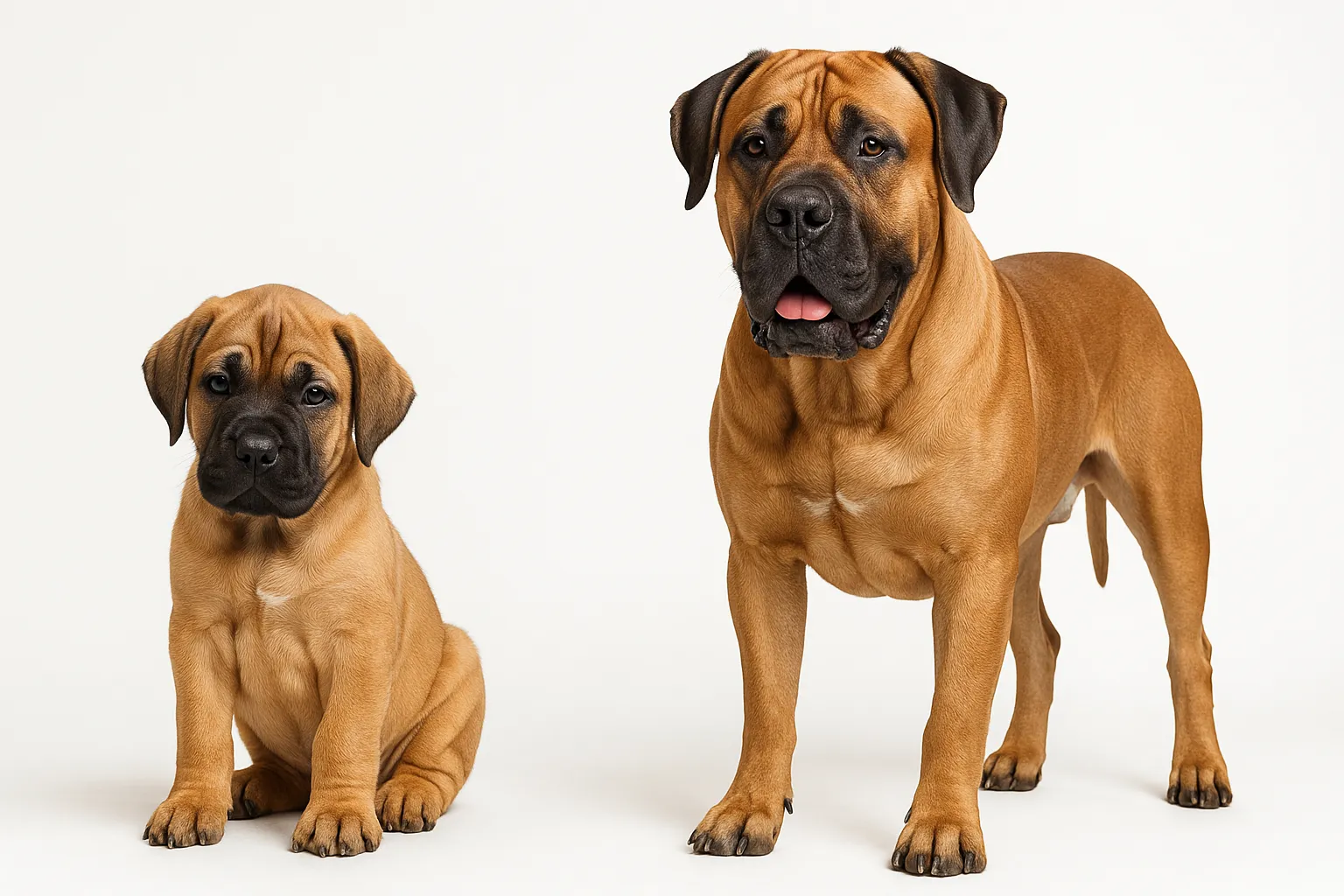
At 150-200 lbs, the Boerboel is one of the heaviest dogs recognized by the AKC — and every one of those pounds matters For longevity. This South African Mastiff was forged on farms where the name itself means “farmer’s dog” in Afrikaans, shaped by both European mastiff bloodlines and the harsh conditions of the African landscape. Boerboels live 9-11 years, typical of giant working dogs. Their primary health threats are hip and elbow dysplasia, bloat (GDV), cardiac disease, and cancer. What sets them apart from some European mastiff breeds is their African farm-hardened heritage, which preserved a degree of functional robustness that pure show breeding often erodes.
That massive frame comes at a cost. Hip and elbow dysplasia are highly prevalent, and the deep-chested conformation elevates bloat risk significantly. Cardiac disease tends to surface in middle age. Cancer rates climb with time. The silver lining: the Boerboel’s development in conditions where only functional, healthy dogs survived has preserved more robust baseline health than some exclusively show-bred mastiff lines. Still, giant breed biology sets hard limits on lifespan.
The Health Conditions That Define This Breed
Hip Dysplasia
Hip dysplasia is highly prevalent in Boerboels. Every dog in this breed should have OFA hip evaluation at 24 months, and every breeding decision should incorporate the results. The breed’s massive body weight places constant mechanical load on hip joints, making strict lean body condition the single most important modifier of disease severity. For dogs with diagnosed dysplasia, physical rehabilitation and joint supplementation help maintain quality of life.
See the Hip Dysplasia guide for full prevention and management detail.
Elbow Dysplasia
Elbow dysplasia co-occurs with hip dysplasia at significant rates and should be evaluated at the same OFA screening. Watch for forelimb lameness or reluctance to rise in a young Boerboel — these warrant urgent radiographic evaluation. Catching it early, before secondary joint changes set in, improves long-term outcomes considerably.
See the Elbow Dysplasia guide for full prevention and management detail.
Bloat (GDV)
Deep-chested and massive, the Boerboel is a high-risk breed for gastric dilatation-volvulus. Prophylactic gastropexy at spay or neuter time surgically prevents GDV — a one-time procedure with lifelong protection. Without it, risk reduction depends on feeding two or more meals daily, using slow feeders, and restricting exercise around mealtimes. Any suspected GDV episode is a same-day emergency where minutes determine survival.
See the Bloat (GDV) guide for full prevention and management detail.
Science-Backed Longevity Strategies
Prophylactic Gastropexy for Bloat Prevention
Given the Boerboel’s conformation, prophylactic gastropexy — surgically tacking the stomach to the body wall — ranks among the highest-return medical decisions you can make. The procedure is straightforward when performed alongside spay or neuter, or as a standalone procedure for intact dogs. It dramatically reduces GDV risk at a low one-time cost. Without it, every Boerboel owner must know the emergency signs by heart: unproductive retching, distended abdomen, hypersalivation, sudden extreme restlessness. Any suspected GDV means leaving for the emergency vet immediately.
Responsible Ownership Requirements
Boerboels are powerful, confident, territorial dogs built for farm guarding. They need experienced owners who provide firm, consistent leadership and invest heavily in early socialization. A poorly socialized Boerboel at 150+ lbs presents genuine public safety risk. Prospective owners should be honest about their experience with large guardian breeds before committing. Socialization must begin at 8 weeks and continue through adolescence — in giant breeds, critical socialization windows close early, and catching up later is much harder.
Giant Breed Skeletal Development Protocol
A Boerboel puppy grows fast, and that rapid growth makes them vulnerable to developmental orthopedic disease. Giant breed puppy food with controlled calcium-to-phosphorus ratios prevents excessive bone growth rate. Avoid high-impact repetitive exercise — jumping, stairs, running on hard surfaces — before 18 months while the skeleton is still developing. Controlled leash walks build cardiovascular fitness without stressing joints. Introduce omega-3 supplementation and glucosamine by age 2-3 to support long-term joint health.
Priority Actions for a Longer Life
The actions most likely to extend your Boerboel’s healthy years:
- OFA hip and elbow evaluation at 24 months — orthopedic disease is the primary concern in this massive breed
- Bloat risk reduction: prophylactic gastropexy at spay/neuter, two meals daily, slow feeder
- Strict lean body condition throughout life — every extra pound on a 150-200 lb dog accelerates aging
These are the monitoring anchors for your Boerboel. Revisit them at every wellness visit and update your approach when screening results shift the picture. Reference Hip Dysplasia, Elbow Dysplasia, Bloat for evidence-based management.
Evidence-Based Longevity Priorities
Body Composition and Muscle Maintenance
Weight stability and muscle quality are the foundation of orthopedic health in Boerboels. Joint load and metabolic strain escalate quickly when body composition drifts, and at this size, even a few extra pounds create real consequences. Their history as guardians and draft workers means muscle maintenance directly supports functional longevity — when muscle declines, everything downstream declines faster.
Condition-Focused Prevention Stack
The conditions most likely to shorten a Boerboel’s lifespan or erode quality of life are Hip Dysplasia, Elbow Dysplasia, and Bloat. Consistent execution of prevention protocols for these three targets preserves your options and prevents the delayed-treatment drift that compounds damage over time.
Behavior, Stress Load, and Recovery
Household rhythm directly affects healthspan in Boerboels. Inconsistent schedules and unclear role structure manifest as vigilance patterns, behavior drift, or recovery problems. These dogs need to know their place in the household — ambiguity creates chronic stress that ages them faster.
Preventive Screening Cadence
Set routine veterinary review checkpoints and escalate frequency when orthopedic function or gait quality shows early drift. In giant breeds, prevention windows close quickly once symptoms become visible — the time to act is before you see a limp.
Breed-Specific Research
Use these evidence deep dives to add mechanism-level context to your Boerboel longevity plan:
- Canine Size Lifespan Tradeoffs By Breed: why giant breeds like Boerboels have shorter lifespans
- Hip Dysplasia Lifetime Load Management: orthopedic management for a massive working breed throughout the lifespan
- Cancer Screening In Dogs What Helps: cancer surveillance strategies for a giant breed with elevated cancer risk
From Genetic Data to Monitoring Decisions
For a Boerboel, genetic testing delivers its greatest value when results directly change what you monitor, how frequently, and what triggers escalation. Hip and elbow scoring (OFA or PennHIP) quantifies orthopedic risk. Breed-specific cancer panels or tumor marker surveillance, when available, add another layer of early detection.
- Select a genetic panel matched to your Boerboel’s known risk profile. The results tell you where to look harder, not what will happen.
- Link your first monitoring playbook to Hip Dysplasia and Elbow Dysplasia so testing results translate into changed daily practice.
- Consolidate genetic panel results, bloodwork trends, and your own notes into a single timeline. The connection between a genetic predisposition and an emerging clinical finding only becomes obvious when you can see both at once.
- The value of genetic testing compounds over time. Each veterinary visit adds context that makes the original results more — not less — relevant to current decisions.
A test result that does not change your monitoring plan is just data. Make every result actionable.
Breeding History & Health Implications
The Boerboel was bred for guarding, draft work, and protective temperament. That legacy produces structural load patterns requiring proactive orthopedic surveillance and a cancer susceptibility profile that benefits from serial monitoring.
- The structural demands of the breed’s working history mean monitoring cadence should tighten across adulthood, not stay static.
- Breed heritage and population health data both point to Hip Dysplasia, Elbow Dysplasia, and Bloat as the surveillance priorities that deserve the tightest monitoring cadence.
- Treat repeat low-grade drift as an early action signal, not background noise.
- Reassess your prevention plan every quarter so updates reflect real trend data rather than assumptions.
The breed’s DNA writes the risk profile. Your dog’s longitudinal health data writes the intervention plan.
Your Veterinary Screening Roadmap
- Puppy to 18 months: controlled growth management, giant breed puppy food, limited high-impact exercise
- 2 years: OFA hip and elbow evaluation, CAER exam, consider prophylactic gastropexy
- 3-6 years: annual wellness panel, cardiac auscultation annually
- 7+ years: senior panel biannually, cancer surveillance, mobility assessment
Fuel for the Long Run
Boerboels need giant breed puppy food during development and quality large-breed adult formulas thereafter. Strict portion control is essential — free-feeding a 150-200 lb dog creates massive orthopedic and cardiovascular stress. Two measured meals daily reduces bloat risk. Omega-3 and glucosamine supplementation supports joint health throughout life. Lean body condition is the single most important nutritional objective across the entire lifespan.
The Healthspan Horizon
Giant breed biology sets hard limits, but Boerboels can reach 10-11 years with good quality of life when owners invest early. Prophylactic gastropexy, OFA orthopedic screening, strict lean body condition, and proactive cardiac monitoring give this breed its best shot at the upper end of the lifespan range. Every preventive measure earns its highest return when started early and maintained consistently.
Most-Missed Early Drift Pattern
Healthspan erosion in Boerboels typically starts with subtle shifts that owners normalize too quickly:
- Hind-limb stiffness after rest related to Hip Dysplasia — often dismissed as “just slow to get going”
- Intermittent forelimb lameness tied to Elbow Dysplasia that appears and resolves before you can get a vet appointment
- Gradual onset of Bloat warning signs — unproductive retching, rigid distended abdomen, rapid deterioration — that demand immediate emergency response
If something has been different for a full week, stop assuming it will self-correct. Persistent drift in any baseline marker is a reason to act.
Additional Health Risks to Monitor
Based on breed predisposition data, Boerboel owners should also be aware of:
Frequently Asked Questions
How long do Boerboels live?
Boerboels typically live 9-11 years. As a giant breed, their lifespan is constrained by the hormonal biology that produces their massive body mass. Bloat prevention, orthopedic management, and lean body condition are the most impactful longevity investments.
Are Boerboels good family dogs?
Boerboels are devoted to their family but require experienced owners who can provide consistent leadership, extensive early socialization, and appropriate guarding dog management. They are not suitable for inexperienced owners or households with frequent visitors.
How much does a Boerboel weigh?
Boerboels typically weigh 150-200 lbs, making them one of the heaviest AKC-recognized breeds. Their massive size creates orthopedic and cardiovascular management requirements throughout life.
Are Boerboels legal everywhere?
Some municipalities and countries restrict or ban Boerboels and other large guardian breeds. Prospective owners should verify local regulations before acquiring a Boerboel. Insurance companies may also restrict coverage for certain breeds.
Are Boerboels related to other mastiffs?
Boerboels are classified in the mastiff family, descended from European mastiff-type dogs brought to South Africa by settlers and further shaped by African conditions. They are distinct from English Mastiffs, Neapolitan Mastiffs, and other recognized mastiff breeds.
References
[1] American Boerboel Club. americanboerboelclub.com. [2] OFA health statistics. ofa.org. [3] Bloat and GDV prevention: Glickman LT et al. J Am Vet Med Assoc. 2000. [4] Giant breed lifespan biology: Kraus C et al. Am Nat. 2013. [5] AKC breed information. akc.org.
Related reads
Related Reading
Continue exploring