The Belgian Farm Dog That Became a Military Asset — and What That Heritage Costs
When the Belgian army needed a versatile working dog, they turned to the Bouvier des Flandres — and it is easy to see why. Developed in the Flanders region for cattle droving, cart pulling, and general farm labor, this powerful breed has since proven itself in police, military, and search-and-rescue work around the world. Bouviers live 10-12 years, a range shaped by their large body size. The health concerns that matter most are hip and elbow dysplasia, bloat, and a condition that owners of older Bouviers need to watch carefully: laryngeal paralysis. This progressive dysfunction of the nerves controlling the larynx affects a meaningful proportion of older Bouviers and can become life-threatening.
GDV risk is substantial in this deep-chested breed. Subvalvular aortic stenosis (a cardiac condition) also appears in some lines.
What This Breed Is Most Likely to Face
Hip Dysplasia
Hip dysplasia occurs at significant rates in Bouviers. OFA hip evaluation at 24 months provides a structural baseline. Weight management, omega-3 supplementation, and physical rehabilitation for affected dogs are the primary tools. Because the breed is prone to both hip and elbow problems, evaluate both joints at the same time.
See the Hip Dysplasia guide for full prevention and management detail.
Elbow Dysplasia
Elbow dysplasia runs alongside hip dysplasia in Bouviers at notable rates. OFA elbow evaluation at 24 months should accompany the hip screening. If a young Bouvier shows forelimb lameness or stiffness, pursue radiographic evaluation promptly — catching it before secondary joint damage develops makes a meaningful difference in long-term outcomes.
See the Elbow Dysplasia guide for full prevention and management detail.
Bloat (GDV)
The Bouvier’s large, deep-chested conformation puts it squarely in the high-risk category for GDV. Prophylactic gastropexy at spay or neuter eliminates the volvulus component. Beyond surgery, feed twice daily, keep exercise away from mealtimes, and know the signs — distended abdomen and unproductive retching mean you leave for the emergency vet immediately.
See the Bloat (GDV) guide for full prevention and management detail.
Evidence-Based Ways to Extend Healthspan
Laryngeal Paralysis Awareness
Laryngeal paralysis deserves special attention in this breed. The recurrent laryngeal nerves progressively fail, causing partial closure of the larynx. Signs come on slowly: a deeper or hoarser bark, reduced exercise tolerance, noisy breathing (stridor), and difficulty managing heat. These changes worsen over months. Surgical lateralization — tie-back of the affected arytenoid cartilage — effectively restores airway diameter. Any change in your Bouvier’s bark quality or new breathing noise warrants a veterinary evaluation, even if it seems minor.
Coat Management for a Heavy Working Breed
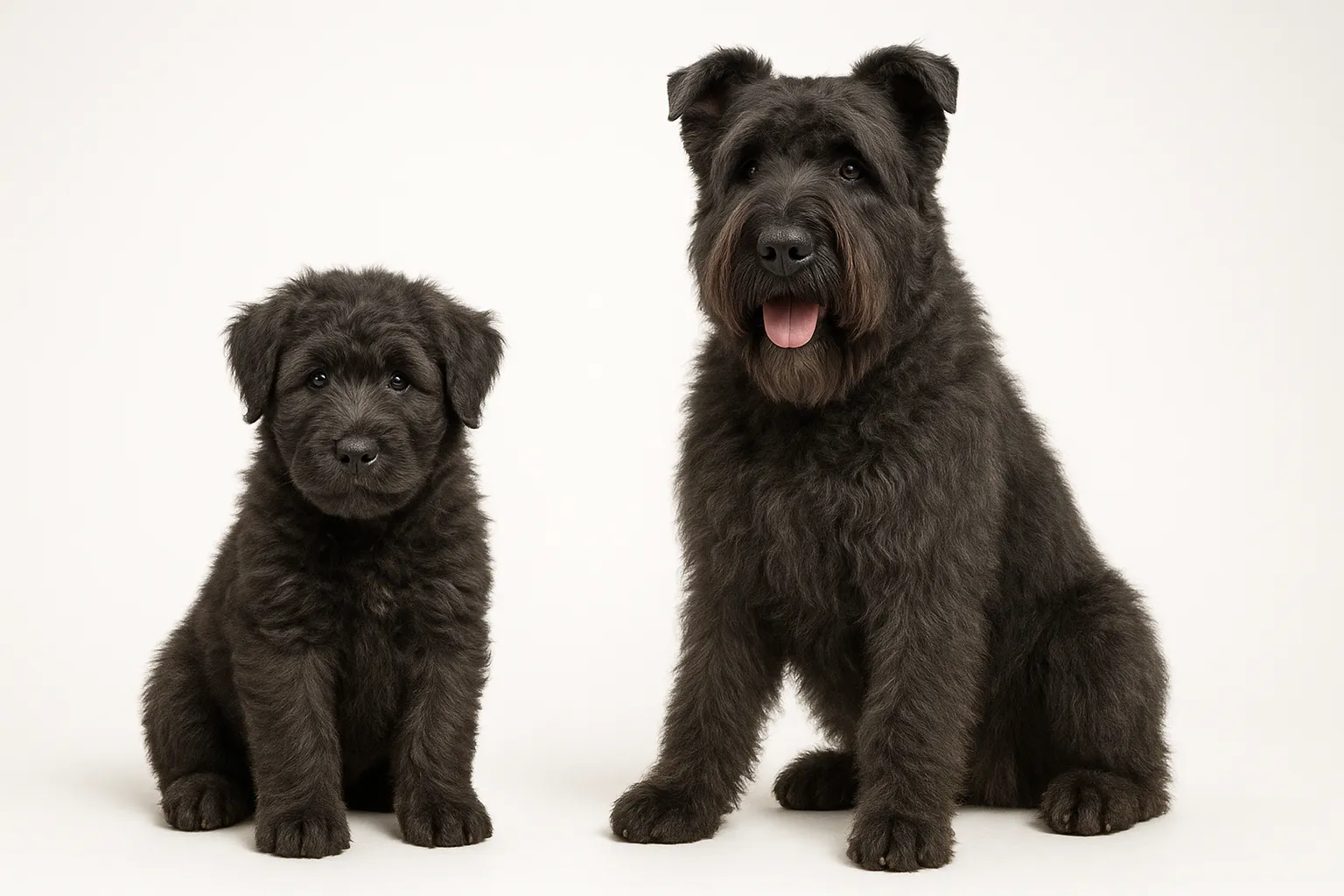
That coarse, thick double coat requires brushing 2-3 times weekly to prevent matting, with more attention needed after outdoor work. The iconic beard and mustache trap food, debris, and moisture — daily cleaning prevents bacterial overgrowth. Professional grooming every 6-8 weeks for bathing, blow-out, and hand-stripping or trimming maintains coat health. In warm weather, watch for moisture trapped under the coat, which can cause hot spots.
Senior Transition for a Working Dog
Bouviers that have worked or competed throughout adulthood need a thoughtful senior transition starting around age 8. High-impact work — Schutzhund protection exercises, heavy pulling — should decrease gradually. Replacing it with lower-impact activity like tracking, obedience, or swimming preserves mental engagement and physical function without overloading aging joints. Pain assessment must be proactive: stoic working dogs will mask discomfort that deserves treatment.
Start Here: Your Top Longevity Targets
Start here — these are the highest-impact moves for Bouvier des Flandres longevity:
- OFA hip and elbow evaluation at 24 months — both are significant concerns in this large Belgian breed
- Prophylactic gastropexy given deep-chest large-breed bloat risk
- Monitor for laryngeal paralysis signs in middle-aged to senior dogs — documented in the breed
Build your annual wellness calendar around these targets. Review progress quarterly and shift resources toward whichever risk area is trending fastest. See Hip Dysplasia, Elbow Dysplasia, Bloat for detailed protocols.
Evidence-Based Longevity Priorities
Body Composition and Muscle Maintenance
Body condition is the single most modifiable longevity factor for a Bouvier des Flandres — every extra pound of fat amplifies risk across joints, heart, and metabolism simultaneously. Joint stress and metabolic strain climb fast in large breeds when body composition drifts. Herding dogs that maintain stable muscle-to-fat ratios throughout life preserve long-term joint health far better than those that don’t.
Condition-Focused Prevention Stack
The conditions most likely to shorten a Bouvier’s lifespan or erode quality of life are Hip Dysplasia, Elbow Dysplasia, and Bloat. Consistent execution of prevention protocols across these targets preserves your options and prevents the compounding effect of delayed treatment.
Behavior, Stress Load, and Recovery
Bouviers maintain better long-term stability when workload, recovery, and mental stimulation are intentionally balanced. Without structured cognitive engagement, these dogs can develop compulsive behaviors or chronic stress patterns that erode healthspan quietly over years.
Preventive Screening Cadence
Use planned veterinary reassessment intervals, then tighten cadence when trend logs show drift in orthopedic function or gait quality. Early intervention windows are where the most healthspan gains happen — waiting for obvious symptoms costs you time you cannot get back.
Breed-Specific Research
Use these evidence deep dives to add mechanism-level context to your Bouvier des Flandres longevity plan:
- Muscle And Mobility Longevity Protocol: joint health and senior exercise management for a large working herding breed
- Canine Size Lifespan Biology: large breed size-lifespan biology relevant to Bouviers
- Laryngeal Paralysis: laryngeal paralysis recognition and management guidance
Genetic Testing: When It Matters
For a Bouvier, the practical value of genetic testing comes from linking results to monitoring cadence and daily execution — not from treating test data as predictive certainty. MDR1 gene testing guides medication safety. Hip and elbow scoring (OFA or PennHIP) quantifies orthopedic risk.
- Choose a genetic panel matched to your breed’s primary risk profile and treat the results as the beginning of a monitoring conversation, not the conclusion.
- Link your first monitoring playbook to Hip Dysplasia and Elbow Dysplasia so results translate into changed daily practice.
- Document weight, energy level, appetite patterns, and any changes you notice between vet visits. When combined with clinical data, home observations often reveal the earliest signs of drift.
- Plan reassessment points at each major life transition — post-growth, mid-life, and the senior threshold. Each stage reframes what your genetic data means for daily management.
The value of any test is measured by whether it changes what you do next.
Breeding History & Health Implications
The Bouvier was bred for sustained movement, vigilance, and rapid decision-making under workload — and that history creates a practical risk profile owners can address through structured prevention.
- Functional demands from this breed’s working history translate directly into musculoskeletal wear that benefits from proactive screening.
- Focus surveillance on Hip Dysplasia, Elbow Dysplasia, and Bloat.
- Treat repeat low-grade drift as an early action signal, not background noise.
- Reassess your prevention plan every quarter so updates reflect real trend data rather than assumptions.
Breed heritage identifies the likely risks. Your dog’s longitudinal health data converts those probabilities into specific, timed actions.
Preventive Care Timeline
- Puppy to 2 years: large-breed puppy nutrition, OFA at 24 months
- 3-7 years: annual cardiac auscultation, annual wellness panel, monthly BCS
- 8+ years: senior panel every 6 months, laryngeal paralysis monitoring, orthopedic assessment
Nutrition That Supports a Longer Life
Bouviers need large-breed adult food with measured portions matched to activity level. Feed twice daily given GDV risk. Lean body condition is the primary modifiable factor for hip, elbow, and GDV risk management. Omega-3 supplementation supports joint health throughout life.
What the Future Can Hold
Bouviers with OFA orthopedic screening, prophylactic gastropexy, and proactive laryngeal paralysis monitoring are well positioned for healthy lives in the 10-12 year range. Their working breed constitution and manageable disease burden support solid longevity when owners invest in preventive care early and maintain it consistently.
Most-Missed Early Drift Pattern
Long-term decline in Bouviers often starts as small changes that owners normalize too quickly:
- Hind-limb stiffness after rest related to Hip Dysplasia — dismissed as “just warming up”
- Intermittent forelimb lameness tied to Elbow Dysplasia that comes and goes
- Gradual onset of Bloat warning signs — unproductive retching, rigid distended abdomen, rapid deterioration — that demand immediate emergency response
When any measured function stays below baseline for a week or more, investigate — waiting for spontaneous recovery risks missing a treatable window.
Additional Health Risks to Monitor
Based on breed predisposition data, Bouvier des Flandres owners should also be aware of:
Frequently Asked Questions
How long do Bouvier des Flandres live?
Bouvier des Flandres typically live 10-12 years. Hip and elbow screening, prophylactic gastropexy, and laryngeal paralysis monitoring are the key longevity investments.
What is laryngeal paralysis in Bouviers?
A condition where the nerves controlling the laryngeal cartilages fail progressively, causing a narrowed airway. Signs include voice change, noisy breathing, and exercise intolerance. Surgical correction (arytenoid lateralization) is highly effective.
Are Bouviers des Flandres good family dogs?
Bouviers are loyal, protective, and excellent family dogs for active families who can provide consistent training and substantial daily exercise. They are not suited to sedentary households or owners unwilling to provide working-breed level engagement.
How much do Bouviers shed?
Bouviers are considered low-to-moderate shedders due to their thick undercoat, but regular brushing is essential to manage loose coat and prevent matting. They are not suitable for allergy-sensitive households despite relatively contained shedding.
What sports are Bouviers good at?
Bouviers excel in herding, Schutzhund/IPO protection sports, agility, obedience, tracking, and search and rescue. Their versatility is a hallmark of the breed — they are among the most capable all-around working dogs.
References
[1] American Bouvier des Flandres Club. bouvier.org. [2] Laryngeal paralysis in working breeds: MacPhail CM et al. JAVMA. 2012. [3] OFA health statistics by breed. ofa.org. [4] AKC breed history and standards. akc.org. [5] WSAVA large breed nutrition guidelines. wsava.org.
Related reads
Related Reading
Continue exploring