A Powerful Dog With a Wide Lifespan Range
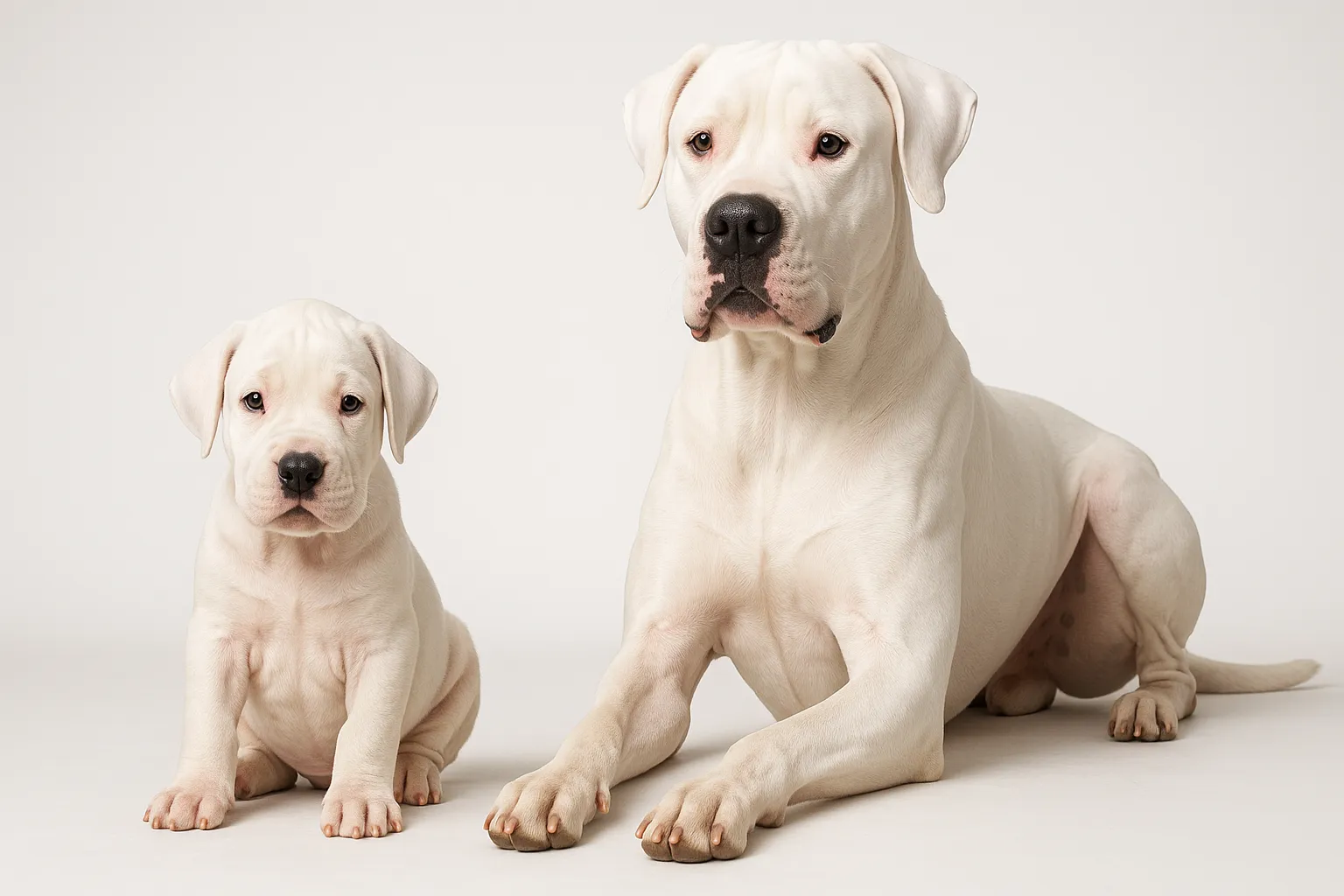
The Dogo Argentino was purpose-built. In the 1920s, Antonio Nores Martinez crossed the now-extinct Cordoba Fighting Dog with multiple breeds to create a big-game hunter capable of pursuing puma and wild boar across Argentine terrain. At 88 to 100 lbs of muscle, these are formidable athletes.
Their lifespan range — 9 to 15 years — is unusually wide for a single breed, reflecting significant individual variation in health outcomes. Three factors dominate: hip dysplasia from their massive muscular frame, congenital deafness linked to their all-white coat, and sun-related skin damage from a coat that provides zero UV protection.
That wide range means owner decisions genuinely shift where a given dog falls on the longevity curve.
The Conditions to Watch For
Hip Dysplasia
Hip dysplasia poses a significant concern in Dogo Argentinos given their large, muscular build and the demands of their hunting heritage. OFA evaluation at 24 months provides a structural baseline.
Lean body condition from puppyhood is the most important modifier of dysplasia severity — though maintaining leanness in a breed selected for muscle mass requires careful attention. Joint supplementation starting around age 3 supports long-term function.
See the Hip Dysplasia guide for full prevention and management detail.
Skin and UV Sensitivity
The all-white coat provides no melanin-based UV protection. Dogs with extensive outdoor sun exposure develop sun-related skin damage, particularly at the nose, ear tips, and periocular areas.
Apply dog-safe sunscreen to exposed non-coated skin, provide shade access, and limit outdoor activity during peak sun hours. Any rapidly growing or non-healing skin lesion in a white dog warrants prompt evaluation for squamous cell carcinoma.
See the Skin and UV Sensitivity guide for full prevention and management detail.
Cancer
Cancer rates in Dogo Argentinos increase with age, as in many large working breeds. Squamous cell carcinoma risk is elevated by chronic UV exposure in white-coated dogs. Starting at age 6 to 7, annual cancer surveillance — lymph node palpation, abdominal ultrasound, and thorough skin inspection — provides the early detection window that matters most.
See the Cancer guide for full prevention and management detail.
What Actually Extends a Dogo Argentino’s Life
BAER Testing: Not Optional for This Breed
Congenital deafness associated with extreme white coat pigmentation occurs in Dogo Argentinos through the same mechanism documented in Dalmatians, white Bull Terriers, and white Boxers. BAER (Brainstem Auditory Evoked Response) testing identifies deafness in individual puppies at 5 to 6 weeks.
Unilaterally deaf dogs — deaf in one ear — live normal lives but should be identified so owners can adjust their approach. Bilaterally deaf dogs require specialized care. Every Dogo Argentino litter should be BAER tested before placement, without exception.
Channeling a Big-Game Hunter’s Drive
These dogs were developed to locate quarry by scent, pursue on stamina, and hold large game until hunters arrived. That heritage translates into a modern dog that needs 60 to 90 minutes of vigorous daily exercise.
They excel in dock diving, weight pulling, protection sports, and tracking. Their athletic capability demands structured outlets — without them, the energy surfaces as behavioral problems in household settings. This is a dog that needs a job.
Legal Restrictions Are a Practical Reality
Dogo Argentinos are classified as restricted or banned in several countries (including Australia, the UK, and Denmark) and some US municipalities. Prospective owners should verify local regulations before acquiring one. Insurance implications deserve investigation too. These restrictions exist regardless of individual temperament.
Priority Actions for a Longer Life
For most Dogo Argentino owners, these are the actions that will matter most:
- BAER hearing test as puppy — congenital deafness is documented in white-coated breeds including Dogo Argentino
- OFA hip evaluation at 24 months — hip dysplasia is a significant concern in this large muscular breed
- UV skin protection — white coat provides no pigment protection; sun exposure increases skin cancer risk
Use these priorities to structure your veterinary conversations and home monitoring routine. The condition guides — Hip Dysplasia, Skin Allergies, Cancer — provide the clinical detail behind each recommendation.
Evidence-Based Longevity Priorities
Body Composition and Muscle Maintenance
Maintaining stable weight and lean muscle mass in a Dogo Argentino is one of the highest-yield longevity interventions available. Joint load and metabolic strain escalate quickly when body composition drifts in a large breed. Their muscular build means that body composition assessment requires looking beyond scale weight to actual muscle-to-fat ratio.
Condition-Focused Prevention Stack
The highest-return prevention targets are Hip Dysplasia, Skin Allergies, and Cancer. Early action preserves the widest range of treatment options — waiting narrows them irreversibly.
Behavior, Stress Load, and Recovery
Dogo Argentinos maintain better long-term stability when workload, recovery, and social structure are intentionally balanced. These guardian-type dogs need predictable routines to prevent the chronic stress accumulation that quietly shortens healthspan.
Preventive Screening Cadence
Schedule veterinary reassessment intervals by age and trend changes rather than waiting for obvious deterioration. Planned checkpoints focused on orthopedic function, skin condition, and gait quality improve early detection and intervention timing.
Breed-Specific Research
Use these evidence deep dives to add mechanism-level context to your Dogo Argentino longevity plan:
- Genetic Testing For Dogs Clinical Roi: BAER deafness testing and genetic screening in white-coated breeds
- Cancer Screening In Dogs What Helps: UV-related skin cancer and general cancer surveillance in Dogo Argentinos
- Hip Dysplasia Lifetime Load Management: hip dysplasia management in a large, muscular hunting breed
Using DNA Data to Guide Prevention
The practical value of genetic testing comes from linking results to monitoring cadence and owner execution — not from treating test data as predictive certainty. Consider OFA or PennHIP hip and elbow scoring to quantify orthopedic risk, and a breed-specific cancer panel when available, as part of the initial assessment.
- Run a genetic panel that targets the conditions most common in Dogo Argentinos. Treat the results as a monitoring guide, not a diagnosis — confirm findings through serial clinical follow-up.
- Link your monitoring plan to Hip Dysplasia and Skin Allergies first. When test results drive concrete changes in screening cadence or intervention, testing earns its cost.
- Consolidate lab results, exam notes, medication history, and what you see at home into a single health file. Trend recognition depends on having all the data in one view.
- Return to your test results whenever something changes — a new lameness, unexplained weight loss, or behavioral shift. Static data becomes useful again when the clinical context moves.
Results without follow-through are noise. Results that change your screening schedule, your daily observations, or your intervention threshold — those are signal.
Breeding History and What It Means Today
The Dogo Argentino was bred for big-game hunting that demanded explosive power, stamina, and high pain tolerance. That heritage creates a practical risk profile owners can address through structured prevention.
- Structural load patterns and cancer susceptibility both require sustained surveillance intensity from early adulthood through the senior years.
- Channel your prevention effort toward Hip Dysplasia, Skin Allergies, Cancer, the conditions where this breed’s genetic and functional history creates the greatest vulnerability.
- Treat repeat low-grade drift as a signal to tighten monitoring early, not noise to watch passively.
- Static prevention plans decay in value. The most effective owners treat their Dogo Argentino’s health plan as something that evolves with every vet visit and every home observation.
Breed heritage sets the surveillance priorities. Your Dogo Argentino’s individual data tells you when to act.
Age-Based Monitoring Milestones
- Puppy at 5-6 weeks: BAER deafness testing
- 2 years: OFA hip evaluation, CAER exam
- 3-7 years: annual wellness bloodwork, skin inspection, cardiac monitoring from age 4
- 8+ years: senior panel biannually, cancer surveillance, mobility assessment
Nutritional Priorities for Healthspan
Dogo Argentinos need quality large-breed adult food, but body composition assessment in this breed requires looking beyond the scale. Muscle mass tracking matters as much as weight. The goal is lean overall condition — not excess fat layered over muscle. UV protection through diet is not possible; topical and behavioral sun management are required. Omega-3 supplementation supports skin, coat, and joint health.
Your Long-Term Health Trajectory
Dogo Argentinos with BAER testing, OFA screening, consistent UV skin protection, and appropriate athletic exercise management can push toward the upper end of the lifespan range — 12 to 15 years for healthy individuals. Their hunting dog heritage and functional selection criteria support robust health when breed-specific care stays consistent.
Subtle Signs You Might Be Missing
Long-term decline in Dogo Argentinos often starts as small changes owners normalize too quickly:
- Subtle hind-limb stiffness after rest related to Hip Dysplasia that owners often dismiss as temporary
- Subtle compensation patterns that mask Skin Allergies progression: seasonal patterns dismissed as normal shedding cycles
- Gradual drift toward Cancer signs that become harder to reverse: palpable masses, persistent lethargy, or sudden collapse
If baseline function is drifting for 7-10 days, treat it as a prevention failure signal and reassess early.
Additional Health Risks to Monitor
Based on breed predisposition data, Dogo Argentino owners should also be aware of:
Frequently Asked Questions
How long do Dogo Argentinos live?
Dogo Argentinos typically live 9-15 years, with significant individual variation. BAER deafness testing, OFA orthopedic screening, UV skin protection, and appropriate large-breed management are the primary longevity investments.
Are Dogo Argentinos deaf?
Some Dogo Argentinos are born deaf (unilaterally or bilaterally) due to the same pigmentation-linked mechanism seen in Dalmatians and white Boxers. BAER testing at 5-6 weeks identifies affected puppies. Responsible breeders BAER test all litters.
Are Dogo Argentinos legal in the US?
Dogo Argentinos are legal in most US states but some municipalities have breed-specific restrictions. They are banned in several countries including Australia and the UK. Prospective owners should verify local regulations.
Are Dogo Argentinos good family dogs?
Dogo Argentinos can be loyal, affectionate family dogs in experienced hands with proper socialization. They require experienced owners who understand large guardian-type dogs. Their size and hunting heritage require management in multi-dog households and around small animals.
What were Dogo Argentinos bred to hunt?
Dogo Argentinos were bred to hunt big game in Argentina — specifically puma, wild boar, and peccary. Dr. Martinez designed them to locate quarry by scent (using Pointer and Foxhound influence), pursue on stamina, and hold the game until hunters arrived.
References
[1] Dogo Argentino Club of America. dogoargentinoclubofamerica.com. [2] BAER testing and white coat deafness: Strain GM. Vet Clin North Am. 1999. [3] OFA health statistics. ofa.org. [4] AKC breed recognition. akc.org. [5] Nores Martinez A. El Dogo Argentino. 1947.
Related reads
Related Reading
Continue exploring