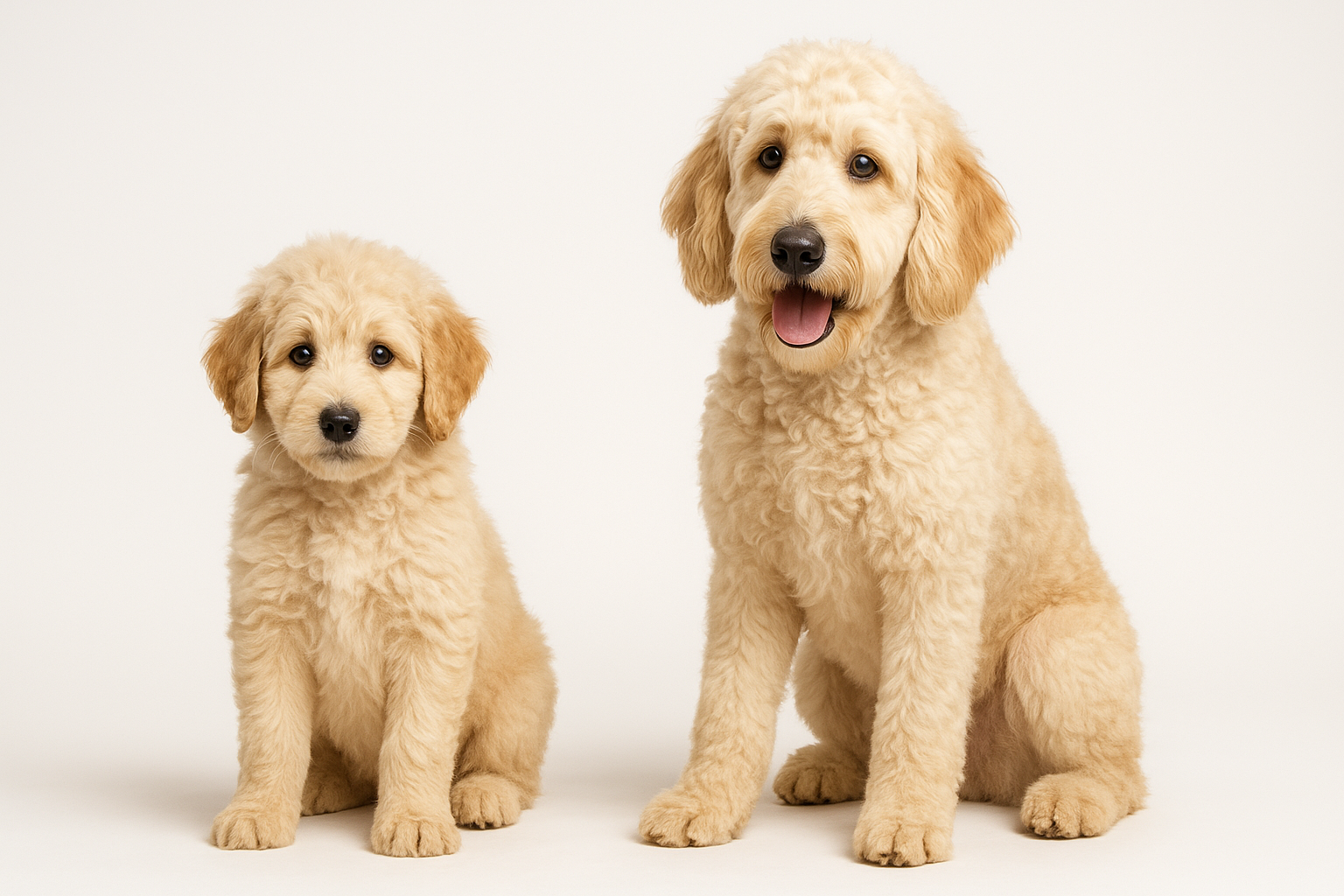
The Doodle Squared
The Double Doodle is what happens when two already-complex crossbreeds are crossed again. One parent is a Goldendoodle (Golden Retriever x Poodle), the other a Labradoodle (Labrador Retriever x Poodle). The result is a dog carrying genetic influence from three foundation breeds: the Golden Retriever, the Labrador Retriever, and the Standard Poodle, with the Poodle represented twice.
That double Poodle contribution shapes both coat type and health profile. The Double Doodle typically inherits a wavy or curly, low-shedding coat, but it also inherits health risks from three different purebred gene pools, and the areas where those pools overlap become concentrated vulnerabilities. Hip dysplasia, eye disease, and obesity predisposition appear in all three foundation breeds, meaning the Double Doodle cannot rely on hybrid vigor to dodge these particular conditions.
The Hybrid Vigor Question Gets Complicated
Standard hybrid vigor theory predicts that first-generation crosses between two genetically distinct populations produce healthier offspring. But the Double Doodle is not a first-generation cross. It is a second-generation combination of dogs that are themselves crosses. The heterosis advantage weakens with each subsequent generation as the gene pool narrows again.
More importantly, the three foundation breeds share several health vulnerabilities. A 2013 JAVMA study found that mixed-breed dogs showed no significant reduction in risk for conditions like hip dysplasia, cancer, or arthritis compared to purebreds. These polygenic conditions are driven by many genes and environmental factors, and they cross breed lines freely.
The practical implication: approach Double Doodle health as though you are managing the combined risk profiles of Golden Retrievers, Labrador Retrievers, and Poodles. That is not a pessimistic framing. It is a complete one.
The Conditions That Shape Double Doodle Health
Hip Dysplasia
All three foundation breeds carry documented hip dysplasia prevalence, with Golden Retrievers at roughly 20% according to OFA data, Labrador Retrievers at approximately 12%, and Standard Poodles at a lower but non-negligible rate. In a Double Doodle weighing 50-70 lbs, poor hip conformation creates compounding stress that progresses from subclinical dysplasia to debilitating arthritis over a relatively predictable timeline.
The Purina Lifetime Study demonstrated that lean dogs developed arthritis 1.8 years later than overweight counterparts. In a breed averaging 12-15 years, that represents meaningful additional quality of life. Controlled growth during the first 18 months, combined with lifelong weight management and low-impact exercise, is the highest-return joint protection strategy.
OFA or PennHIP evaluation before age 2 establishes a baseline that guides exercise selection and weight targets for life. See Joint Screening Protocol by Breed for the structured approach.
Progressive Retinal Atrophy
Progressive retinal atrophy (PRA) is a group of inherited retinal degenerations that cause progressive vision loss, beginning with impaired night vision and advancing to complete blindness. The prcd-PRA mutation is documented in all three foundation breeds, meaning the Double Doodle faces this risk from multiple genetic directions.
Genetic testing for prcd-PRA is available and should have been performed on at least the Poodle grandparents. If your Double Doodle’s breeding background is unknown, consider DNA testing through services like Embark or Wisdom Panel. Annual ophthalmic screening starting at age 3 provides clinical monitoring regardless of genetic status.
See Eye Health Screening Frequency by Breed for recommended intervals.
Ear Infections
The Double Doodle almost always inherits the Poodle’s ear canal architecture: floppy, hair-filled, and poorly ventilated. This creates a warm, moist environment that yeast and bacteria colonize readily. Recurrent ear infections are one of the most common management challenges in Poodle crosses, and the Double Doodle’s double Poodle heritage makes this essentially a certainty.
Chronic ear infections are not just uncomfortable. Left untreated or undertreated, they can cause permanent ear canal thickening, hearing loss, and chronic pain. Prevention is straightforward but requires consistency:
- Clean ears weekly with a veterinary-approved ear cleanser
- Have ear canal hair plucked or trimmed during grooming appointments every 6-8 weeks
- Dry ears thoroughly after swimming or bathing
- Treat active infections promptly and complete the full course of medication
Atopic Dermatitis
Atopic dermatitis is an allergic skin condition triggered by environmental allergens (pollen, dust mites, mold). All three foundation breeds carry predisposition, and the Double Doodle’s dense coat can trap allergens against the skin, intensifying the inflammatory response.
Signs include persistent scratching, face rubbing, paw licking (particularly the spaces between toes), and recurrent hot spots. If basic grooming and bathing do not resolve skin irritation, allergy workup with your veterinarian can identify specific triggers and guide targeted treatment with immunotherapy, medicated baths, or medications like oclacitinib (Apoquel) or lokivetmab (Cytopoint).
Dietary support through Skin and Coat Nutrition and Omega-3 supplementation can reduce inflammatory load and improve skin barrier function.
Obesity
All three foundation breeds carry genetic predisposition to obesity. Labrador Retrievers and Golden Retrievers have documented POMC gene mutations that impair satiety signaling, meaning many Double Doodles inherit a biologically reduced ability to feel full. If your Double Doodle seems perpetually hungry, it may not be behavioral. It may be genetic.
Measured meals, treats capped at 10% of daily calories, and monthly body condition scoring are non-negotiable. Target a BCS of 4-5 on the 9-point scale: ribs palpable without pressing, visible waist, clear abdominal tuck. Use Feeding Guide for Large Breeds as your framework, and shift to Weight Management Feeding Protocol at the first sign of weight drift.
Nutrition for the Double Doodle
The Double Doodle’s nutritional needs vary substantially with size. A 30 lb Double Doodle has a fundamentally different metabolic profile than a 70 lb one, and feeding protocols should reflect this.
Prioritize a high-quality protein source appropriate for your dog’s size category. Use Feeding Guide for Large Breeds for dogs over 50 lbs or Feeding Guide for Medium Breeds for dogs in the 30-50 lb range.
Omega-3 supplementation addresses three Double Doodle vulnerabilities simultaneously: skin inflammation, joint health, and cardiac support. Dose at approximately 75 mg EPA+DHA per kg of body weight daily.
For dogs with identified hip dysplasia or early arthritis, discuss adding glucosamine and chondroitin to the supplement protocol.
Exercise That Serves the Whole Dog
The Double Doodle inherits working-breed energy from all three foundation lines. This is a dog that needs 60-90 minutes of daily activity, split between physical exercise and mental enrichment.
Swimming is the ideal exercise for joint-conscious conditioning. Most Double Doodles take to water readily, inheriting water affinity from both the Labrador and Golden Retriever lines. Walking on varied terrain builds stabilizer muscle strength and proprioception. Structured fetch on soft ground provides cardiovascular conditioning.
Avoid repetitive high-impact exercise (sustained ball-launching on hard surfaces, aggressive jumping) in dogs under 18 months. After skeletal maturity, match exercise intensity to your individual dog’s joint status. A Double Doodle with documented hip dysplasia needs a different exercise menu than one with clear hip radiographs.
Mental enrichment is not optional. Puzzle feeders, scent work, and training sessions satisfy the Poodle intelligence and working-breed drive that this cross inherits. Under-stimulated Double Doodles develop anxiety, destructive behavior, and compulsive habits that erode quality of life.
Preventive Screening Timeline
- Puppy to 18 months: Growth-rate monitoring, joint-safe exercise, patellar and hip evaluation. Establish grooming and ear care routines immediately.
- 2 to 5 years: Annual wellness exam with hip reassessment, eye exam, cardiac auscultation, ear health check, and body condition scoring. Baseline bloodwork by age 3.
- 6 to 9 years: Add cancer screening (monthly at-home mass checks plus veterinary review). Increase monitoring for joint changes. Senior bloodwork annually. Reassess skin management protocol.
- 10+ years: Twice-yearly exams. Comprehensive senior panel. Mobility and pain assessment. Cognitive function screening. Cardiac reassessment.
Breed-Specific Research
These resources provide deeper context for Double Doodle health management:
- Hybrid Vigor in Dogs: What the Evidence Shows: the reality of crossbreeding health benefits in multigenerational crosses.
- Arthritis Pain Management Stack for Dogs: joint-protective protocols for breeds at elevated orthopedic risk.
- Designer Dog Health Testing: What Breeders Should Screen: which genetic tests matter for Poodle crosses.
Condition-Specific Monitoring Triggers
These signals should prompt veterinary evaluation rather than continued observation:
- Hip Dysplasia: Bunny-hopping gait, reluctance to climb stairs, stiffness after rest, audible clicking, or difficulty rising from lying position.
- Progressive Retinal Atrophy: Bumping into furniture in dim light, dilated pupils, reluctance to navigate unfamiliar spaces at night.
- Ear Infections: Head shaking, odor from ear canals, dark discharge, scratching at ears, or head tilt.
- Atopic Dermatitis: Persistent scratching, face rubbing, paw licking, recurrent hot spots despite grooming compliance.
- Obesity: Ribs no longer easily palpable, loss of waist tuck, weight trending upward on monthly checks.
- Arthritis: Gradual decline in walk enthusiasm, slower to rise, avoiding previously enjoyed activities, limping after exercise.
12-Month Longevity Execution Plan
Quarter 1: Baseline and Risk Mapping
- Document starting weight, body condition score, and gait quality with video
- Complete hip evaluation (OFA or PennHIP) if not already done
- Establish ear care and grooming cadence: weekly ear cleaning, professional grooming every 6-8 weeks
- Set feeding protocol: measured meals, defined treat budget, appropriate food for size category
- Schedule baseline eye exam
Quarter 2: Adherence and Early Detection
- Compare current weight and gait video against Q1 baselines
- Audit ear care compliance: are weekly cleanings happening? Any breakthrough infections?
- Assess skin condition: emerging allergy patterns, hot spots, coat quality
- Report any changes in gait, appetite, or energy to your veterinarian
Quarter 3: Midyear Systems Check
- Review six months of weight, skin, and ear health data
- Adjust exercise intensity and type for seasonal conditions
- Repeat cardiac auscultation if any murmur was previously detected
- Update grooming protocol based on skin and coat response
Quarter 4: Annual Review and Forward Planning
- Comprehensive wellness exam with full bloodwork
- Year-end eye exam and hip reassessment as indicated
- Complete mobility assessment: joint range of motion, gait symmetry, exercise tolerance
- Use full-year trend data to build next year’s screening schedule and adjust protocols
When to Seek Emergency Care
Do not wait on any of the following:
- Sudden collapse or inability to stand
- Unproductive retching with abdominal rigidity (bloat, possible in deep-chested Double Doodles)
- Sudden complete blindness
- Respiratory distress or sustained resting respiratory rate above 40 breaths per minute
- Acute lameness with obvious pain and no history of trauma
- Seizure activity lasting more than 3 minutes
- Complete food refusal lasting more than 24 hours with concurrent lethargy
Home Tracking Dashboard
Monitor these markers monthly to catch drift early:
- Weight and body condition score with rib palpation
- Ear health: odor, discharge, head shaking frequency
- Skin condition: scratching patterns, hot spots, coat quality
- Gait quality on all four limbs, especially after rest
- Eye clarity: any cloudiness, excessive tearing, or navigational difficulty in low light
- Appetite consistency, water intake, stool quality
- Energy level and exercise recovery time
Frequently Asked Questions
How long do Double Doodles typically live? Double Doodles average 12-15 years, reflecting the generally favorable longevity genetics of their Poodle, Golden Retriever, and Labrador Retriever foundation breeds. Dogs at the lower end of the weight range may trend toward longer lifespans than larger individuals.
Are Double Doodles healthier than purebred dogs? Not automatically. The Double Doodle is a multigenerational cross, which means heterosis benefits are weaker than in first-generation crosses. Additionally, all three foundation breeds share predispositions to hip dysplasia, obesity, and eye disease, so the cross inherits these risks from multiple directions. Health depends on the specific parents’ testing and genetic backgrounds, not the fact that the dog is a cross.
Why does my Double Doodle get so many ear infections? The double Poodle genetic contribution virtually guarantees the floppy, hair-filled ear canals that create the warm, moist environment yeast and bacteria thrive in. Weekly ear cleaning, regular ear hair removal during grooming, and thorough drying after water exposure are essential management strategies, not optional grooming extras.
My Double Doodle seems hungry all the time. Is this normal? It may be genetic rather than behavioral. Both Golden Retrievers and Labrador Retrievers carry POMC gene mutations that impair satiety signaling, and the Double Doodle may inherit this trait. Measured meals with a defined calorie budget are essential. Do not free-feed, and keep treats within 10% of daily caloric intake.
Should I get my Double Doodle’s eyes tested? Yes. All three foundation breeds carry risk for progressive retinal atrophy, and the prcd-PRA mutation appears across all three gene pools. Annual ophthalmic screening starting at age 3, combined with genetic testing if your dog’s breeding background is unknown, provides comprehensive surveillance.
What type of exercise is best for a Double Doodle? Swimming is ideal: it builds fitness with minimal joint impact, and most Double Doodles inherit water affinity from their Retriever ancestry. Supplement with walking on varied terrain and moderate fetch on soft ground. Avoid repetitive high-impact exercise, especially in dogs with documented hip dysplasia.
How often should a Double Doodle be groomed? Professional grooming every 6-8 weeks, with thorough brushing at least twice weekly at home. Ear cleaning should happen weekly, not just at grooming appointments. Grooming is not cosmetic in this breed. It is infection prevention.
References
[1] Prevalence of inherited disorders among mixed-breed and purebred dogs (Bellumori et al., JAVMA, 2013) [2] Effects of Diet Restriction on Life Span and Age-Related Changes in Dogs (Kealy et al., 2002) [3] Life expectancy, mortality, and longevity in companion dogs (Scientific Reports, 2024) [4] Morris Animal Foundation Golden Retriever Lifetime Study [5] Orthopedic Foundation for Animals (OFA) [6] Merck Veterinary Manual [7] AAHA Canine Life Stage Guidelines
This content is for informational purposes only and does not constitute veterinary advice. Always consult a licensed veterinarian for decisions about your dog’s health, diagnosis, and treatment.
Related reads
Related Reading
Continue exploring