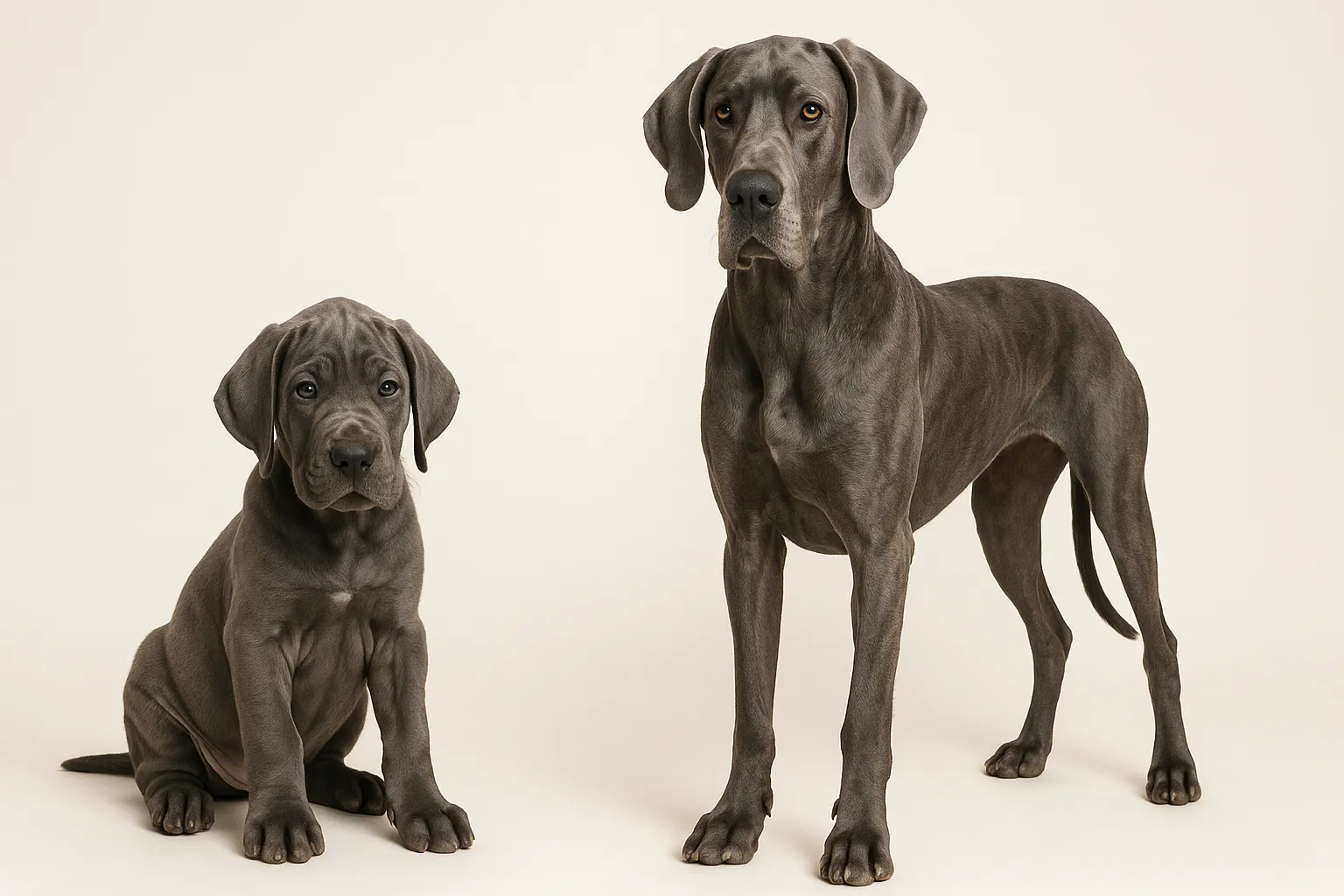
When Your Dog’s Entire Senior Phase Fits Inside Another Breed’s Middle Age
A Great Dane puppy born today will likely celebrate seven to ten birthdays. That is roughly half the lifespan of a Border Collie, and it changes everything about how you approach prevention. There is no coasting period. Every year of a Dane’s life carries the urgency that most breeds only reach in their final quarter.
Gastric dilatation-volvulus can kill in hours. Heart disease progresses quietly until it does not. Longevity planning in Danes is fundamentally about risk mitigation and early detection — you are buying time, and the returns on proactive care are enormous.
Breed-Specific Risk Profile
Bloat (GDV)
Great Danes rank among the highest-risk breeds for GDV. Prevention planning, owner emergency readiness, and prophylactic gastropexy are essential — not optional considerations in this breed.
Heart Disease
Dilated cardiomyopathy is a meaningful risk. Early-stage screening catches the disease before it progresses to overt heart failure, when treatment options are far better.
Arthritis
A body this large puts enormous load on every joint. Lean conditioning and controlled exercise preserve mobility longer than any supplement alone.
Cancer
Large-breed cancer burden can materially shorten lifespan. Responding to early symptoms and maintaining routine screening keep treatment options on the table.
Spinal Disorders
Neurologic and orthopedic spinal problems can surface with age. Running a fast workup on any gait change or pain signal improves outcomes significantly.
Priority Actions for a Longer Life
Top priorities:
- Have an explicit GDV emergency and gastropexy plan
- Screen heart health proactively
- Protect joints with lean conditioning
These three actions address the leading causes of sudden decompensation and chronic decline in Great Danes.
Evidence-Based Longevity Priorities
Body Composition and Muscle Maintenance
In a Great Dane, body composition control predicts long-term function more reliably than almost any other single factor. Excess weight accelerates orthopedic decline and shortens lifespan more dramatically in giant breeds than in smaller dogs. Every additional pound lands harder on joints that are already under strain.
Condition-Focused Prevention Stack
Bloat, heart disease, arthritis, and age-associated cancer are the highest-yield clinical targets for this breed. Build your prevention plan around early screening, fast treatment escalation, and adherence to long-term management protocols.
Behavior, Stress Load, and Recovery
Household rhythm matters more than most Dane owners realize. Inconsistent schedules and unclear role structure often show up as behavior drift, vigilance patterns, or poor recovery from exertion.
Preventive Screening Cadence
Do not wait for a crisis to schedule veterinary visits. Routine screening intervals tied to orthopedic function and gait quality catch subtle drift before it compounds into serious disease.
Breed-Specific Research
Use these evidence deep dives to add mechanism-level context to your Great Dane longevity plan:
- Blood Pressure Monitoring in Dogs: The Silent Risk Most Owners Miss: cardiac screening schedules and early detection strategies for breed-specific heart conditions.
- Loyal’s LOY-001 and LOY-002: FDA Progress, Clinical Data, and 2026: tracks the large-dog LOY-001/LOY-003 pipeline and the separate senior-dog LOY-002 program.
- Muscle and Mobility Longevity Protocol for Aging Dogs: spine-protective daily management and early intervention for disc-related conditions.
- Senior Dog Screening Protocol: What to Test and When: evidence-based framework for structuring your breed-specific screening timeline.
How to Use Genetic Panel Results
Genetic testing has the most value when results directly change what gets measured, how often, and what triggers escalation this quarter. Hip and elbow scoring (OFA or PennHIP) quantifies orthopedic risk; breed-specific cancer panels or tumor marker surveillance add another layer when available.
- Use a breed-appropriate genetic panel as your foundation, but remember that genetic risk is not the same as clinical disease. Serial veterinary observations bridge that gap.
- Link your monitoring plan to Bloat and Heart Disease first. When test results drive concrete changes in screening cadence or intervention, testing earns its cost.
- A running health log that combines lab work, clinical notes, and your daily observations gives your vet a clearer picture in five minutes than a full workup without history.
- Treat each annual exam as a chance to re-read your genetic data against fresh clinical findings. The same panel results carry different weight as your Great Dane ages.
A test result that does not change your next action is just information. Make every panel result translate into a specific monitoring decision.
Breeding History & Health Implications
Great Danes were bred for guarding, draft work, and protective temperament. That legacy produces structural load patterns demanding proactive orthopedic surveillance and a cancer susceptibility that benefits from serial tumor screening.
- Structural demands require sustained surveillance intensity from early adulthood through the senior years.
- Prioritize surveillance around Bloat, Heart Disease, and Arthritis.
- When a mild concern surfaces more than once, the right response is earlier screening — not more watching and waiting.
- Course-correct regularly. The point of ongoing monitoring is not to confirm the original plan — it is to improve it as your dog’s health picture becomes clearer.
What the breed was built for tells you where to look. What your dog’s trend data shows tells you when to move.
Your Veterinary Screening Roadmap
- Puppy to 2 years: controlled growth and orthopedic-safe conditioning.
- 3 to 6 years: annual cardiac and metabolic screening with mobility tracking.
- 7+ years: semiannual preventive visits with cardiac, oncologic, and orthopedic focus.
Your Long-Term Health Trajectory
A Great Dane at 9 or 10 is not common. When it happens, it reflects an owner who internalized the compressed timeline from the beginning. Gastropexy before the first birthday. Cardiac screening that started early and never lapsed. Body condition that never crept above ideal. Emergency logistics that were rehearsed, not improvised.
These dogs do not have the luxury of gradual senior transitions like smaller breeds. The window between “fine” and “crisis” is narrower, which makes every month of consistent prevention more valuable. The Danes that reach double digits are almost always the beneficiaries of owners who treated each year as precious and acted accordingly.
Most-Missed Early Drift Pattern
Healthspan erosion in Great Danes typically begins with subtle shifts that are easy to explain away:
- Restlessness or pacing after meals related to Bloat that owners dismiss as a quirk
- Reduced exercise tolerance attributed to aging that actually signals Heart Disease progression
- Persistent limping, reluctance to walk, and muscle loss that mark the slide toward Arthritis
A week of consistent deviation from your dog’s normal baseline is not a fluctuation. It is a signal that warrants veterinary reassessment.
Great Dane GDV Red-Alert Drill
Every Great Dane household should rehearse one emergency sequence for suspected GDV:
- Treat unproductive retching, sudden abdominal distension, or collapse as immediate ER signs.
- Stop all feeding and watering attempts once severe signs appear.
- Transport immediately to the nearest emergency hospital with surgery capability.
- Call ahead en route so triage is ready on arrival.
In this breed, minutes matter. Preplanned logistics often influence survival more than anything you can do at home.
Cardiac Screening Milestones by Age Band
Use proactive milestones rather than waiting for symptoms:
- Age 2-4: establish baseline auscultation, resting respiratory trend, and exercise tolerance profile.
- Age 5-6: increase screening intensity for early myocardial or arrhythmic drift.
- Age 7+: semiannual review with low threshold for imaging and rhythm assessment if stamina changes.
Shorter recheck intervals are usually safer in giant breeds where cardiac reserve can narrow quickly.
Giant-Dog Transport Readiness Plan
Great Dane emergencies can fail at the logistics stage if transport is not preplanned. Maintain a readiness plan:
- pre-identified vehicle setup for safe, rapid loading
- two-person movement strategy for weak or non-ambulatory episodes
- route options for primary and backup emergency hospitals
- written trigger threshold for immediate departure (retching + distension, collapse, severe breathing effort)
Transport readiness shortens treatment delay in the breed with one of the tightest emergency windows.
Post-Meal Surveillance Window
The 2-3 hours after meals are a critical observation period for acute GI risk in Great Danes.
- maintain calm, low-exertion routine during the post-meal window
- watch for pacing, retching attempts, abdominal discomfort, or abrupt restlessness
- keep emergency-contact and transport steps immediately accessible
- escalate at the first concerning pattern rather than waiting for severe progression
Structured post-meal surveillance can materially shorten response time when it matters most.
Leverage-Safe Transition Protocol
Great Danes are vulnerable to strain during routine transitions — getting in and out of cars, off furniture, up and down stairs.
- use ramps or low-angle assists for repeated daily transitions
- avoid twisting lifts that torque spine and shoulders
- standardize one safe assist method across all caregivers
- escalate if transition hesitation or post-transition pain increases
Transition mechanics are a high-frequency, high-impact longevity factor in giant breeds.
Additional Relevant Condition Guides
These additional condition pages are also relevant for this breed profile and prevention planning:
Condition-Specific Monitoring Triggers
These are the signals that should prompt action rather than continued observation:
- Bloat (GDV): Track appetite, stool quality, and vomiting frequency; escalate for persistent GI signs or rapid weight change.
- Heart Disease: Count resting respiratory rate while your dog sleeps (normal: under 30 breaths per minute). A sustained increase above baseline is one of the earliest signs of cardiac progression.
- Arthritis: Compare monthly gait videos side by side. Arthritis progression is often too gradual to notice day-to-day but becomes obvious in time-lapse comparison.
- Cancer: Monitor for the warning signs that owners most often miss: subtle appetite decline, gradual energy loss, unexplained lameness, or a mass that appears and grows over weeks.
- Spinal Disorders: Track sleep-wake pattern, disorientation events, and behavior changes; escalate for sudden neurologic shifts or repeated episodes.
12-Month Longevity Execution Plan
Use this quarterly framework to keep prevention proactive instead of reactive:
Quarter 1: Baseline and Risk Mapping
- Lock in baseline measurements: body weight, body condition score, resting heart rate, and a short gait video you can compare against later
- Map your breed’s top condition risks with your vet and agree on the screening schedule for the year
- Make sure every person who feeds your dog knows the daily calorie target and follows the same measuring protocol
- Schedule baseline abdominal ultrasound and complete blood count for cancer surveillance
Quarter 2: Adherence and Early Drift Control
- Review which parts of the Q1 plan you actually followed and which drifted — then fix the gaps before they become habits
- Tighten your observation frequency on any metric that is moving — weight, gait quality, appetite, or energy level
- Fast-track anything unusual: appetite shifts, stamina drops, breathing changes, limping, or behavioral shifts all warrant early vet conversations
- Update your gait footage and compare against Q1 — escalate any visible change in stride pattern, limping, or post-exercise stiffness
Quarter 3: Midyear Reassessment
- Take a hard look at six months of data: are the prevention measures working, or do outcomes suggest a different approach?
- Update your screening cadence using the symptom trends and lab data from the first half of the year
- Update the exercise plan: account for seasonal conditions, any new physical limitations, and changes in post-exercise recovery time
- Repeat resting respiratory rate trending and cardiac auscultation if murmur or arrhythmia risk is present
Quarter 4: Senior-Readiness Update
- Translate twelve months of health data into a specific, written plan for next year’s screening and monitoring priorities
- Revise your trigger list for emergency and urgent vet visits based on the patterns you actually saw this year
- Finalize next year’s prevention checklist with dates, responsible parties, and decision triggers — then put it where you will actually see it
- Run a follow-up abdominal ultrasound and senior blood panel, looking for any changes since baseline screening
- Finish the year with a clinical mobility review: joint range of motion, gait quality, and exercise tolerance to guide next year’s plan
When to Escalate Fast
Do not wait on any of the following:
- Sudden refusal to eat with concurrent lethargy — in combination, these signal more than a skipped meal
- Respiratory distress, fainting, or new neurologic symptoms — each of these can deteriorate rapidly without intervention
- Unrelenting vomiting, abdominal tenderness, or any sudden change in abdominal shape or firmness
- Rapid decline in mobility, comfort, or normal behavior patterns
- Unproductive retching, restlessness, and rigid abdomen (bloat emergency)
- Fainting, collapse under exertion, or a sustained resting respiratory rate above 40 breaths per minute
Breed-Specific Priorities This Year
Your Great Dane’s best odds come from focusing on a few high-impact prevention habits and reviewing them with your vet every quarter. Let the trend data guide adjustments.
- Have an explicit GDV emergency and gastropexy plan
- Screen heart health proactively
- Protect joints with lean conditioning
Home Tracking Dashboard
Track these markers monthly to catch subtle changes before they become urgent:
- Body weight on the same scale, at the same time of day, with body-condition score comparison
- How reliably your dog eats and drinks, and whether stool or urination patterns have shifted
- Respiratory rate at rest and after mild activity
- Exercise tolerance and recovery patterns
- Willingness to engage in usual physical activity and time needed to return to baseline afterward
- Sleep patterns, behavioral consistency, and interest in interaction with people and other animals
- Condition-specific early drift markers tied to bloat, heart disease, arthritis
Nutrition That Supports a Longer Life
Great Dane care is strongest when feeding is measured, predictable, and reviewed on a fixed cadence. Use Feeding Guide for Giant Breeds as the baseline framework, then layer targeted adjustments from Weight Loss Feeding Protocol only when the goal and response metrics are explicit.
Long-term outcomes improve when treat calories are budgeted daily and corrected early when trend drift appears.
Frequently Asked Questions
How long do Great Danes live? Most Great Danes live 7 to 10 years, which is short even among giant breeds. That compressed timeline makes every year of prevention count more. Gastropexy, proactive cardiac screening, and lean body conditioning are the three investments that most reliably extend both lifespan and quality of life.
Should every Great Dane get a gastropexy? The strong consensus among veterinarians is yes. Great Danes rank among the highest-risk breeds for gastric dilatation-volvulus, which can kill in hours. Prophylactic gastropexy, typically performed at the time of spay or neuter, eliminates the fatal volvulus component. It is one of the most impactful single decisions a Dane owner can make.
What heart disease affects Great Danes? Dilated cardiomyopathy is the primary cardiac concern. The heart muscle weakens and enlarges, eventually leading to heart failure if undetected. Early-stage screening through auscultation, echocardiography, and resting respiratory rate monitoring at home can catch the disease when treatment options are far better than they are after symptoms appear.
How do I protect my Great Dane’s joints? Start with lean body condition. In a dog that weighs 110 to 175 pounds, every extra pound hits joints harder than it would in a smaller breed. Controlled, low-impact exercise protects cartilage better than high-intensity bursts. Non-slip surfaces, ramps for vehicle access, and consistent daily activity patterns all reduce mechanical strain on vulnerable joints.
What early signs do Great Dane owners most often miss? Post-meal restlessness that signals GDV risk, reduced exercise tolerance that reflects early cardiac disease, and hind-limb stiffness after rest that marks the beginning of arthritis. Each of these is commonly attributed to personality or aging rather than recognized as a drift signal that warrants prompt veterinary evaluation.
References
[1] AKC Great Dane Breed Information [2] AAHA Canine Life Stage Guidelines [3] Merck Veterinary Manual [4] WSAVA Global Nutrition Guidelines [5] Dog Aging Project
Related reads
Related Reading
Continue exploring