A Giant Breed Where Every Year Counts
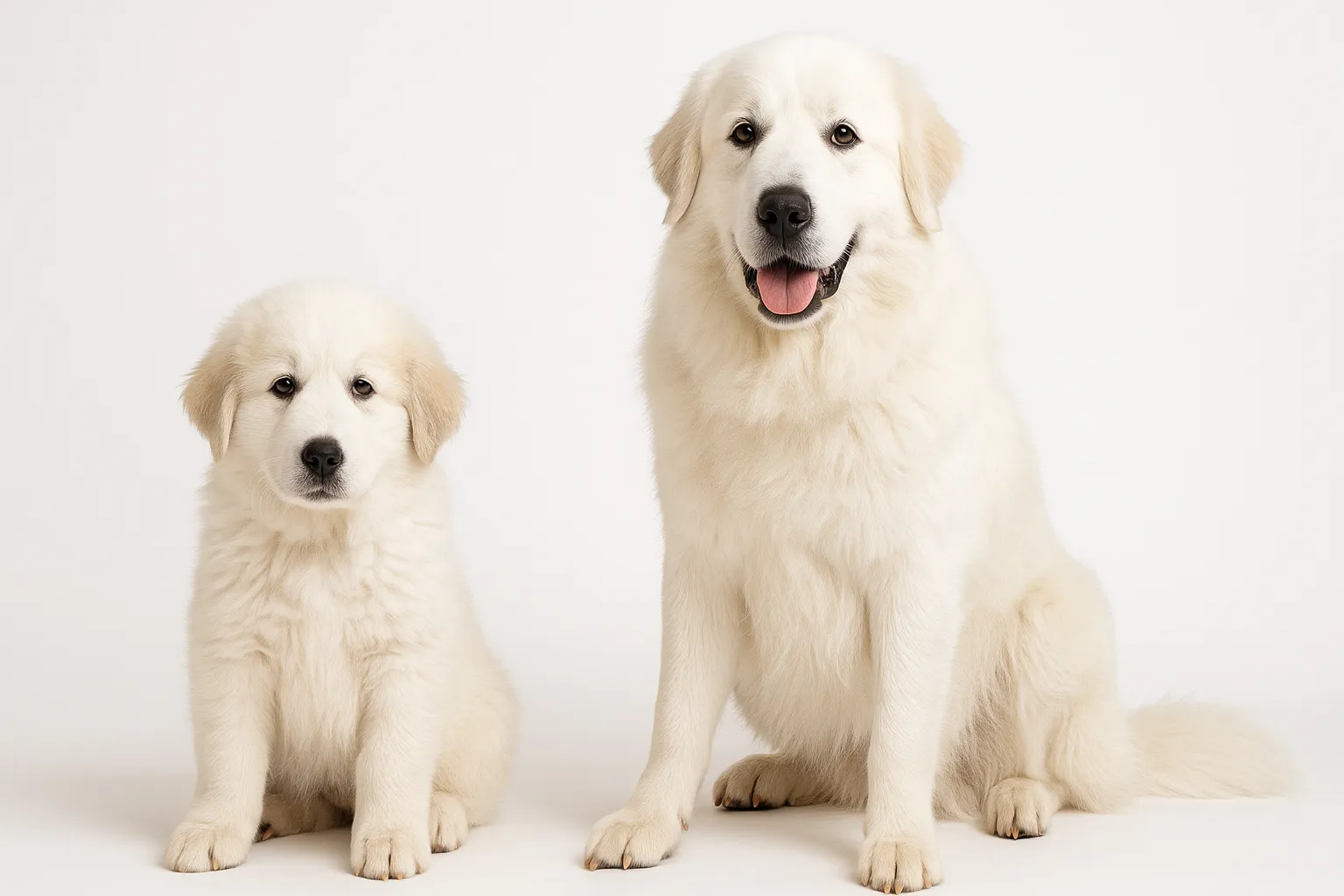
Great Pyrenees typically live 10-12 years, which is respectable for a giant breed. These dogs were shaped by centuries of livestock guardian work in the Pyrenean mountains — a job that demanded independent judgment, cold hardiness, and physical toughness.
That large body comes with specific trade-offs. Deep chest conformation drives GDV risk. Hip dysplasia occurs at significant rates. Cancer risk scales with body size. And the breed’s independent nature means you cannot rely on behavioral compliance to tell you something is wrong. You have to look for it.
The Conditions to Watch For
Hip Dysplasia
Hip dysplasia is common in Great Pyrenees. OFA data shows over 20% of evaluated dogs are affected. An OFA or PennHIP evaluation at 24 months gives you a structural baseline, and weight management during growth and throughout adult life is the primary protective factor. One important detail: this breed’s thick coat hides weight gain easily. Palpate ribs monthly to get an accurate read on body condition.
See the Hip Dysplasia guide for full prevention and management detail.
Bloat (GDV)
Great Pyrenees fall in the highest-risk category for GDV based on breed size and chest conformation. Prophylactic gastropexy should be discussed at the very first puppy wellness visit, not deferred. Standard prevention also includes twice-daily feeding, slow-feeder bowls, and restricting vigorous exercise for 1 hour before and after meals.
See the Bloat (GDV) guide for full prevention and management detail.
Cancer
Cancer rates climb with body size in dogs, and giant breeds bear a disproportionate cancer burden. Osteosarcoma, hemangiosarcoma, and lymphoma are among the higher-risk cancers for large dogs. Annual examinations after age 6 with lymph node palpation, bone palpation for tenderness, and prompt workup of new masses are the primary surveillance tools available.
See the Cancer guide for full prevention and management detail.
Arthritis
Secondary arthritis develops in Great Pyrenees with hip dysplasia and is common in senior giant-breed dogs generally. Weight management is the most effective long-term defense. Omega-3 supplementation, controlled exercise, and veterinarian-supervised pain management address established disease.
See the Arthritis guide for full prevention and management detail.
Hypothyroidism
Hypothyroidism appears at moderate rates in Great Pyrenees. Annual thyroid panels from age 4 provide reliable detection. The thick coat can mask both coat changes and weight gain, making laboratory screening essential rather than optional.
See the Hypothyroidism guide for full prevention and management detail.
Practical Longevity Strategies
GDV Prevention and Gastropexy
Treat prophylactic gastropexy as a routine part of initial veterinary care, not an optional upgrade. Performed laparoscopically alongside spay or neuter, it takes roughly 15-20 minutes and eliminates the fatal volvulus component of GDV for life. Studies in high-risk breeds show gastropexy reduces GDV mortality by over 95%.
Even with gastropexy, feeding practices matter. Twice-daily feeding, slow-feeder bowls, and limiting exercise around meals reduce gas accumulation and stretch-related bloat episodes.
Weight Management in a Giant Breed
In a dog that weighs 85-120 lbs at ideal weight, even 10 extra pounds represents a significant percentage of body mass. That creates proportionally large joint load. During growth (0-18 months), large-breed puppy formulas with controlled calcium-phosphorus ratios are important. Adult dogs should hold at BCS 4-5/9 — visible waist behind the ribs, ribs palpable without pressing. Monthly body condition scoring is the most reliable tool you have. Visual assessment alone is unreliable through this breed’s thick double coat.
Heat Management
Great Pyrenees were built for alpine cold. In warm climates, heat management is a genuine requirement, not a minor convenience. Restrict exercise to early morning and late evening from May through September. Provide air conditioning or a cool indoor environment as the primary summer habitat. The white coat absorbs less solar heat than darker coats, but the insulation still limits heat dissipation. Recognize early heat stress signs — excessive panting, drooling, stumbling — as emergencies requiring immediate intervention.
Where to Focus Your Prevention Effort
The prevention actions most Great Pyrenees owners should prioritize above all else:
- Prophylactic gastropexy is the highest-return surgical decision for a Great Pyrenees
- Hip evaluation at 24 months and strict weight management throughout life
- Annual cancer surveillance after age 6 given elevated rates in giant breeds
Anchor your monitoring plan to these high-yield targets. When you are deciding where to invest time and money, these conditions are where the evidence points. See Hip Dysplasia, Bloat, Cancer for the full breakdown.
Evidence-Based Longevity Priorities
Body Composition and Muscle Maintenance
Maintaining stable weight and lean muscle mass is one of the highest-yield longevity interventions available for Great Pyrenees. In giant breeds, excess weight accelerates orthopedic decline and shortens lifespan more sharply than in smaller dogs. These are powerful, heavy animals, and every pound matters.
Condition-Focused Prevention Stack
The highest-return prevention targets for Great Pyrenees are Hip Dysplasia, Bloat, and Cancer. Proactive response to early signals preserves interventions that become unavailable once conditions progress.
Behavior, Stress Load, and Recovery
Household rhythm quality directly affects healthspan in this breed. Inconsistent schedules and unclear role structure often show up as behavior drift, vigilance patterns, or poor recovery from exertion.
Preventive Screening Cadence
Schedule veterinary reassessment intervals by age band and trend changes rather than waiting for obvious deterioration. Planned checkpoints focused on orthopedic function and gait quality improve early detection and intervention timing.
Breed-Specific Research
Use these evidence deep dives to add mechanism-level context to your Great Pyrenees longevity plan:
- Arthritis Pain Management Stack For Dogs: evidence framework for hip dysplasia and arthritis management in giant breeds
- Canine Cancer Early Warning Workflow: guides cancer surveillance planning in giant breeds
- Canine Obesity And Lifespan Evidence: evidence base for weight management in giant breeds
Making Genetic Testing Actionable
Genetic testing has the most value when results directly change what gets measured, how often, and what triggers escalation. Hip and elbow scoring (OFA or PennHIP) quantifies orthopedic risk; breed-specific cancer panels or tumor marker surveillance add another layer when available.
- A well-chosen initial panel gives you a risk map. Follow-up assessments at regular intervals tell you which risks are materializing and which remain theoretical.
- Connect your first monitoring protocol to Hip Dysplasia and Bloat — these are the conditions where test results should directly change what you do next.
- Track everything in one place: test results, exam findings, medication changes, and what you notice at home. Patterns that span months or years only become visible when the data lives together.
- Plan reassessment points at each major life transition — post-growth, mid-life, and the senior threshold. Each stage reframes what your genetic data means for daily management.
Every genetic or diagnostic result should answer one question: what do I do differently starting now?
Breeding History & Health Implications
Great Pyrenees were bred for guarding and endurance in harsh mountain environments. That legacy produces structural load patterns demanding proactive orthopedic surveillance, and a cancer susceptibility that benefits from serial tumor screening.
- Structural demands require monitoring frequency calibrated to actual risk, not just annual wellness defaults.
- Prioritize surveillance around Hip Dysplasia, Bloat, and Cancer.
- Treat repeat low-grade drift as a signal to tighten cadence early, not as background noise.
- Static prevention plans decay in value. The most effective owners treat their Great Pyrenees’s health plan as something that evolves with every vet visit and every home observation.
Breeding history narrows the search. Serial monitoring data makes the call.
Monitoring Schedule by Life Stage
- Puppy to 2 years: gastropexy discussion, OFA hip evaluation at 24 months, baseline thyroid
- 2 to 6 years: annual wellness exam, thyroid panel from age 4, joint assessment
- 7+ years: biannual exams, cancer surveillance, expanded bloodwork, pain and mobility assessment
The Feeding Plan That Matters
Great Pyrenees need giant-breed puppy formulas during growth to control skeletal development rate. Adults benefit from complete, high-quality large/giant-breed diets with measured portions. Given their large size and hypothyroidism risk, measured feeding — not free-feeding — is essential. Omega-3 supplementation supports joint and coat health. Avoid high-calorie supplemental treats that add untracked calories.
What a Well-Managed Life Looks Like
Great Pyrenees longevity hinges on three interventions: prophylactic gastropexy, hip management, and weight control. The breed’s mountain working heritage provides real physical robustness when health challenges are addressed proactively. Owners who commit to gastropexy and annual monitoring give their dogs the strongest foundation for reaching the upper end of the 10-12 year range.
Most-Missed Early Drift Pattern
Healthspan erosion in Great Pyrenees typically begins with shifts that are easy to explain away:
- Hind-limb stiffness after rest related to Hip Dysplasia that owners dismiss as “just slow to warm up”
- Intermittent mild abdominal discomfort after eating that signals Bloat risk
- Palpable masses, persistent lethargy, or sudden collapse tied to Cancer
When any measured function stays below baseline for a week or more, investigate — waiting for spontaneous recovery risks missing a treatable window.
Frequently Asked Questions
How long do Great Pyrenees live?
Great Pyrenees typically live 10-12 years, consistent with other giant breeds. Proactive GDV prevention and weight management are the most impactful owner-controllable factors.
Should all Great Pyrenees get gastropexy?
Yes — most veterinarians recommend prophylactic gastropexy for Great Pyrenees given their very high GDV risk from size and deep chest conformation.
Are Great Pyrenees prone to hip problems?
Yes — over 20% of evaluated Great Pyrenees have hip dysplasia based on OFA data. Weight management and OFA evaluation at 24 months are the primary management tools.
Do Great Pyrenees do well in warm climates?
They can adapt with strict heat management but require air conditioning, restricted warm-weather exercise, and close monitoring for heat stress given their heavy white coat.
What is the biggest health risk for Great Pyrenees?
GDV (bloat) is the most acute, potentially fatal risk. Prophylactic gastropexy effectively eliminates the volvulus component. Hip dysplasia and cancer are the most impactful chronic health concerns.
References
[1] Prophylactic gastropexy: Glickman et al. JAVMA 2000. [2] OFA hip dysplasia statistics by breed. ofa.org. [3] WSAVA global nutrition guidelines. wsava.org. [4] Great Pyrenees Club of America Health Committee. gpcaonline.com. [5] Merck Veterinary Manual: Gastric Dilatation-Volvulus. merckvetmanual.com.
Related reads
Related Reading
Continue exploring