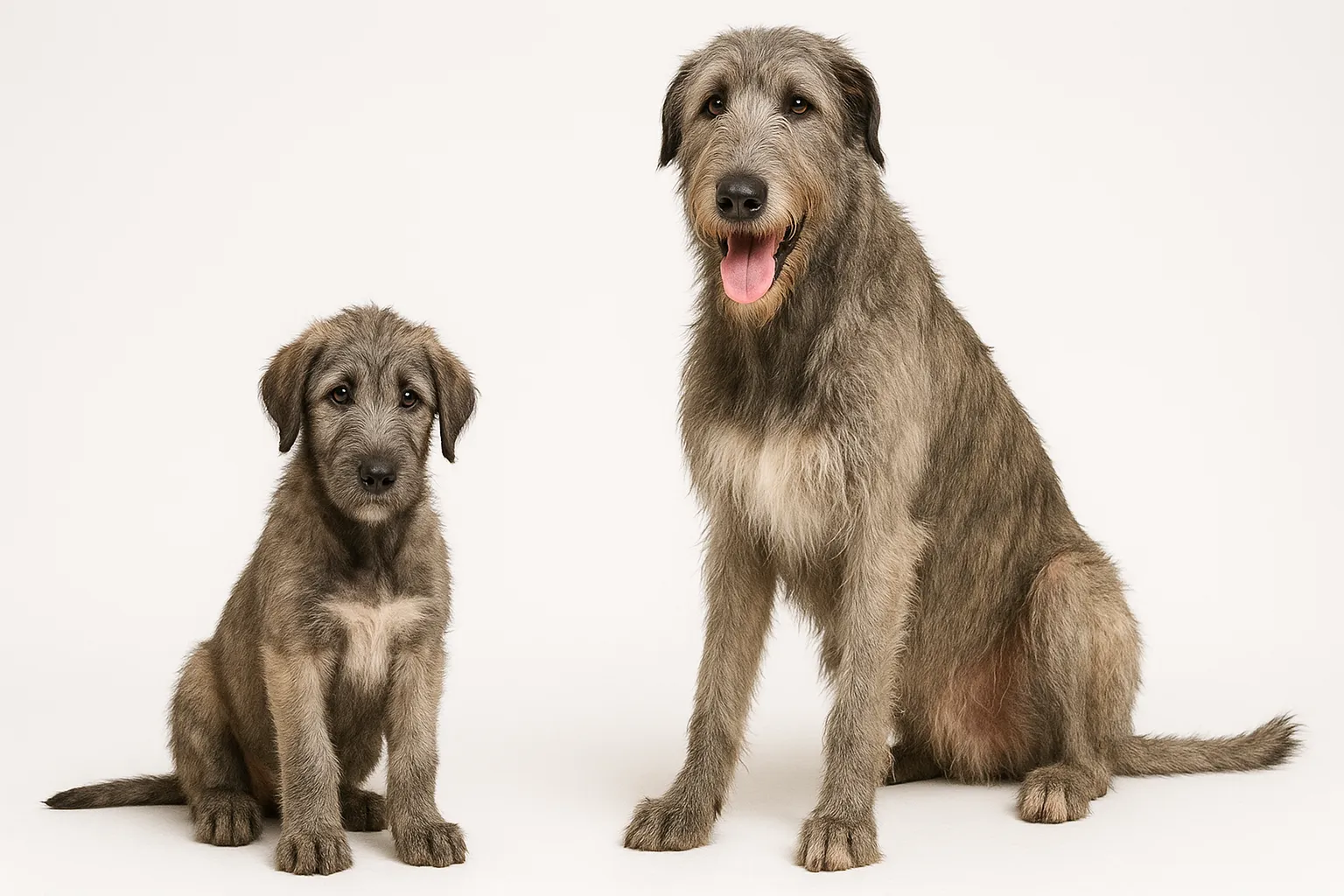
The Hardest Longevity Challenge in Dogs
Owning an Irish Wolfhound means accepting a painful trade-off. The tallest dog breed in the world, gentle and magnificent, averages just 6-8 years — with exceptional dogs reaching 9-10. That brevity is not random. It reflects the extreme negative correlation between body size and lifespan, amplified by a breed where dilated cardiomyopathy (DCM) affects the majority of dogs.
GDV, osteosarcoma, and other cancers further compress an already short window. But this is not a hopeless situation. Owners who pursue proactive health management — particularly cardiac monitoring — can add meaningful healthy time to their Wolfhound’s life. The question is not whether to invest in prevention, but how aggressively.
DCM is the single most important longevity-determining condition for this breed. Annual echocardiographic monitoring detects it before clinical signs appear, opening a window for medical management at the preclinical stage when treatment works best. GDV is the most acute life-threatening risk and is preventable through gastropexy. Osteosarcoma rates are significantly elevated, as in most giant breeds.
The Health Conditions That Define This Breed
Dilated Cardiomyopathy (DCM)
DCM is the most common and most serious health condition in Irish Wolfhounds. By age 4, a majority show subclinical evidence on echocardiography. That statistic shapes everything about how this breed should be medically managed.
Annual echocardiographic monitoring starting at age 2 is the standard of care. Identifying preclinical DCM allows medical management to begin before congestive heart failure develops — a window that may add 1-2 or more years of quality life. Establish a relationship with a veterinary cardiologist early, not after a crisis.
See the Dilated Cardiomyopathy (DCM) guide for full prevention and management detail.
Bloat (GDV)
Irish Wolfhounds sit in the extreme high-risk category for GDV. Their enormous body size and deep, narrow chest create maximal anatomic risk. Prophylactic gastropexy should be discussed at the first puppy visit — this is not optional for this breed.
Beyond surgery, feeding twice daily, using a slow-feeder bowl, and avoiding vigorous exercise before and after meals are essential daily practices.
See the Bloat (GDV) guide for full prevention and management detail.
Cancer
Osteosarcoma occurs at significantly elevated rates in giant breeds, and Irish Wolfhounds are no exception. Sudden unexplained lameness, bone pain on palpation, or soft tissue swelling at a bony site warrants immediate radiographic evaluation. Do not wait to see if lameness resolves.
Lymphoma and hemangiosarcoma are also elevated. Annual physical exams after age 4 with lymph node palpation and bone tenderness assessment provide primary surveillance.
See the Cancer guide for full prevention and management detail.
Hip Dysplasia
Hip dysplasia affects Irish Wolfhounds at significant rates. OFA evaluation at 24 months establishes a structural baseline. Given this breed’s compressed lifespan, even mild dysplasia should be addressed proactively — symptoms may appear during what is effectively middle age.
See the Hip Dysplasia guide for full prevention and management detail.
Arthritis
Secondary arthritis is common in Irish Wolfhounds, driven by hip dysplasia and the cumulative wear of extreme body size. Weight management is the most effective protective factor. Anti-inflammatory nutrition, omega-3 supplementation, and veterinarian-supervised pain management support quality of life in affected dogs.
See the Arthritis guide for full prevention and management detail.
What Actually Moves the Needle
Annual Echocardiography Protocol
When the majority of a breed develops DCM by middle age, annual echocardiography is not optional screening — it is standard care. Start a baseline echo at age 2 and repeat annually. The key measurements — left ventricular diameter and shortening fraction — detect declining cardiac function before any clinical signs appear.
The Irish Wolfhound Club of America recommends annual cardiac screening and maintains a cardiac health registry. Dogs identified with preclinical DCM benefit from cardiologist-guided monitoring and, at appropriate thresholds, medical management that delays the onset of congestive heart failure.
Osteosarcoma Awareness
Osteosarcoma in Irish Wolfhounds often announces itself overnight — sudden, severe lameness or bone swelling that may initially look like a bruise or sprain. This is not a soft tissue injury with gradual onset. Any lameness that does not resolve within 24-48 hours warrants radiographic evaluation, not watchful waiting.
If osteosarcoma is suspected, staging follows promptly. Lung radiographs check for metastasis and inform prognosis. Palliative care options, including pain management and radiation, exist even when curative surgery is declined.
Life Quality Optimization
Given the Irish Wolfhound’s compressed lifespan, owners are managing life quality across a timeline where every month matters more. A heart condition identified at age 7 is mid-to-late life for this breed. Veterinary discussions should include quality-of-life framing alongside treatment options.
Regular assessments of activity enjoyment, appetite, social engagement, and comfort help you track functional status. These observations inform palliative and end-of-life decisions proactively — before a crisis forces reactive choices.
The Three Things That Matter Most
These are the investments that pay the highest longevity dividend for a Irish Wolfhound:
- Annual echocardiography — dilated cardiomyopathy affects the majority of Irish Wolfhounds by age 4
- Prophylactic gastropexy is essential given the breed’s extreme deep-chest GDV risk
- Proactive cancer surveillance after age 4 given the breed’s significantly elevated cancer rates
These priorities drive the highest return on your preventive care investment. Revisit them seasonally and let your vet know you are tracking these specifically. Use Heart Disease, Bloat, Cancer as your reference.
Evidence-Based Longevity Priorities
Body Composition and Muscle Maintenance
In Irish Wolfhounds, body composition control predicts long-term function more reliably than almost any other single factor. Excess weight in a giant breed accelerates orthopedic decline and compresses lifespan more dramatically than in smaller dogs. These pursuit athletes need sustained lean mass to preserve both joint function and cardiovascular efficiency.
Condition-Focused Prevention Stack
The greatest healthspan gains come from focusing prevention on Heart Disease, Bloat, Cancer. Early action preserves the widest range of treatment options — waiting narrows them irreversibly.
Behavior, Stress Load, and Recovery
Irish Wolfhounds maintain better stability when scent enrichment, controlled exercise, and recovery time are deliberately balanced. Without adequate sensory engagement, these dogs may develop chronic stress patterns or obsessive behaviors that erode both mental and physical health.
Preventive Screening Cadence
Routine screening at planned intervals outperforms reactive veterinary visits every time. By the time you notice something is wrong enough to schedule an urgent appointment, the optimal intervention window may already be closing.
Breed-Specific Research
Use these evidence deep dives to add mechanism-level context to your Irish Wolfhound longevity plan:
-
Loyal’s LOY-001 and LOY-002: FDA Progress, Clinical Data, and 2026: useful context for large/giant-dog drug timing, while cardiac and GDV prevention remain the immediate priorities.
-
Blood Pressure Monitoring In Dogs: relevant for cardiac monitoring in DCM-affected giant breeds
-
Canine Cancer Early Warning Workflow: guides osteosarcoma and cancer surveillance planning in giant breeds
-
Senior Dog Screening Protocol: framework for annual wellness testing with giant-breed-specific timing
Making Genetic Testing Actionable
Genetic testing in Irish Wolfhounds delivers the most value when results connect to monitoring cadence and owner action — not as standalone predictions. Consider hip and elbow scoring (OFA or PennHIP) to quantify orthopedic risk, and breed-specific cancer panels or tumor marker surveillance when available.
- Use a breed-appropriate genetic panel as your foundation, but remember that genetic risk is not the same as clinical disease. Serial veterinary observations bridge that gap.
- Connect your first monitoring protocol to Heart Disease and Bloat — these are the conditions where test results should directly change what you do next.
- Keep all health data in one place — test results, exam summaries, medication changes, and your daily notes. Continuity across appointments depends on accessible history.
- Circle back to your genetic data after spay/neuter, at the adult-to-senior transition, and anytime a pattern emerges — weight creeping up, stamina dropping, or behavior shifting without obvious cause.
Measure to decide, not to collect. If a result does not change your monitoring cadence or intervention threshold, question whether you needed it.
Breeding History & Health Implications
The Irish Wolfhound was bred for tracking endurance, pursuit speed, and the sheer physical power to take down large game. That legacy built a magnificent animal — but also one whose size creates structural load patterns and cancer susceptibility that demand vigilant monitoring throughout adulthood.
- Structural demands and elevated cancer risk require tighter monitoring cadence across the breed’s compressed lifespan.
- Prioritize surveillance based on breed heritage — Heart Disease, Bloat, Cancer are the highest-probability targets that history and data both point to.
- The biggest threat to your Irish Wolfhound’s healthspan is normalizing gradual decline. Any persistent change in mobility, appetite, energy, or recovery time is a data point, not an inevitability.
- The best prevention plan is a living document. Adjust it whenever new data arrives, whenever a life stage changes, and whenever something surprises you.
What the breed was built for tells you where to look. What your dog’s trend data shows tells you when to move.
Age-Based Monitoring Milestones
- Puppy to 2 years: gastropexy discussion, baseline echocardiogram at 2 years, OFA hip evaluation
- 3 to 6 years: annual echocardiogram (cardiologist recommended), cancer surveillance, joint assessment
- 7+ years: for this breed, represents late life — aggressive comfort and quality-of-life management priority
Feeding for Longevity
Irish Wolfhounds require giant-breed puppy formulas during growth to control skeletal development rate. Adults do well on complete, high-quality large-breed diets with measured portions. Omega-3 supplementation supports joint health.
Twice-daily feeding — never once daily — reduces GDV risk. Monitor body condition monthly. Given the breed’s short lifespan, maintaining optimal condition throughout life has greater proportional benefit than in longer-lived breeds. Every healthy month counts more.
The Longevity Picture
Irish Wolfhounds face an inherently compressed lifespan that responsible ownership cannot fully overcome. But proactive cardiac monitoring, GDV prevention through gastropexy, and cancer awareness can meaningfully extend the good-quality time available. Annual echocardiography is the single highest-return health investment for this breed.
Wolfhound owners benefit from establishing relationships with veterinary cardiologists and oncologists early — not seeking specialists only when a crisis hits. The best care for this breed is planned, not reactive.
Most-Missed Early Drift Pattern
Long-term decline in Irish Wolfhounds often starts with changes that owners normalize too quickly:
- Slightly elevated resting respiratory rate related to Heart Disease that gets dismissed as the dog being warm or tired
- Intermittent mild abdominal discomfort after eating that may signal early Bloat patterns
- Gradual emergence of Cancer signs: palpable masses, persistent lethargy, or sudden collapse
If something has been different for a full week, stop assuming it will self-correct. Persistent drift in any baseline marker is a reason to act.
Frequently Asked Questions
How long do Irish Wolfhounds live?
Irish Wolfhounds have one of the shortest lifespans of any breed — typically 6-8 years, with exceptional dogs reaching 9-10 years. Annual cardiac monitoring and GDV prevention through gastropexy are the highest-impact health investments.
Do all Irish Wolfhounds get heart disease?
The majority of Irish Wolfhounds develop dilated cardiomyopathy (DCM). Annual echocardiography starting at age 2 detects the condition in its preclinical phase, when medical management can meaningfully delay disease progression.
Should Irish Wolfhounds get gastropexy?
Yes — their extreme body size and deep chest create very high GDV risk. Prophylactic gastropexy is recommended, ideally performed at the time of spay or neuter.
What is osteosarcoma and how common is it in Wolfhounds?
Osteosarcoma is a bone cancer with significantly elevated rates in giant breeds. It often presents as sudden severe lameness. Any unexplained limb pain in a Wolfhound warrants same-week radiographic evaluation.
How can I help my Irish Wolfhound live longer?
Annual echocardiography starting at age 2, prophylactic gastropexy, cancer awareness after age 4, lean body condition maintenance, and establishing relationships with veterinary cardiology and oncology specialists are the highest-yield actions.
References
[1] Irish Wolfhound Club of America Cardiac Health Program. iwclubofamerica.org. [2] DCM in Irish Wolfhounds: Vollmar BC. JSAP 1999. [3] Prophylactic gastropexy: Glickman et al. JAVMA 2000. [4] OFA health statistics by breed. ofa.org. [5] WSAVA global nutrition guidelines. wsava.org.
Related reads
Related Reading
Continue exploring