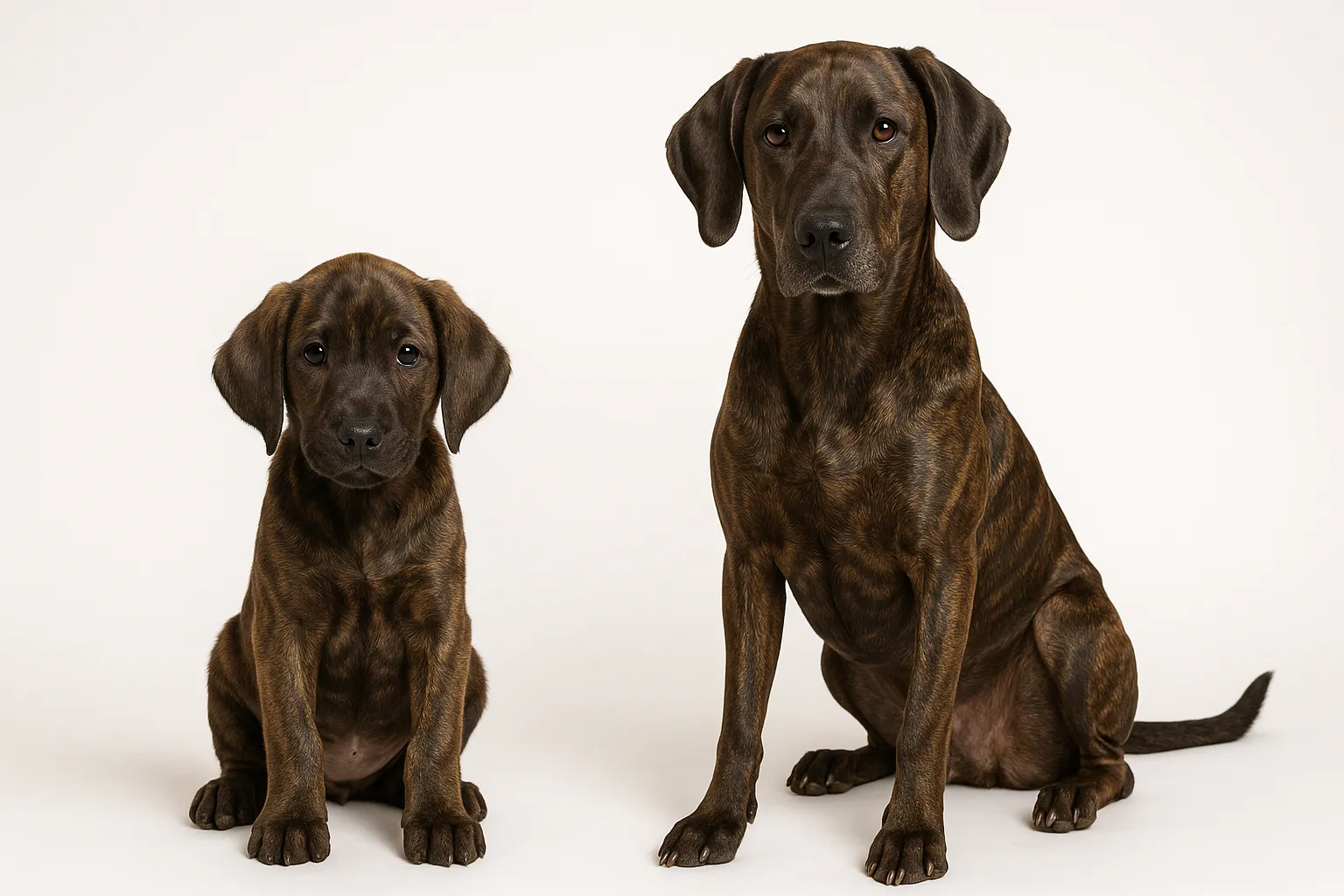
The Only Coonhound With German Blood — and a Cleaner Health Profile for It
North Carolina’s state dog was never bred from English foxhound stock. The Plott Hound descends from German Hanoverian Hounds imported to the American colonies by the Plott family, making it the only coonhound breed with a distinct European lineage. That genetic independence matters — it contributes to a relatively clean health profile.
Robust and athletic, Plott Hounds live 12-14 years, slightly longer than most coonhound breeds. No breed-specific single-gene disorders with high prevalence are documented as of 2026. The primary health management concerns are hip dysplasia, ear infections driven by pendulous ear anatomy, and GDV risk from a deep-chested body type.
What This Breed Is Most Likely to Face
Hip Dysplasia
Hip dysplasia is the primary structural concern, occurring at rates typical for large working hounds. OFA hip evaluation at 24 months establishes a structural baseline. Lean body condition throughout life slows joint disease progression and preserves the mobility these dogs were built for.
See the Hip Dysplasia guide for full prevention and management detail.
Ear Infections (Otitis Externa)
Those long, pendulous hound ears look distinctive, but they trap moisture and create a persistent environment for otitis externa. Weekly inspection and cleaning prevent infections from taking hold. Post-water exposure cleaning is essential. When infections recur despite consistent home care, culture-guided veterinary treatment identifies the organisms driving the problem.
See the Ear Infections (Otitis Externa) guide for full prevention and management detail.
Bloat (GDV)
The Plott Hound’s deep chest places it in the GDV risk category. Prophylactic gastropexy performed at the time of spay/neuter significantly reduces volvulus risk. Feeding twice daily and avoiding vigorous exercise after meals add further protection.
See the Bloat (GDV) guide for full prevention and management detail.
What the Evidence Says About Living Longer
Ear Care for Working Hounds
A Plott Hound in the field encounters streams, dense brush, and debris — all of which compound ear infection risk beyond the baseline created by pendulous ears. Weekly cleaning and immediate drying after water exposure reduce infection frequency substantially. Dogs that hunt regularly may need even more frequent cleaning.
Any odor, discharge, or behavioral ear-scratching warrants veterinary evaluation within 2-3 days. Waiting longer risks chronic infection.
Athletic Fitness Maintenance
These dogs were originally bred to hunt black bear, one of the most physically demanding and dangerous hunting pursuits in North America. That heritage built a dog with exceptional stamina and conditioning. Plott Hounds thrive with vigorous daily exercise. Maintaining muscle mass and lean body condition through regular activity supports orthopedic health and preserves the working capacity bred into the breed.
Breed Robustness Management
Plott Hounds have earned their reputation for hardiness, with fewer serious hereditary conditions than many large breeds. But hardiness maintained through passive assumption is hardiness that erodes over time. OFA evaluations, consistent ear management, weight control, and dental care protect what responsible breeding built.
The Prevention Plan That Pays Off
Start here — these are the highest-impact moves for Plott Hound longevity:
- OFA hip evaluation at 24 months — moderate hip dysplasia prevalence in hound breeds
- Weekly ear cleaning — pendulous hound ears create persistent ear infection risk
- Maintain lean body condition — working hound weight management prevents joint deterioration
These priorities drive the highest return on your preventive care investment. Revisit them seasonally and let your vet know you are tracking these specifically. Use Hip Dysplasia, Ear Infections, Bloat as your reference.
Evidence-Based Longevity Priorities
Body Composition and Muscle Maintenance
Optimal body condition extends healthspan by reducing cumulative disease load across multiple systems. Joint load and metabolic strain rise quickly when weight drifts on a large-framed dog. As pursuit athletes, Plott Hounds need sustained lean mass to preserve both joint function and cardiovascular efficiency.
Condition-Focused Prevention Stack
Your highest-yield prevention effort targets Hip Dysplasia, Ear Infections, Bloat. Early, consistent action on these conditions preserves the interventions that late detection forecloses.
Behavior, Stress Load, and Recovery
Plott Hounds maintain better stability when scent enrichment, controlled exercise, and recovery time are deliberately balanced. Without adequate sensory engagement, these dogs may develop chronic stress or obsessive patterns that quietly erode healthspan.
Preventive Screening Cadence
Use planned veterinary reassessment intervals, then tighten cadence when trend logs show drift in orthopedic function and gait quality. Early intervention windows are where most healthspan gains are made.
Breed-Specific Research
Use these evidence deep dives to add mechanism-level context to your Plott Hound longevity plan:
- Exercise Protocols By Breed Size: exercise management for large working scent hound breeds
- Canine Obesity And Lifespan Evidence: weight management evidence for working hound breeds
- Annual Wellness Testing Protocol For Dogs: wellness monitoring framework for healthy working breeds
Genetic Testing: When It Matters
The practical value of genetic testing in the Plott Hound comes from linking results to monitoring cadence and owner action, not from treating test data as predictive certainty. Hip and elbow scoring (OFA or PennHIP) quantifies orthopedic risk as part of the initial assessment.
- Use a breed-appropriate genetic panel as your foundation, but remember that genetic risk is not the same as clinical disease. Serial veterinary observations bridge that gap.
- Build your initial monitoring playbook around Ear Infections and Hip Dysplasia, so that every test result feeds into a specific follow-up action.
- Keep all health data in one place — test results, exam summaries, medication changes, and your daily notes. Continuity across appointments depends on accessible history.
- The value of genetic testing compounds over time. Each veterinary visit adds context that makes the original results more — not less — relevant to current decisions.
Measure to decide, not to collect. If a result does not change your monitoring cadence or intervention threshold, question whether you needed it.
Breeding History & Health Implications
The Plott Hound was bred for tracking endurance, pursuit speed, and scent-driven work. That heritage shapes a practical risk profile owners can address through structured prevention.
- Joint and structural stress from this breed’s build and movement patterns require orthopedic monitoring earlier and more frequently than in lighter-framed breeds.
- Direct your monitoring attention first to Ear Infections, Hip Dysplasia, Bloat — these are the risks that the breed’s working history and health data identify as most likely.
- The biggest threat to your Plott Hound’s healthspan is normalizing gradual decline. Any persistent change in mobility, appetite, energy, or recovery time is a data point, not an inevitability.
- The best prevention plan is a living document. Adjust it whenever new data arrives, whenever a life stage changes, and whenever something surprises you.
What the breed was built for tells you where to look. What your dog’s trend data shows tells you when to move.
Preventive Care Timeline
- Puppy to 2 years: OFA hip at 24 months, establish ear care routine
- 3-7 years: annual wellness panel, monthly ear care, body condition monitoring
- 8+ years: senior panel annually, orthopedic assessment, ear monitoring
Feeding for Longevity
Plott Hounds do well on complete large-breed adult diets. Active hunting dogs need higher caloric intake during hunting season; household dogs should have strictly measured portions to prevent obesity. Omega-3 supplementation supports joint health. Feed twice daily given GDV risk.
How the Pieces Connect
Among coonhound breeds, the Plott Hound stands out for both health and lifespan. Consistent ear care, disciplined weight management, and hip screening protect what the breed’s diverse genetic background already provides. When preventive care matches genetic advantage, these dogs age well.
Most-Missed Early Drift Pattern
Long-term decline in Plott Hounds often starts as small changes that owners normalize too quickly:
- Head tilting or occasional ear scratching related to Ear Infections that owners often dismiss as temporary
- Subtle compensation patterns that mask Hip Dysplasia progression: bunny-hopping gait or reluctance to jump
- Gradual drift toward Bloat signs that become harder to reverse: unproductive retching, rigid distended abdomen, and rapid deterioration
If baseline function is drifting for 7-10 days, treat it as a prevention failure signal and reassess early.
Additional Health Risks to Monitor
Based on breed predisposition data, Plott Hound owners should also be aware of:
Frequently Asked Questions
How long do Plott Hounds live?
Plott Hounds typically live 12-14 years — among the longer-lived of the coonhound breeds. Ear care, OFA hip screening, and weight management are the key longevity investments.
Are Plott Hounds rare?
Plott Hounds are less common than Beagles or Bloodhounds but are not rare. They are more prevalent in the Southeastern United States where they remain popular hunting dogs. The National Plott Hound Association provides breeder information.
What were Plott Hounds originally bred to hunt?
Plott Hounds were originally bred in North Carolina to hunt black bear — one of the most physically demanding and potentially dangerous hunting pursuits. They are also used for wild boar, mountain lion, and racoon hunting.
Are Plott Hounds good family dogs?
Plott Hounds are loyal and affectionate with family but have strong prey drives and high exercise needs. They are better suited to active rural or suburban households with secure fencing than urban apartments.
What makes Plott Hounds different from other coonhounds?
Plott Hounds are the only American coonhound breed without English foxhound ancestry — their heritage traces to German Hanoverian Hound stock. They have a distinctive bawling voice, exceptional tenacity, and are particularly valued for hunting large, dangerous game.
References
[1] National Plott Hound Association health resources. [2] OFA health statistics by breed. ofa.org. [3] WSAVA global nutrition guidelines. wsava.org. [4] Canine hip dysplasia management: Morgan JP et al. JAVMA. 2000. [5] North Carolina State Dog designation. ncleg.gov.
Related reads
Related Reading
Continue exploring