Built for the Arctic — But Their Joints Need Protection
One in five Alaskan Malamutes has hip dysplasia. That single statistic should shape how every owner approaches this breed from puppyhood onward.
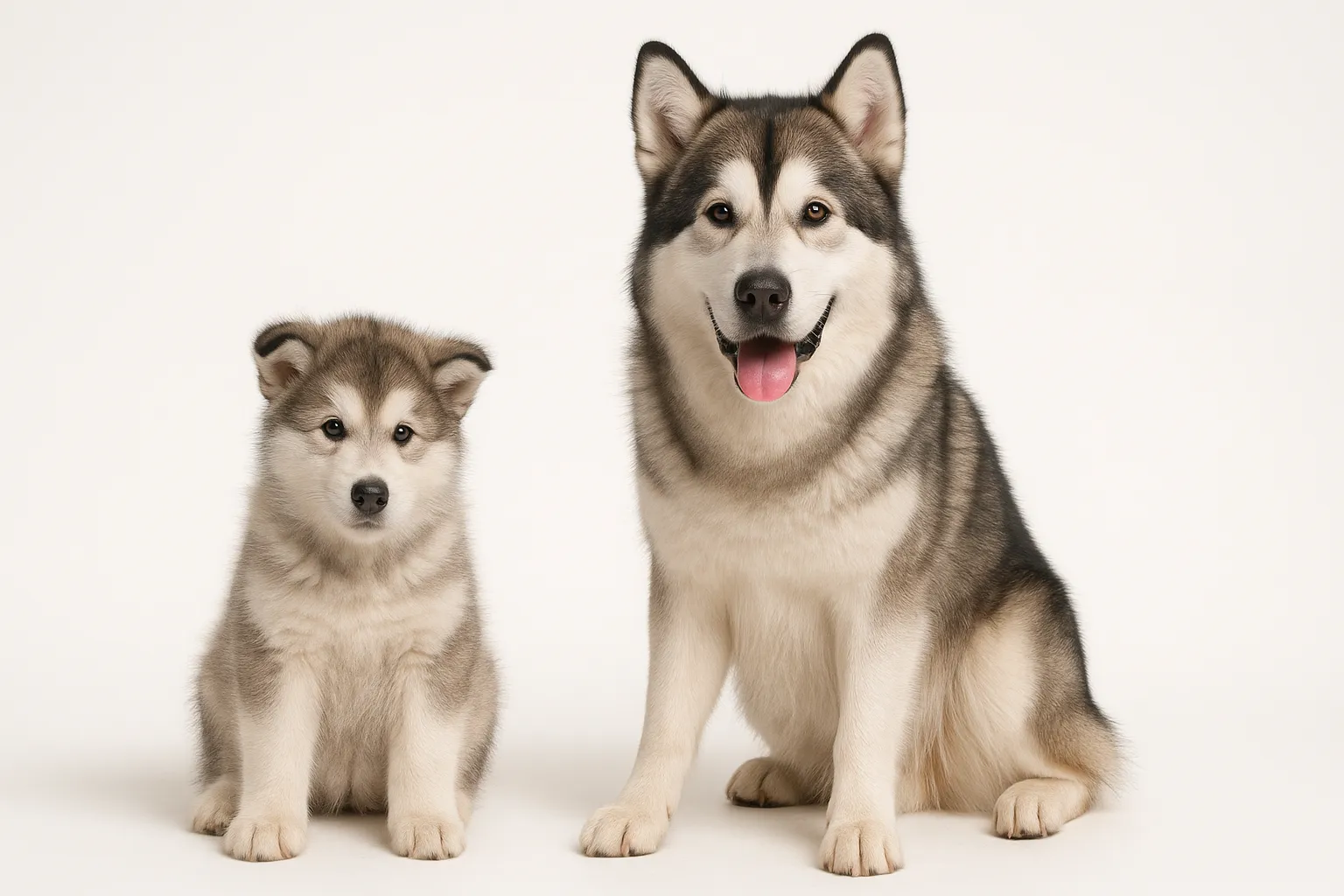
Malamutes typically live 10-14 years — good to above average for a large Arctic working breed. They are powerful sled dogs built for endurance pulling in extreme cold, and their working-dog constitution supports robust physical aging when major health challenges are proactively managed. But hip dysplasia, hypothyroidism, and a breed-specific visual condition called cone degeneration (day blindness) all require targeted monitoring.
The Conditions to Watch For
Hip Dysplasia: A 20% Prevalence Rate
Hip dysplasia affects approximately 20% of Alaskan Malamutes according to OFA data. OFA evaluation at 24 months is standard for breeding dogs. Weight management during growth (0-18 months) and throughout adult life is the primary modifiable risk factor.
The breed’s natural strength can compensate for mild dysplasia early on, which sounds like good news until you realize the underlying joint changes progress regardless of whether your dog is limping.
See the Hip Dysplasia guide for full prevention and management detail.
Hypothyroidism: Hidden by the Thick Coat
Hypothyroidism is highly prevalent in Alaskan Malamutes, with the breed appearing in the top tiers of OFA thyroid disease statistics. Annual thyroid panels from age 3, including thyroglobulin autoantibodies, are standard.
The practical challenge: the Malamute’s thick double coat masks the weight gain that is often the first visible sign. Laboratory screening is more reliable than visual assessment for this breed.
See the Hypothyroidism guide for full prevention and management detail.
Bloat (GDV): Deep Chest, Serious Risk
Alaskan Malamutes have a deep chest conformation that increases GDV risk. Prophylactic gastropexy is recommended and is most conveniently performed at the time of spay/neuter. Preventive feeding management — twice-daily feeding, slow-feeder bowls, avoiding vigorous exercise 1 hour before and after meals — provides additional protection.
See the Bloat (GDV) guide for full prevention and management detail.
Cancer: Standard Large-Breed Rates
Cancer rates in Malamutes are similar to other large breeds. Annual examinations after age 6 with lymph node palpation and prompt workup of new masses or unexplained changes provide the standard surveillance approach.
See the Cancer guide for full prevention and management detail.
Arthritis: The Consequence of Hip Disease
Secondary arthritis develops commonly alongside hip dysplasia in Malamutes. The breed’s large frame means joint disease creates significant discomfort when poorly managed. Weight management, omega-3 supplementation, and veterinarian-supervised analgesic management form the ongoing approach.
See the Arthritis guide for full prevention and management detail.
Longevity Interventions That Have Data Behind Them
Hip Protection Starts in Puppyhood
For Alaskan Malamutes, hip management is not a senior-stage concern — it begins the day you bring your puppy home. During growth (0-18 months), avoid high-impact exercise like forced running, jumping, and rough play. Maintain lean body condition (BCS 4-5/9) and ensure controlled calcium-to-phosphorus ratios by using appropriate puppy food rather than adult formulas.
OFA hip evaluation at 24 months provides structural baseline data. After that, monthly body condition scoring and weight management become your ongoing tools. The Purina Lifetime Study demonstrated that lean dogs developed arthritis over four years later than overweight counterparts. Four years is significant.
Day Blindness: A Breed-Specific Visual Condition
Cone degeneration (day blindness) is a breed-specific progressive condition unique to Malamutes. A recessive mutation causes reduced vision in bright light while dim-light vision remains intact. DNA testing identifies carriers and affected dogs before behavioral signs appear.
Affected dogs can adapt remarkably well to home environments with consistent routines. But owners need to be aware, because exposing affected dogs to startling situations in bright outdoor conditions can be dangerous.
Arctic Dogs and Summer Heat
Alaskan Malamutes are poorly adapted to heat. Do not exercise your Malamute in temperatures above 75 degrees F — heat stroke can occur in surprisingly mild weather if the coat is thick or exercise is vigorous.
Keep outdoor exercise to early morning or late evening from May through September. Always provide water and shade. Excessive drooling, stumbling, and disorientation are signs of heat stroke and require immediate cooling with room-temperature water and veterinary evaluation. This is an emergency.
The Longevity Priorities That Move the Needle
The prevention actions most Alaskan Malamute owners should prioritize above all else:
- OFA hip evaluation at 24 months and strict weight management throughout life
- Annual thyroid screening from age 3 — hypothyroidism is highly prevalent in the breed
- Prophylactic gastropexy given deep chest conformation and large body size
Frame your prevention investment around these targets. When resources are limited, these are where the evidence says to spend them first. See Hip Dysplasia, Hypothyroidism, Bloat for the full clinical picture.
Evidence-Based Longevity Priorities
Body Composition Is the Highest-Yield Intervention
Optimal body condition in your Alaskan Malamute protects joints, supports metabolic health, and reduces the inflammatory burden that drives premature aging. Joint load and metabolic strain rise quickly in large breeds when body composition drifts. Prevention must stay proactive — waiting until your dog looks heavy means you are already behind.
Stack Prevention Around the Biggest Threats
Target your prevention plan at Hip Dysplasia, Hypothyroidism, Bloat — the conditions where proactive monitoring and early response yield the highest return on invested time and resources.
Predictable Routines for a Draft Breed
Malamutes maintain better long-term stability when workload, recovery, and social structure are intentionally balanced. As guardian and draft breeds, they need predictable routines to prevent chronic stress accumulation.
Catch Drift Before It Compounds
Use planned veterinary reassessment intervals, then tighten cadence when trend logs show drift in orthopedic function and gait quality. Early intervention windows are where most healthspan gains are made.
Breed-Specific Research
Use these evidence deep dives to add mechanism-level context to your Alaskan Malamute longevity plan:
- Arthritis Pain Management Stack For Dogs: evidence framework for hip dysplasia and arthritis management in large breeds
- Annual Wellness Testing Protocol For Dogs: guides thyroid monitoring decisions in high-prevalence breeds
- Canine Obesity And Lifespan Evidence: evidence base for weight management and joint disease relationship
Genetic Testing: When It Matters
The practical value of genetic testing in Alaskan Malamutes comes from linking results to monitoring cadence and owner execution — not treating test data as predictive certainty. Consider hip and elbow scoring (OFA or PennHIP) to quantify orthopedic risk, plus cone degeneration and chondrodysplasia DNA testing.
- Match your initial testing to the breed’s established vulnerabilities. One round of results tells you where to look; repeated clinical assessment tells you what is actually happening.
- Your first monitoring protocols should target Hip Dysplasia and Hypothyroidism. The goal is results that change behavior — not just data that sits in a file.
- Keep a running health log — test results, clinical findings, home observations. Patterns that matter only emerge when you connect data points across months and years.
- Treat each annual exam as a chance to re-read your genetic data against fresh clinical findings. The same panel results carry different weight as your Alaskan Malamute ages.
A test result that does not change your next action is just information. Make every panel result translate into a specific monitoring decision.
Sled Dogs and the Health Legacy of Draft Work
The Alaskan Malamute was bred for hauling heavy loads across frozen terrain. That endurance heritage gives the breed robust cardiovascular capacity, but it also creates structural load patterns that demand proactive orthopedic surveillance throughout adulthood.
- Prioritize surveillance around Hip Dysplasia, Hypothyroidism, Bloat.
- Small, recurring changes are easier to dismiss than dramatic ones, but they are often more important. A pattern of minor drift is your earliest warning that something is shifting.
- Review and adjust your Alaskan Malamute’s longevity plan every quarter. The right focus at age two is not the right focus at age eight — let age, weight trends, and vet findings guide the updates.
The breed’s past shapes the risk landscape. Your Alaskan Malamute’s present — measured in real data, not assumptions — shapes the response.
Monitoring Schedule by Life Stage
- Puppy to 2 years: cone degeneration DNA test, OFA hip evaluation, gastropexy discussion, baseline thyroid
- 3 to 6 years: annual thyroid panel, wellness bloodwork, joint assessment
- 7+ years: biannual exams, cancer surveillance, mobility and pain assessment
What and How to Feed
Alaskan Malamutes need complete, high-quality large-breed diets. During growth, large-breed puppy formulas with controlled calcium-phosphorus ratios prevent accelerated skeletal development. Adults require measured portions — the breed gains weight readily, especially in warmer climates where activity naturally decreases.
Omega-3 supplementation supports joint and coat health.
The Healthspan Horizon
Alaskan Malamutes have good longevity potential when hip health, hypothyroidism, and GDV prevention are proactively managed. The breed’s working-dog heritage supports robust physical conditioning with appropriate exercise. Owners who pursue genetic testing, OFA evaluation, and prophylactic gastropexy give their dogs the best foundation for reaching the upper end of the 10-14 year range.
The Subtle Signs You Are Most Likely to Miss
Long-term decline in Malamutes often starts as small changes that owners normalize too quickly:
- Subtle hind-limb stiffness after rest related to Hip Dysplasia — easily dismissed as slow mornings
- Lethargy attributed to breed temperament or aging that actually signals Hypothyroidism progression
- Unproductive retching, rigid distended abdomen, or rapid deterioration — Bloat signs that require emergency veterinary care
If baseline function is drifting for 7-10 days, treat it as a prevention failure signal and reassess early.
Frequently Asked Questions
What is day blindness in Alaskan Malamutes?
Day blindness (cone degeneration) is a breed-specific progressive visual condition caused by a recessive gene mutation. Affected dogs have reduced vision in bright light but retain dim-light vision. DNA testing identifies carriers and affected dogs.
How long do Alaskan Malamutes live?
Malamutes typically live 10-14 years. With proactive hip, thyroid, and GDV management, reaching 12-14 years is achievable for well-managed dogs.
Are Malamutes good in hot climates?
They can adapt with strict heat management, but they are poorly heat-tolerant by nature. Exercise must be restricted during warm weather, and air conditioning access in summer is essential.
Should Alaskan Malamutes get gastropexy?
Most veterinarians recommend prophylactic gastropexy given the breed’s deep chest and large body size, both of which significantly increase GDV risk.
What is the most important genetic test for a Malamute?
Cone degeneration (day blindness) testing and chondrodysplasia mutation screening are the most breed-specific priority tests. Combine with OFA hip evaluation at 24 months.
References
[1] OFA hip dysplasia and thyroid statistics by breed. ofa.org. [2] Cone degeneration in Alaskan Malamutes: known recessive mutation. NCBI. [3] Prophylactic gastropexy: Glickman et al. JAVMA 2000. [4] WSAVA global nutrition guidelines. wsava.org. [5] AKC Alaskan Malamute breed health surveys. akc.org.
Related reads
Related Reading
Continue exploring