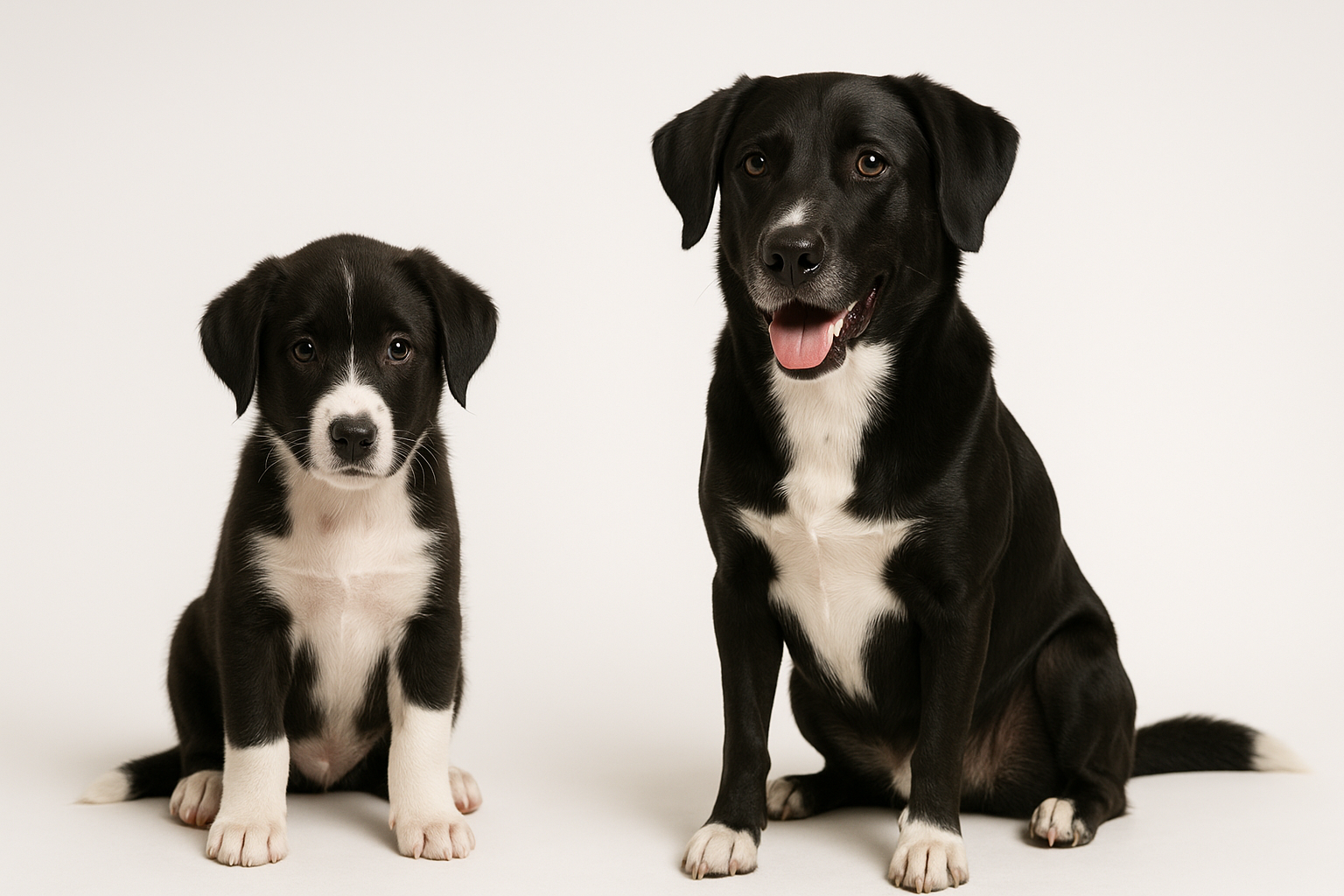
The Working Dog That Never Clocks Out
Cross the most intelligent herding breed in the world with the most popular sporting retriever, and you get a dog that wants to work constantly and will invent a job if you do not provide one. The Borador, a cross between the Border Collie and the Labrador Retriever, combines two lines that were shaped by centuries of demanding physical labor. The result is an athletic, biddable, high-drive dog with a genuinely favorable longevity profile, provided its body and mind receive the management they require.
Both parent breeds are well-studied populations with large veterinary datasets. That depth of knowledge means we can map Borador health risks with more confidence than many designer crossbreeds allow.
What Two Working-Breed Gene Pools Create
The Border Collie is among the longest-lived medium-to-large breeds, with a median lifespan of 12-14 years according to UK breed mortality surveys. The Labrador Retriever, the most popular breed in North America for three decades, averages 11-13 years with extensive health outcome data from studies including the Purina Lifetime Study and OFA registry analysis.
First-generation Borador crosses may benefit from heterosis for certain recessive conditions. The 2013 Bellumori et al. study in JAVMA found that purebreds were significantly more likely to develop 10 of 24 genetic disorders compared to mixed-breed dogs. However, both parent breeds share predispositions to hip dysplasia, elbow dysplasia, and progressive retinal atrophy, so hybrid vigor offers limited protection for these specific vulnerabilities.
The Borador’s 12-15 year range reflects the fortunate overlap of two relatively long-lived parent breeds. But reaching the upper end of that range requires active management, not passive luck.
The Conditions That Define Borador Health
Hip and Elbow Dysplasia
Both the Border Collie and the Labrador Retriever carry OFA-documented prevalence for hip dysplasia, with Labrador Retrievers at approximately 12% and Border Collies at a lower but non-trivial rate. Elbow dysplasia, driven by developmental abnormalities in the elbow joint, is particularly well-documented in Labrador lines.
In a 35-65 lb Borador, dysplastic joints create abnormal biomechanics that accelerate cartilage wear and progress to arthritis. The trajectory is predictable: subclinical dysplasia in youth becomes intermittent stiffness in midlife and chronic pain management in the senior years.
The Purina Lifetime Study showed lean dogs developed arthritis 1.8 years later than overweight counterparts. In a breed averaging 12-15 years, that delay is substantial. Controlled growth during the first 18 months, OFA or PennHIP evaluation before age 2, and lifelong lean body condition provide the strongest joint protection available.
For dogs with identified dysplasia, swimming is the ideal exercise: it builds muscle strength around compromised joints without the impact loading that walking and running create. See Joint Screening Protocol by Breed for a structured evaluation approach.
Obesity: The Labrador Legacy
The Labrador Retriever carries a well-documented POMC gene deletion that impairs satiety signaling. Dogs with this mutation feel perpetually hungry because their brain cannot accurately register that they have eaten enough. Approximately 25% of Labrador Retrievers carry this mutation, and your Borador may have inherited it.
Obesity in a Borador does not just add weight. It accelerates every joint condition on the risk list, increases cancer risk, and shortens lifespan by an estimated 1.8-2.5 years based on the Purina Lifetime Study data. This single condition interacts with nearly every other health vulnerability the Borador carries.
If your Borador seems insatiably hungry despite adequate feeding, that may be genetic rather than behavioral. The management response is the same: measured meals, treats capped at 10% of daily calories, monthly body condition scoring, and absolute refusal to supplement with table food or unscheduled treats. Target a BCS of 4-5 on the 9-point scale, with ribs easily palpable and a clearly defined waist.
Use Feeding Guide for Large Breeds for dogs over 50 lbs or Feeding Guide for Medium Breeds for lighter Boradors. Shift to Weight Management Feeding Protocol at the first sign of BCS drift.
Progressive Retinal Atrophy
Both parent breeds carry risk for progressive retinal atrophy (PRA). The prcd-PRA mutation is documented in both Border Collie and Labrador Retriever lines, meaning the Borador can inherit this from either side. PRA causes progressive vision loss beginning with night blindness and advancing to complete blindness over months to years.
Genetic testing can identify carriers before symptoms appear. If your Borador’s parents were not tested, consider DNA testing through Embark or Wisdom Panel. Annual ophthalmic screening starting at age 3 provides clinical surveillance regardless of genetic test results.
See Eye Health Screening Frequency by Breed for recommended intervals.
Ear Infections
The Labrador’s floppy ear anatomy contributes to ear infection susceptibility. Floppy ears trap moisture and restrict airflow to the ear canal, creating conditions that favor yeast and bacterial overgrowth. Boradors that swim regularly (many inherit the Labrador’s water affinity) face compounded risk if ears are not dried thoroughly after each water exposure.
Weekly ear cleaning with a veterinary-approved cleanser, plus thorough drying after swimming or bathing, converts ear infections from a recurring management headache into a preventable condition.
Nutrition for the Borador Athlete
The Borador is a high-energy working-type dog that burns calories efficiently when appropriately exercised. Feed for activity level, not appetite. A Borador with an active daily routine (60+ minutes of structured exercise) needs more calories than a Borador living a sedentary suburban life, but even the active dog should maintain a lean BCS of 4-5.
Omega-3 supplementation at approximately 75 mg EPA+DHA per kg of body weight supports joint health, skin integrity, and cardiovascular function. For dogs with identified hip or elbow dysplasia, discuss adding glucosamine and chondroitin as part of a broader joint supplement stack.
Exercise and Mental Work
This is where the Borador either thrives or unravels. Both parent breeds were developed for sustained physical and cognitive work. The Border Collie brings intense focus, problem-solving ability, and a near-obsessive drive to complete tasks. The Labrador brings endurance, retrieving instinct, and social motivation. The cross needs both physical exertion and mental challenge daily.
Plan for 60-90 minutes of daily activity. Ideal activities include:
- Long walks or hikes on varied terrain
- Swimming (builds fitness with zero joint impact)
- Structured fetch and retrieval work
- Agility or rally obedience training
- Scent work and tracking exercises
- Puzzle feeders and food-dispensing toys
Under-exercised Boradors develop anxiety, compulsive behaviors, and destructive habits. These are not personality defects. They are symptoms of a working brain without work to do. Adequate mental and physical stimulation is a health intervention, not a lifestyle luxury.
During the first 18 months, focus on moderate, varied exercise rather than sustained high-intensity activity. Developing joints need protection. After skeletal maturity, scale exercise to your dog’s joint status: a Borador with clear hip radiographs can handle more impact than one with documented dysplasia.
Preventive Screening Timeline
- Puppy to 18 months: Growth-rate monitoring, joint-safe exercise, baseline hip and elbow evaluation. Establish ear care routine.
- 2 to 5 years: Annual wellness exam with hip/elbow reassessment, eye exam, cardiac auscultation, and body condition scoring. Baseline bloodwork by age 3.
- 6 to 9 years: Senior bloodwork annually. Increase monitoring for joint changes, vision quality, and emerging lumps. Reassess exercise protocol for joint tolerance.
- 10+ years: Twice-yearly exams. Comprehensive senior panel. Mobility and pain assessment. Cognitive function screening.
Breed-Specific Research
These resources provide deeper context for Borador health management:
- Joint Screening Protocol by Breed: structured orthopedic evaluation for breeds with documented hip and elbow dysplasia risk.
- Eye Health Screening Frequency by Breed: ophthalmic surveillance timing for PRA-susceptible breeds.
- Weight Management Protocol for Dogs: evidence-based weight control strategies for breeds with genetic obesity risk.
Condition-Specific Monitoring Triggers
These signals should prompt veterinary evaluation rather than continued observation:
- Hip Dysplasia: Bunny-hopping gait, reluctance to climb stairs, stiffness after rest, audible clicking, or difficulty rising.
- Elbow Dysplasia: Front leg lameness, especially after exercise. Reluctance to extend the elbow fully. Swelling around the elbow joint.
- Progressive Retinal Atrophy: Bumping into furniture in dim light, dilated pupils, reluctance to navigate unfamiliar spaces at night.
- Obesity: Ribs no longer easily palpable, loss of waist definition, weight trending upward on monthly checks.
- Ear Infections: Head shaking, odor from ear canals, dark discharge, scratching at ears, or head tilt.
- Arthritis: Gradual decline in exercise enthusiasm, slower to rise, avoiding jumps or stairs, limping after rest.
12-Month Longevity Execution Plan
Quarter 1: Baseline and Risk Mapping
- Document starting weight, body condition score, and gait quality with video
- Complete hip and elbow radiographic evaluation if not already done
- Establish exercise protocol that matches the Borador’s working-breed needs
- Set feeding protocol: measured meals, treat budget, appropriate formula for size
- Begin or optimize ear care routine
Quarter 2: Adherence and Early Detection
- Compare current weight and gait video against Q1 baselines
- Assess exercise adequacy: is your Borador showing signs of under-stimulation (destructive behavior, anxiety, compulsive habits)?
- Schedule eye exam if not completed at annual wellness visit
- Monitor for any front or rear limb lameness
Quarter 3: Midyear Systems Check
- Review six months of weight and mobility data
- Adjust exercise intensity and type for seasonal conditions
- Reassess ear health: frequency of infections, compliance with weekly cleaning
- Evaluate mental enrichment: is the routine still challenging, or has the dog mastered all current puzzles?
Quarter 4: Annual Review and Forward Planning
- Comprehensive wellness exam with full bloodwork
- Year-end mobility assessment: joint range of motion, gait symmetry, exercise tolerance
- Update eye screening schedule based on any changes detected
- Use full-year data to build next year’s monitoring and exercise plan
When to Seek Emergency Care
Do not wait on any of the following:
- Sudden collapse or inability to stand
- Acute, severe lameness with no history of trauma
- Sudden vision loss (bilateral PRA progression is typically gradual, but acute retinal detachment can occur)
- Respiratory distress or sustained resting respiratory rate above 40 breaths per minute
- Unproductive retching with abdominal rigidity
- Seizure activity lasting more than 3 minutes
- Complete food refusal lasting more than 24 hours with concurrent lethargy
Home Tracking Dashboard
Monitor these markers monthly to catch drift early:
- Weight and body condition score with rib palpation
- Gait quality on all four limbs, especially after rest and after exercise
- Eye clarity and navigational confidence in low-light conditions
- Ear health: odor, discharge, head shaking frequency
- Appetite consistency, water intake, stool quality
- Energy level and exercise recovery time
- Behavioral markers: is the dog settled and content, or showing signs of under-stimulation?
Frequently Asked Questions
How long do Boradors typically live? Boradors average 12-15 years, reflecting the favorable longevity genetics of both the Border Collie and Labrador Retriever. Both parent breeds are among the longer-lived medium-to-large breeds, and the cross typically falls within or near their combined range.
Are Boradors prone to weight gain? Yes. The Labrador Retriever parent carries a well-documented POMC gene mutation that impairs satiety signaling in approximately 25% of the breed. If your Borador inherited this trait, it will feel perpetually hungry regardless of adequate feeding. Measured meals and strict treat budgets are essential.
How much exercise does a Borador really need? At minimum, 60-90 minutes daily, combining physical activity with mental enrichment. This is a cross of two working breeds developed for sustained labor. Inadequate exercise does not just cause behavioral problems. It contributes to obesity, joint stiffness, and accelerated aging.
Should I get my Borador’s hips and elbows evaluated? Yes, regardless of whether symptoms are present. Both parent breeds carry documented prevalence for hip and elbow dysplasia. Early radiographic evaluation (OFA or PennHIP) before age 2 establishes a baseline that guides exercise selection and weight management for life.
Can Boradors go blind from PRA? Progressive retinal atrophy can progress to complete blindness, though the timeline varies from months to years. Both parent breeds carry the prcd-PRA mutation. Genetic testing identifies carriers, and annual eye exams detect early retinal changes before significant vision loss occurs.
Why does my Borador keep getting ear infections? The Labrador ear architecture (floppy, poorly ventilated) creates conditions that favor yeast and bacterial overgrowth. If your Borador swims regularly, moisture retention compounds the problem. Weekly ear cleaning and thorough drying after water exposure are the primary prevention strategies.
References
[1] Life expectancy, mortality, and longevity in companion dogs (Scientific Reports, 2024) [2] Prevalence of inherited disorders among mixed-breed and purebred dogs (Bellumori et al., JAVMA, 2013) [3] Effects of Diet Restriction on Life Span and Age-Related Changes in Dogs (Kealy et al., 2002) [4] Orthopedic Foundation for Animals (OFA) [5] Merck Veterinary Manual [6] AAHA Canine Life Stage Guidelines
This content is for informational purposes only and does not constitute veterinary advice. Always consult a licensed veterinarian for decisions about your dog’s health, diagnosis, and treatment.
Related reads
Related Reading
Continue exploring